Waterhole Lodge vs. River Lodge on Safari: Which Gives Better Wildlife Viewing?
A waterhole lodge often has the advantage for concentrated, lodge-side wildlife viewing, while a river lodge can offer a broader and more continuous range of wildlife activity. Neither setting is automatically better. The stronger choice depends on season, the reliability of the water source, surrounding habitat, the lodge’s exact position, and whether you care most about seeing animals from camp or encountering varied habitats during the day.
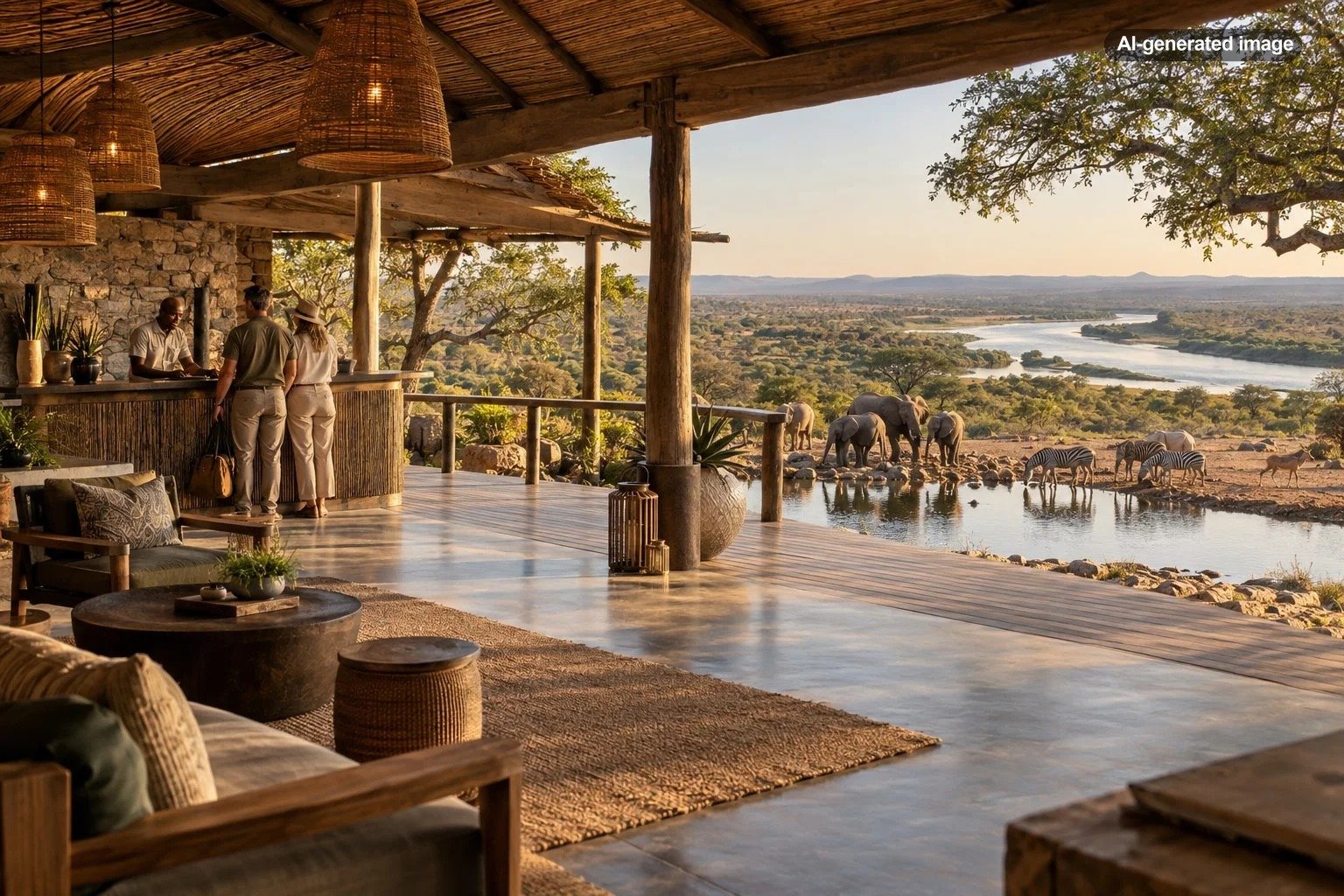
For travelers who imagine watching elephants, antelope, or other animals approach a single visible water source while sitting on a deck, a well-positioned waterhole lodge can be extremely appealing. A river lodge may be more rewarding for travelers who value changing scenery, birdlife, aquatic species, movement corridors, and wildlife activity spread along a larger natural system.
Quick answer: waterhole lodge or river lodge?
- Choose a waterhole lodge if your priority is concentrated wildlife activity that may be visible without leaving camp.
- Choose a river lodge if you prefer a wider variety of habitats and wildlife movement along a natural corridor.
- Dry-season travel can make both settings especially productive where alternative water becomes limited.
- Wet-season conditions can reduce the importance of one particular water source because wildlife may have more places to drink.
- The exact lodge location matters more than the label. A mediocre waterhole position can be less productive than an excellent river frontage, and vice versa.
How wildlife viewing differs at a waterhole lodge
A lodge overlooking a dependable waterhole creates a natural focal point. Instead of wildlife being distributed across a long stretch of river, drinking animals may approach a relatively compact area. That concentration can make sightings easier to observe from a fixed position.
This arrangement is particularly attractive to travelers who enjoy passive wildlife watching. A productive lodge waterhole may provide activity while guests are having breakfast, resting between game drives, or sitting quietly on a viewing deck. The benefit is not simply the number of sightings. It is the ability to spend time watching behavior rather than constantly moving in search of the next animal.
Waterholes can become more important during dry periods when water is limited across the surrounding landscape. As vegetation thins and animals depend more heavily on remaining water, visits may become more predictable. However, waterhole activity is never guaranteed. Nearby rainfall, alternative water sources, predator presence, disturbance, and daily animal movements can all change what appears.
Who is a waterhole lodge best for?
A waterhole lodge is especially appealing for photographers, families who appreciate wildlife viewing between drives, travelers who prefer a slower safari rhythm, and anyone who wants a realistic chance of seeing animals without being in a vehicle for every encounter.
The tradeoff is that a waterhole concentrates attention on one relatively small stage. When the waterhole is quiet, the view may feel static. Some waterholes are also seasonal or influenced by local water-management practices, so travelers should not assume that every lodge advertising a waterhole has equally dependable activity.
How wildlife viewing differs at a river lodge
Rivers create a different type of safari environment. Rather than drawing wildlife to one compact point, a river can function as an extended habitat and movement corridor. Riverbanks may combine water, vegetation, shade, exposed sand, trees, reeds, and crossing points, creating opportunities for several kinds of wildlife behavior.
Depending on the ecosystem, river environments can also add animals and birds associated with permanent or seasonal waterways. The result may be greater habitat diversity than travelers see around a single waterhole. Wildlife can appear directly in front of the lodge, farther along the bank, or during drives that follow the river system.
A riverfront setting does not mean animals will constantly stand outside the lodge. Because a river offers many possible access points, wildlife may be less concentrated in one precise location. A herd that must visit a small waterhole could drink directly in front of a viewing area, while the same herd along a river might stop hundreds of yards away.
Who is a river lodge best for?
A river lodge can be a strong fit for birders, travelers interested in varied habitats, repeat safari guests looking beyond headline mammal sightings, and visitors who enjoy observing an ecosystem rather than waiting at a single wildlife focal point.
The practical tradeoff is dispersion. A long riverbank can support considerable wildlife activity while producing relatively little directly in front of one guest room or deck.
Waterhole lodge vs. river lodge: the main differences
| Factor | Waterhole lodge | River lodge |
|---|---|---|
| Wildlife pattern | More concentrated around one focal point | More dispersed along a corridor |
| Lodge-side viewing | Can be excellent when the waterhole is active | Highly dependent on exact river frontage |
| Habitat variety | Usually centered on the water source and nearby bush | Can include banks, woodland, reeds, channels, and crossings |
| Birding | Often productive around drinking and bathing areas | Potentially broader where river habitats support additional species |
| Dry-season appeal | Potentially very strong as animals seek limited water | Potentially very strong along dependable rivers |
| Viewing style | Wait and watch | Watch a broader landscape and movement corridor |
Season can matter more than lodge type
The waterhole-versus-river decision changes with rainfall. In many safari ecosystems, dry conditions reduce surface water and thin vegetation. Animals may become easier to locate near dependable rivers and remaining waterholes. This can make either lodge type highly productive when it overlooks an important source of water.
During wetter periods, wildlife may have access to temporary pools, pans, streams, and other scattered water. Animals no longer need to return as consistently to the same river section or waterhole. Vegetation may also become denser, making some species harder to spot even when they are nearby.
This does not make a wet-season safari inferior. It changes the viewing pattern. Landscapes can become greener, bird activity may change significantly, and young animals or seasonal wildlife behavior may add interest. Travelers should therefore compare the lodge’s setting with the timing of their trip rather than treating waterhole and river locations as year-round guarantees.
Predator sightings depend on more than water
It is tempting to choose a waterhole because prey animals drink there and assume predators will therefore appear regularly. Predators certainly use areas around water, but their movements depend on territory, prey distribution, cover, competition, temperature, and numerous other factors. The same applies to river corridors, which can provide water, vegetation, crossings, and travel routes without guaranteeing predator encounters.
If lions, leopards, wild dogs, or other predators are a major priority, ask about the quality of the surrounding wildlife area rather than focusing exclusively on whether the lodge faces water. Reserve size, habitat, guiding access, road networks, neighboring land use, and the local wildlife population can influence sightings substantially.
The lodge’s exact position is the overlooked factor
Two lodges can both advertise a riverfront location and provide completely different experiences. One may overlook a broad, active bend in the river from an elevated deck. Another may technically sit beside the same river but have vegetation blocking much of the view. Similarly, one waterhole may be positioned directly below a communal deck while another sits farther from guest areas.
Before booking, look beyond the description and establish what guests can actually see from common areas and accommodations. Useful questions include whether the water source is visible from the main deck, whether vegetation obstructs views, whether the waterhole is permanent or seasonal, how far rooms are from the river, and whether guests can safely watch wildlife from camp between scheduled activities.
Do not choose a lodge based on lodge-side viewing alone
Most safari travelers will spend significant time away from the lodge on guided activities. A spectacular waterhole is valuable, but it may not compensate for a location with limited access to productive wildlife areas. Conversely, a lodge with only occasional wildlife visible from its deck might offer exceptional game drives because of the habitat and guiding area surrounding it.
Consider the entire safari experience: the wildlife area, guide-to-guest arrangements, vehicle policies, typical drive structure, access to different habitats, opportunities for walking or boating where applicable, and how much time you realistically expect to spend at the lodge.
Which setting should you choose?
Choose the waterhole lodge if you value concentrated, stationary viewing and want wildlife watching to continue during downtime at camp. It is particularly compelling when the waterhole is dependable and clearly visible from guest areas.
Choose the river lodge if you value habitat diversity, birding, changing scenery, and the possibility of watching wildlife move through a larger natural corridor. River locations can be especially interesting for travelers who enjoy observing the broader ecology of a safari destination.
If wildlife viewing is the only deciding factor, however, compare individual lodges rather than categories. Ask where the lodge sits within the reserve, what the water source is like during your travel month, which habitats are accessible on drives, and what guests can genuinely see from camp. Those details are more useful than the words waterhole or riverfront in a property description.
Frequently asked questions
Are waterholes better for seeing elephants?
They can be excellent places to watch elephants when local conditions draw herds to that particular water source. River systems can also provide outstanding elephant viewing, so the result depends on the destination, season, and current animal movements.
Are river lodges better for birdwatching?
River environments can support especially varied birdlife because they combine water with multiple vegetation types and feeding areas. Waterholes can also be highly productive, particularly when birds gather to drink, feed, or bathe.
Is a waterhole lodge better in the dry season?
Often, its relative advantage increases when alternative water becomes scarce. Dependable rivers can become equally important during the same period, however, so travelers should investigate local conditions rather than applying one rule to every safari region.
Does riverfront mean I will see wildlife from my room?
No. The lodge may be beside a river without every room having an unobstructed view of the bank. Confirm the position of the accommodation and viewing areas if watching wildlife from your room is important.
What should I ask before booking either type of lodge?
Ask whether the water source is permanent or seasonal, how clearly it can be seen from guest areas, what wildlife habitats are accessible on guided activities, and how conditions normally change during your travel month. Those questions provide a more realistic basis for comparison than the property’s setting alone.