Why Hotels Sometimes Perform Welfare Checks on Occupied Rooms
Hotels sometimes perform welfare checks on occupied rooms when staff have a reasonable concern about a guest’s well-being, the condition of the room, or a possible emergency. The purpose is generally to confirm that the occupant is safe and that nothing requiring immediate assistance is happening behind the door. It is not necessarily an accusation or an indication that the guest has done something wrong.
The exact procedure varies by property, jurisdiction, and situation. A routine check may involve a telephone call and a knock at the door, while a credible report of a medical emergency can produce a much faster response involving management, security, emergency medical personnel, or law enforcement.
Quick answer
- A hotel may initiate a welfare check after repeated failed attempts to contact a guest or an unusual period without observable activity.
- Concern from a relative, travel companion, colleague, or hotel employee may prompt staff to investigate.
- A persistent Do Not Disturb sign does not guarantee that nobody will enter the room under any circumstances.
- Staff will often try less intrusive contact methods before opening a door when circumstances permit.
- Travelers can usually resolve a routine check quickly by answering the door or calling the front desk.
What a hotel welfare check means
A welfare check, sometimes called a wellness check, is an attempt to determine whether an occupant needs help. Hotels must balance guest privacy with practical responsibilities involving emergencies, employee safety, property protection, and the well-being of other guests.
The phrase can describe several different responses. In a low-urgency situation, a front-desk employee might call the room and ask whether everything is all right. If the guest does not respond, a manager or security employee may visit the floor, knock, identify themselves, and make another attempt to communicate. Entry may be considered if concern remains, although the decision and procedure depend on hotel policy and the facts available.
A genuinely urgent report is different. If someone reports hearing calls for help, sees signs of a serious medical problem, or provides credible information about an immediate threat, hotel employees may contact emergency services rather than treating the matter as a routine guest-service issue.
Common reasons a hotel might check an occupied room
A guest cannot be reached
A concerned relative, colleague, tour leader, or travel companion may call after being unable to contact the guest. One missed call is unlikely to tell hotel staff very much. Concern becomes more substantial when several details align, such as missed plans, an unanswered room telephone, and information that the person has a medical vulnerability.
Staff notice unusual circumstances
Hotel employees may report repeated alarms, water entering a hallway, a door left unsecured, concerning sounds, or another irregular condition. Housekeeping may also raise a concern when a room has remained inaccessible for an unusual period under the property’s procedures. None of these signs automatically proves that a guest is in danger, but they can justify additional contact.
A scheduled departure passes without contact
If checkout time has passed and the guest has not departed, extended the reservation, or answered communications, the hotel needs to determine whether the room is still occupied. This is not always framed as a welfare check at first. It may begin as an ordinary checkout inquiry and become a well-being concern only when staff cannot make contact or observe something unusual.
Someone reports a possible emergency
A companion might report that the guest sounded disoriented, mentioned feeling ill, or stopped responding during an active conversation. The quality of the information matters. A specific, credible report generally calls for a different response than a vague request from a person whose relationship to the guest cannot be established.
What usually happens during the check
When there is no obvious immediate danger, staff may begin by calling the room and any contact number associated with the reservation. They may review relevant operational information, such as whether a key was recently used or whether an authorized employee has interacted with the guest. The availability and permitted use of such information vary by property and system.
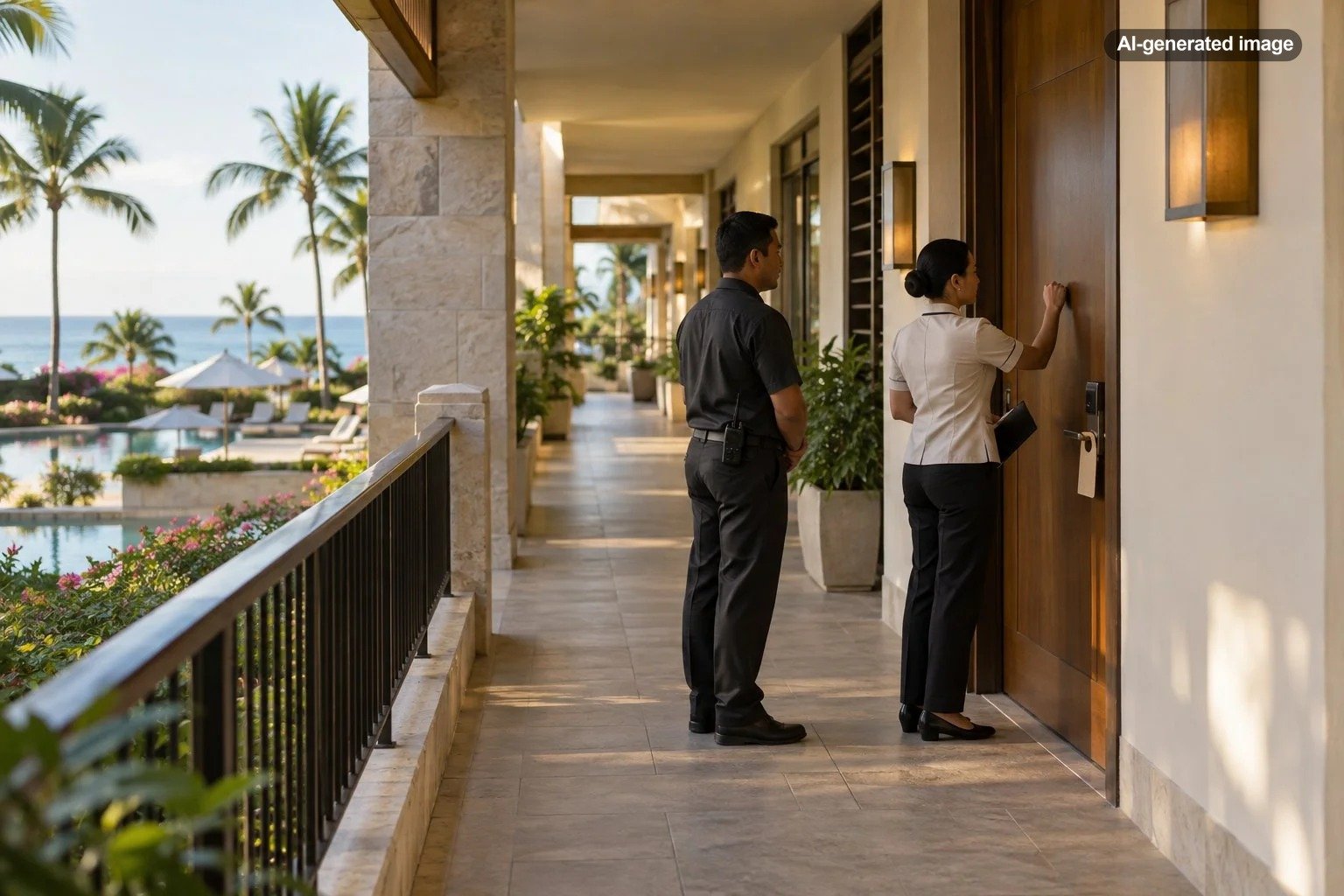
An employee may then knock, announce the hotel’s presence, and allow time for a response. Depending on hotel rules, a manager or security employee may accompany the staff member. Properties may avoid sending an employee alone when the circumstances are uncertain or potentially unsafe.
If staff enter, the immediate objective is typically limited: locate the occupant, assess whether assistance appears necessary, and address any evident emergency. When medical or safety concerns exceed the hotel’s capabilities, employees may call emergency services. Police welfare-check procedures can also involve attempts to call the person, gather details from the requester, and look for indications of distress before considering entry.
How a Do Not Disturb sign affects the decision
A Do Not Disturb sign communicates a strong request for privacy, but it is not an absolute barrier against every form of entry. Hotels generally retain the ability to respond to suspected emergencies, urgent maintenance problems, or other serious concerns. Some properties also have procedures for rooms that have displayed the sign continuously for an extended period.
Travelers should not assume that every hotel uses the same timing or protocol. A large convention hotel with on-site security may handle the situation differently from a small independent property. The nature of the concern also matters more than the sign alone: water leaking from a room or a credible medical warning can require prompt action.
Privacy, safety, and the limits of a hotel response
Welfare checks involve a real tension between privacy and safety. Staff should not treat a general curiosity, interpersonal dispute, or unsupported allegation as permission for unlimited access to a guest’s room. At the same time, waiting too long during a credible emergency can have serious consequences.
Hotels may also be cautious about revealing information to the person who requested the check. Even if staff confirm that a guest is safe, privacy considerations may limit what they disclose about the guest’s location, activities, companions, health, or reservation. A concerned caller should be prepared to provide identifying details and explain the specific reason for concern, but should not expect access to private reservation information.
Law enforcement authority is separate from hotel policy. Police departments may have rules governing when officers can enter a space without a warrant, and a general request for a welfare check does not automatically eliminate privacy protections. Urgent circumstances and local law affect what officers can do.
How travelers should respond
If hotel staff call or knock for a routine welfare check, respond clearly and calmly. Confirm that you do not require assistance. If you want to verify that the person at the door is an employee, call the front desk using the hotel’s published number or the room telephone before opening the door.
Guests who expect to sleep through much of the day, work overnight, remain in the room while ill, or avoid housekeeping for several days can reduce confusion by communicating with the front desk. There is no need to share extensive personal information. A simple message that you are safe, do not need service, and will contact the desk if that changes may be sufficient, subject to the hotel’s policies.
If you are worried about another guest, give the hotel concrete information rather than asking staff to act on speculation. Explain when you last had contact, what changed, whether the person mentioned a health concern, and why the situation appears unusual. Call emergency services directly when you believe there is an immediate threat to life, while also notifying the hotel so responders can be directed to the correct room.
What travelers often overlook
A welfare check is not always prompted by behavior inside the room. A missed group departure, an unattended animal, a maintenance issue, or a concerned call from outside the property can start the process. Conversely, the absence of housekeeping service does not by itself establish that something is wrong.
It is also important to distinguish a hotel employee’s visit from a police welfare check. Hotel staff operate under property procedures and can request assistance, but they do not have the same authority or training as emergency responders. When the situation appears dangerous, employees may keep their distance and wait for qualified responders rather than entering immediately.
Frequently asked questions
Can a hotel enter while the Do Not Disturb sign is displayed?
Potentially, yes. A sign requests privacy but may not prevent entry during a suspected emergency, an urgent property issue, or another circumstance covered by hotel policy. Procedures and notice practices differ.
Will the hotel tell a caller whether a guest is staying there?
Not necessarily. Hotels may decline to confirm occupancy or disclose room information. Staff can still receive a concern and decide whether it warrants internal action.
Does an unanswered door automatically lead to police involvement?
No. The response depends on the available facts. Staff may make additional contact attempts, involve a manager or security employee, enter under property procedures, or call emergency services when the concern appears urgent.
What if a welfare check feels suspicious?
Keep the door closed and independently call the front desk to verify the employee’s identity and purpose. If someone is trying to force entry without a credible explanation, contact hotel security or emergency services.