Can You Get Compensation If a Hotel Elevator Is Out of Service?
Yes, you can ask for compensation when a hotel elevator is out of service, but compensation is not automatically guaranteed. The strongest cases are usually those in which the outage materially changes what the hotel can reasonably provide, prevents a guest from accessing the assigned room, creates a serious mobility problem, or contradicts an important representation made before booking.
A short elevator interruption in a low-rise hotel is very different from spending several nights on an upper floor when you cannot comfortably use the stairs. The practical remedy may also be more useful than a cash refund: a lower-floor room, relocation to another property, help with luggage, a partial rate adjustment, or cancellation without penalty can sometimes solve the actual problem more effectively.
Quick answer: what can you reasonably request?
- A room on a lower floor if one is available and stairs are difficult or inconvenient.
- A room change within the hotel when the outage substantially affects access to your assigned room.
- Assistance with luggage if you must use stairs and hotel staff can safely provide it.
- A partial refund, rate adjustment, or hotel credit when the disruption significantly reduces the value or usability of the stay.
- Cancellation or relocation when the hotel cannot provide a workable accommodation, particularly when accessibility is involved.
There is usually no universal automatic refund
Hotel compensation is highly dependent on the circumstances. An elevator outage does not generally produce a fixed refund percentage simply because the elevator stopped working. Hotels differ in their policies, the length of the interruption may vary, and the practical effect on each guest can be very different.
For example, a healthy traveler staying on the second floor during a one-hour repair may experience little more than inconvenience. A traveler assigned to the tenth floor during a multi-day outage has a much stronger argument that the stay has been materially disrupted. The situation becomes more significant when a guest has limited mobility or cannot safely use stairs.
Rather than beginning with a demand for a specific percentage refund, explain how the outage is affecting your stay and ask the hotel what remedy it can provide. This gives management an opportunity to address the problem immediately.
Accessibility can change the situation substantially
An elevator is not merely a convenience for every traveler. For some guests, it is part of the accessible route needed to reach a hotel room or other facilities. Federal accessibility rules for places of lodging can therefore become relevant when an elevator problem prevents a guest with a disability from accessing accommodations or services.
The U.S. Department of Justice regulations implementing Title III of the Americans with Disabilities Act contain requirements governing accessibility at places of lodging, including accessible reservations and accessible routes in covered facilities. The exact obligations depend on the building, the circumstances, and applicable accessibility standards, so an elevator outage should not automatically be treated as proof of a legal violation.
If you cannot use stairs because of a disability or mobility limitation, tell the front desk clearly that this is an accessibility issue rather than simply an inconvenience. Ask what accessible alternative the hotel can provide. Depending on the situation, that might mean moving you to an accessible room on a reachable floor, arranging another workable accommodation, or considering relocation when access cannot otherwise be provided.
How long the elevator is down matters
The duration and predictability of the outage are important. A hotel may have little control over an unexpected mechanical failure, but the practical impact grows as the disruption continues.
If staff expects the elevator to return to service shortly, changing rooms or relocating may create more inconvenience than simply waiting. If the hotel cannot provide a meaningful repair estimate and you face repeated trips up several flights of stairs, it becomes more reasonable to ask for a substantive solution.
Ask the front desk two specific questions: whether the outage is expected to continue through your stay and what alternatives are available if it does. Avoid relying on vague assurances such as “soon” if the answer will determine whether you remain at the property.
The floor you are staying on makes a major difference
A broken elevator has very different consequences on the second floor and the twentieth floor. When discussing compensation or another remedy, focus on the actual burden rather than the existence of the mechanical problem alone.
Relevant factors include how many flights of stairs you must climb, how often you need to leave the property, whether you are traveling with young children, whether you have heavy luggage, and whether anyone in your party has a condition that makes repeated stair use difficult.
A traveler who can comfortably walk one flight may reasonably accept a lower-floor room. Someone who cannot use stairs at all may require an entirely different solution.
Ask for a practical remedy before focusing on money
The most useful first request is often the one that restores the stay you expected. Ask whether the hotel can move you to a lower floor, provide assistance, or offer another accessible arrangement.
If the hotel solves the access problem promptly, additional compensation may be less important. If it cannot solve the problem, you have a stronger basis for asking whether the rate can be adjusted or whether you can leave without a cancellation or early-departure penalty.
If relocation is proposed, clarify who is arranging it and whether you would incur additional charges before agreeing. Do not assume that another property will automatically honor the original hotel’s rate or reservation terms unless that arrangement is confirmed.
Document the problem if the disruption is significant
If you may request a refund or escalate the complaint later, keep basic documentation. You do not need to turn the situation into an investigation. A few clear records are usually more useful than dozens of photos.
- Note when you first learned the elevator was unavailable.
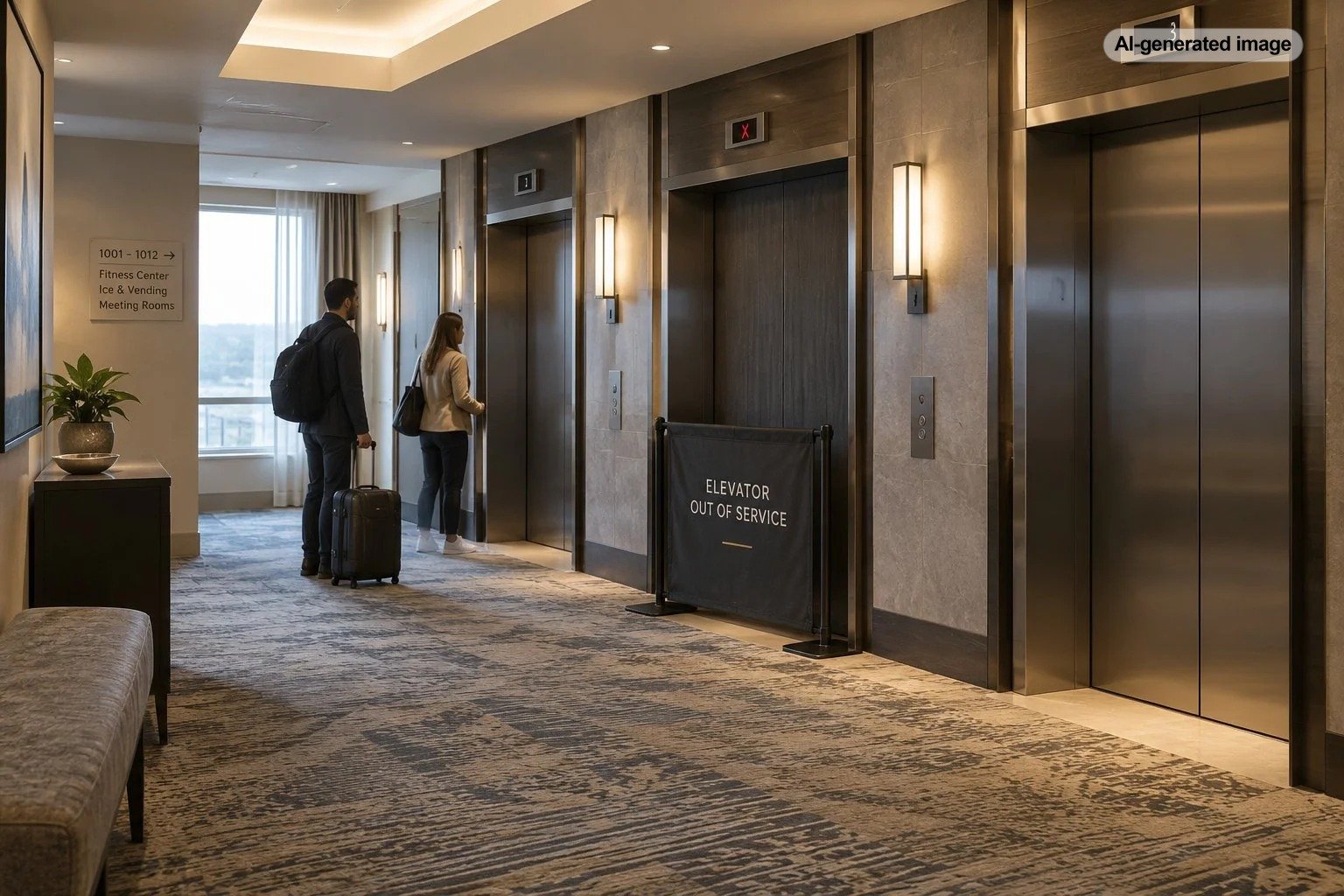
- Photograph any posted out-of-service notice if appropriate.
- Record the floor and room you were assigned.
- Keep messages exchanged through the hotel’s app, email, or booking platform.
- Write down the remedy you requested and the response you received.
- Keep receipts for reasonable additional expenses directly caused by a relocation if the hotel has agreed to cover them.
The Federal Trade Commission’s general consumer guidance recommends approaching the business directly, keeping relevant purchase documents, clearly explaining the problem, and stating the resolution you are seeking.
Who should you speak with?
Start with the front desk because staff may be able to move your room immediately. If the problem cannot be resolved there, ask for the manager on duty. A calm explanation of the practical impact is generally more useful than simply saying the elevator is unacceptable.
For example, explain that you were placed on a high floor, the elevator has remained unavailable, and repeated stair use is not workable for your party. Then request a specific solution such as a lower-floor room, cancellation without penalty, or an appropriate rate adjustment.
If you booked through a third-party travel seller, understand that its cancellation and refund process may differ from booking directly with the property. The FTC has previously noted that hotel policies and booking terms can differ when reservations are made through intermediaries. Depending on who processed the payment, you may need to speak with both the hotel and the booking company.
What travelers often overlook
The elevator may be operating when you check in and fail later. That makes it difficult to treat every outage as something the hotel should have disclosed in advance. What matters is how the property responds once the problem occurs.
Multiple elevators can change the analysis. If one elevator is broken but another remains fully operational, the inconvenience may be relatively minor unless the remaining elevator creates a separate accessibility or capacity issue.
A refund is not always the best outcome. If moving to another hotel late at night would be disruptive, a lower-floor room may be preferable even if a partial credit is theoretically available.
Accessibility should be raised explicitly. Staff cannot necessarily understand from a general complaint that stairs are unusable for someone in your party. Explain the functional problem clearly so the hotel can consider an appropriate accommodation.
FAQ
Can I demand a full refund because the hotel elevator is broken?
You can request one, but a full refund is not automatically guaranteed. The strength of the request depends on factors such as the duration of the outage, your floor, whether alternatives were available, and how severely the outage affected your ability to use the hotel.
What if I cannot use stairs because of a disability?
Tell the hotel immediately that you need an accessible solution. Ask management what alternative accommodation or accessible route it can provide. Accessibility requirements can involve federal, state, and local rules, and the appropriate remedy depends on the circumstances.
Can I ask to move to another hotel?
Yes. If the elevator outage makes the assigned accommodation unusable for you and the hotel cannot provide a suitable alternative, ask whether management can arrange relocation or permit cancellation without penalty. Confirm the financial terms before leaving.
Should I dispute the hotel charge with my credit card company?
Usually, try to resolve the matter directly with the hotel or booking provider first and keep documentation of those efforts. A payment dispute has its own rules and is not a substitute for determining what remedy the hotel should reasonably provide.
Is a broken elevator always an ADA violation?
No. The existence of an elevator outage by itself does not establish an ADA violation. Accessibility obligations depend on the facility, the applicable standards, how access is affected, and how the property responds. Travelers facing an accessibility problem should request an appropriate accommodation promptly.
The bottom line
A hotel elevator outage can justify compensation or another remedy when it meaningfully interferes with your stay, but there is no single automatic compensation rule that applies to every hotel and every outage. Start by asking the property to solve the actual access problem. If it cannot, a room change, cancellation without penalty, relocation, partial refund, or other adjustment may be reasonable depending on the circumstances.
The more clearly you can show that the outage materially affected your ability to use the room you booked, the stronger your request becomes. Accessibility concerns deserve particularly prompt attention because an elevator may be essential rather than optional for some guests.