Hotel Room Near the Elevator vs. Far Away: Which Is Better?
If you value quiet above almost everything else, a hotel room farther from the elevator is usually the better choice. If convenience, mobility, or minimizing long walks matters more, a room near the elevator can be preferable. Neither location is automatically good or bad because hotel layouts, elevator design, soundproofing, hallway traffic, and nearby service areas vary considerably.
The most useful approach is to decide which inconvenience would bother you more: occasional noise and foot traffic near an elevator bank, or a longer walk every time you enter and leave your room. For many travelers, a room somewhere between those two extremes offers the best balance.
Quick answer: near the elevator or far away?
- Choose farther from the elevator if you are a light sleeper, plan to sleep early, or want to minimize hallway traffic.
- Choose near the elevator if you have mobility concerns, frequently return to the room, have small children, or are carrying substantial luggage.
- Avoid assuming the farthest room is always quietest. End-of-hall rooms can sometimes be near stairwells, housekeeping areas, mechanical spaces, or exterior noise.
- Ask the hotel for a quiet room rather than requesting only a specific distance from the elevator. Staff may know which rooms are genuinely quieter.
Why rooms near the elevator can be noisier
The main disadvantage of staying near an elevator is not necessarily the elevator machinery itself. Modern hotels can isolate mechanical equipment effectively, although building design varies. The more predictable issue is human traffic.
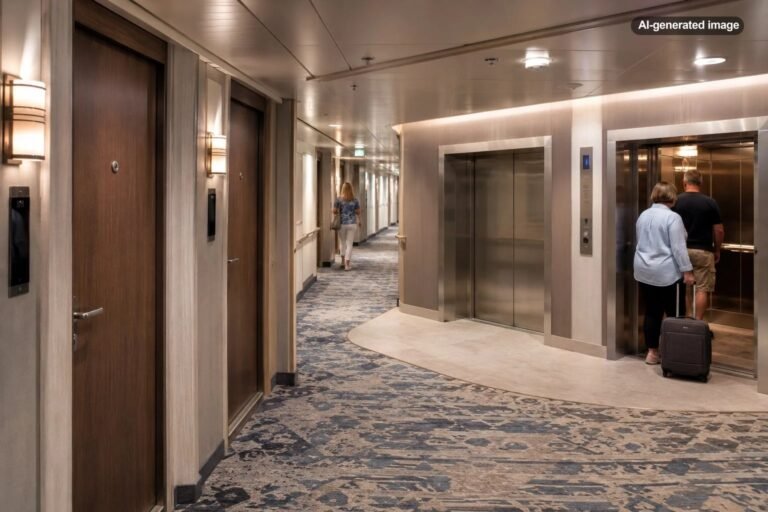
Guests naturally gather near elevator banks while waiting. Conversations may continue as people arrive from restaurants, events, bars, or late flights. Rolling luggage, footsteps, children, housekeeping carts, and repeated door openings can also make this part of a corridor busier than rooms farther away.
Some rooms can additionally pick up elevator chimes, doors opening and closing, or mechanical sound and vibration. Whether that is noticeable depends heavily on the building. A room technically close to an elevator may be exceptionally quiet if it is separated by a vestibule or service core, while another room sharing a wall with elevator equipment may be much more noticeable.
The advantages of staying near the elevator
Proximity can be genuinely useful. A long hotel corridor feels considerably longer when you are moving several suitcases, returning repeatedly with children, or making frequent trips between your room and the lobby.
Travelers with limited mobility may find an elevator-adjacent room substantially more comfortable. The same can be true for older travelers or anyone recovering from an injury. Business travelers moving between meetings and their room may also appreciate the efficiency.
Families sometimes prefer a shorter route because it simplifies moving strollers, bags, and tired children. In a very large resort or convention hotel, the practical difference can be greater than it appears on a floor plan.
There is another overlooked point: convenience can matter more during a short stay than during a weeklong vacation. If you are staying one night before a flight and expect to enter and leave the room several times, accepting a little more corridor activity may be a worthwhile tradeoff.
Why farther from the elevator often feels quieter
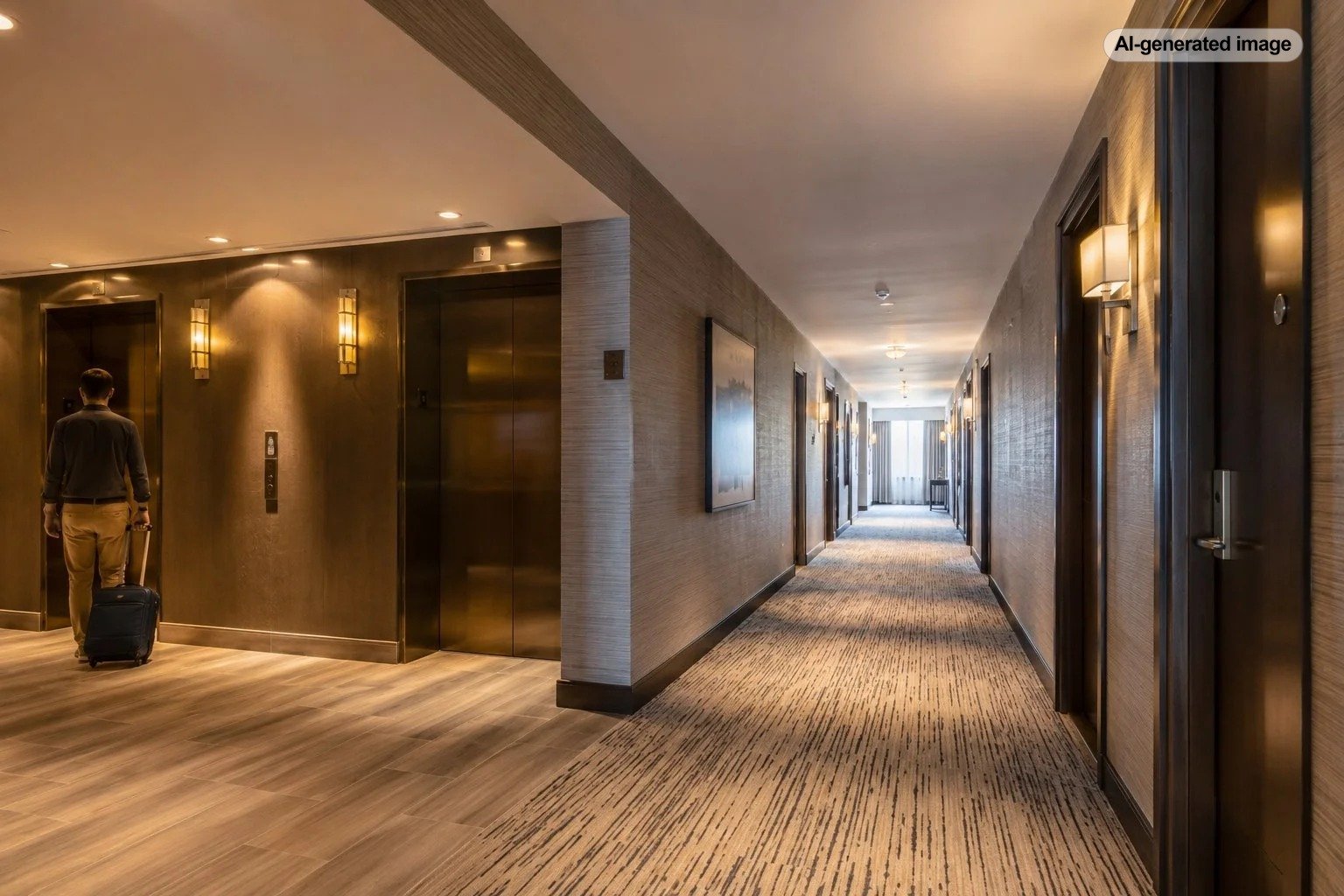
Moving farther down the corridor usually reduces the number of guests who pass directly outside your door. People staying beyond your room may still walk past, but you are less likely to hear every traveler arriving on the floor.
This makes distance from elevators particularly attractive for light sleepers, travelers dealing with jet lag, families with children who go to bed early, and anyone who expects to spend substantial time relaxing in the room.
However, requesting the room farthest from the elevator is not automatically the best strategy. Corridor ends may contain stairwells, housekeeping closets, service doors, ice machines, vending areas, or building equipment. A distant room may also create a noticeably longer walk in a sprawling resort.
What matters more than elevator distance
Elevators are only one potential source of hotel noise. A room far from the elevator can still be poorly positioned if it faces a busy road, sits beside an ice machine, connects to another guest room, overlooks a pool, or is close to an event space.
When quiet is your priority, asking for a quiet room away from elevators and service areas can be more effective than asking for the last room in the hallway. Hotel employees often understand the property’s acoustics better than a guest looking at a map.
It is also worth considering what is above and below your room. Bars, restaurants, ballrooms, fitness facilities, loading areas, and mechanical spaces can sometimes matter more than what is immediately beside you.
A practical comparison
| Factor | Near elevator | Farther away |
|---|---|---|
| Walking distance | Usually shorter | Usually longer |
| Hallway traffic | Often higher | Often lower |
| Best for mobility | Usually better | May be less convenient |
| Best for light sleepers | Potentially less suitable | Often preferable |
| Possible drawbacks | Voices, luggage, elevator sounds | Long walk, possible stair or service-area noise |
Who should request a room near the elevator?
A nearby room makes the most sense when walking distance is an important part of your comfort. Travelers with mobility limitations should feel comfortable making this request directly rather than treating it as a minor preference.
It can also suit families with young children, travelers carrying bulky equipment, guests making frequent trips to the lobby, and people staying in exceptionally large hotels. If you are not particularly sensitive to noise, the convenience may outweigh the potential disadvantages.
Who should request a room farther away?
Light sleepers are the clearest candidates. The farther you are from a major circulation point, the fewer passing conversations and rolling bags you are likely to encounter.
A farther room may also suit travelers working from their hotel room, people recovering from a long journey, families maintaining an early bedtime, or couples prioritizing a quieter stay.
Instead of requesting the absolute end of the corridor, consider asking for a quiet room away from the elevator, ice machine, housekeeping area, and stairwell. That gives the front desk more flexibility to choose a favorable location.
What travelers often overlook
The room next to the elevator is different from a room merely near it. A room several doors away may provide nearly all the convenience with substantially less traffic outside the door.
Hotel construction matters. Elevator sound that is obvious in one property may be barely perceptible in another. Floor plans also differ, so room numbers alone are not a dependable way to judge distance from elevators.
Your arrival time can affect your options. Room requests are generally preferences rather than guarantees unless a property specifically confirms otherwise. If location matters greatly, mention your preference during booking and politely ask again when checking in.
Do not unpack immediately if quiet is critical. Spend a few minutes listening for hallway, elevator, connecting-room, street, or mechanical noise. If the location clearly does not work for you, discussing alternatives with the front desk before settling in is easier than moving later.
Frequently asked questions
Are hotel rooms beside elevators always noisy?
No. Soundproofing, elevator placement, corridor design, and guest traffic differ among hotels. Some rooms close to elevators are quiet, while others may experience noticeable hallway or mechanical noise.
How far from the elevator should I request?
There is no universal ideal distance. Asking for a quiet room several doors away from elevators and other high-traffic areas is generally more useful than specifying an exact number of rooms.
Is the end of a hotel hallway the quietest location?
Not necessarily. End rooms can receive less passing traffic, but they may be near stairwells, service rooms, mechanical areas, or exterior noise. Ask the hotel which part of the floor tends to be quiet.
Can I request a room away from the elevator when booking?
Yes. Hotels commonly accept room-location preferences, although fulfillment depends on the property’s inventory and assignment process. Repeating the request politely at check-in can be helpful.
What is the best hotel room location for most travelers?
A room moderately removed from the elevator is often a sensible compromise: close enough to avoid an inconvenient walk but far enough to reduce activity around the elevator bank. Travelers who are highly noise-sensitive or mobility-conscious may reasonably choose one extreme over the other.
The bottom line
For most travelers seeking better sleep, a room farther from the elevator is the safer preference. For travelers prioritizing accessibility and convenience, staying near the elevator can make the hotel considerably easier to navigate.
The best request is rarely simply ‘near’ or ‘far.’ Tell the hotel what you actually want: a quiet room, minimal walking, convenient elevator access, or separation from busy areas. That gives staff a clearer goal and gives you a better chance of receiving a room location that suits the way you travel.