Why Do Some Mountain Hotels Become Difficult to Reach After Dark?
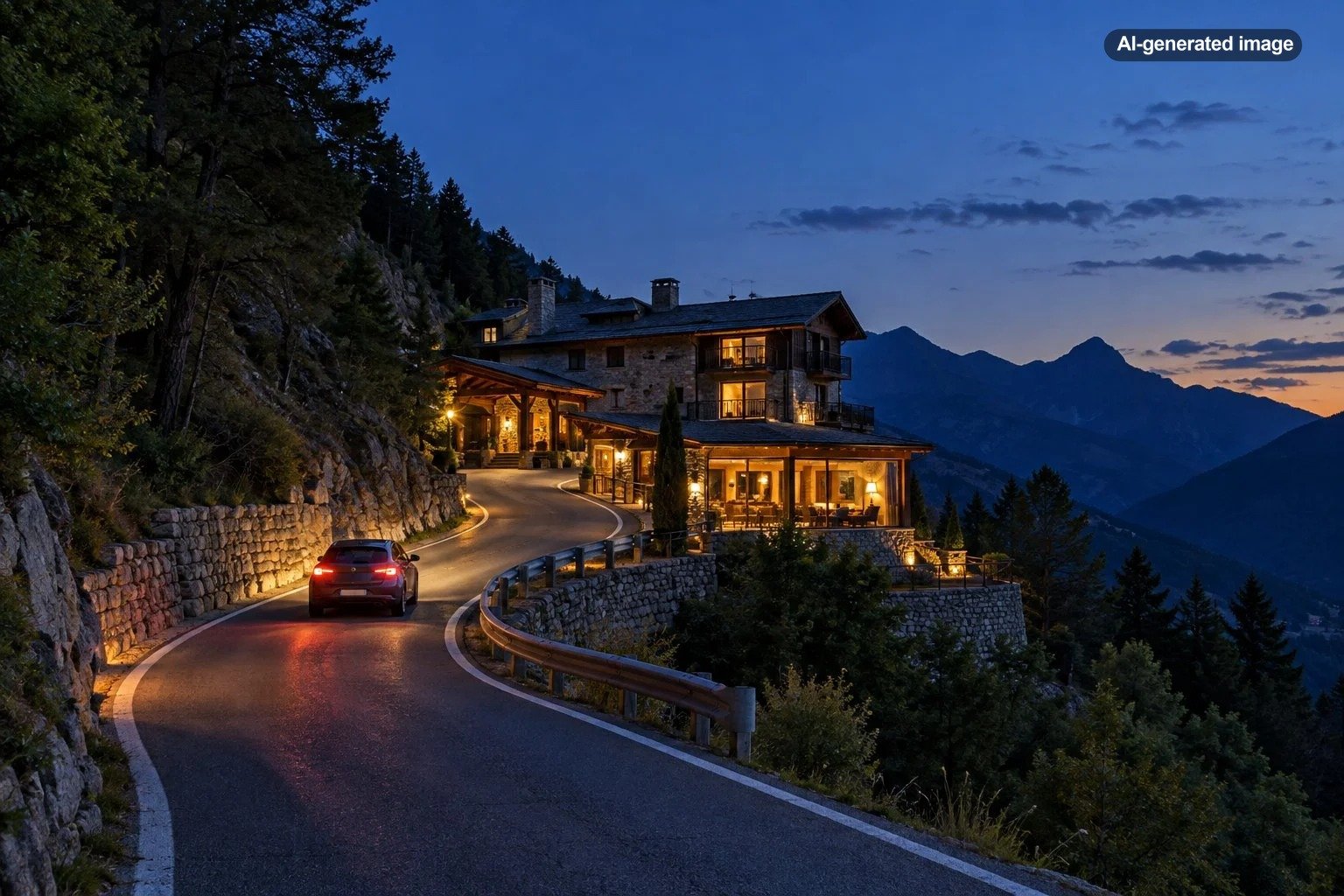
Some mountain hotels become difficult to reach after dark because the final miles of the journey involve narrow roads, sharp curves, steep gradients, limited lighting, and unfamiliar turns. A property that seems conveniently located on a map may require a surprisingly demanding drive once daylight disappears. The problem is often not the distance to the hotel but the conditions along the route.
Mountain accommodations are frequently chosen for the same qualities that complicate nighttime access: elevated locations, secluded surroundings, dramatic views, and separation from busy roads. Understanding the difference between a scenic location and a practical arrival route can make an important difference when deciding where to stay.
Quick Answer: What Makes Mountain Hotels Harder to Reach at Night?
- Unlit roads: Rural mountain roads may have little or no street lighting, making curves, intersections, and roadside obstacles harder to recognize.
- Steep and winding approaches: Switchbacks, narrow lanes, and changing elevations require more attention than typical city driving.
- Unfamiliar navigation: GPS directions may lead travelers onto minor roads or overlook the hotel’s preferred entrance.
- Changing weather: Fog, rain, snow, and freezing temperatures can make an otherwise manageable approach more difficult.
- Limited transportation: Taxis, shuttles, roadside services, and cellular coverage may be less dependable in remote mountain areas.
These challenges do not mean mountain hotels are inherently inaccessible or unsuitable for evening arrivals. They mean that the final approach deserves as much attention as the hotel’s location, amenities, and room options.
Mountain Roads Often Look Very Different After Sunset
A mountain road that feels straightforward during daylight can become substantially more demanding at night. Sunlight makes it easier to anticipate the direction of the road, identify changes in elevation, and recognize the surrounding landscape. After sunset, drivers must rely more heavily on headlights, reflective markings, road signs, and their ability to interpret the roadway immediately ahead.
Unlike major highways, smaller mountain roads may have limited artificial lighting. Road markings can be difficult to see, particularly when pavement is wet or worn. Some routes also have narrow shoulders, retaining walls, or steep terrain beside the road.
Curves present another complication. Headlights generally illuminate the direction the vehicle is facing rather than the entire bend ahead. On a road with frequent switchbacks, a driver may have less advance visibility than expected.
The National Park Service advises motorists to account for narrow roads, sharp curves, and other unusual roadway features when driving through mountainous park environments. Similar considerations can apply to roads leading to remote accommodations.
The Last Few Miles May Be the Most Difficult Part
One of the most overlooked aspects of mountain hotel access is the difference between the main approach road and the final property entrance.
A traveler might spend most of the journey on a well-maintained highway before turning onto a much narrower local road. The final section could include a steep driveway, an unpaved approach, several tight bends, or a poorly marked entrance.
Consider two accommodations located approximately the same distance from a mountain town. The first sits directly beside a paved main road. The second occupies an elevated hillside reached by a series of switchbacks and a private access lane. Both may appear equally convenient when comparing map distances, but the driving experience can be very different.
This distinction is particularly important when booking remote cabins, hillside lodges, small mountain inns, and vacation rentals. A property’s distance from the nearest town does not fully explain how easy it will be to reach.
Private Driveways Can Be More Challenging Than Public Roads
Some mountain properties have private access roads that differ considerably from nearby public routes. These may be steep, narrow, gravel surfaced, or difficult to identify from the main road.
Before booking, ask whether the approach is paved, whether ordinary passenger vehicles can use it, and whether the entrance is clearly marked at night. Also confirm whether the property recommends a particular route rather than simply following the shortest navigation suggestion.
Why GPS Directions Can Become Less Reliable in Remote Areas
Digital navigation is extremely useful for mountain travel, but it should not be treated as a complete assessment of road suitability.
A navigation app may prioritize distance or estimated driving time without adequately communicating how uncomfortable a narrow or steep route might feel to an unfamiliar driver. A technically passable road is not necessarily the approach a hotel recommends for guests.
Mountainous terrain can also limit cellular coverage. Although GPS positioning itself does not generally require an active cellular connection, downloading maps, receiving traffic updates, and recalculating certain routes can depend on connectivity.
Another issue is entrance placement. A large mountain property might have several gates, service roads, or access points. The hotel’s mailing address may not correspond to the guest entrance.
For a more reliable arrival, request the hotel’s preferred driving directions, save the precise entrance location, and download offline maps before leaving an area with dependable internet access. If the property’s directions conflict with navigation software, contact the hotel before proceeding.
Weather and Elevation Can Change the Arrival Experience
Weather introduces another layer of uncertainty, especially when a hotel sits significantly higher than the nearest city or airport.
Rain can reduce visibility and make road surfaces slippery. Fog may obscure the roadway ahead, while snow and ice can create additional traction problems. Temperatures can also vary with elevation, meaning that conditions near the hotel may differ from those at the starting point.
These issues are not limited to the middle of winter. Mountain weather can change quickly during transitional seasons, and shaded sections of road may retain difficult conditions longer than exposed areas.
The Colorado Department of Transportation recommends checking forecasts and road conditions before mountain journeys. It also publishes information about seasonal closures and vehicle traction requirements. Specific regulations vary by jurisdiction and can change with road conditions.
Travelers should check the relevant local transportation authority rather than assuming that a standard rental vehicle will be suitable for every mountain route.
Does Four-Wheel Drive Solve the Problem?
Not necessarily. All-wheel drive and four-wheel drive can help with traction in certain situations, but neither eliminates the risks associated with poor visibility, unsuitable tires, ice, steep descents, or restricted access.
Appropriate tires, vehicle condition, local regulations, and the driver’s experience matter. Some roads may also be closed regardless of the vehicle being driven.
If significant snow or ice is forecast, confirm whether the access road will be open and whether the vehicle meets applicable requirements before attempting the trip.
Wildlife, Limited Lighting, and Roadside Hazards Require Extra Attention
Mountain roads often pass through forests, valleys, and undeveloped areas where wildlife may cross unexpectedly.
Animals can be difficult to see against dark surroundings, particularly near bends or where vegetation extends toward the roadway. Depending on the destination, wildlife movement may be especially relevant around dusk and dawn.
Fallen branches, loose rocks, standing water, and other obstructions can also be harder to identify after sunset.
These factors make conservative driving particularly important. Reduce speed to suit visibility and road conditions, maintain sufficient following distance, and avoid distractions. Never assume that a road is clear simply because it appears empty.
Travelers unfamiliar with mountain driving should also consider whether fatigue will affect their arrival. A late flight followed by a long rental-car journey and an unfamiliar mountain ascent can be substantially more stressful than the same drive undertaken after a night’s rest.
Not Every Mountain Hotel Has Convenient Evening Transportation
Travelers who do not plan to drive should investigate nighttime transportation before making a reservation.
In major resort towns, taxis, private transfers, and scheduled transportation may provide practical alternatives. More isolated accommodations, however, may depend on advance arrangements or have limited local transportation options.
The presence of a hotel shuttle should never be assumed. Even when transportation is advertised, operating hours, pickup locations, reservation requirements, and seasonal service may vary.
Ask the property whether it can arrange a late arrival transfer, whether the driver can reach the actual entrance, and whether the service will operate at the expected arrival time.
Travelers arriving by train or bus should be equally careful. A station that looks close to a hotel on a map might be separated from it by a steep road without a convenient pedestrian route.
How to Evaluate Mountain Hotel Access Before Booking
The best approach is to evaluate the route and the accommodation together, rather than making the reservation based solely on scenery or distance.
Before committing to a mountain property, consider the following questions:
- What is the final approach like? Find out whether the last section is paved, steep, narrow, or unlit.
- Is the entrance easy to find? Ask whether there are signs, landmarks, or special navigation instructions.
- Are there seasonal access restrictions? Check whether snow, storms, or planned closures can affect the journey.
- Can guests arrive late? Confirm reception hours, check-in procedures, and how to obtain assistance after dark.
- Is a special vehicle necessary? Ask about road requirements and review any relevant rental-car restrictions.
- Is there a dependable alternative to driving? Verify transfers or local transportation arrangements in advance.
Recent guest reviews can also provide useful clues. Look for detailed comments about difficult turns, confusing driveways, nighttime arrivals, or unexpected road conditions. Such reviews should be treated as individual experiences rather than definitive evidence of current conditions.
Should You Choose a Mountain Hotel Near Town Instead?
A hotel in or near a mountain town can be a practical compromise for travelers who want mountain scenery without a demanding nighttime approach.
Town-based accommodations may offer easier access to restaurants, transportation, and main roads. They can also be convenient for travelers arriving late, changing destinations frequently, or traveling with children.
More remote hillside hotels may appeal to travelers seeking privacy, quiet surroundings, or a particular landscape setting. The tradeoff is that every evening return to the property may involve another drive along the same mountain road.
The right choice depends on the itinerary. Someone planning to remain at a resort for several days may place less importance on repeated driving access than a traveler who expects to explore different towns each evening.
When comparing locations, examine the actual approach route for each property, not simply its distance from the nearest resort center.
Affiliate disclosure: HotelInfo.com may earn a commission when you book or purchase through links on this page. This does not affect the price you pay. Learn more.
Travelers considering a self-contained mountain stay can also browse Homes & Villas by Marriott Bonvoy to explore vacation rental options. As with hotel reservations, verify each property’s location, access arrangements, parking conditions, amenities, and applicable terms individually before booking.
How to Plan a More Comfortable Arrival After Dark
If an evening arrival cannot be avoided, several practical preparations can make the experience more manageable.
Confirm the Exact Approach Before Departure
Contact the property for directions that identify the preferred entrance. Ask whether the recommended route changes in poor weather and whether any sections should be avoided after dark.
Allow More Time Than the Navigation Estimate
Mountain driving can be slower than expected because of curves, weather, traffic, wildlife, and unfamiliar intersections. Avoid planning an arrival with no margin for delays.
Prepare the Vehicle and Navigation
Check fuel or battery range, headlights, tires, windshield visibility, and weather conditions before starting the ascent. Download offline navigation information and keep the hotel’s contact details readily available.
Consider Arriving Before Sunset
When possible, schedule the final mountain approach during daylight. This provides a better opportunity to recognize road features, identify the property entrance, and understand the surrounding area before driving it again at night.
Have an Alternative Plan
If the route becomes unsafe because of weather, road closures, or poor visibility, do not continue simply to meet the planned check-in time. Stop somewhere safe and legal, contact the accommodation, and consider delaying the mountain ascent or staying overnight at a more accessible location.
What Travelers Often Overlook About Mountain Hotel Locations
Travelers frequently focus on the journey to the hotel while overlooking the need to repeat that journey throughout their stay.
A hillside accommodation might be easy to reach in the afternoon but less appealing when returning from dinner after sunset. This matters particularly when restaurants, shops, and activities are concentrated in a town below the hotel.
Another overlooked detail is parking. Reaching the property does not necessarily mean that parking is effortless. A steep parking area, limited turning space, or a separate lot connected by an inclined walkway can create additional inconvenience, especially with luggage.
Finally, the shortest route is not always the most comfortable route. A slightly longer approach using established main roads may be preferable to a shorter route involving narrow local lanes. The hotel may be able to identify the better option.
Frequently Asked Questions
Are mountain hotels generally safe to reach at night?
Many are accessible after dark, but conditions vary considerably. Road design, weather, lighting, vehicle suitability, and driver experience all affect the journey. Confirm the approach and current conditions rather than judging access solely by the hotel’s location.
Why does a mountain hotel look close on the map but take so long to reach?
Mountain routes often follow winding roads that cover more distance than a direct line on a map. Sharp curves, elevation changes, lower speeds, and indirect access roads can extend travel time.
Can I rely on GPS to find a remote mountain hotel?
GPS is useful, but it should be supplemented with the property’s preferred directions. Download offline maps, verify the correct guest entrance, and avoid unfamiliar shortcuts that appear unsuitable for your vehicle.
Is it better to stay in a mountain town or at a remote lodge?
A mountain town may be more practical for late arrivals and frequent evening outings. A remote lodge may better suit travelers who prioritize seclusion and intend to spend much of their time at the property. Compare access conditions and transportation needs before deciding.
What should I do if mountain roads become difficult during my arrival?
Do not push ahead when visibility, traction, road closures, or other conditions make the route unsafe. Find a safe and legal place to stop, consult official road information, and contact the accommodation about changing your arrival plans. Do not attempt to bypass closures.
The Best Mountain Hotel Arrival Starts Before the Drive
Mountain hotels can offer exceptional settings, but their locations sometimes require more preparation than accommodations in cities or established resort centers. Darkness magnifies challenges that may barely register during daylight, particularly on steep roads with tight curves, limited lighting, and unfamiliar entrances.
Before booking, investigate the final approach, expected arrival conditions, transportation availability, and the property’s recommended route. Travelers who treat access as part of the accommodation decision are better positioned to choose a mountain stay that suits both their expectations and their driving comfort.
Sources & Further Reading
- National Park Service: Slow Down. Enjoy the View. Watch the Road. Guidance on winding roads, limited visibility, wildlife, and attentive driving.
- Colorado Division of Motor Vehicles: Mountain Driving Information about steep grades, curves, changing weather, and mountain road hazards.
- Colorado Department of Transportation: Winter Driving Resources for checking mountain road conditions, seasonal closures, and winter vehicle preparation.