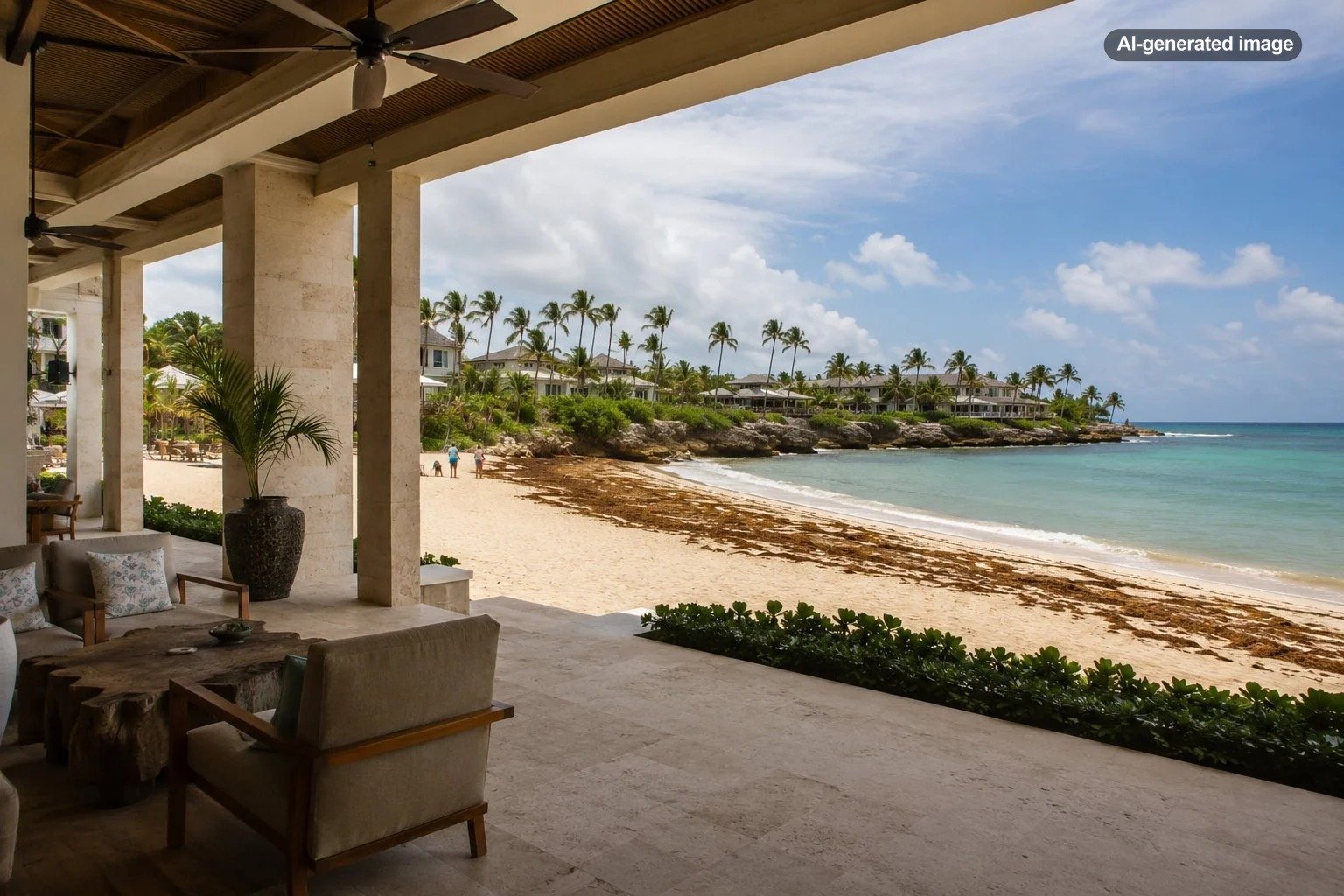
Why Some Caribbean Resort Beaches Have Seaweed and Others Do Not
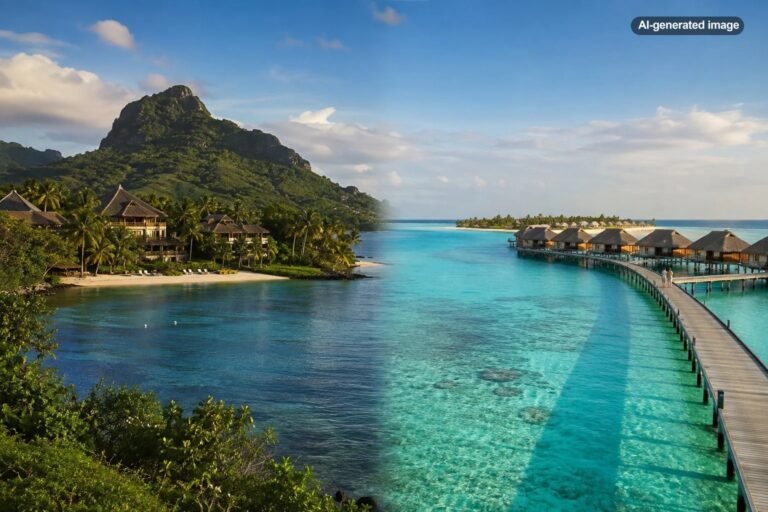
Two Caribbean resorts can sit on the same island, sometimes only a modest distance apart, and have dramatically different amounts of seaweed on their beaches. The reason is that floating Sargassum does not arrive evenly along a coastline. Its movement is shaped by ocean currents, wind, waves, shoreline direction, bays, reefs, headlands, and other local coastal features.
That means a regional report of heavy Sargassum does not automatically mean every resort beach in the region will be covered. It also means a beach that looks clear today cannot be assumed to remain clear throughout a future trip. For travelers choosing a Caribbean resort, the most useful approach is to understand why conditions vary and then check the specific property and beach shortly before traveling.
Quick answer: why neighboring beaches can look completely different
- Ocean currents move floating Sargassum unevenly. Large offshore concentrations can pass some shorelines while being carried toward others.
- Wind direction matters. Onshore winds can help push floating material toward a beach, while other wind patterns may keep it offshore or move it along the coast.
- Beach orientation changes exposure. A shoreline facing incoming wind, waves, and currents may receive more Sargassum than a beach facing another direction.
- Coastal geography can trap or divert it. Bays, points, reefs, channels, and headlands can influence where floating Sargassum accumulates.
- Resort management changes what guests see. Some properties remove accumulated Sargassum regularly, while the scale and timing of cleanup vary by property and conditions.
Sargassum starts offshore, not on the resort beach
The seaweed most travelers are discussing when they talk about Caribbean beach problems is generally pelagic Sargassum, a floating brown algae that naturally lives at the ocean surface. Since the early 2010s, large concentrations have repeatedly developed across the tropical Atlantic and moved through parts of the Caribbean.
These floating mats are not stationary. Winds and ocean circulation continually redistribute them. A large concentration visible offshore may break apart, shift direction, move past an island, or reach only selected sections of coastline. This is one reason broad statements such as an entire island having or not having Sargassum are often too simplistic for hotel planning.
Beach direction can matter as much as island location
When comparing resorts, look beyond the island name and consider which side of the island the beach occupies. Two coastlines on opposite sides of the same island may have very different exposure to prevailing marine conditions at a particular time.
This does not create a permanent rule that one side of an island is always clear. Wind and current patterns change, and Sargassum distribution itself is irregular. Instead, beach orientation should be treated as one factor that helps explain why reports from nearby resorts can conflict without either report being inaccurate.
Bays, reefs, and headlands create highly local conditions
The shape of the coastline can make Sargassum distribution even more uneven. A curved bay may retain floating material that enters it, while an exposed point may experience more active water movement. Offshore reefs and channels can also affect wave action and the routes floating material follows as it approaches land.
As a result, a traveler might see a significant accumulation at one resort and relatively little at another property nearby. Even neighboring stretches of beach can differ. This local variability is why photos or reports from a distant part of the island should not be treated as a reliable description of the beach directly in front of a particular hotel.
Wind can change the picture quickly
Sargassum floats at the air-sea boundary, so both water movement and wind influence where it travels. A change in wind can alter whether offshore patches are pushed toward land, transported parallel to the shoreline, or remain farther from the beach.
This also explains why a resort’s beach conditions may change during a stay. A shoreline can be relatively clear and later receive a new influx, or an accumulation can diminish after weather and water movement shift. The practical lesson is that Sargassum should be treated as a dynamic condition rather than a permanent characteristic of a particular resort.
The amount of Sargassum offshore varies over time
There is also a larger seasonal and year-to-year pattern. The amount of Sargassum present across the tropical Atlantic and Caribbean is not constant. Some periods produce substantially more floating material than others, and its geographic distribution can change as currents, winds, ocean conditions, and biological growth interact.
For travelers, this means an experience from a previous year is useful context but not a guarantee. A friend who encountered a clear beach several summers ago and a recent visitor reporting heavy seaweed may both be accurately describing the same resort under different conditions.
Resort cleanup can create another major difference
Natural exposure is only part of what guests ultimately see. Once Sargassum reaches shore, hotel and local cleanup practices become important. Removal may involve manual crews or specialized equipment, depending on the beach, local practices, environmental considerations, and the amount arriving.
A well-maintained beach can therefore appear much clearer than another nearby shoreline receiving a similar influx. However, cleanup has limits. During a substantial arrival, new Sargassum can wash ashore faster than crews can remove it. Travelers should distinguish between a resort that actively manages its beach and a promise that the beach will always be seaweed-free, which is difficult to guarantee in a changing marine environment.
How to evaluate a resort before booking
Instead of searching for a supposedly permanent list of Caribbean beaches without Sargassum, evaluate current conditions at the specific resort you are considering. Start with the exact beach location rather than relying on island-wide comments. Look for recent dated photographs, resort webcams when available, and current local reporting close to your travel dates.
It can also be useful to contact the property directly and ask specific questions: Has Sargassum been reaching the beach recently? How frequently is accumulated seaweed being removed? Are some sections of the property shoreline typically clearer than others under current conditions? Specific questions are more useful than simply asking whether the resort has a good beach.
Affiliate disclosure: HotelInfo.com may earn a commission when you book or purchase through links on this page. This does not affect the price you pay. Learn more.
If Sargassum exposure is an important part of your lodging decision, compare the exact coastal setting of each property rather than relying only on destination names. Travelers who want to broaden the accommodation search beyond conventional resorts can also browse Homes & Villas by Marriott Bonvoy; property standards, amenities, rates, taxes, fees, availability, and cancellation terms vary, so verify the details of any individual accommodation before booking.
What travelers often overlook
The biggest mistake is treating Sargassum as a simple yes-or-no destination characteristic. A statement such as a particular island having seaweed leaves out the details that matter most: which coast, which beach, what date, what the winds and currents have been doing, and how the shoreline is being managed.
Another overlooked distinction is the difference between Sargassum offshore and Sargassum accumulated on the sand. Floating patches visible in the water may affect swimming even if crews have cleaned the beach itself. Conversely, material deposited higher on the shoreline may remain visible while nearshore water conditions improve. If swimming conditions matter more to you than beach appearance, ask about both.
Finally, consider your tolerance for uncertainty. Travelers whose vacations depend heavily on uninterrupted beach swimming may want a property with multiple swimming areas, access to beaches with different orientations, or enough alternative activities that changing shoreline conditions will not define the entire trip. Travelers who primarily value pools, dining, sightseeing, or other resort features may consider temporary Sargassum less consequential.
Frequently asked questions
Why does one Caribbean resort have Sargassum while the resort next door does not?
Small differences in shoreline orientation, water circulation, wind exposure, reefs, bays, and coastal shape can change where floating Sargassum lands. Cleanup practices can further increase the visible difference between neighboring properties.
Are there Caribbean beaches that never get Sargassum?
Travelers should be cautious about absolute claims. Some shorelines may be less exposed under common conditions, but floating Sargassum is moved by changing winds and currents. Current information is more useful than a permanent seaweed-free label.
Can a resort predict whether its beach will have seaweed months in advance?
Long-range certainty at the individual-beach level is difficult because local inundation depends on changing offshore concentrations, currents, winds, and coastal conditions. Monitoring becomes more useful as the travel date approaches.
Does a clean resort beach mean there is no Sargassum nearby?
Not necessarily. The beach may have been cleaned, floating patches may remain offshore, or local currents may temporarily be directing Sargassum elsewhere. Beach appearance and offshore conditions are related but not identical.
What is the best way to check conditions before a Caribbean trip?
Use recent information for the exact property and coastline. Compare dated photos or webcams when available, review regional Sargassum monitoring, and contact the resort shortly before departure for a current description of both the sand and swimming area.