Which Cruise Cabins Have the Least Balcony Privacy?
A private balcony sounds like one of the most appealing features of a cruise cabin, but the word private can be misleading. Some balconies are visible from public decks, neighboring cabins, or entire rows of rooms across an open-air neighborhood. Others sit beneath overhanging decks where passengers can look down into the outdoor space. The least private cruise balconies are generally inward-facing neighborhood balconies, balconies directly overlooked by public areas, and exposed terraces with limited screening between neighboring cabins.
That does not necessarily make these cabins poor choices. A balcony overlooking an active promenade can be entertaining, while an extended balcony beneath an upper deck may offer welcome outdoor space. The important distinction is whether you want an open-air seat with interesting views or a secluded place where you can relax without feeling observed.
Quick Answer: Cruise Balcony Locations With the Least Privacy
- Inward-facing neighborhood balconies: These can be visible from cabins across a ship’s central courtyard, park, or entertainment district.
- Balconies overlooked by public decks: Passengers on elevated walking areas, observation decks, or open terraces may be able to see directly into them.
- Exposed aft balconies: Certain stepped stern designs allow guests on higher decks to look down onto balconies below.
- Balconies beside public gathering areas: Nearby lounges, promenades, or outdoor seating zones can reduce the feeling of seclusion.
- Angled or unusually shaped balconies: Some provide additional floor space but expose more of their seating area to neighboring cabins.
None of these characteristics automatically means a particular cabin lacks privacy. The exact ship design, deck position, divider height, and sightlines matter more than the cabin category alone.
Inward-Facing Balconies Can Be the Most Visible
On some large cruise ships, balconies face an internal open-air neighborhood rather than the ocean. These rooms can overlook landscaped walkways, entertainment spaces, or family-oriented recreation areas. The arrangement creates an interesting alternative to traditional ocean-facing accommodation, but it also introduces an important privacy tradeoff.
Royal Caribbean’s Oasis Class ships, including Allure of the Seas and Harmony of the Seas, feature Central Park and Boardwalk balcony categories. Instead of looking exclusively toward open water, guests can watch activity within the ship’s interior neighborhoods. Depending on the cabin’s position, passengers across the open space may also have a view toward the balcony and its windows.
A guest reading outside may be visible from numerous rooms opposite. During the evening, illuminated cabin interiors can also become easier to see through uncovered windows or balcony doors.
Best for: Travelers who enjoy people-watching, neighborhood atmosphere, and observing shipboard activity.
Less suitable for: Couples seeking a secluded outdoor retreat, travelers who want to keep their curtains open, or anyone uncomfortable with neighboring cabins facing their balcony.
Not all neighborhood balconies feel equally exposed. Their height, orientation, distance from opposite rooms, and proximity to gathering spaces can change the experience considerably.
Balconies Directly Below Public Observation Areas
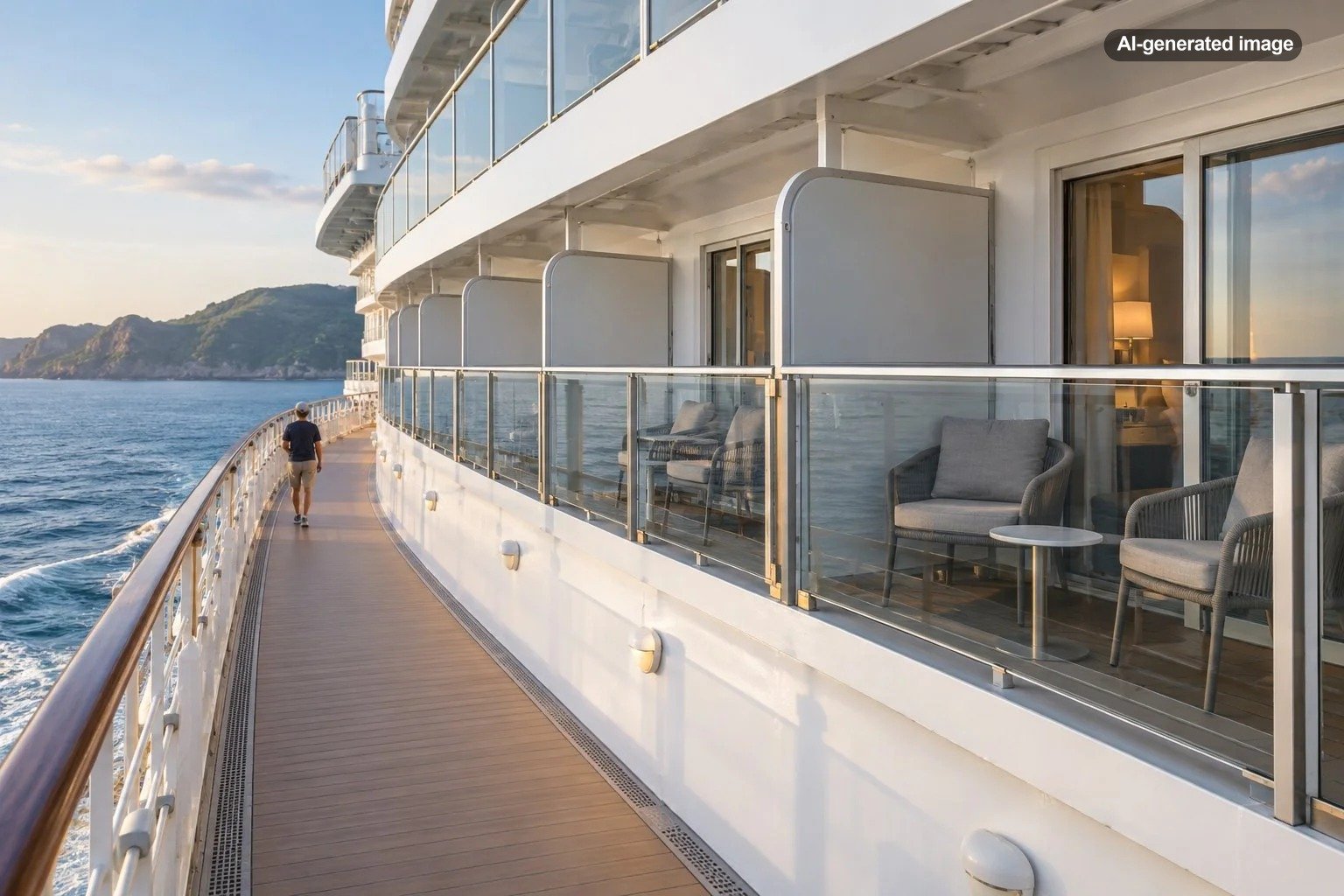
A balcony becomes less private when people can look down into it from an elevated public deck. This can occur where a ship’s exterior steps inward, where upper decks project around a recessed cabin area, or where open observation spaces sit above guest accommodations.
The critical detail is the viewing angle. A balcony may have a perfectly unobstructed view of the sea while still being visible to people standing above it.
Overhead visibility also depends on how far the balcony projects beyond the ship’s structure. A deeply recessed balcony may be reasonably sheltered, while an extended balcony can expose its outer seating area.
When studying a ship’s exterior photographs, look for railings, walking areas, and public terraces positioned above the balcony. Pay particular attention to whether passengers standing at those railings could see the furniture below.
Aft Balconies on Ships With Stepped Stern Designs
Aft-facing cabins occupy the rear of a cruise ship and often appeal to travelers who enjoy watching the wake. Some provide unusually broad views or larger outdoor spaces. However, aft balconies are not automatically more private than conventional side-facing cabins.
On ships with a tiered or stepped stern, the balconies may resemble staggered terraces. Guests on upper decks can sometimes see portions of the balconies below, particularly the areas closest to the railing.
Other ships have more vertically aligned aft balconies, deeper overhangs, or structural screening that reduces this issue. The presence of an aft-facing balcony alone therefore says little about privacy.
Travelers considering an aft cabin should inspect an actual photograph of the ship’s stern, preferably from a perspective that shows several decks simultaneously. This often reveals more about visibility than a simplified deck plan.
Best for: Travelers who prioritize wake views and an open atmosphere over complete seclusion.
Less suitable for: Guests expecting an extended aft balcony to function like an enclosed private terrace.
Balconies Next to Promenades, Lounges, and Public Gathering Spaces
Some cabin locations place outdoor seating surprisingly close to areas used by other passengers. A balcony might overlook a public promenade, sit near an outdoor lounge, or face a recreational area where guests regularly gather.
In these situations, privacy involves more than whether someone can see directly into the cabin. Nearby conversations, frequent movement, and the feeling of being watched can make an outdoor space less relaxing.
Noise and visual exposure are separate considerations. A balcony may be partially screened from view but still receive considerable sound from a busy deck. Conversely, a quiet courtyard-facing balcony may be easily visible from rooms opposite.
Check both the deck containing the cabin and the decks immediately above and below it. Public spaces are not always obvious when looking only at a cabin selection map.
Angled Balconies and Extended Balconies With Open Sides
Cruise ships sometimes feature balconies with irregular shapes caused by structural curves, changes in hull width, or the placement of exterior equipment. Certain angled balconies provide more outdoor floor space than neighboring cabins, which can make them attractive.
However, extra space is not always fully sheltered. The extended portion may project beyond the privacy divider or sit within a neighbor’s sightline.
Imagine two adjacent balconies, one extending farther outward than the other. A passenger standing near the outer railing of the larger balcony may have a direct view into part of the smaller one. The same geometry can work in reverse.
When comparing these cabins, determine whether the additional balcony area is genuinely useful for private seating or primarily creates more exposed space.
How Balcony Privacy Varies by Cabin Design
| Balcony design | Main privacy concern | What to examine |
|---|---|---|
| Inward-facing neighborhood | Views from opposite cabins and public areas | Distance across the open space and nearby activity |
| Below an elevated public deck | Passengers looking down | Overhang depth and railing sightlines |
| Stepped aft balcony | Overlooking from higher balconies | Rear exterior photographs |
| Angled or extended balcony | Side visibility from neighboring cabins | Divider position and balcony projection |
| Conventional ocean-facing balcony | Neighboring balconies and occasional overhead views | Divider height and deck alignment |
| Recessed or sheltered balcony | Limited outward openness rather than direct exposure | Sidewalls, ceiling coverage, and viewing angle |
These are general design considerations rather than guarantees. Two cabins in the same broad category can offer noticeably different degrees of privacy.
Are Infinite Verandas More Private Than Traditional Balconies?
Some modern cruise ships offer an alternative to the conventional exterior balcony. Celebrity Cruises, for example, uses Infinite Veranda accommodations on its Edge Series ships. These designs integrate a windowed veranda area into the cabin rather than providing the same separate open-air platform found in a traditional balcony.
Because the configuration differs, guests should not assume that an Infinite Veranda provides the same outdoor experience as a conventional balcony. Its appeal may include a more enclosed setting and the ability to control the opening, while the sensation of sitting outdoors is different.
For privacy-conscious travelers, the key questions remain whether nearby cabins have a direct viewing angle, how the windows and shades operate, and what happens to visibility when the opening is in use.
Travelers who specifically want to sit outside behind a conventional balcony divider should compare photographs and cabin layouts rather than relying on the word veranda.
How to Check Balcony Privacy Before Booking
Choosing a cabin with better privacy requires more than locating an appealing room number. A reliable assessment combines the deck plan with photographs of the actual vessel.
1. Start With the Exact Ship and Deck
Identify the ship, sailing, and cabin category. Similar ship classes may contain different layouts, and configurations can change after modifications. Examine the current deck plan for the exact ship rather than assuming a sister ship is identical.
2. Examine the Decks Above and Below
Look for public observation areas, walking decks, restaurants with outdoor seating, and recreational facilities. Consider both vertical and diagonal sightlines. A cabin several doors away from a public area may still face it directly.
3. Find Exterior Photographs
A photograph showing the entire side or stern of the ship can reveal balcony geometry that a flat deck plan cannot. Zoom in on the cabin’s approximate position and look for overhangs, stepped terraces, transparent partitions, and nearby public railings.
4. Look for Cabin-Specific Photographs or Videos
Search using the ship name and exact cabin number. Traveler photographs and walkthrough videos can help establish whether the divider reaches the railing, whether neighboring balconies overlook the seating area, and how much of the balcony is sheltered.
Check that the material shows the same ship and a relevant configuration. Older photographs may not reflect subsequent renovations.
5. Ask a Precise Question Before Paying for an Upgrade
Rather than asking whether a balcony is private, ask whether passengers on public decks or adjacent balconies can see into its seating area. Also ask whether the balcony faces another bank of cabins and whether its railings or dividers are transparent.
These questions are more useful than a broad assurance that the accommodation includes a private balcony.
If privacy is a deciding factor, choose an identified cabin rather than relying on a guarantee category in which the cruise line assigns the specific room later. Assignment rules and available choices vary by fare and cruise line.
Which Cruise Balcony Locations Usually Offer Better Privacy?
For travelers who want a quieter and less exposed outdoor space, a conventional ocean-facing balcony with solid side dividers and no public overlook is often a sensible starting point.
Look for cabins on sections of the ship where balconies align vertically without conspicuous terraces projecting outward. A covered balcony may offer additional screening from higher decks, although coverage does not guarantee complete privacy.
Recessed balconies can also be appealing where substantial sidewalls limit diagonal views. Their tradeoff is that the structural framing may restrict the openness of the view.
Do not assume that suites, larger balconies, higher decks, or premium cabin categories always offer greater privacy. A spacious suite terrace may be more visible than a compact standard balcony if its layout exposes it to upper decks or neighboring accommodations.
What Travelers Often Overlook About Balcony Privacy
Privacy changes between day and night. An interior cabin light can make occupants more visible through glass doors, particularly when the surrounding outdoor area is dark. Curtains or shades are important even when the balcony itself feels sheltered.
Port days can create different sightlines. A balcony that faces open water during a sea day may overlook a terminal, another docked ship, or nearby waterfront buildings while in port. People on neighboring vessels may be much closer than expected.
Glass dividers provide separation without full visual screening. Even frosted panels can leave parts of the balcony visible, depending on their height, opacity, and position.
A larger balcony is not necessarily a more usable balcony. If the extended section feels exposed, travelers may spend most of their time sitting closer to the cabin door.
Wind, shade, and noise affect the experience too. A secluded balcony can still be uncomfortable if it is unusually windy or receives noise from a nearby public deck. Privacy should be evaluated alongside overall usability.
Should You Pay More for a More Private Balcony?
That depends on how you expect to use the outdoor space. Travelers planning to read, rest, or spend extended periods outside may place substantial value on a sheltered balcony with limited sightlines.
For others, a neighborhood-facing balcony can offer a distinctive shipboard perspective. Families may enjoy watching activity below, while travelers who spend most of their time exploring the ship may not need extensive balcony seclusion.
Rather than paying more for a higher cabin category automatically, compare specific cabin locations. A well-positioned standard balcony may offer the atmosphere you want without requiring a more expensive accommodation type.
Affiliate disclosure: HotelInfo.com may earn a commission when you book or purchase through links on this page. This does not affect the price you pay. Learn more.
When comparing ships and departure dates, travelers can browse cruises with Expedia before examining the actual cabin options offered for a particular sailing. The final privacy assessment should always be based on the chosen ship and cabin location.
Frequently Asked Questions
Can neighboring passengers see onto a cruise balcony?
Yes, depending on the layout. Balcony dividers often limit direct views, but passengers may still see around them or look down from higher balconies. Extended, angled, and stepped designs can create additional sightlines.
Are aft balconies less private than side balconies?
Some are, particularly on ships with staggered stern terraces. Other aft balconies are reasonably sheltered. Examine the exact ship’s rear exterior before deciding.
Are promenade-facing balcony cabins a good choice?
They can be appealing for people-watching and observing onboard activity. However, guests seeking ocean views, quiet surroundings, or stronger visual privacy may prefer an outward-facing balcony.
Does a higher deck guarantee more balcony privacy?
No. A higher balcony can sometimes overlook lower terraces, but it may also be close to public observation areas or under a busy upper deck. Height alone does not determine privacy.
Can you make a cruise balcony more private?
You can choose seating positions away from exposed railings, close curtains when appropriate, and select a sheltered cabin in advance. Avoid attaching unauthorized screens, coverings, or decorations to balcony structures, and follow the cruise line’s safety requirements.
The Best Balcony Choice Depends on What Privacy Means to You
The cruise cabins with the least balcony privacy tend to share one characteristic: their outdoor spaces are visible from places where other people naturally spend time. Inward-facing neighborhood balconies, terraces overlooked by public decks, and certain stepped aft balconies deserve particular attention.
The most reliable way to avoid disappointment is to evaluate the specific balcony rather than the category name. Compare deck plans, exterior photographs, nearby public spaces, and cabin-specific images before booking. A balcony does not need to be completely secluded to be enjoyable, but knowing who might be able to see into it makes it much easier to choose the right cabin.
Sources & Further Reading
- Royal Caribbean: Allure of the Seas Balcony Staterooms – Official descriptions of ocean-facing, Central Park, and Boardwalk balcony categories.
- Royal Caribbean: Harmony of the Seas Balcony Staterooms – Official information on neighborhood-facing and traditional ocean-view balconies.
- Celebrity Cruises: Veranda Staterooms – Official explanation of Infinite Veranda and conventional veranda accommodations.