How Long Are Safari Game Drives and Are There Bathroom Breaks?
Safari game drives typically last between two and four hours, although some morning outings extend to five hours and full-day excursions can keep travelers away from camp for six to nine hours or longer. Bathroom breaks are generally possible, but travelers should not assume that a restroom will be available along every route. Depending on the destination, a bathroom stop might involve a designated facility, a return to camp, or a discreet stop in the bush arranged by the guide.
For first-time safari travelers, this practical detail can matter almost as much as the wildlife experience itself. Understanding how long you will be seated, where restroom facilities may be located, and how flexible the itinerary can be makes it easier to choose the right safari style without unnecessary discomfort.
Quick Answer: Safari Drive Lengths and Bathroom Breaks
- Typical game drive: Approximately two to four hours, depending on the operator and destination.
- Morning drive: Often three to five hours, sometimes with a refreshment or breakfast stop.
- Afternoon drive: Commonly two to four hours, usually finishing around sunset or according to park regulations.
- Full-day game drive: Frequently six to nine hours or more, including breaks for meals, wildlife observation, and rest.
- Bathroom availability: Toilets may be found at lodges, park gates, or designated picnic areas. Remote routes may require a guide-supervised bush stop.
These are planning estimates, not guaranteed schedules. A private safari vehicle may provide more control over timing, while a shared drive usually follows a predetermined itinerary.
How Long Does a Typical Morning Safari Game Drive Last?
Morning game drives commonly last three to five hours, although some camps offer shorter excursions. Departures often take place around sunrise or shortly beforehand, when temperatures are cooler and many animals are more active.
A typical morning might begin with an early wake-up call, coffee or tea, and departure from camp. The vehicle travels along approved wildlife-viewing tracks, stopping frequently when animals are spotted. Some operators include a short stop for refreshments or breakfast before returning to the lodge.
Importantly, three hours on a game drive does not mean three uninterrupted hours of driving. The vehicle may remain stationary while guests observe elephants, watch birds, or photograph a distant predator. These pauses provide a change of pace, but they do not necessarily provide an opportunity to leave the vehicle.
Travelers who need reliable restroom access should use their lodge bathroom immediately before departure and ask whether the morning route includes a designated facility.
Are Afternoon Game Drives Usually Shorter?
Afternoon game drives often last approximately two to four hours. Many begin during the middle or later part of the afternoon and continue toward sunset, although departure times vary with season, location, and local regulations.
These outings may feel more manageable for travelers who find prolonged vehicle travel uncomfortable. They also tend to avoid spending the hottest midday hours in an open safari vehicle.
Some private reserves include a brief sundowner stop, where guests enjoy refreshments before returning to camp. However, a sundowner is not necessarily a bathroom stop, and there may be no toilet facilities at the selected location.
It is also worth distinguishing an afternoon game drive from a night drive. Driving after dark is permitted only in certain areas and under applicable rules. Night excursions, where available, may have different durations and bathroom arrangements.
What Happens on a Full-Day Safari Game Drive?
A full-day safari drive is substantially different from a morning or afternoon excursion. Travelers may leave their accommodation early and remain in the park for much of the day, sometimes covering considerable distances between wildlife-viewing areas.
Full-day excursions are common on itineraries involving large national parks, distant wildlife habitats, or travel between safari accommodations. A visit to Tanzania’s Serengeti, for example, may involve extended periods away from the lodge when exploring remote sections of the park.
These outings usually include time for a packed lunch, refreshments, and occasional rest stops. However, the presence and quality of restroom facilities depend on the route.
A designated picnic site may have basic toilets, while another stop may offer only an appropriate outdoor location. Travelers should ask whether the operator has planned restroom stops rather than assuming a long excursion includes facilities at regular intervals.
For anyone with back discomfort, limited mobility, young children, or a need for frequent bathroom access, the distinction between a full-day drive and two shorter outings can be especially important.
Are There Actual Bathrooms During Safari Game Drives?
Yes, some safari routes include actual bathrooms, but availability varies considerably.
Bathrooms at Safari Lodges and Camps
Most established safari lodges and many permanent tented camps provide bathroom facilities for guests. Depending on the accommodation, these may include private bathrooms with flushing toilets or more basic arrangements.
These facilities are generally the most convenient option before and after a game drive. Travelers should not expect to return to camp during a scheduled outing unless that possibility has been arranged.
Restrooms at Park Gates and Picnic Areas
Some national parks provide toilets at entrance gates, visitor areas, and designated picnic sites. Facilities range from conventional restrooms to basic pit or long-drop toilets.
However, these facilities may be far apart, unavailable on a particular route, or unsuitable for travelers requiring accessible bathrooms. Their presence elsewhere in a park does not guarantee that your guide can reach one when needed.
Bathroom Breaks in the Bush
When no formal restroom is available, guides may arrange what is commonly called a bush toilet or bush break. This involves stopping in an appropriate location so a guest can relieve themselves outdoors.
Such stops are a normal part of many safari operations, but they are not automatically permitted everywhere. Wildlife conditions, park regulations, terrain, and guide instructions determine whether passengers may safely leave the vehicle.
How Does a Bush Bathroom Break Actually Work?
For travelers unfamiliar with the concept, a bush bathroom stop can sound uncomfortable. In practice, a professional guide will explain the procedure and determine whether a suitable stopping location is available.
The guide may select an open area with good visibility, check the surroundings, and indicate where a guest may go. The vehicle can sometimes provide a degree of privacy, although this should never be assumed in advance.
There may be no toilet seat, running water, or enclosed space. Guests may need to squat or otherwise use an outdoor location. Carrying tissues, hand sanitizer, and a sealable bag for used paper can make the experience more manageable.
Never leave the safari vehicle without the guide’s explicit permission. Do not wander into vegetation, approach wildlife, or assume that an animal-free-looking area is safe. If local rules or conditions prevent a stop, the guide may need to reach another location.
Waste-disposal expectations vary, so ask the guide how to handle used tissues and hygiene products. Do not leave wipes, sanitary products, or other trash in the environment.
Can You Request an Extra Bathroom Break?
Often, yes. However, whether an additional stop is possible depends on the type of safari and where the vehicle is traveling.
Private game drives generally offer more flexibility because the itinerary is arranged for your party. The guide may be able to plan a route near facilities, accommodate shorter excursions, or schedule suitable breaks.
Shared game drives usually operate on a group schedule. Guides may accommodate reasonable requests, but other passengers, wildlife conditions, travel distances, and park regulations can limit flexibility.
Neither option guarantees immediate restroom access. A private vehicle provides scheduling flexibility rather than unrestricted permission to stop anywhere.
If predictable bathroom access is essential, discuss it with the safari operator before reserving. Ask specifically about the longest expected interval between suitable restroom opportunities.
How Comfortable Are Safari Vehicles for Several Hours?
Bathroom access is only one consideration when evaluating a lengthy game drive. Vehicle design and road conditions can significantly influence comfort.
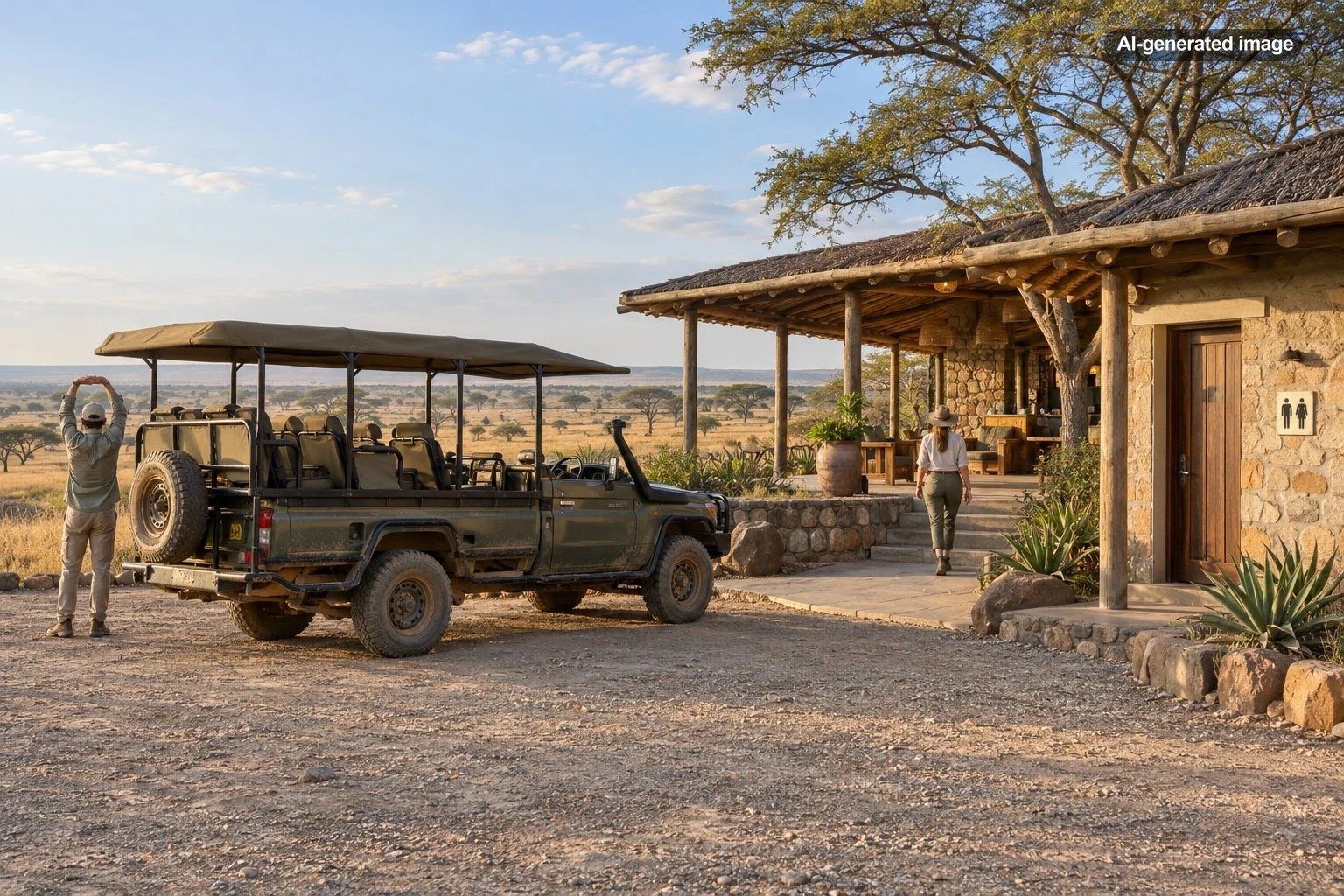
Open-sided safari vehicles provide excellent opportunities to observe wildlife but may expose passengers to wind, dust, cooler morning temperatures, and changing weather. Enclosed vehicles with opening roofs can offer a different balance of shelter and visibility.
Safari tracks can be uneven, and passengers may experience continuous vibration or jolting over rough terrain. Sitting for several hours can become tiring even when the vehicle stops frequently for sightings.
Before booking, consider whether the vehicle has adequate legroom, how many passengers will share each row, whether refreshments are supplied, and whether the guide can accommodate stretching breaks.
Travelers with significant mobility limitations should also ask about the height of the vehicle’s entry steps and whether assistance is available. A safari described as largely vehicle-based may still require climbing into a raised vehicle.
Practical Preparations for Bathroom Breaks on Safari
A few simple preparations can reduce uncertainty without adding unnecessary equipment to your luggage.
- Use the bathroom before departure. Do not rely on finding another restroom shortly after leaving camp.
- Carry a small hygiene pouch. Include tissues, hand sanitizer, and a sealable bag for waste when instructed to pack it out.
- Choose practical clothing. Comfortable trousers or other clothing that is easy to manage can make outdoor bathroom stops less awkward.
- Drink water sensibly. Avoid deliberately restricting fluids to prevent bathroom visits, especially in hot conditions.
- Tell your guide about relevant needs. Advance notice helps with planning, particularly when frequent stops or accessible facilities are important.
- Ask about the actual itinerary. The phrase half-day safari does not reveal whether a suitable toilet will be available during the excursion.
For travelers who require prescription medication, medical equipment, or particular hygiene arrangements, confirming the facilities with the operator before travel is preferable to improvising during the drive.
Which Safari Style Is Best for Travelers Concerned About Bathroom Access?
Travelers who value predictable comfort may prefer a lodge-based safari offering separate morning and afternoon excursions. Returning to camp between drives provides an opportunity to use the bathroom, eat, rest, and prepare for the next outing.
Families with young children may also find this arrangement easier than spending an entire day in a vehicle. Shorter drives can provide more manageable periods of sitting without requiring children to remain occupied for most of the day.
A private vehicle may be especially useful for travelers managing medical needs or needing additional flexibility. However, booking one does not replace the need to discuss suitable bathroom locations and any physical limitations beforehand.
Full-day excursions remain worthwhile for travelers who want to explore distant wildlife areas or maximize time in the field. The key is understanding the tradeoff: more extensive wildlife exploration can mean longer periods between comfortable facilities.
Questions to Ask Your Safari Operator Before Booking
Rather than asking only whether bathrooms are available, request details about the specific game drives included in your itinerary.
- How many hours does each morning and afternoon game drive normally last?
- Will we return to camp between excursions?
- Are there designated toilets along the planned route?
- How are bathroom requests handled when no facilities are nearby?
- Are bush bathroom stops allowed in the areas we will visit?
- Can we arrange a shorter drive or a private vehicle if necessary?
- Are there vehicle-access or restroom-access limitations we should know about?
These questions are more useful than relying on the general description of a safari package. Two camps in the same destination may operate substantially different schedules and routes.
Frequently Asked Questions
Do safari vehicles have toilets?
Most conventional safari game-drive vehicles do not have onboard toilets. Guests typically use facilities at camp, designated stopping points, or guide-approved outdoor locations. Ask about the specific vehicle if onboard facilities are important.
Can you get out of a safari vehicle to use the bathroom?
Only when your guide confirms that it is permitted and appropriate. Wildlife risks and park regulations vary. Never exit independently, even when no animals are visible.
How often do safari game drives stop?
Vehicles may stop frequently for wildlife sightings, but these are not necessarily opportunities to get out. Refreshment, stretching, and bathroom breaks depend on the itinerary. There is no universal guaranteed interval between restroom stops.
Is a full-day safari too long for children?
Not necessarily, but it depends on the child’s age, tolerance for sitting, road conditions, and the operator’s policies. Families may prefer shorter outings with a midday return to camp, especially when children need regular bathroom breaks.
Can safari guides accommodate travelers who need frequent bathroom breaks?
Many operators can discuss suitable arrangements, particularly for private drives. However, access to facilities and permission to stop depend on the route and wildlife conditions. Any essential accommodation should be confirmed before booking.
The Best Way to Plan a Comfortable Safari Drive
For most travelers, a safari itinerary with morning and afternoon game drives provides a practical balance between wildlife viewing and comfort. Excursions lasting two to four hours are common, and returning to camp between outings makes meals, rest, and bathroom access easier to manage.
Longer drives are not inherently better or worse. They allow more time to explore, but they also require greater flexibility regarding seating comfort, travel conditions, and restroom availability.
The most important preparation is to ask your safari operator exactly how bathroom breaks work on your chosen itinerary. Knowing whether you will encounter a proper restroom, a designated picnic facility, or a possible bush stop allows you to prepare realistically and focus your attention on the wildlife rather than worrying about the next bathroom.
Sources & Further Reading
- Africa Geographic Travel – Safari Fitness and Mobility Guide: Guidance on physical demands, vehicle access, drive durations, and comfort stops.
- Magical Tanzania – What to Expect on a Safari Game Drive: Practical information about typical game-drive experiences and scheduling.
- Tanzania Safaris – How Do You Go to the Bathroom on a Safari?: Information about lodge bathrooms, designated facilities, bush stops, and hygiene preparations.