How to Choose a Cruise With Outdoor Dining That Is Actually Comfortable at Sea
Outdoor dining can be one of the most appealing parts of a cruise, but an attractive terrace in a promotional photograph does not necessarily translate into a comfortable meal at sea. Wind, direct sunlight, limited seating, noise, and exposure to changing weather can make a seemingly ideal restaurant considerably less enjoyable once the ship is underway.
To choose a cruise with genuinely comfortable outdoor dining, look beyond the number of restaurants advertising alfresco seating. Focus on where those tables are located, how well they are protected from the elements, whether outdoor seating is available during normal meal periods, and how the ship’s itinerary may affect conditions. The best choice is usually a ship that combines inviting exterior spaces with dependable indoor alternatives.
Quick Answer: What Makes Outdoor Cruise Dining Comfortable?
- Wind protection: Look for recessed terraces, sheltered seating areas, and thoughtful placement relative to exposed decks.
- Shade: Covered seating can be more useful than unobstructed views, particularly during warm-weather sailings.
- Practical availability: Confirm which restaurants actually serve meals outside and whether seating depends on weather, reservations, or operating hours.
- Seating comfort: Consider chair design, table spacing, shade coverage, and proximity to busy passenger routes.
- Indoor alternatives: A nearby enclosed dining room provides flexibility when conditions change.
Start With the Location of the Outdoor Dining Area
The position of an outdoor restaurant matters more than its appearance in a brochure. Two terraces on the same ship can offer substantially different experiences because of their exposure, orientation, and surrounding structures.
An open deck near the front of a vessel may experience noticeable airflow while the ship is moving. A dining space recessed into the ship’s structure, positioned beside an enclosed restaurant, or protected by surrounding walls may offer a calmer setting. Actual conditions depend on wind direction, ship speed, deck configuration, and weather.
Look closely at deck plans and photographs showing the entire restaurant rather than isolated tables. An outdoor dining area surrounded by substantial structures may be more practical than a dramatically exposed terrace with panoramic views.
Also consider whether the restaurant overlooks a pool, sits beside a pedestrian walkway, or occupies a quieter section of the ship. A lively poolside venue can be pleasant for a casual lunch but less suitable for travelers hoping to enjoy an unhurried dinner.
Understand How Wind Changes the Experience
Wind is one of the most overlooked considerations when evaluating cruise ship restaurants. Even when the surrounding air feels pleasantly warm, airflow across an exposed deck can make dining uncomfortable.
Napkins, lightweight menus, and loose clothing can become distracting in gusty conditions. Food may cool more quickly, and conversations can become less pleasant when passengers must speak over wind or surrounding deck noise.
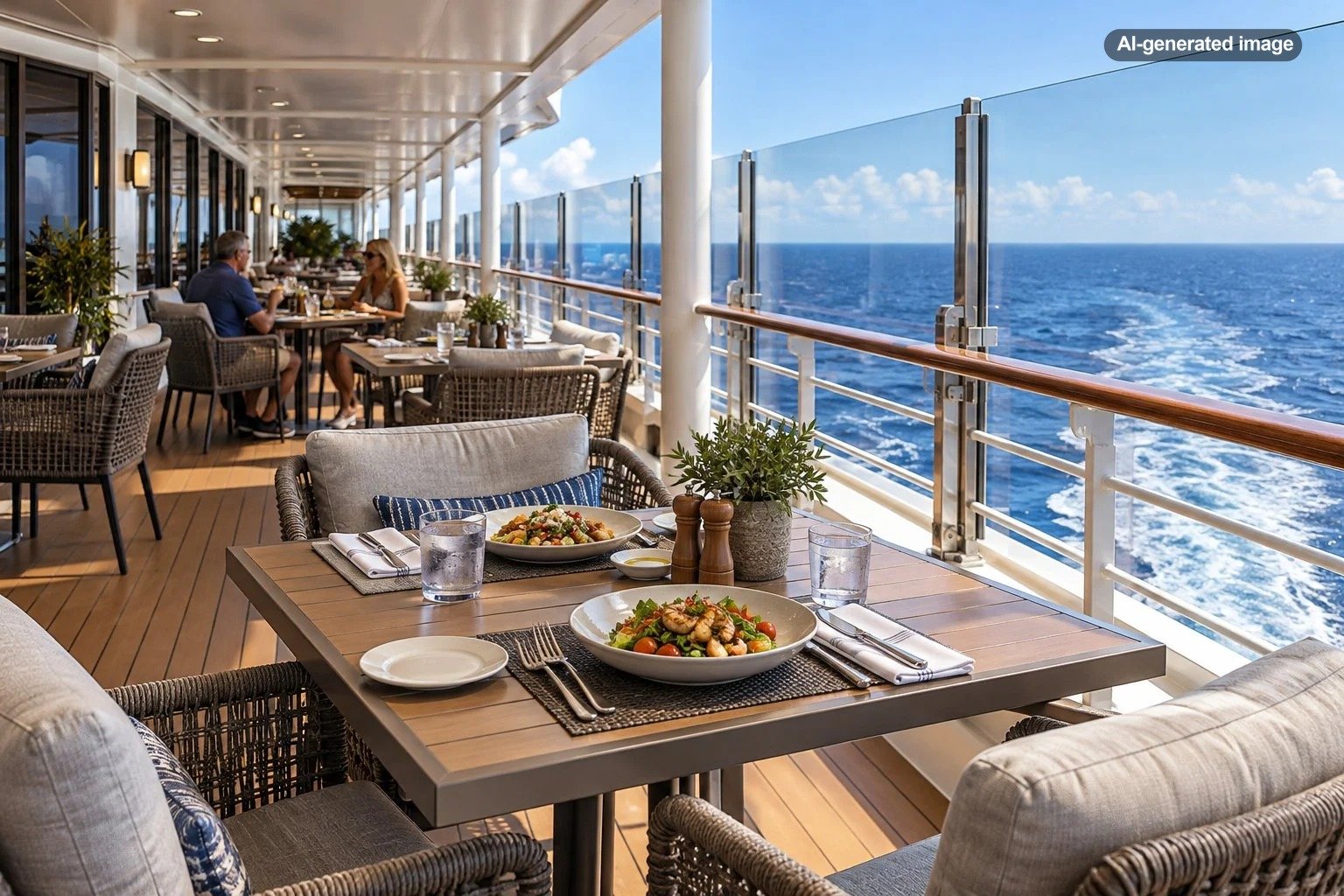
Some ships incorporate glass wind screens, partial walls, or protected seating arrangements. These features can improve comfort, although they cannot eliminate every effect of changing conditions.
When researching a ship, look for photographs taken from different angles. A terrace that appears exposed from one viewpoint may have protected seating behind a structural partition. Conversely, a restaurant advertised as covered may remain open to considerable crosswinds.
Ask whether staff routinely close outdoor dining sections during windy conditions and whether passengers can transfer to indoor tables without making an entirely new reservation.
Choose Shade Based on Your Itinerary
Shade can be just as important as wind protection, particularly on cruises visiting warm destinations. A sunny terrace may look appealing in the early morning but become less comfortable during a prolonged midday meal.
Permanent overhead structures generally provide more predictable shade than movable umbrellas, although the amount of coverage still depends on the sun’s position. Retractable coverings may offer flexibility, but availability and use can vary with weather and operating procedures.
For Caribbean and other warm-weather itineraries, consider whether an outdoor lunch can be enjoyed without prolonged exposure to direct sunlight. A partially enclosed dining terrace with airflow and overhead coverage may be more useful than an entirely open deck.
For cooler itineraries, the priorities can shift. A sheltered terrace that receives sunlight during the day may feel more inviting than a heavily shaded area. Travelers should also remember that sunshine does not guarantee comfortable temperatures when wind and maritime weather are involved.
Check What Outdoor Dining Actually Means
Cruise marketing sometimes uses outdoor dining as a broad description for several very different experiences. Understanding the distinction is essential before choosing a sailing primarily for this feature.
Full-Service Outdoor Restaurants
These venues may offer seated meals with table service in an exterior section. They are often the closest match for travelers imagining a relaxed restaurant dinner outdoors. However, outdoor tables may be limited, reservations may be required, and service outside may depend on conditions.
Buffet Restaurants With Exterior Seating
An indoor buffet connected to an outdoor terrace can be a practical choice for breakfast or lunch. Guests select their food inside and carry it to exterior tables. This offers flexibility but may involve navigating doors, crowds, and seating areas while holding plates or drinks.
Poolside Grills and Casual Cafes
These options are often convenient for informal meals, but they may have a narrower menu and a busier atmosphere. Outdoor tables near pools can be exposed to entertainment noise, passenger traffic, and periods of intense sunlight.
Private Balcony Dining
A cabin balcony provides a different kind of outdoor experience. Depending on the cruise line, ship, and cabin category, room-service options may allow passengers to enjoy food outside. However, balcony furniture, table dimensions, meal delivery arrangements, and weather exposure vary considerably. A balcony should not be assumed to function as a full outdoor restaurant.
Compare the Dining Atmosphere, Not Just the View
Comfort extends beyond temperature and wind. The surrounding atmosphere can determine whether passengers want to remain at a table for an extended meal.
A restaurant overlooking an activity pool might be an enjoyable choice for families seeking a casual setting. Couples hoping for a quieter evening may prefer an exterior dining area associated with a specialty restaurant or a less heavily traveled deck.
Table spacing also matters. Closely arranged seating can make conversations less private, while tables placed directly along major walkways may be interrupted by passing passengers.
Furniture deserves attention as well. Lightweight chairs may be perfectly suitable for a quick meal but less appealing for a lengthy dinner. Look for photographs showing actual seating arrangements rather than relying exclusively on descriptions such as elegant or luxurious.
Travelers who value accessibility should examine how the outdoor restaurant is reached, whether door thresholds present obstacles, and whether routes and tables accommodate their needs. Accessibility arrangements should be confirmed directly with the cruise line.
Match Outdoor Dining to the Cruise Destination
The itinerary can influence outdoor dining comfort as much as the ship itself. A vessel with an appealing terrace may offer very different dining experiences across separate regions and seasons.
Caribbean cruises: Shade, ventilation, and protection from occasional rain can be important considerations. Travelers who particularly enjoy outdoor breakfast or lunch should prioritize covered seating.
Mediterranean cruises: Warm-season sailings may favor shaded terraces, while cooler shoulder-season departures can make sheltered, sunlit spaces appealing. Evening temperatures and conditions can vary considerably by destination and sailing date.
Alaska cruises: Scenic outdoor seating can be attractive, but lower temperatures, wind, and precipitation may limit comfortable meal periods. A restaurant with both substantial windows and protected exterior seating offers greater flexibility.
Transatlantic and other ocean crossings: Multiple consecutive sea days increase the importance of comfortable dining alternatives. Exposed outdoor spaces may be less consistently usable when the ship encounters changing weather.
No region guarantees comfortable outdoor dining throughout a cruise. Treat climate as a planning consideration rather than a promise about the conditions during a particular departure.
Compare Different Outdoor Dining Arrangements
| Dining arrangement | Main advantage | Potential drawback |
|---|---|---|
| Sheltered restaurant terrace | Greater protection and a traditional dining experience | Limited outdoor tables |
| Open upper-deck restaurant | Expansive views and open-air atmosphere | Greater exposure to sun and wind |
| Buffet terrace | Flexible timing and casual meals | Possible crowding and self-service |
| Poolside dining | Convenient informal meals | Activity noise and passenger traffic |
| Private balcony | Privacy and personal space | Limited furniture and variable meal service |
For travelers who expect to dine outdoors frequently, a sheltered restaurant terrace or covered buffet seating area is often a more dependable choice than a single exposed venue designed primarily around its views.
Investigate Seating Availability Before Booking
One of the most common planning mistakes is assuming that the presence of outdoor tables guarantees access whenever a restaurant is open.
Some exterior seating areas operate only during selected meal periods. Others may be reserved for guests dining at a particular restaurant, available on a first-come basis, or closed when conditions are unsuitable.
Ask the cruise line whether outdoor tables can be requested in advance and whether reservations specify an exterior table or simply a place in the restaurant. Also check whether outdoor seating is available on sea days, when demand for popular onboard spaces may be greater.
If outdoor dining is central to the trip, it is worth clarifying how many meals can realistically be enjoyed outside rather than focusing solely on whether one restaurant has an exterior section.
Use Ship Reviews and Photographs Carefully
Passenger reviews can help reveal details that official descriptions may not emphasize, particularly comments about wind, shade, crowded terraces, and the likelihood of securing an outdoor table.
However, a single review should not be treated as representative of every sailing. Weather, season, restaurant staffing, and passenger demand can affect the experience. Look for recurring observations across multiple accounts, preferably from travelers who sailed the same ship on a comparable itinerary.
Photographs are particularly useful when they show the terrace in ordinary operation. Look for overhead coverage, neighboring structures, available tables, door locations, and whether diners are seated in direct sun.
Remember that ships can change dining layouts and operating arrangements over time. Confirm significant details against current cruise line information before making a booking decision.
Build a Shortlist Around Your Dining Priorities
Once you understand the main comfort factors, compare a small number of suitable ships rather than treating every cruise with exterior seating as equivalent.
For example, a couple interested in leisurely evening meals might prioritize sheltered specialty restaurant terraces and reliable indoor alternatives. A family planning flexible lunches may find a spacious buffet terrace more valuable. Travelers on a scenic, cooler-weather itinerary may place greater importance on enclosed restaurants with large windows and occasional outdoor access.
Consider the itinerary, ship size, general restaurant arrangements, and cabin preferences together. A slightly less dramatic terrace may be the better choice if its seating is easier to use throughout the voyage.
Affiliate disclosure: HotelInfo.com may earn a commission when you book or purchase through links on this page. This does not affect the price you pay. Learn more.
When assembling a shortlist, travelers can compare available sailings with Expedia Cruises to identify itineraries and ships worth investigating. Confirm specific outdoor restaurant features directly with the cruise line before booking, since a cruise-search listing alone may not establish how outdoor seating operates.
Questions Worth Asking Before You Reserve
A brief conversation with the cruise line or a knowledgeable booking representative can help distinguish attractive marketing from practical dining arrangements.
- Which restaurants offer full meals outdoors rather than just drinks or snacks?
- Are exterior tables covered, partially sheltered, or fully exposed?
- Can outdoor seating be requested or reserved?
- Does the restaurant serve dinner outside as well as breakfast or lunch?
- What happens to reservations when the exterior section closes because of weather?
- Are outdoor tables accessible without stairs or difficult thresholds?
- Have the ship’s restaurant layout or seating arrangements changed recently?
Not every representative will be able to answer each question immediately. Where the details are important, request confirmation from the cruise line rather than treating an uncertain answer as a guarantee.
Frequently Asked Questions
Can you eat outside while a cruise ship is moving?
Yes, many cruise ships provide outdoor dining while underway. Whether a particular section remains open depends on ship design, restaurant operations, and prevailing conditions. Wind and weather can restrict service even when the ship is operating normally.
Is outdoor dining better on smaller cruise ships?
Not necessarily. Smaller ships may offer intimate terraces, while larger vessels can provide more restaurant choices and alternative sheltered areas. The layout and operating arrangements matter more than ship size alone.
Are outdoor cruise restaurants usually included in the fare?
It depends on the cruise line and venue. Some outdoor dining options are part of included restaurants, while others belong to specialty dining programs or have additional charges. Verify what is included in the fare for the specific sailing.
Can you reserve an outdoor table on a cruise?
Some restaurants permit seating requests, but an advance dining reservation does not necessarily guarantee an outdoor table. Policies vary by venue, and exterior sections may close because of weather. Confirm the actual seating arrangement before relying on it.
What is the most important feature for comfortable outdoor dining at sea?
A sheltered location with dependable shade and convenient access to indoor seating is one of the strongest combinations. The ideal arrangement also depends on destination, season, meal preferences, and the atmosphere a traveler enjoys.
Choose Usability Over Appearance
The most satisfying outdoor cruise dining experience is not necessarily found on the terrace with the widest ocean view. It is found in a space where passengers can sit comfortably, enjoy their food, and remain relaxed as the ship and weather conditions change.
Prioritize protection from wind and sun, realistic meal availability, appropriate seating, and dependable alternatives. By evaluating these details before choosing a ship, travelers can make outdoor dining a meaningful part of their cruise experience rather than an appealing feature they rarely get to use.