What to Do If Your Hotel Room Safe Will Not Open
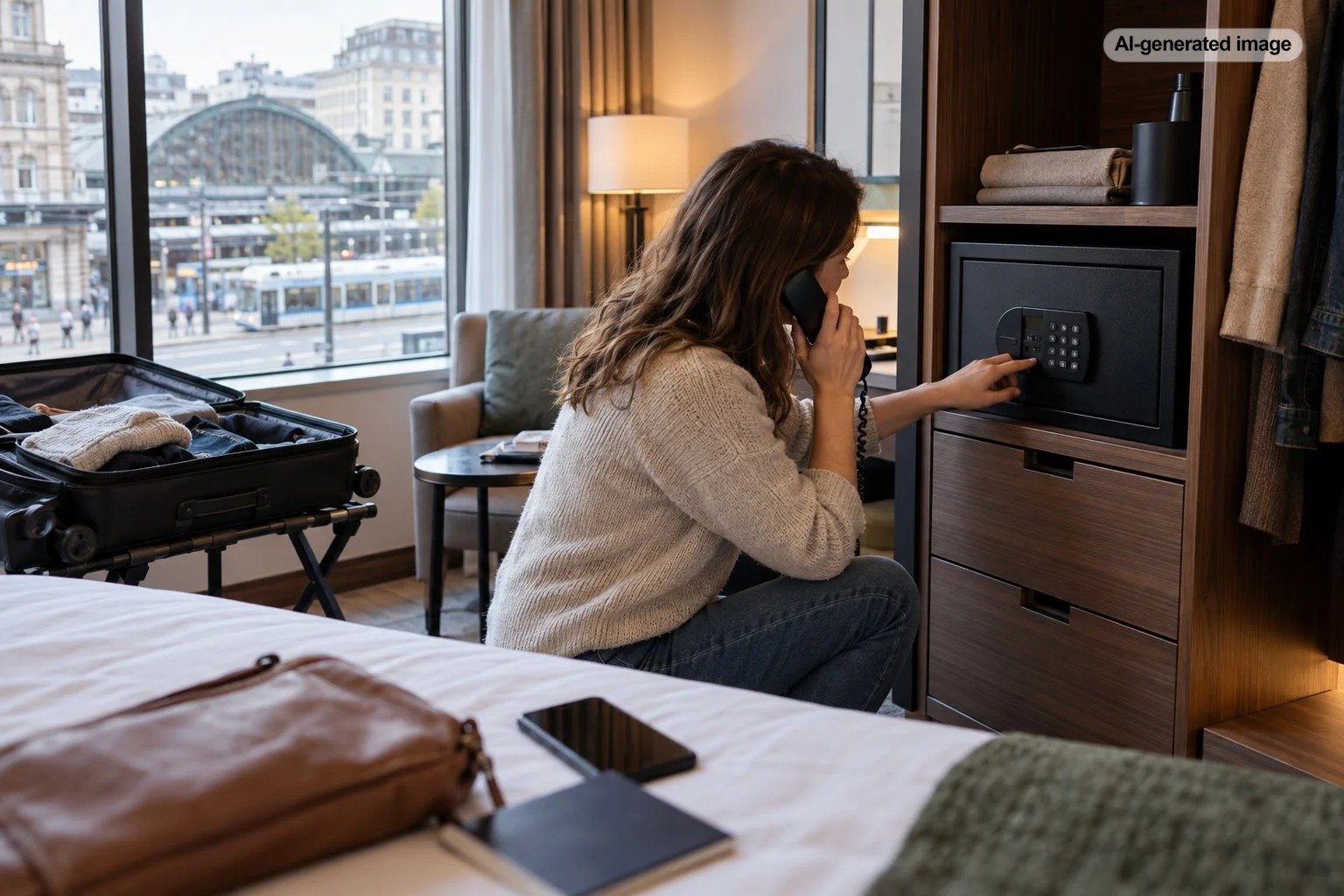
If your hotel room safe will not open, resist the temptation to keep entering codes or trying to force the door. Start by checking the display, keypad, handle, and any printed instructions, then contact the front desk if the safe still does not respond. Hotel safes can lock temporarily after repeated incorrect attempts, develop low-battery problems, or require an authorized staff override. The safest approach is usually to leave the safe intact and have hotel personnel resolve the problem.
This is especially important when your passport, wallet, medication, jewelry, laptop, or other essential belongings are inside. A malfunctioning safe is frustrating, but aggressive troubleshooting can make the situation more complicated.
Quick answer: what to do first
- Stop entering codes repeatedly if the safe is rejecting them.
- Read the display carefully for messages such as an error, low-battery warning, or temporary lockout.
- Check the operating instructions printed on or near the safe.
- Try the code only once more if you are confident you know the correct sequence.
- Contact the front desk or hotel security if the safe remains locked.
Check whether the safe is actually malfunctioning
A safe that will not open is not necessarily broken. Electronic hotel safes differ in their operating sequences. Some require you to enter a PIN and then press a confirmation key. Others unlock automatically after the correct code is entered. Certain models may require you to turn a handle within a short period after the electronic lock releases.
Look for instructions inside the cabinet, on the safe door, or near the keypad. If you remember exactly how you locked the safe, repeat that procedure carefully rather than experimenting with several different combinations.
Also check the door itself. A suitcase, laptop sleeve, clothing item, charging cable, or other object may be pressing against the inside of the door and placing tension on the locking bolts. If the safe indicates that it has unlocked but the door does not move, avoid pulling hard on the handle. Hotel staff may be able to relieve the pressure without damaging the safe or your belongings.
Pay attention to the display and keypad
The behavior of the keypad can provide useful clues. A blank display may indicate a power or battery problem. A visible error message may point to an incorrect sequence. Some electronic safes also enter a temporary shutdown or hold mode after several unsuccessful code attempts.
That means repeatedly guessing your PIN can make a simple mistake more inconvenient. If you have entered the code several times and the safe no longer responds normally, stop and call the hotel rather than continuing to press buttons.
Low batteries are another possibility. Many hotel safes use replaceable batteries and some models provide a low-battery indication. Battery replacement or emergency power procedures, however, should generally be handled by authorized hotel personnel rather than guests.
If you forgot the code, do not try random combinations
Forgetting a safe code can happen easily, particularly when travelers use a temporary number that differs from their usual PIN. Before calling for help, think about whether you may have used a familiar four-, five-, or six-digit number, depending on what the safe accepted when you locked it.
Avoid systematically trying birthdays, repeated numbers, or numerous other possibilities. Apart from wasting time, repeated incorrect entries may trigger a lockout period on some safes.
If you cannot confidently remember the code, contact the front desk and explain that your belongings are inside. You do not need to disclose what the code might have been.
Contact the front desk and ask for authorized assistance
Hotels commonly have procedures for dealing with guest safe lockouts. The exact process varies by property and safe system. Assistance may involve an authorized employee, security staff member, maintenance employee, or manager who can use approved equipment or credentials to open the safe.
Be prepared for the hotel to confirm that you are the registered occupant of the room before assisting. That verification is a reasonable security step because staff should not open an occupied guest-room safe simply because someone requests access.
If your identification is locked inside the safe, explain that immediately. The hotel may have another way to verify your identity and room assignment.
Stay in the room while the safe is opened
Whenever practical, remain present while hotel personnel work on a safe containing your belongings. Once it opens, check the contents before the employee leaves. This is particularly sensible when the safe contains cash, jewelry, travel documents, electronics, or other valuables.
If the hotel needs additional time to resolve the problem and you must leave the room, ask how access to the room and safe will be controlled while you are away. Do not assume that every property follows the same procedure.
Do not pry, strike, drill, or dismantle the safe
A locked safe can make travelers impatient, especially when a departure, flight, meeting, or tour is approaching. Trying to force the door is still a poor solution. Prying at the door, striking the keypad, removing components, or attempting online bypass tricks can damage hotel property and may complicate efforts to retrieve your belongings.
It can also make it harder to determine whether the original problem was a forgotten code, depleted battery, temporary lockout, mechanical obstruction, or actual equipment failure.
If timing is critical, tell the front desk exactly why. For example, mention that your passport is inside and that you need to depart for the airport. That gives the hotel useful context without requiring you to attempt risky shortcuts.
After the safe is opened, decide whether to keep using it
If the problem resulted from a forgotten code and the safe appears to operate normally afterward, you may choose to reset it and continue using it. Test the newly set code while the door is still open before locking valuables inside again.
If the safe had a blank display, inconsistent keypad response, low-battery indication, sticking door, or unexplained failure, ask the hotel whether it should be serviced before you use it again. You may prefer another storage arrangement rather than risk a second lockout.
Do not assume that transferring valuables to an unlocked drawer or suitcase provides equivalent security. If the in-room safe cannot be used, ask the property what other secure-storage options it offers rather than assuming a particular service is available.
What travelers often overlook
Test the safe before putting everything inside. When first using an unfamiliar safe, set a code and confirm that the locking and unlocking sequence works while the door remains open. This simple step can reveal confusing controls before your passport or wallet is behind a locked door.
Keep essential departure items in mind. If you have an early flight or train, retrieving your passport and other critical belongings the night before departure can reduce the consequences of discovering a safe problem minutes before checkout.
Do not store the code with the safe. Writing a PIN on a note beside the keypad defeats much of the purpose of using a safe. If you need a reminder, use a method that does not obviously identify the number as the safe code.
A safe lockout is not automatically evidence of tampering. Incorrect codes, temporary shutdown modes, battery issues, operating-sequence mistakes, and mechanical pressure can all create access problems. Avoid jumping to conclusions until the hotel has inspected the situation.
Frequently asked questions
Can hotel staff open a locked room safe?
Many hotel safe systems provide authorized procedures for emergency access, but the method and personnel involved vary by property and equipment. Contact the front desk rather than attempting an override yourself.
What happens if I enter the wrong hotel safe code too many times?
Some electronic safes temporarily disable normal operation after repeated incorrect attempts. If the keypad stops responding normally, wait and contact hotel staff instead of continuing to guess.
What if the hotel safe has no power?
A blank display can be consistent with depleted batteries or another electrical problem. Hotel staff may have an approved battery replacement or emergency-opening procedure. Avoid dismantling the keypad or safe yourself.
What if my passport is locked inside and I need to leave?
Call the front desk immediately and explain that a time-sensitive travel document is inside. Ask for authorized assistance and be ready to verify your identity and room assignment. The sooner the hotel understands the urgency, the more effectively it can route the problem to the appropriate employee.
Should I use the same safe again after staff opens it?
That depends on why it failed. If you simply forgot the code and the safe operates normally, it may be reasonable to reset it. If the keypad, batteries, door, or locking mechanism appeared unreliable, ask the hotel to inspect it before placing valuables inside again.