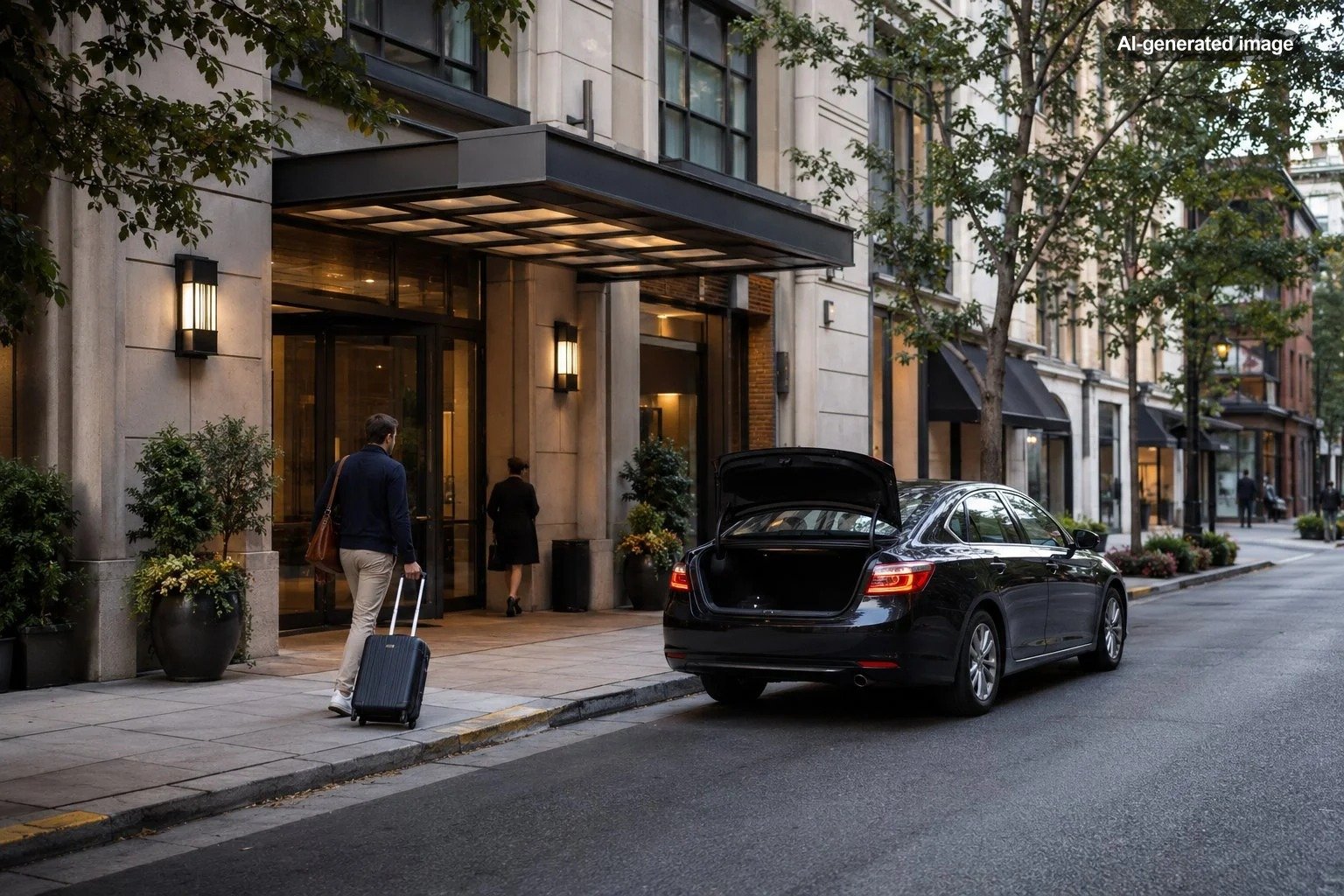
Early Check-in and Late Checkout: How They Really Work
Early check-in and late checkout are requests to use a hotel room outside the property’s standard arrival and departure hours. They may sound like simple schedule adjustments, but each request depends on room availability, housekeeping progress, occupancy, hotel policy, and sometimes loyalty status or an additional fee.
The most important distinction is that a request is not the same as a guarantee. Unless your reservation, rate, loyalty benefit, or written confirmation explicitly promises a particular time, plan as though the hotel’s regular check-in and checkout hours still apply.
Quick answer
- Early check-in: You may receive your room before the standard check-in time if a suitable room is clean and available.
- Late checkout: You may be allowed to keep the room beyond the standard checkout time if the hotel does not need it immediately for an arriving guest.
- Approval is property-specific: Even hotels within the same brand can have different hours, fees, and procedures.
- Fees may apply: Some hotels accommodate modest extensions at no charge, while others use hourly, fixed, half-day, or full-night charges.
- The safest guarantee: Travelers who must have a room very early or very late may need to reserve an additional night.
What early check-in actually means
Early check-in means the hotel assigns you a room before its published check-in time. It does not necessarily mean that every part of the formal check-in process happens early. A hotel may verify your identification, take a payment authorization, and store your luggage while the room is still being prepared.
The front desk usually needs a room in your reserved category that has already been vacated, inspected, cleaned, and released for occupancy. A vacant room is not automatically a ready room. Housekeeping may still need to service it, maintenance may be resolving an issue, or the room may be held for another operational reason.
Early arrival is easier to accommodate when the hotel had unsold rooms the previous night. It can be much harder after a sold-out night, during a convention, after a major event, or when many guests have requested late checkout.
What late checkout actually means
Late checkout allows you to remain in the room beyond the hotel’s normal departure time. Hotels must balance this request against the time required to clean and inspect the room before the next guest arrives.
A short extension may be manageable when occupancy is low or the room is not assigned for the coming night. A longer extension can interfere with housekeeping schedules and the next guest’s check-in, which is why hotels may deny the request or charge an additional amount.
Do not assume that staying beyond checkout without approval will be treated as an informal extension. The hotel may deactivate room access, contact you, remove the room from housekeeping’s normal sequence, or apply a late-departure charge under its policy.
Why hotels cannot always approve these requests
Hotels sell nights rather than blocks of 24 uninterrupted hours. The period between checkout and check-in is the operational window used to turn over rooms. Early arrivals and late departures both reduce that window.
Several factors influence the decision:
- Occupancy: A hotel with many empty rooms has more flexibility than one transitioning between two full nights.
- Room category: Your exact room type may be unavailable even when another category is ready.
- Housekeeping capacity: Staffing levels, the number of departures, and the condition of rooms affect readiness.
- Maintenance: A room may require inspection or repair before it can be released.
- Incoming reservations: A late checkout is less likely when another guest has booked the same room category.
- Property policy: Some hotels give the front desk broad discretion, while others use set fees and cutoff times.
When and how to request early check-in
Add your expected arrival time to the reservation when possible, but treat that note as advance information rather than confirmation. Contacting the property shortly before arrival can help the hotel understand your plans, although the final answer may not be available until the day of arrival.
When you reach the hotel, ask whether your reserved room type is ready. If it is not, practical alternatives include luggage storage, completing registration in advance, waiting in a public area, or accepting a different available room category when the hotel offers that option.
Be cautious about requesting an upgrade and early access at the same time. The upgraded category may take longer to become available than the room you originally reserved. Decide which matters more: entering a room sooner or waiting for the preferred room.
When and how to request late checkout
Ask about late checkout at arrival if it is important, then confirm again on the morning of departure. The hotel may not know its final room needs until it reviews occupancy, arrivals, housekeeping assignments, and other checkout requests.
State the specific time you need. Asking for an extra hour is easier to evaluate than making an open-ended request. If the full extension is unavailable, ask whether a shorter one is possible and whether the hotel can store your luggage afterward.
Before leaving the room, confirm any fee and the approved departure time. Keeping the approval in the hotel’s messaging system or obtaining written confirmation can prevent misunderstandings.
Are early check-in and late checkout free?
Sometimes, but not always. Policies vary by property, rate, brand, room type, membership tier, and requested time. A hotel may waive the fee as a courtesy, charge for a specific extension, or require an additional night when the requested period is substantial.
Fees may also change according to timing. For example, a brief extension could be handled differently from keeping the room into the late afternoon or evening. Because charges are property-specific, check the hotel’s current policy rather than relying on a rule remembered from another stay.
Loyalty status can improve access to these benefits, but conditions and exceptions matter. Some programs describe late checkout as subject to availability, while certain higher-tier benefits may be guaranteed only at participating properties or may exclude particular brands, resorts, convention hotels, or other property types.
How to improve your chances
- Book directly when practical so your reservation and loyalty information are easy for the property to identify.
- Add an accurate arrival time instead of merely selecting the earliest available option.
- Contact the property itself, since a central reservations agent may not know that day’s room situation.
- Keep your room-category requirements flexible when getting into any suitable room is the priority.
- Make the request politely and acknowledge that it depends on availability.
- Ask for the exact time you need rather than the maximum possible extension.
- Have a backup plan involving luggage storage, a lounge, a coworking space, or another suitable waiting area.
When you should book an extra night
An additional night may be the sensible choice when room access is essential rather than merely convenient. This often applies to travelers arriving after an overnight flight, families with young children, guests who need privacy for work or medical routines, and people preparing for an event shortly after arrival.
For a very early arrival, booking the previous night can preserve access to the room, but you should tell the hotel that you will arrive after midnight or the following morning. Otherwise, the reservation could potentially be treated as a no-show under its terms.
For a late-evening departure, reserving the following night may provide uninterrupted use of the room. Compare that cost with any day-use or late-checkout option the hotel may offer. Never assume the extra night is unnecessary until the property confirms an alternative that meets your schedule.
What travelers often overlook
Room readiness and check-in are different
You may be able to complete paperwork and leave luggage before you can receive a room key. Conversely, digital check-in does not always mean that a room will be available early.
One room can delay a group
Families and groups booking several rooms may find that some are ready before others. Decide whether the group prefers immediate access to available rooms or wants to wait until rooms near one another can be assigned.
Housekeeping needs a confirmed departure
A late checkout affects the order in which rooms are cleaned. Leaving earlier than your approved time and notifying the front desk can help the hotel release the room sooner.
Luggage storage has its own conditions
Many hotels can hold bags before check-in or after checkout, but hours, storage duration, capacity, and fees can vary. Ask specifically about oversized items, overnight storage, valuables, and the latest retrieval time.
Frequently asked questions
Can a hotel guarantee early check-in?
A hotel may offer a guaranteed option through a special rate or policy, but an ordinary request is generally dependent on availability. Reserving the previous night is often the clearest way to secure access early in the morning.
Does checking in through an app guarantee that the room is ready?
No. Digital check-in can communicate arrival details and streamline registration, but the room must still be cleaned, inspected, and released by the hotel.
Can I request late checkout before my trip?
Yes, but the hotel may be unable to confirm it until arrival or the morning of departure. Ask when booking, at check-in, and again before the regular checkout deadline.
Will loyalty status always provide late checkout?
No. Benefits differ among programs and tiers, and exclusions or availability conditions may apply. Review the current program terms and the property’s policy.
What should I do when the request is denied?
Ask about luggage storage, access to public facilities, a shorter extension, a day-use room, or another available room category. The most useful alternative depends on whether you need storage, privacy, rest, workspace, or shower access.