What to Do If Your Cruise Cabin Air Conditioning Is Too Warm
A cruise cabin that feels too warm can turn an otherwise comfortable voyage into a frustrating experience, particularly when the temperature interferes with sleep. If your cruise cabin air conditioning is not cooling properly, begin by checking the thermostat, making sure balcony doors are fully closed, and giving the system a reasonable opportunity to respond. If the cabin remains uncomfortable, contact your stateroom attendant or Guest Services and request a maintenance inspection.
The important distinction is between a room that simply feels warmer than you prefer and a cooling system that may not be functioning correctly. Cruise ships have different climate-control arrangements, and the thermostat may not offer the same degree of control as the system in your home. Knowing what to check, what to report, and when to escalate the issue can make the process substantially easier.
Quick Answer: What to Do When Your Cruise Cabin Is Too Hot
- Adjust the cabin thermostat toward its coolest available setting and allow time for the temperature to change.
- Close balcony doors completely and check whether any nearby vents are obstructed.
- Contact your stateroom attendant or Guest Services if the room remains unusually warm.
- Request a maintenance inspection rather than attempting to repair or open any equipment yourself.
- If the problem continues, document the issue and ask what alternative arrangements may be available.
Start by Checking the Cabin Thermostat
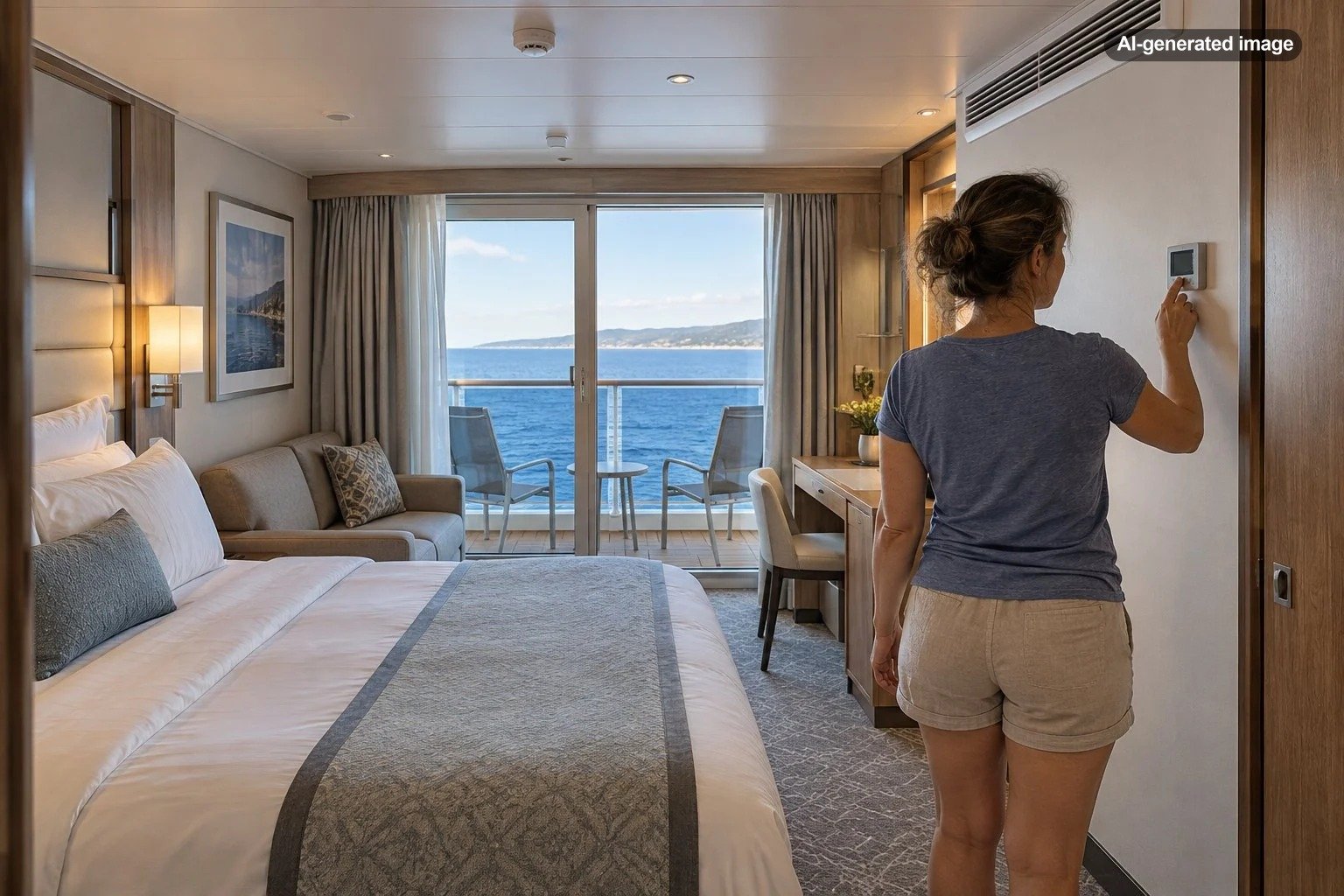
The simplest explanation is sometimes an unfamiliar thermostat. Some cruise cabins have a digital temperature display, while others use a dial or sliding control with relatively limited adjustment options. A control marked with warmer and cooler settings may not display an actual temperature.
Set the thermostat toward the cool end of its available range. If the controls are unclear, ask your stateroom attendant to explain how they work. Avoid repeatedly changing the setting every few minutes, because doing so can make it difficult to determine whether the system is responding.
Allow a reasonable period for the cabin to cool, especially if the room has been exposed to substantial afternoon sunlight or the balcony door was recently open. The time required will depend on the ship, the cabin, and the underlying problem. If you have already waited and the space still feels unusually warm, there is little benefit in postponing a maintenance request.
Make Sure the Balcony Door Is Fully Closed
In balcony cabins, an open or incompletely latched door can be an important factor. Some shipboard climate-control systems use sensors or switches that reduce or interrupt cooling when the balcony door is open. The exact arrangement depends on the vessel.
Close the door completely, check that it has latched correctly, and return to the thermostat. Even if the system does not have a door sensor, warm and humid outside air can quickly undermine the cooling already provided.
Do not attempt to bypass door sensors, interfere with switches, or modify the door hardware. If the door does not close properly, report that as a separate maintenance concern. A malfunctioning latch may be relevant to both comfort and the secure operation of the cabin.
Check for Obvious Airflow Problems
Before calling maintenance, look for simple obstructions around accessible air outlets. Clothing, luggage, or other belongings positioned directly against a vent may interfere with airflow. Move those objects without touching or dismantling the ventilation equipment.
It also helps to distinguish between three different situations:
- Little or no airflow: The ventilation system may not be operating as expected, or airflow may be restricted.
- Airflow that feels insufficiently cool: Air is moving, but the cabin may not be receiving enough cooling to reach a comfortable temperature.
- Cool airflow with a persistently warm room: Sun exposure, heat entering through an open door, or another operational issue may be affecting the room temperature.
These observations do not establish a technical diagnosis. They simply give the ship’s maintenance team more useful information than a general statement that the room is hot.
Contact Your Stateroom Attendant or Guest Services
If the basic checks do not solve the problem, report it while there is still enough time for the crew to investigate. Waiting until bedtime can create additional frustration, especially when you are already tired and the cabin is uncomfortable.
Your stateroom attendant may be able to confirm that the thermostat is being used correctly or help initiate a maintenance request. Guest Services can generally direct the problem to the appropriate onboard department if the attendant is unavailable.
Describe the symptoms as specifically as possible. For example, explain whether the cabin has remained warm since embarkation, whether cooling stopped suddenly, or whether the thermostat appears to have no effect. Mention if the problem becomes more noticeable during the afternoon or overnight.
Ask whether a technician can inspect the cooling system and how you should follow up. Record the approximate time you reported the problem and any instructions provided. A calm, precise explanation is usually more productive than repeatedly changing the thermostat and hoping the issue resolves itself.
What If Maintenance Says the Air Conditioning Is Working?
A functioning system does not always mean that a particular traveler finds the temperature comfortable. One person may sleep well in a moderately cool cabin, while another may need a noticeably cooler environment. Cruise ships may also have operating limits that prevent a cabin from reaching every requested temperature.
If the technician confirms that the equipment is operating normally but you remain uncomfortable, ask whether the actual room temperature can be checked and whether any further adjustments are possible. The answer may depend on the ship’s HVAC design and onboard conditions.
It is useful to separate personal temperature preference from a measurable failure. If several occupants find the cabin unusually hot, the cooling has stopped altogether, or the room remains substantially warmer than surrounding interior spaces, share those observations. They may help the crew decide whether additional investigation is warranted.
What to Do If the Problem Continues Overnight
Persistent heat is particularly disruptive at night. Warm bedding, limited airflow, and a room that has absorbed heat throughout the day can make sleeping difficult even when the cabin seemed tolerable earlier.
If maintenance has already inspected the system and the room remains uncomfortable, contact Guest Services again. Explain that the original problem is unresolved and that it is affecting your ability to use the cabin comfortably. Ask whether a second inspection, another operational adjustment, or alternative accommodations can be considered.
A cabin change is not guaranteed. Availability depends on occupancy, cabin accessibility, operational restrictions, and the cruise line’s procedures. A different cabin category or location should not be assumed to offer better cooling without confirmation.
For a multi-night sailing, a continued problem deserves follow-up rather than repeated informal complaints without a documented request. Ask Guest Services who is coordinating the response and when you can reasonably expect an update.
Ways to Stay More Comfortable While Waiting
While the crew investigates, a few temporary measures may make the cabin more manageable. These are comfort adjustments, not substitutes for repairing malfunctioning air conditioning.
- Keep curtains closed during strong sunlight. Reducing direct solar exposure can help limit heat entering through the windows.
- Choose lightweight sleepwear. Breathable fabrics may feel more comfortable than heavy pajamas or layered clothing.
- Adjust the bedding. Use a sheet instead of a heavy comforter if the room feels warm overnight.
- Stay hydrated. Drink water regularly, particularly when spending time in warmer conditions.
- Spend time in a comfortable public area. A lounge or another climate-controlled space may provide temporary relief while the cabin is being inspected.
Do not prop open corridor or balcony doors to force additional ventilation. Apart from being ineffective in some conditions, this can interfere with normal shipboard safety and climate-control arrangements.
Some travelers consider bringing a small portable fan. However, cruise lines maintain restrictions on electrical equipment, and permitted items can vary. Check the specific cruise line’s current prohibited-items policy before packing one. Never assume that a household appliance is acceptable simply because it is compact.
When a Warm Cabin Becomes a More Serious Concern
For most travelers, an inadequately cooled cabin is primarily a comfort problem. However, prolonged exposure to heat can be more concerning for young children, older adults, and people with certain health conditions or heat sensitivities.
If someone develops symptoms such as dizziness, unusual weakness, nausea, or a significant headache in a hot cabin, move to a cooler area and seek assistance from the ship’s medical center. Confusion, fainting, or other severe symptoms require urgent medical attention.
Do not continue sleeping in a persistently overheated cabin if someone is becoming unwell. Contact the crew promptly and explain the medical concern rather than treating it solely as a housekeeping or maintenance complaint.
Should You Request Compensation for an Air Conditioning Problem?
If a cabin remains inadequately cooled despite repeated maintenance requests, you can ask Guest Services whether a remedy is available. Depending on the circumstances, a cruise line might consider a cabin move, an onboard accommodation, or another response. None should be treated as automatic.
Keep a straightforward record of the problem, including when it began, when it was reported, whether maintenance attended, and how long the issue continued. If you take photographs of the thermostat display, remember that the display may show a requested setting rather than the actual cabin temperature.
Ask whether an unresolved complaint should be documented before disembarkation and whether there is a formal post-cruise customer relations process. Cruise contracts and guest-service policies differ, so avoid assuming that discomfort automatically creates an entitlement to a refund or onboard credit.
If you purchased travel insurance, examine the actual policy terms before assuming that an onboard air-conditioning problem is covered. Ordinary cabin discomfort may not satisfy the requirements of a travel insurance benefit.
What Travelers Often Overlook About Cruise Cabin Cooling
A balcony does not guarantee a cooler room
Balcony access can provide outdoor space, but opening the door on a hot or humid day may make the cabin warmer rather than cooler. A balcony cabin is not inherently better cooled than an interior cabin.
The ship’s location and time of day can affect comfort
A cabin receiving direct afternoon sunlight may feel different from the same cabin at night. Outside humidity, sunlight, and repeated balcony-door use can influence perceived comfort, even when the ventilation system is operating.
Higher cabin categories do not guarantee different temperature controls
Booking a suite or a more expensive cabin does not necessarily mean receiving a stronger air-conditioning system. Climate-control design depends on the specific ship and accommodations rather than price alone.
The first day is the best time to identify a persistent problem
After boarding, briefly check the thermostat and cabin comfort before unpacking everything or settling in for the evening. Early reporting gives the crew a better opportunity to address any problem during the voyage.
Frequently Asked Questions
Can I make my cruise cabin colder than the thermostat allows?
Generally, guests should use the available controls rather than attempting to override the system. If the coolest setting remains uncomfortable, ask the crew whether a technician can adjust or inspect the equipment. Available adjustments vary by ship.
Why does my cruise cabin feel hotter at night?
The cause may involve stored daytime heat, bedding, limited airflow, personal sleep preferences, or an actual cooling problem. If the room is becoming warmer despite an unchanged thermostat setting, report the pattern to maintenance.
Can I leave my balcony door open to cool the cabin?
It is generally better to keep the balcony door closed while using air conditioning. Outside heat and humidity may increase the cooling burden, and some vessels have sensors that reduce cooling when the door is open.
Will the cruise line move me to another cabin if the AC is broken?
A cabin move may be considered if the problem cannot be resolved, but it depends on available accommodations and the cruise line’s procedures. Explain the continuing problem to Guest Services and ask what options are realistically available.
Should I report warm air conditioning even on a short cruise?
Yes. A short itinerary makes timely reporting especially important. Even if maintenance cannot immediately complete a repair, an early report gives the crew an opportunity to investigate and discuss possible alternatives.
Address the Problem Early and Keep the Follow-Up Practical
A cruise cabin that is too warm should not become an ongoing guessing game. Start with the thermostat, balcony door, and obvious airflow conditions. If those checks do not help, involve the crew and request an inspection. Persistent problems deserve documented follow-up, particularly when they interfere with sleep or affect a traveler’s health.
The most effective approach combines reasonable troubleshooting with clear communication. You do not need to diagnose the ship’s mechanical systems yourself. Your role is to describe the problem accurately, explain its effect on your stay, and make sure the appropriate onboard staff have an opportunity to address it.