How to Tell If a Resort Has Enough Shade Around the Pool
A beautiful resort pool can look inviting in photographs, but its comfort depends on more than the water, landscaping, and lounge chairs. If you prefer to spend several hours outside without sitting in direct sunlight, the availability of reliable shade can make a substantial difference to your vacation. Unfortunately, resort websites rarely explain exactly how much of their pool seating stays shaded throughout the day.
To tell whether a resort has enough shade around the pool, examine the number and distribution of umbrellas, covered seating areas, cabanas, and permanent shade structures. Then compare official photographs with recent guest images, investigate how sunlight moves across the deck, and ask the property whether shaded chairs are complimentary, reservable, or available only with a separate charge.
Quick Answer: What Makes a Resort Pool Adequately Shaded?
A resort is more likely to provide a comfortable shaded pool experience when several conditions are present:
- Multiple shade options: Guests can choose among umbrellas, covered lounges, pergolas, and other sheltered seating rather than depending on one small shaded corner.
- Shade near the water: Covered chairs are located conveniently beside the pool, not exclusively at a distant restaurant or bar.
- Useful afternoon coverage: Shaded areas remain available during the hours when guests actually want to use the pool.
- Accessible seating: A meaningful portion of shaded seating is available without mandatory cabana rental or premium reservation charges.
- Reasonable availability: The quantity of shaded seating appears appropriate for the number of guests sharing the pool.
The most important distinction is between a pool that photographs well with shade features and one that provides enough usable shade for ordinary guests.
Start With the Number of Umbrellas, Not Just Their Appearance
Pool umbrellas are among the most recognizable signs of shaded seating. They are also easy to overestimate when examining promotional photography.
A carefully composed resort image might prominently feature three attractive umbrellas in the foreground while leaving dozens of uncovered chairs outside the frame. Another photograph might show umbrellas over nearly every pair of loungers. Those two arrangements offer very different experiences.
Look for wide-angle photographs that reveal entire seating rows. Estimate how many lounge chairs appear beneath an umbrella and how many have no nearby coverage. An umbrella positioned between two chairs may shade both at certain times, but its effectiveness depends on its size, angle, and the sun’s position.
Consider whether umbrellas are adjustable. Tilting or movable umbrellas may allow guests to maintain shade as sunlight shifts. Fixed umbrellas can be perfectly useful, but their coverage changes as the day progresses.
Also distinguish between umbrellas permanently assigned to lounge chairs and a small supply that attendants distribute upon request. The latter arrangement may be convenient when sufficient inventory exists, but availability can become an issue during busy periods.
Understand the Difference Between Umbrellas, Pergolas, and Cabanas
Not every shade structure provides the same level of coverage, privacy, or convenience.
Individual Pool Umbrellas
Umbrellas generally offer flexibility and allow travelers to sit close to the water. Their principal limitation is that the shadow moves throughout the day. A chair fully shaded during breakfast hours may receive substantial direct sunlight later.
Pergolas and Open-Air Pavilions
Pergolas can make a pool deck feel more sheltered, but their effectiveness depends on the roof design. Widely spaced overhead slats may create attractive patterns of light while allowing significant sunlight through. A solid-roof pavilion provides a different degree of coverage.
When examining photographs, look at the shadows on the furniture beneath these structures. Distinct stripes of sunlight suggest partial rather than continuous shade.
Private Pool Cabanas
Cabanas may provide covered seating, additional privacy, and more room for families or groups. However, their booking arrangements vary widely. Some properties offer complimentary shared cabanas, while others operate them as separately priced experiences.
A resort with many attractive cabanas but few public umbrellas may not be especially comfortable for guests who do not intend to reserve one.
Natural Shade From Trees
Mature trees and landscaped gardens can provide pleasant shelter, particularly around lagoon-style pools or garden terraces. However, the amount of coverage depends on canopy density and the direction of sunlight.
Palms and sparsely planted ornamental trees may contribute to the tropical atmosphere without providing broad, dependable shade across lounge chairs.
Check Whether the Shade Lasts Through the Afternoon
A shaded pool deck in an early-morning photograph may look entirely different by midafternoon. Sun position changes with the hour, season, and location, causing shadows from buildings, umbrellas, and trees to move.
When comparing images, look for clues such as the direction and length of shadows. Long shadows often indicate a lower sun angle, whereas short shadows suggest the sun is higher overhead. These clues are approximate because camera orientation and local conditions matter.
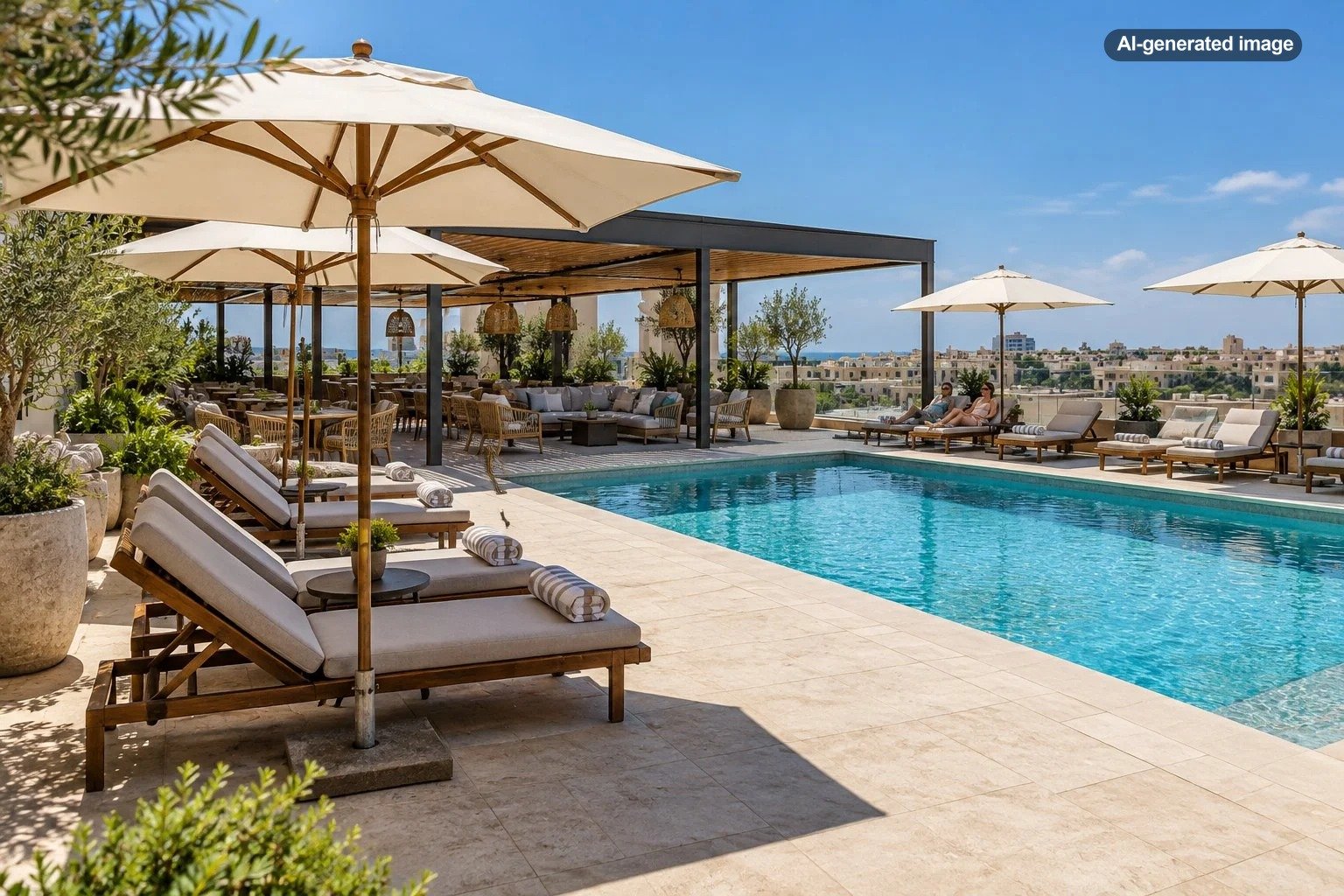
For example, a pool surrounded by tall hotel buildings might receive useful building shade during part of the afternoon. A rooftop infinity pool with uninterrupted open views may have almost no natural coverage unless the property provides umbrellas or permanent shelters.
The same resort may also have different sun conditions in different seasons. A photograph taken during a winter stay is not necessarily representative of summer afternoon coverage.
If shade is central to your decision, ask the property a specific question: Which pool seating areas are typically shaded between noon and 3 p.m. during the month of my visit? This is more informative than asking whether the pool has umbrellas.
Use Guest Photographs to See the Entire Pool Deck
Official resort photography is designed to present the property attractively. It can accurately show amenities without revealing how those amenities function when the pool is busy.
Recent traveler photographs often provide a more complete view. Examine pictures on booking platforms, traveler review pages, and location-based photo collections, prioritizing images taken during a season similar to your planned visit.
Look particularly for:
- Wide views showing how many lounge chairs have umbrellas.
- Pool areas photographed around midday or in the afternoon.
- Occupied chairs that reveal which shaded locations guests favor.
- Separate adult, family, and quieter pools with different amounts of coverage.
- Areas where umbrellas appear closed, missing, or stored away.
- Shaded seating situated far from the main swimming area.
A single photograph should not be treated as definitive. Umbrellas may be closed temporarily because of weather or operational decisions, and a quiet image may have been taken before most guests arrived. Look for patterns across several independent photographs.
Read Reviews for Shade Availability, Not Just Pool Quality
Guest reviews frequently discuss pool cleanliness, water temperature, drinks, and service. For shade-focused travelers, more useful information may appear in comments about seating availability.
Search reviews using terms such as shade, umbrella, covered chairs, cabana, afternoon sun, and pool seating.
Pay attention to the difference between complaints about insufficient shade and complaints about insufficient seating overall. A pool might have abundant loungers but only a handful beneath umbrellas. Conversely, a resort with many shaded chairs could still experience shortages during peak occupancy.
Reviews mentioning that shaded chairs are claimed very early in the morning deserve attention, especially if similar observations recur across different stays. The issue may be the allocation of shaded seating rather than the total number of umbrellas.
Review dates matter. Pool furniture, landscaping, cabana policies, and seating arrangements can change. Give greater weight to recent, consistent observations than to isolated comments from several years earlier.
Compare Shade Availability With the Size and Layout of the Resort
The quantity of shade becomes more meaningful when considered alongside the number of people likely to use the pool.
A small boutique resort with a compact pool and several generously shaded seating clusters might feel more comfortable than a sprawling property with dozens of umbrellas spread across multiple heavily used pools. Neither arrangement is automatically superior.
Consider the layout as well. A resort might advertise several pools, but only one may have extensive shaded seating. That pool could be adults-only, restricted to particular room categories, or located in a separate part of the property. Such restrictions should be verified rather than assumed.
For families, shade next to the pool where children actually swim may be especially valuable. A shaded lounge area across a garden or behind a building may be pleasant for reading but less convenient for keeping children within sight.
Travelers seeking quiet may prefer a partially sheltered garden pool rather than the main activity pool, even if the latter provides more umbrellas overall.
Find Out Whether Shaded Chairs Cost Extra
A frequent source of confusion is the difference between included pool seating and premium shaded accommodations.
Some resorts provide umbrellas beside ordinary lounge chairs at no additional charge. Others offer the most extensive shade through private cabanas, covered daybeds, or reserved seating categories that carry separate fees.
Before booking, determine whether complimentary poolside umbrellas are available, whether shaded chairs are first-come, first-served, and whether any covered seating requires a reservation or minimum purchase.
Also ask whether guests can reserve shaded seating in advance and whether the resort restricts personal umbrellas or other portable shade equipment. Policies can vary, and assumptions based on another property may be misleading.
If reliable shade is a necessity rather than a preference, the ability to secure covered seating may matter more than the total number of shade structures visible in photographs.
Questions to Ask the Resort Before Booking
When photographs and reviews leave uncertainty, contacting the property directly is often the most efficient next step. Specific questions are easier for staff to answer accurately than general requests for reassurance.
- Are complimentary umbrellas available at the main swimming pool?
- Approximately how many lounge chairs have umbrella coverage?
- Is shaded seating available on a first-come basis, or can it be reserved?
- Which areas remain shaded during the early and midafternoon?
- Do all guests have access to the pools with the most shade?
- Are covered daybeds or cabanas subject to additional charges?
- Are umbrellas ever removed or closed because of wind or weather?
- Can the property share a recent photograph of the main pool seating area?
If the responses remain vague, ask whether the resort can identify a specific pool or seating section that normally offers the most dependable shade.
Choose the Right Pool Setup for Your Travel Style
Different travelers have different expectations for outdoor comfort. A couple intending to swim briefly before sightseeing may be satisfied with a few umbrellas, while someone planning full afternoons beside the water may need substantially more coverage.
For Families With Young Children
Prioritize shade close to the shallow or family swimming area, with enough nearby seats for adults supervising children. The convenience of staying together may be more important than a secluded premium cabana elsewhere on the property.
For Travelers Who Prefer Reading or Relaxing Poolside
Seek larger shaded seating clusters, adjustable umbrellas, or solid-roof lounges that allow extended periods outdoors without repeatedly moving chairs. A quiet covered terrace can be more useful than a visually striking but completely exposed pool deck.
For Couples Seeking Privacy
Partially enclosed cabanas or separated garden loungers may offer both privacy and shade. Check whether these options are included, reservable, or independently priced.
For Guests Who Enjoy Sun and Shade
A pool with a mix of covered and uncovered seating offers flexibility. Adjustable umbrellas or neighboring shaded and sunny sections can make it easier for travelers with different preferences to share the same space.
Remember That Shade Is Not Complete Sun Protection
Shaded seating can improve comfort and reduce direct sunlight, but an umbrella does not block every source of ultraviolet radiation. Sunlight can reach guests from the sides, and ultraviolet radiation can be reflected by water and nearby surfaces.
The Centers for Disease Control and Prevention advises travelers to seek full shade when possible and combine shade with other protective measures. The Environmental Protection Agency similarly notes that umbrellas, trees, and canopies do not offer complete protection.
This distinction matters when comparing a small umbrella, a slatted pergola, and a substantial covered pavilion. A pleasant-looking shadow does not necessarily represent equivalent UV protection.
Travelers planning lengthy pool sessions should use appropriate sunscreen, protective clothing, and other recommended precautions rather than relying exclusively on poolside shade. The availability of sheltered seating is a useful resort amenity, not a substitute for sun protection.
Common Mistakes When Evaluating Resort Pool Shade
Judging from a single promotional photograph: An image featuring a shaded daybed does not demonstrate that ordinary lounge chairs receive similar coverage.
Counting cabanas as complimentary shade: Covered accommodations may be premium inventory rather than seating generally available to guests.
Ignoring the time of day: A shaded morning terrace can become fully exposed in the afternoon.
Assuming tropical landscaping creates substantial shelter: Decorative palms and thin tree canopies may provide less coverage than their appearance suggests.
Overlooking different pool access rules: Shade may be plentiful at a pool that is not available to every guest.
Confusing ample seating with ample shaded seating: A large pool deck can accommodate many guests while providing very limited shelter.
Forgetting weather-related restrictions: Umbrellas and temporary shade structures may be unavailable during windy conditions, even when ordinarily provided.
Frequently Asked Questions
How many umbrellas should a good resort pool have?
There is no universal number because pool dimensions, chair arrangements, umbrella sizes, and guest capacity differ. A more useful measure is the share of usable chairs that receive shade and whether shaded seating remains accessible during busy hours.
Are pool cabanas usually included in a resort stay?
Not necessarily. Some properties include certain covered seating areas, while others charge separately for cabanas or reserved daybeds. Confirm the arrangement directly with the resort before assuming any particular amenity is complimentary.
Can I tell which side of a resort pool will have afternoon shade?
Sometimes. Building orientation, nearby structures, tree placement, and the seasonal path of the sun provide clues. Satellite imagery and photographs taken at different times can help, but the property is usually better positioned to describe its current afternoon shade patterns.
Do rooftop resort pools have less shade?
Not automatically. Rooftop pools may have fewer nearby trees or buildings to provide natural shelter, but well-designed rooftop decks can include umbrellas, covered lounges, and permanent shade structures. Evaluate the actual seating arrangement rather than relying on the pool’s location.
What if a resort has beautiful pools but very little shade?
Consider whether your plans involve brief swims or extended poolside relaxation. If you expect to spend most afternoons outdoors, limited shade may be a meaningful disadvantage. Compare other properties or investigate whether a covered seating reservation would meet your needs.
Make Shade Part of Your Resort Shortlist
Shade deserves the same attention as pool size, seating comfort, and access when comparing resorts. A property does not need to provide covered seating everywhere, but its arrangements should match how you expect to spend your time.
The most dependable evaluation combines wide-angle photographs, recent guest observations, an understanding of afternoon sunlight, and confirmation of seating policies. Look beyond whether umbrellas appear in the marketing images and determine whether you can realistically use them when you want to be beside the pool.
A resort with modest but dependable shaded seating may ultimately provide a more enjoyable poolside experience than a visually dramatic property where the only comfortable covered spaces require separate reservations.
Sources & Further Reading
- Centers for Disease Control and Prevention: Sun Exposure in Travelers – Guidance on shade, reflected ultraviolet radiation, and sun protection during travel.
- U.S. Environmental Protection Agency: Ultraviolet Radiation and Sun Exposure – Information about the limitations of umbrellas, trees, and canopies as sun protection.
- Australian Radiation Protection and Nuclear Safety Agency: Sun Protection Using Shade – Explanation of shade design, coverage, reflected radiation, and changing sun position.