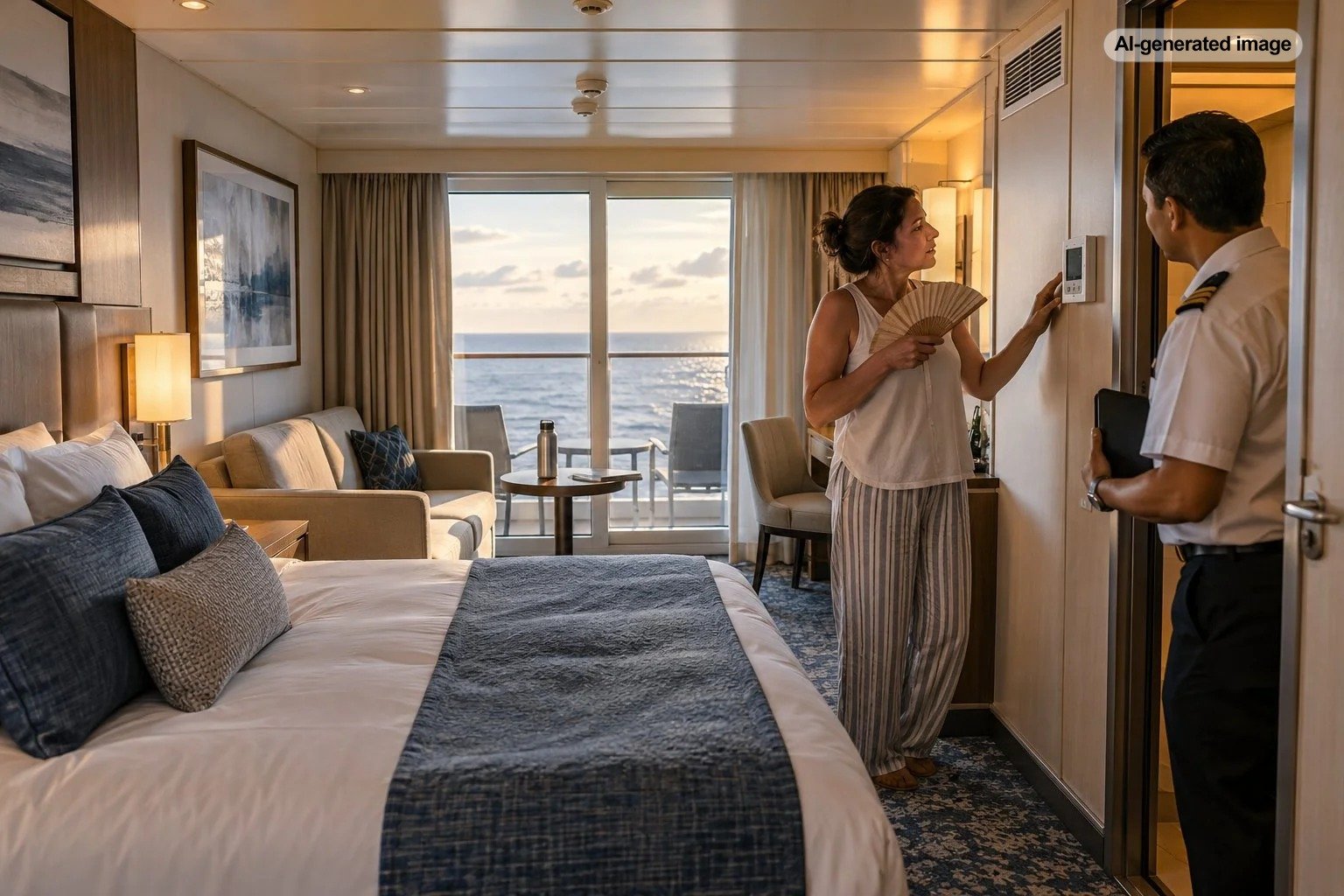
What to Do If the Air Conditioning in Your Cruise Cabin Does Not Work
If the air conditioning in your cruise cabin does not seem to be working, start with the simple controls you can safely check, then report the problem to the ship’s Guest Services or the appropriate onboard service desk promptly. Avoid dismantling vents, opening panels, or attempting repairs yourself. A cabin that remains uncomfortably warm after reasonable thermostat adjustments is an onboard service issue that the crew needs an opportunity to inspect.
Do not wait until the final night to mention a problem that has affected you since embarkation. Reporting it early creates more time for troubleshooting, follow-up, and any practical alternatives the cruise line may be able to offer.
Quick answer: what to do first
- Check that the cabin thermostat is set to a cooler setting and give the system some time to respond.
- Make sure exterior doors and windows that are designed to close are fully shut, especially in balcony cabins.
- Do not block supply or return vents with luggage, clothing, or bedding.
- Report the issue promptly through Guest Services, your cabin steward, or the ship’s designated service channel.
- If the problem continues, document when you reported it and ask what the next troubleshooting step will be.
Check the cabin controls before requesting maintenance
Cruise-ship climate systems do not necessarily behave like a residential air conditioner. The thermostat may offer a limited temperature range, and changes may not produce an immediate blast of cold air. Set the control clearly toward the cooler end rather than repeatedly moving it up and down.
Before concluding that the system has failed, check whether anything obvious could be interfering with normal operation. In some cabin designs, an exterior door that is not fully closed can affect climate control. Luggage pushed against a vent can also reduce airflow. These are reasonable passenger checks; removing covers, manipulating electrical components, or trying to access mechanical equipment is not.
Distinguish weak cooling from no cooling
There is a practical difference between a cabin that feels warmer than you prefer and a system that appears unable to cool the room at all. Note whether air is moving from the vent, whether the room temperature changes after an adjustment, and whether the problem is constant or intermittent. Those details can make your report more useful to the crew.
Report the problem while you are still onboard
The most important step is to tell the cruise line while there is still time to investigate. Norwegian Cruise Line, for example, advises passengers to bring onboard service issues to the Guest Services desk promptly so the crew can address them during the voyage. Royal Caribbean likewise identifies its onboard Guest Services desk as a place passengers can raise concerns and seek assistance.
Explain the issue in simple, specific terms: your cabin number, how long the room has been uncomfortable, what thermostat setting you tried, whether airflow is present, and whether anyone has already inspected the system. If the problem improves temporarily and then returns, report that as well.
Keep the conversation focused on the condition that needs to be corrected. Asking when someone can inspect the cabin and how you should follow up if it remains warm is usually more useful than immediately debating compensation.
Give maintenance access and test the result
If a crew member or technician is sent to the cabin, make the room accessible and explain what you have observed. After any adjustment or repair, allow a reasonable period for the cabin temperature to change. A system can be functioning without making the room noticeably cooler within a few minutes.
When you return later, check whether the problem is actually resolved rather than assuming the service visit fixed it. If the cabin is still unusually warm, contact Guest Services again and reference the earlier report. A repeat problem is important information because it shows that the first intervention did not provide a lasting solution.
Document an unresolved problem without turning the trip into a paperwork exercise
You do not need an elaborate evidence file for every maintenance issue, but a few basic notes can help if the problem continues. Record the approximate time you first reported it, any follow-up conversations, and whether maintenance visited. A photo of the thermostat display may also be useful if it shows something relevant, although the displayed setting alone does not prove the actual room temperature.
If you speak with several departments, ask whether the issue has a service request or case reference. Procedures vary by cruise line and ship, so do not assume that every company uses the same tracking system.
Ask about practical alternatives if the cabin cannot be cooled
If repeated efforts do not solve the problem, ask Guest Services what options are available. What a ship can offer depends on the cause of the problem, occupancy, operational conditions, and the cruise line’s policies. A cabin change should never be assumed to be available, particularly on a full sailing.
If another room is proposed, inspect the practical details before moving. Confirm where it is located, whether everyone on the reservation can be accommodated, and how keys or onboard account access will be handled. Travelers with mobility or accessibility requirements should mention those needs before accepting a different cabin.
Likewise, do not assume a maintenance problem automatically entitles a passenger to a specific refund, onboard credit, or other form of compensation. Resolution policies and circumstances differ. The immediate priority onboard is getting the cabin problem assessed and corrected.
Take heat-related symptoms seriously
An uncomfortable cabin is usually a service problem, but excessive heat can become more important for travelers who are particularly sensitive to temperature or who begin to feel unwell. If someone develops concerning symptoms, seek assistance from the ship’s medical staff rather than treating the situation solely as a room-comfort complaint.
If you have a medical or accessibility need that makes reliable temperature control especially important, tell the cruise line as early as possible. Major cruise lines maintain accessibility channels for travelers with disability-related or medical accommodation needs, although services, advance-notice requirements, and available equipment vary.
What travelers often overlook
A slightly cool vent does not necessarily mean the room will cool quickly. Cabin size, system design, exterior conditions, and the length of time the room has been warm can all affect how quickly you notice a change.
Repeatedly changing the thermostat can make troubleshooting less clear. Choose a cooler setting, leave it there for a while, and observe what happens.
Waiting weakens your practical options. The sooner the crew knows about the problem, the more time they have to inspect it and follow up before the voyage ends.
A post-cruise complaint is not a substitute for an onboard report. Cruise lines provide channels for feedback after a sailing, but a cabin maintenance issue is far more likely to be investigated meaningfully while the passenger and the problem are still onboard.
Frequently asked questions
Should I contact my cabin steward or Guest Services first?
Either may be able to direct the issue appropriately. If the problem is significant, persists, or requires technical attention, make sure it reaches the ship’s formal Guest Services or maintenance process rather than relying only on an informal conversation.
Can I ask to change cabins?
You can ask what alternatives are available if the problem cannot be resolved, but another cabin is not guaranteed. Availability and the cruise line’s response will depend on the individual sailing and circumstances.
Should I bring a portable fan on a cruise?
Do not assume a particular electrical appliance is permitted. Cruise-line rules regarding personal electrical devices can differ and may change, so check the current prohibited-items guidance for your cruise line before packing one.
What if the air conditioning fails again after maintenance visits?
Report the recurrence and reference the earlier service request if you have one. Explain approximately when the cabin became warm again and whether airflow or thermostat behavior changed. A recurring fault may require a different troubleshooting approach.
What if the issue is still unresolved when the cruise ends?
Keep your basic notes and use the cruise line’s official post-cruise Guest Experience or customer-service channel. State what happened, when you reported it onboard, what attempts were made to resolve it, and what remained unresolved.