Where to Stay in Jeju Island for Coastal Scenery Without Spending All Day Driving
Jeju Island rewards travelers who choose their accommodation carefully. Its volcanic coastline, clear-water beaches, oceanfront walking paths, and dramatic cliffs are distributed around a surprisingly large island. Stay in the wrong location for your priorities, and a relaxing coastal vacation can quickly become a series of long drives between attractions.
For coastal scenery without spending all day driving, Jungmun is an excellent choice for resort-focused travelers, central Seogwipo suits those who prefer dramatic cliffs and an established town, and Pyoseon offers a quieter eastern coastal base. Hamdeok and Hyeopjae are also attractive for travelers who prioritize beaches and neighborhood walks over extensive sightseeing. The important decision is not simply which hotel has the prettiest photographs, but how much of the surrounding coastline you can enjoy without repeatedly getting into a vehicle.
Jeju Coastal Stay: Quick Planning Snapshot
- Best all-around resort area: Jungmun, for coastal landscapes, established hotels, and relatively concentrated sightseeing.
- Best for dramatic oceanfront scenery: Seogwipo, especially its southern clifftop areas.
- Best for a quieter eastern coast: Pyoseon, with a slower pace and access to nearby coastal scenery.
- Best for beach-focused stays: Hamdeok in the northeast or Hyeopjae and Geumneung in the west.
- Suggested stay: Three to five nights for a coastal-focused visit, with more time or two lodging bases for broader exploration.
- Transportation: A rental car is useful for dispersed attractions, but a carefully chosen hotel can substantially reduce daily driving.
Which Part of Jeju Island Should You Stay In?
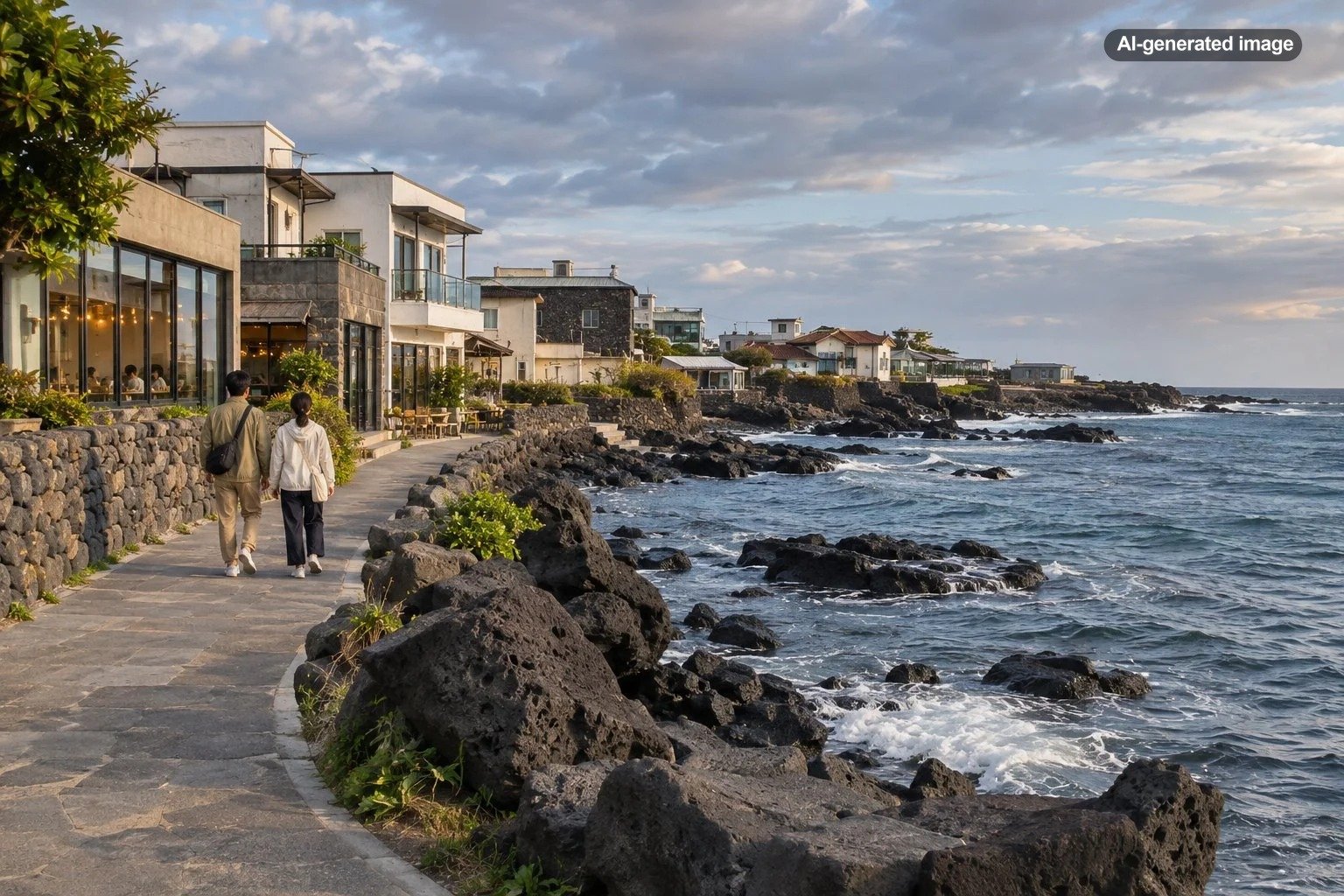
Jeju’s coastline changes considerably from one region to another. The south has volcanic cliffs, waterfalls, and large resort properties. The northeast is associated with sandy beaches, turquoise water, and seaside cafes. Western Jeju offers pale beaches, island views, and sunset-oriented coastal scenery. The southeast has quieter shorelines and a more relaxed resort atmosphere.
Choosing a region based on the scenery you actually want is the easiest way to reduce transportation time.
| Area | Best For | Main Tradeoff |
|---|---|---|
| Jungmun | Upscale resorts, coastal cliffs, beach visits | Spread-out resort grounds and higher-end lodging |
| Central Seogwipo | Clifftop scenery, restaurants, local atmosphere | Some coastal walks involve slopes or stairs |
| Pyoseon | Quiet eastern scenery and resort relaxation | Less convenient for western attractions |
| Hamdeok | Sandy beach, cafes, short coastal walks | Fewer major resort choices |
| Hyeopjae and Geumneung | Clear water, beach scenery, western sunsets | Longer journeys to southern and eastern sights |
| Jeju City waterfront | Airport convenience, markets, urban waterfront | Less of a secluded coastal experience |
For a short trip, prioritize one area rather than attempting to see every coast. A four-night stay in Jungmun with a few nearby excursions can be more enjoyable than four days spent crossing the island to reach widely separated attractions.
1. Parnas Hotel Jeju: For Oceanfront Luxury in Jungmun
Area: Jungmun, southern Jeju. Positioning: Luxury.
Parnas Hotel Jeju is a compelling choice for travelers who want the sea to be a central part of their hotel experience. Its Jungmun location places it in an established resort district overlooking the southern coastline, making it particularly attractive for couples and visitors planning a slower vacation.
The surrounding region offers access to Jungmun Saekdal Beach, ocean viewpoints, and the broader Jungmun resort area’s attractions. Staying here makes it easier to organize a day around one coastal neighborhood rather than driving from a distant hotel for each activity.
Best for: Couples, luxury travelers, and visitors who value ocean-oriented resort surroundings.
Tradeoff: The resort setting is not equivalent to staying in a compact town. Restaurant choices, beach approaches, and some attractions may still require transportation or significant walking. Check the precise room-view category rather than assuming every room directly faces the ocean.
2. The Shilla Jeju: For a Traditional Full-Service Resort Experience
Area: Jungmun, southern Jeju. Positioning: Luxury.
The Shilla Jeju is an established premium resort set within the Jungmun Tourist Complex. Its landscaped grounds, dining facilities, swimming pools, and family-oriented recreational options make it a practical choice for guests who prefer to spend substantial time at their hotel.
This is particularly useful when minimizing driving is a priority. Rather than scheduling a different destination every day, travelers can alternate resort time with visits to the surrounding coast and nearby attractions.
The hotel’s southern setting offers a different experience from the flat, sandy beaches of northern Jeju. The appeal is the combination of gardens, coastal atmosphere, and resort facilities rather than direct access to an extensive beachfront promenade.
Best for: Families, multigenerational travelers, and couples seeking a full-service resort.
Tradeoff: Resort activities and hotel dining may account for more of the trip than local neighborhood exploration. Guests wanting independent cafes and restaurants immediately outside the property should evaluate walking routes carefully.
3. LOTTE HOTEL JEJU: For Families Who Want a Convenient Jungmun Base
Area: Jungmun Resort Complex, southern Jeju. Positioning: Upscale to luxury.
LOTTE HOTEL JEJU combines substantial resort facilities with a location in one of the island’s most established coastal vacation districts. Its gardens, swimming facilities, and family-focused recreation make it an appealing option when different travelers in the same group want different activities.
Families can build a relaxed itinerary around time at the property, visits to Jungmun’s coast, and occasional outings to attractions in southern Jeju. That approach is particularly valuable when traveling with young children who may not enjoy frequent transfers between distant destinations.
The hotel also works for travelers who want resort convenience without needing an ambitious daily sightseeing schedule.
Best for: Families, first-time visitors seeking resort infrastructure, and travelers who want several leisure options in one place.
Tradeoff: This is a substantial resort rather than a small coastal guesthouse. Walking distances within the grounds and between nearby attractions can be meaningful, and direct beach access should be checked against the specific route guests intend to use.
4. JW Marriott Jeju Resort & Spa: For Dramatic Southern Cliffs
Area: Seogwipo, southern Jeju. Positioning: High luxury.
JW Marriott Jeju Resort & Spa occupies a clifftop setting near Seogwipo, making it especially appealing to travelers who prefer volcanic coastal landscapes over conventional sandy beaches.
The property combines contemporary resort facilities with a natural setting overlooking Jeju’s southern coast. For visitors whose ideal day includes a scenic walk, a leisurely meal, and time enjoying the ocean atmosphere, this location encourages a slower pace.
Seogwipo also provides access to an established city environment, including markets and dining opportunities, although reaching specific destinations from the resort may involve a car or taxi.
Best for: Couples, design-oriented travelers, wellness-focused stays, and visitors who value rugged coastal scenery.
Tradeoff: A clifftop location is not the same as a beachfront hotel. Travelers prioritizing easy sandy-beach swimming or level pedestrian routes should consider other areas. The luxury positioning also makes it less appropriate for budget-conscious trips.
5. Hidden Cliff Hotel & Nature: For Forest and Coastal Atmosphere
Area: Yerae, near Jungmun. Positioning: Upscale to luxury.
Hidden Cliff Hotel & Nature offers a different interpretation of a scenic Jeju stay. Rather than emphasizing immediate beach access, its setting brings together forested landscapes, elevated terrain, and ocean-oriented surroundings.
The property is suited to visitors who want a quieter base near the Jungmun area, with opportunities to enjoy the hotel’s natural environment between coastal excursions. Its infinity pool and surrounding landscape are important elements of the experience.
This can be a useful alternative for travelers who like southern Jeju but prefer some separation from the most concentrated resort areas.
Best for: Couples, nature-oriented travelers, and visitors seeking a peaceful resort atmosphere.
Tradeoff: Despite its coastal character, this is not primarily a walk-out-to-the-sand property. A vehicle or arranged transportation will be useful for many beaches, restaurants, and attractions.
6. Haevichi Hotel & Resort Jeju: For the Quieter Pyoseon Coast
Area: Pyoseon, southeastern Jeju. Positioning: Upscale to luxury.
Haevichi Hotel & Resort Jeju is a strong alternative for travelers who would rather settle into one quieter coastal area than stay in the busier southwestern resort corridor. Located in Pyoseon, the property combines a coastal setting with hotel and resort accommodations.
Pyoseon offers a slower rhythm and a different perspective on the island’s scenery. The eastern and southeastern coastlines can be explored in manageable regional outings rather than treated as quick stops on an island-wide circuit.
Haevichi is especially appealing when the hotel itself will be part of the vacation rather than simply a place to sleep. The property’s official transportation information also describes airport shuttle and public bus options, although travelers should verify current services and reservations before relying on them.
Best for: Couples, families, repeat Jeju visitors, and travelers who want a quieter resort stay.
Tradeoff: Pyoseon is less convenient for western Jeju and Jungmun sightseeing. Choose it because you genuinely want to spend time in the southeast, not because it appears geographically central on a simplified map.
7. Hotel RegentMarine Jeju: For a Waterfront Stay Near the Airport
Area: Jeju City waterfront. Positioning: Moderate.
Hotel RegentMarine Jeju offers a practical compromise between coastal scenery and urban convenience. Located near Tapdong Square and the northern waterfront, it places guests closer to restaurants, markets, and transportation than many of the island’s more isolated resorts.
Its location can be particularly useful for a short visit, a late arrival, or a departure day when staying relatively close to Jeju International Airport reduces logistical pressure.
Travelers can enjoy the waterfront and explore nearby urban attractions without organizing every outing around a rental car. The surrounding landscape, however, is a city shoreline rather than the dramatic cliffs or broad beaches associated with other parts of the island.
Best for: Short stays, airport convenience, moderate budgets, and visitors who prefer restaurants and urban activity nearby.
Tradeoff: The setting is more developed and urban. Travelers seeking a quiet beach resort should choose another region. Confirm the exact room category if a sea view matters.
8. Grand Hyatt Jeju: For Resort Facilities and Jeju City Convenience
Area: Jeju City, inland from the waterfront. Positioning: Luxury.
Grand Hyatt Jeju is a useful comparison for travelers who want to minimize driving but do not necessarily need to sleep directly beside the sea. Located within Jeju Dream Tower, the hotel offers extensive dining, recreation, and wellness facilities in a developed urban setting.
Its location near the airport and Jeju City’s commercial districts can simplify a trip that combines relaxation, shopping, and occasional coastal excursions. Guests can enjoy a substantial hotel experience without planning a vehicle-based activity every day.
However, this is not a beachfront hotel. Its appeal lies in convenience and facilities rather than direct pedestrian access to Jeju’s most scenic beaches.
Best for: Travelers seeking urban luxury, short visits, and those combining city activities with selective coastal sightseeing.
Tradeoff: A dedicated beach vacation is better served by Hamdeok, Hyeopjae, Jungmun, or another genuinely coastal location.
What About Hamdeok and Hyeopjae for a Beach-Focused Trip?
The named hotels above provide a range of verified accommodations, but travelers who want a sandy beach directly integrated into everyday life should also consider smaller hotels and guesthouses around Hamdeok and Hyeopjae. These neighborhoods are especially relevant to the goal of avoiding constant driving.
Hamdeok: For Beach Walks and Cafes
Hamdeok Beach sits on Jeju’s northeastern coast, with clear water, pale sand, Seoubong Hill, and a concentration of cafes and visitor facilities. A conveniently located hotel or guesthouse can allow travelers to spend entire mornings or afternoons exploring the beach neighborhood on foot.
Hamdeok is particularly suitable for travelers who prefer simple coastal routines: breakfast, a beach walk, lunch nearby, and perhaps a short excursion later in the day.
Its limitation is geographic. Travelers planning repeated visits to southwestern Jeju will still face lengthy cross-island journeys.
Hyeopjae and Geumneung: For Western Beaches and Island Views
Hyeopjae and neighboring Geumneung are known for pale sand, clear water, and views toward Biyangdo Island. The two beaches create an attractive base for visitors who want to focus on western Jeju rather than race around the island.
Accommodation in this area tends to suit travelers comfortable with smaller properties and a more independent vacation style. A hotel near the beach can make sunset walks and relaxed mornings easy, although the actual pedestrian route should be checked before booking.
The tradeoff is distance from southern and eastern attractions. Staying here works best when western Jeju is the main destination, not merely one stop among many.
Do You Need a Rental Car on Jeju Island?
Not every traveler needs a rental car, but many will find one useful. The answer depends on how concentrated the itinerary is and whether the hotel offers enough nearby attractions to make a slower trip satisfying.
A traveler spending three nights at a Jungmun resort might use taxis for selected outings and remain at the property for much of the stay. Someone planning to explore Hamdeok, Hyeopjae, Seongsan, and Seogwipo from a single hotel will have a more complicated transportation schedule.
Public transportation serves many populated areas, but bus transfers, walking distances, and service frequency can affect convenience. A scenic coastal destination may be straightforward to reach by car but considerably less convenient from a particular bus stop.
Affiliate disclosure: HotelInfo.com may earn a commission when you book or purchase through links on this page. This does not affect the price you pay. Learn more.
If your itinerary includes several dispersed beaches or viewpoints, you can compare available rental vehicles with Expedia. Review the rental location, insurance terms, driver requirements, deposit conditions, and final cost before choosing a vehicle.
For a lower-driving itinerary, an effective compromise is to rent a vehicle only for selected days, provided pickup and return arrangements make that practical. The larger benefit comes from avoiding unnecessary cross-island travel, not simply reducing the number of days with a car.
Should You Stay in One Hotel or Split Your Stay?
For a three-night vacation focused on one coastal region, one hotel is generally the simpler choice. Packing, checking out, and moving luggage can consume time that might otherwise be spent enjoying the destination.
For five to seven nights, two bases become more attractive if you genuinely want to experience contrasting coastlines. A combination of Jungmun and Hamdeok, for example, allows several days in southern Jeju followed by time near northeastern beaches.
Another option is Seogwipo followed by Hyeopjae or Geumneung. That combination works for travelers who appreciate volcanic cliffs but also want calmer, sandy-beach scenery.
Avoid changing hotels every night. The purpose of dividing a trip is to reduce repeated long journeys, not to create a constant cycle of checking in and checking out.
What Travelers Often Overlook When Booking a Jeju Coastal Hotel
An Ocean View Does Not Guarantee Easy Beach Access
Jeju’s coastline includes cliffs, volcanic rocks, elevated resort grounds, and steep approaches to the water. A room with a dramatic sea view may be some distance from a safe, accessible swimming beach.
Check whether the property’s closest coastal route is a paved promenade, a sloped pathway, a stairway, or a vehicle journey. This distinction matters especially for families with strollers and travelers with mobility limitations.
Walking Distance Is Not Always Easy Walking
A relatively short route can feel much longer when it involves hills, exposed coastal winds, or stairs. Map distances alone may not reflect the effort involved.
Before booking, identify the precise route between the hotel entrance and the beach, nearest restaurants, and any coastal walking paths you intend to use.
The Room Category Matters as Much as the Hotel Name
Large resorts may have rooms facing gardens, interior courtyards, pools, mountains, or the ocean. Do not assume that every room shares the view presented in a hotel’s main promotional photographs.
Review the exact description and any limitations of the selected view category. A partial sea view can be substantially different from an unobstructed ocean-facing room.
Weather Changes the Value of a Coastal Location
Wind, rain, cloud cover, and seasonal conditions can alter how enjoyable particular coastal activities feel. A resort with indoor facilities may be useful during unsettled weather, while a beach-centered guesthouse may appeal more to travelers who plan to spend most of their time outdoors.
Do not build the entire vacation around swimming unless you have checked the relevant seasonal beach arrangements and local conditions. Coastal walks and sightseeing can remain rewarding outside the main swimming season.
Frequently Asked Questions
What is the best area to stay in Jeju Island for ocean views?
Jungmun and the southern Seogwipo coastline are excellent choices for elevated ocean views and dramatic coastal scenery. Hamdeok and Hyeopjae are better suited to travelers who want sandy beaches and seaside neighborhoods. The strongest choice depends on whether you prefer cliffs, resort gardens, or direct beach access.
Is Jungmun or Seogwipo better for a first visit?
Choose Jungmun if you want a full-service resort vacation with nearby coastal attractions. Central Seogwipo is appealing if you prefer an established town, local dining, and access to southern coastal scenery. Both make practical bases for a trip focused on southern Jeju.
Can you enjoy Jeju Island without renting a car?
Yes, especially if you choose a hotel close to the attractions and restaurants you plan to use. Taxis and public transportation can support a slower itinerary. However, reaching numerous dispersed destinations is generally easier with a car, and transportation options should be evaluated for your specific dates and routes.
Which Jeju area is better for families who want beach time?
Hamdeok and Hyeopjae are appealing for families seeking sandy-beach settings, while Jungmun’s larger resorts provide more extensive on-property leisure choices. Consider beach access, walking routes, weather exposure, and the children’s ages rather than assuming every coastal hotel offers the same experience.
How many nights should you spend on Jeju Island?
Three or four nights can work well for a relaxed stay focused on one region. Five to seven nights offers more flexibility for exploring two coastal areas without turning every day into a long drive. A shorter, geographically focused itinerary is often preferable to trying to cover the entire island.
The Best Jeju Stay Is the One That Keeps the Coast Close
Jeju Island does not require an exhausting driving itinerary to deliver memorable coastal scenery. The key is to choose accommodation that places your preferred landscapes, daily walks, and dining options within a manageable area.
For a polished resort experience, Jungmun offers several strong choices, including Parnas Hotel Jeju, The Shilla Jeju, and LOTTE HOTEL JEJU. Travelers drawn to volcanic cliffs can consider JW Marriott Jeju Resort & Spa, while Haevichi provides a quieter alternative on the southeastern coast. Hamdeok and Hyeopjae deserve particular attention if the priority is a beach neighborhood rather than a large resort.
Choose the coast first, select a hotel that genuinely suits your preferred daily pace, and build the itinerary around nearby experiences. That approach leaves more time for the island itself and less time spent looking at it through a windshield.
Sources & Further Reading
- Parnas Hotel Jeju: Official property information
- The Shilla Jeju: Official hotel introduction
- LOTTE HOTEL JEJU: Official hotel information
- JW Marriott Jeju Resort & Spa: Official hotel website
- Hidden Cliff Hotel & Nature: Official hotel information
- Haevichi Hotel & Resort Jeju: Official location and transportation
- Hotel RegentMarine Jeju: Official hotel website
- Grand Hyatt Jeju: Official hotel website
- Visit Jeju: Hamdeok Beach
- Visit Jeju: Hyeopjae Beach
- Visit Jeju: Jungmun Saekdal Beach