Why Some Hotel Rooms Have Better Air Conditioning Than Others
Some hotel rooms really do cool more effectively than others, even within the same building. The difference is not always a sign that one room has a broken air conditioner. Room location, sun exposure, HVAC design, thermostat controls, airflow, insulation, occupancy, and maintenance can all affect how quickly a room reaches a comfortable temperature and how consistently it stays there.
That is why two guests staying on the same floor can have noticeably different experiences. One room may cool quickly and remain steady overnight, while another feels warm in the afternoon, humid after a shower, or slow to recover after the door has been opened repeatedly.
Quick answer
- Rooms with strong afternoon sun or large exterior windows can have a higher cooling load.
- Hotel HVAC systems vary widely, from individual room units to centralized systems serving many rooms.
- Furniture, curtains, dust buildup, or blocked vents can reduce effective airflow.
- Thermostat limits, occupancy sensors, and energy-management controls can affect how the system operates.
- Room position, insulation, building design, and maintenance can make neighboring rooms feel different.
Room location can change how hard the AC has to work
A hotel room does not exist in a perfectly uniform environment. Its position in the building changes how much heat it receives and how quickly that heat enters the space.
A room exposed to strong afternoon sun may become warmer than a comparable room facing away from direct sunlight. Large windows can add another variable, especially when curtains are left open for much of the day. Upper-floor rooms may also experience different heat conditions than rooms surrounded by conditioned spaces on multiple sides.
Corner rooms can be particularly different because they may have more exterior wall area. That can be pleasant for views and natural light, but it also means the room can exchange more heat with the outdoors than an interior room with only one exterior wall.
Hotels use different types of cooling systems
There is no single standard air-conditioning setup used in every hotel. Some properties use individual room units that allow each room to control much of its own heating and cooling. Others use fan-coil systems, heat pumps, or centralized systems connected to a broader building network.
These designs can feel different to a guest. An individual room unit may produce a noticeable burst of cool air and cycle on and off. A centralized system may feel quieter or more gradual. Some systems are designed to maintain a narrow temperature range rather than rapidly cool a room after a guest returns and lowers the thermostat.
Even within one property, renovations or additions can sometimes result in different parts of a building having different equipment or control strategies. Travelers should therefore avoid assuming that every room will behave exactly like a previous room at the same hotel.
Thermostat controls are not always as simple as they appear
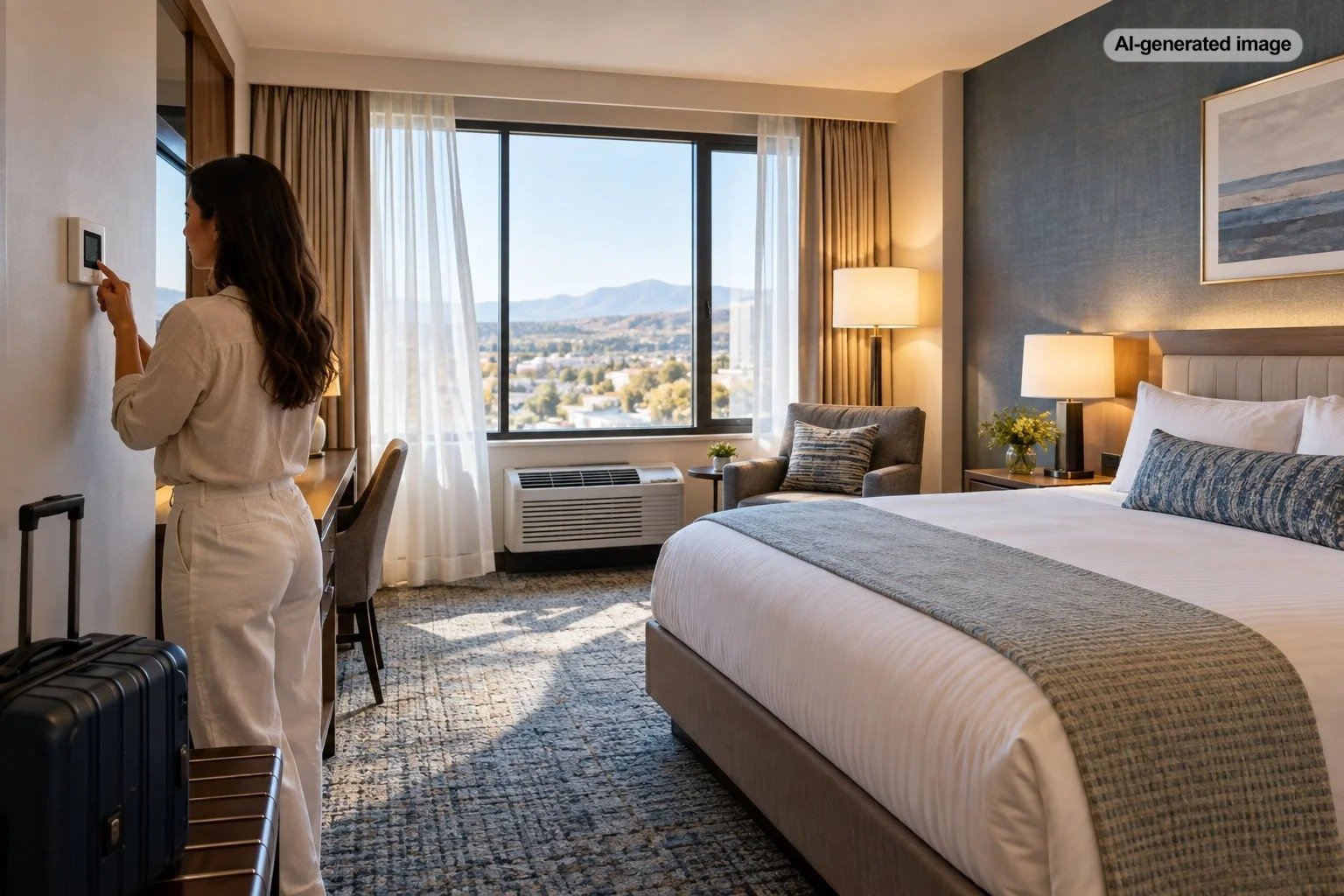
A hotel thermostat may look similar to a residential thermostat while operating under different rules. Some hotels use energy-management systems designed to reduce unnecessary heating or cooling when a room is unoccupied. Motion, door, or occupancy sensors may influence operation in certain installations.
There can also be limits on the temperatures a guest can select, even if the display appears to allow a broad range. In other cases, changing the thermostat dramatically does not make the air coming from the system colder; it simply tells the system to continue running until the room approaches the selected temperature.
If a room feels warmer than expected, repeatedly lowering the set point may therefore make little immediate difference. The more useful question is whether the system is producing cool air and gradually reducing the room temperature.
Airflow can make one room feel much better than another
Cooling performance is not only about the temperature of the air. The air also has to circulate through the room effectively.
A vent partially blocked by a chair, luggage, heavy curtain, or other furnishing may distribute less air through the occupied part of the room. Dust accumulation around an intake or outlet can also affect airflow, although guests should not remove covers or attempt mechanical cleaning themselves.
Room layout matters as well. A bed positioned directly in the path of cool air can make the sleeping area feel cold while another part of the room remains warm. In a larger suite, air may not circulate evenly between separate sleeping, living, or bathroom areas.
Humidity can affect comfort even when the temperature looks reasonable
A room can display a comfortable temperature and still feel unpleasant if humidity is high. Cooling systems normally remove some moisture from indoor air while operating, but the amount of dehumidification can vary with equipment design, operating time, outdoor conditions, and room use.
Long showers, repeatedly opening a balcony or exterior door, or allowing warm outdoor air into the room can temporarily increase moisture. A system that cycles off quickly may also create a different comfort experience than one that runs for longer periods and removes more humidity.
This is one reason guests sometimes describe a room as muggy rather than simply hot.
Maintenance can create noticeable room-to-room differences
Two identical HVAC units may perform differently if one has recently been serviced and the other has restricted airflow or another maintenance issue. Hotel engineering teams routinely deal with equipment exposed to continuous guest use, changing outdoor conditions, and frequent thermostat adjustments.
A room that never seems to cool, produces little airflow, leaks water, makes unusual mechanical noises, or repeatedly shuts down may warrant attention from hotel staff. Guests generally should not open equipment covers, move fixed components, or attempt repairs.
Reporting the symptom clearly can be more helpful than simply saying the room is uncomfortable. For example, telling the front desk that the unit is running but producing very little cool air gives staff more useful information than only reporting that the room feels warm.
Large windows and dramatic views can have a comfort tradeoff
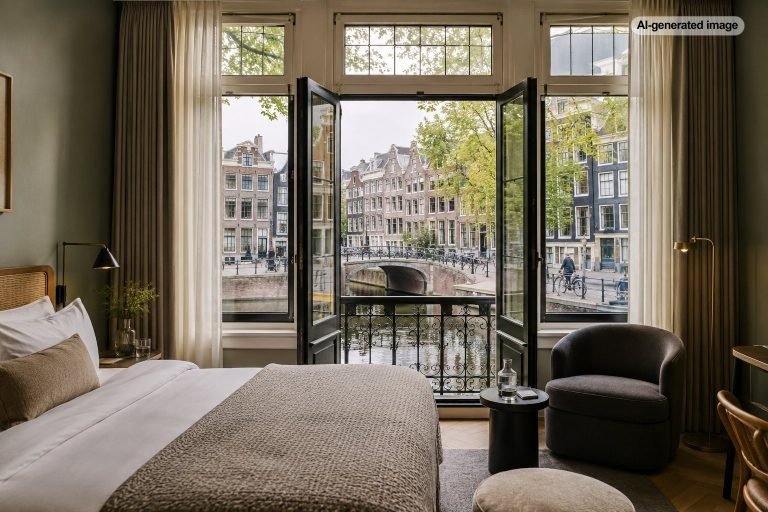
Floor-to-ceiling glass, panoramic views, and bright corner rooms can be major reasons travelers select a particular room. They can also increase the effect of outdoor heat and sunlight.
Closing blackout curtains or shades while away during the hottest part of the day can sometimes reduce solar heat gain. A traveler who strongly prioritizes a consistently cool sleeping environment may prefer a room with less direct afternoon sun, while another traveler may gladly accept a warmer late afternoon in exchange for a preferred view.
Neither choice is inherently better. It is a question of which room characteristics matter most for a particular stay.
What to do when your hotel room will not cool properly
Start with simple checks that do not involve opening or modifying the equipment. Confirm that the thermostat is set to cooling, make sure obvious vents are not blocked by personal belongings, close exterior doors and windows, and give the system some time to respond after changing the temperature.
If the room remains uncomfortably warm, contact the front desk. The hotel may be able to send engineering staff to inspect the system or explain how the controls operate. Depending on the property’s circumstances and room availability, staff may also be able to discuss other options if the problem cannot be corrected promptly.
Travelers who are particularly sensitive to heat may also find it useful to ask about room orientation or climate-control setup before arrival, although hotels may not always be able to guarantee a particular exposure, location, or HVAC configuration.
What travelers often overlook
Guests frequently judge hotel air conditioning by how cold the room feels immediately after entering. That can be misleading. A room that has been unoccupied, exposed to afternoon sun, or recently cleaned with the door open may need time to reach a stable temperature.
It is also worth distinguishing between a system that is slow and one that is malfunctioning. Gradual cooling can be normal for some systems. No cooling, very weak airflow, unusual water leakage, or repeated unexplained shutdowns are more useful reasons to contact the hotel.
For travelers comparing accommodations, air-conditioning quality can be difficult to evaluate from a standard amenity list alone. Reviews may provide context, but individual experiences can be affected by the exact room, weather conditions, personal temperature preferences, and temporary maintenance issues.
Frequently asked questions
Why is my hotel room AC running but the room is still warm?
The room may be gaining heat faster than the system can remove it, particularly during strong sun exposure. Restricted airflow, high humidity, thermostat controls, or a maintenance problem can also contribute. If the room does not gradually improve, contact hotel staff.
Do corner hotel rooms get hotter?
They can. Corner rooms often have more exterior wall or window area, which can increase heat transfer. The actual effect depends on orientation, glazing, insulation, weather, and building design.
Why does the hotel AC turn off when I leave?
Some hotel climate-control systems use occupancy or energy-management features that adjust operation when a room appears vacant. The exact behavior varies by property and system.
Can closing the curtains make a hotel room cooler?
When direct sunlight is heating the windows and interior surfaces, closing curtains or shades can help reduce solar heat entering the room. The benefit varies with window orientation and building design.
Should I request another room if the AC is weak?
First report the problem so hotel staff have an opportunity to check the system. If the issue cannot be corrected, you can ask what alternatives are available. Room changes depend on the property’s circumstances and availability.