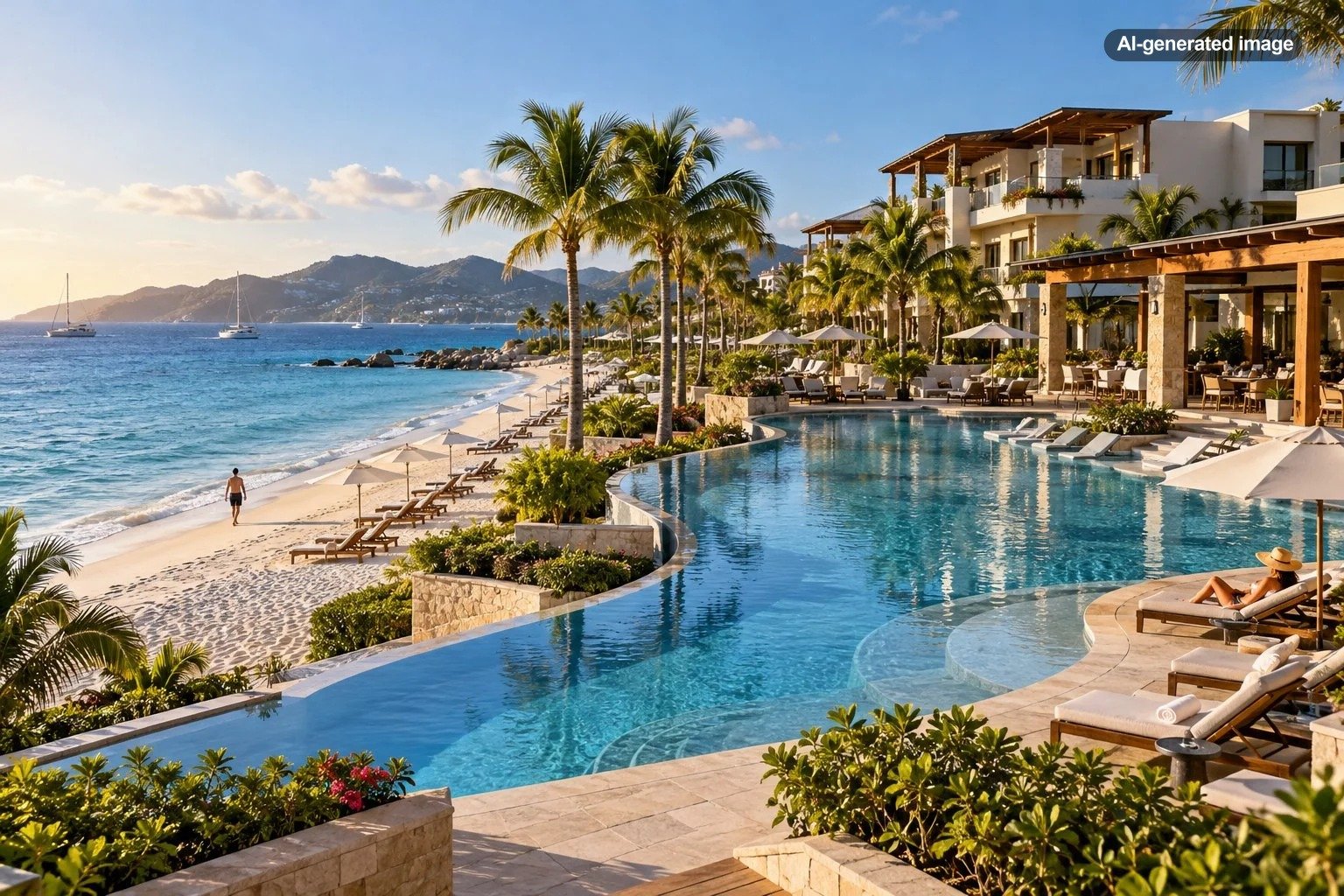
How to Choose an All-Inclusive Resort If One Person Loves the Beach and the Other Loves Pools
Choosing an all-inclusive resort becomes more complicated when one traveler wants to spend most of the day by the ocean while the other would happily stay beside the pool. The solution is not simply finding a property that has both. A better choice is a resort where the beach and pool experiences are each strong enough to stand on their own and close enough together that neither person feels as though every day requires a compromise.
The most important factors are resort layout, the character of the beach, the type and number of pools, shade and seating, room location, and how naturally the two areas connect. A property can look ideal in photographs yet feel inconvenient if the beach is a long walk from the main pool or if one area is noticeably livelier than the other.
Quick answer: look for two equally usable resort zones
- Choose a resort where the main beach and at least one attractive pool are within an easy walk of each other.
- Compare the beach itself, not merely whether the property is described as beachfront.
- Look at the number and style of pools, including whether they are quiet, activity-focused, family-oriented, or adults-only.
- Check the resort map before choosing a room so neither traveler ends up far from the area they care about most.
- Pay attention to shade, seating, food access, and atmosphere in both areas because these details often shape the actual day more than the headline amenities.
Start with the beach because beach quality varies more than pool quality
Pools are engineered environments. Beaches are not. Two resorts can both advertise direct beach access while offering very different experiences because shoreline conditions depend on geography, weather, tides, currents, vegetation, and the surrounding coastline.
The beach-focused traveler should look beyond broad descriptions such as sandy beach or oceanfront resort. Consider whether the shoreline appears suitable for long walks, casual swimming, lounging, or simply enjoying the view. A narrow beach may be perfectly pleasant for someone who wants to read beside the water but disappointing for someone imagining long stretches of sand. Similarly, a visually dramatic coastline may not provide the calm-water swimming experience another traveler expects.
Because shoreline conditions can change, current property information and recent traveler photographs can be useful when evaluating the general character of the beach. Treat individual reviews cautiously, especially when they describe temporary weather or sea conditions as permanent features.
Compare the pools by purpose, not just by quantity
A resort advertising several pools does not necessarily offer several distinct pool experiences. Some properties divide one large aquatic complex into multiple sections, while others provide genuinely different environments across the grounds.
For someone who considers the pool a major part of the vacation, identify what kind of experience matters. A large activity pool can be enjoyable for travelers who like music, games, and a social atmosphere. Someone seeking quiet may place greater value on an adults-only or low-activity pool. Families may care more about shallow areas, splash features, or convenient access to family-oriented facilities.
Also consider whether there is comfortable seating around the pool. The experience can change considerably if loungers are densely arranged, shade is limited, or the pool deck is separated from food and drinks by a significant walk.
Study the resort map before deciding that both travelers will be happy
Resort layout is one of the most useful indicators of whether different vacation styles can coexist comfortably. A compact beachfront resort can make it easy for one person to swim in the ocean while the other uses the pool only a minute or two away. At a sprawling property, the same arrangement could involve long paths, shuttle rides, elevators, or repeated walks across the grounds.
Look for the relative positions of the beach, primary pools, restaurants, guest rooms, and major activity areas. The ideal arrangement does not require both travelers to stay together constantly. Instead, it should make separating and meeting again effortless.
For example, one person might spend the morning at the beach while the other chooses a shaded pool. If both areas connect conveniently to the same lunch venue, they can easily regroup without coordinating transportation or crossing a large property.
Choose a room location that avoids favoring only one preference
Room location can quietly determine which part of the resort feels convenient. A building beside the beach may be ideal for the ocean-focused traveler but frustrating if the preferred pool is on the opposite side of a large resort. The reverse can happen with rooms surrounding a central pool complex.
A useful compromise is often a centrally located room or building between the two main areas. Before requesting a particular location, however, consider whether the resort publishes a current property map and whether room-category placement is clearly defined. Do not assume that a category name guarantees a specific walking distance or view unless the property says so.
Think about where each person will spend the middle of the day
Morning preferences may be easy to accommodate. The more revealing question is what happens from late morning through the afternoon, when travelers often settle into one area for several hours.
The beach lover may care about natural shade, comfortable loungers, nearby refreshments, and convenient access to the water. The pool lover may care about umbrellas, quieter sections, swim-up service where offered, or proximity to lunch. Even a spectacular beach or beautiful pool can become less appealing if the practical setup makes spending several hours there uncomfortable.
This is especially important for travelers who prefer not to move repeatedly during the day. A resort where both zones function as complete relaxation areas will usually create less friction than one where either the beach or pool feels secondary.
Compare atmosphere as carefully as the physical amenities
The beach and pool areas at the same resort can have very different personalities. A main pool might have organized activities and music while the beach remains comparatively quiet. At another property, the beachfront area may be the social center while a secondary pool offers a calmer retreat.
Neither setup is inherently better. What matters is whether the atmosphere matches each traveler’s expectations. Someone who loves pools because they enjoy a lively social environment may be disappointed by a beautiful but extremely quiet pool. Another traveler may actively prefer exactly that setting.
When comparing resorts, look for descriptions of different zones rather than assuming the entire property has one consistent mood.
Decide whether you actually need to spend the day together
Couples, friends, and family members sometimes search for a resort where everyone will enjoy the same place at the same time. That may be unnecessary. An all-inclusive property can work especially well for travelers with different preferences because meals, drinks, and common areas provide natural meeting points throughout the day.
If independent time is comfortable for both travelers, prioritize convenience between the beach and pools rather than searching for one area that satisfies everyone equally. A resort where each person has a preferred space and can reconnect easily may be more enjoyable than a property chosen through constant compromise.
Watch for the details that resort photographs rarely explain
Wide-angle photographs can show that a resort has an attractive coastline and an impressive pool, but they reveal less about how those spaces function during an ordinary vacation day. When evaluating properties, consider practical questions such as whether shade is available, whether pathways are easy to navigate, whether one area is noticeably farther from restaurants, and whether the pool or beach appears to be the dominant social center of the resort.
Seasonality matters as well. Weather, waves, seaweed, wind, occupancy, maintenance, and temporary programming can affect how particular areas feel. Avoid selecting a resort based on a single photograph, review, or highly specific traveler experience.
A simple way to compare your final resort choices
| Factor | Beach-focused traveler | Pool-focused traveler |
|---|---|---|
| Location | Easy shoreline access | Easy access to preferred pool |
| Comfort | Shade and convenient seating | Shade and comfortable pool deck |
| Atmosphere | Quiet, social, or active as preferred | Quiet, social, or activity-oriented as preferred |
| Food access | Convenient to daytime dining | Convenient to daytime dining |
| Best compromise | Beach and pool zones close enough that meeting again requires little planning | |
Frequently asked questions
Is a beachfront all-inclusive automatically a good choice for a beach lover?
No. Beachfront describes location, not the character of the shoreline. Evaluate the sand, apparent swimming conditions, usable beach area, shade, seating, and relationship between the beach and the rest of the resort.
How many pools should a good all-inclusive resort have?
There is no ideal number. One well-designed pool that matches a traveler’s preferred atmosphere can be more useful than several similar pools. Focus on pool type, location, seating, shade, and overall environment.
Should we choose a room near the beach or the pool?
If both preferences are equally important, a central location may be the easiest compromise. Review the property map and room-category information rather than assuming a room name indicates its precise position.
What if one traveler wants a quiet vacation and the other wants activities?
Look for a resort with distinct zones. A quieter beach or secondary pool can coexist well with a livelier main pool when the areas are conveniently connected.
What is the most important feature to compare?
For travelers divided between beach and pool time, layout is often the deciding factor. Strong amenities matter, but they are far easier to enjoy when neither person has to cross a large resort repeatedly just to use the area they prefer.