Where Should I Stay in Seattle for a First-Time Visit?
For most first-time visitors, the best place to stay in Seattle is the downtown area between Pike Place Market, Westlake, and Belltown. This central zone puts many signature sights within walking distance while keeping light rail, the waterfront, restaurants, and Seattle Center reasonably easy to reach.
That does not make downtown the automatic choice for every traveler. Seattle Center is more convenient for the Space Needle and major museums, Capitol Hill offers a stronger neighborhood and nightlife experience, and Pioneer Square can work well for history, stadium events, and regional transit. The right choice depends on whether you value sightseeing efficiency, evening atmosphere, quiet, transit access, or a more residential setting.
Quick answer
- Best overall for a first visit: Pike Place Market and the downtown waterfront for central sightseeing and short walks to major landmarks.
- Best for restaurants and nightlife: Belltown or Capitol Hill, depending on whether you want to remain downtown or prefer a distinct neighborhood.
- Best for the Space Needle and museums: Seattle Center and Lower Queen Anne.
- Best for historic character and stadium events: Pioneer Square.
- Best for a quieter modern base: South Lake Union, especially when a slightly removed business-district atmosphere is acceptable.
Pike Place Market and the downtown waterfront: Best overall for sightseeing
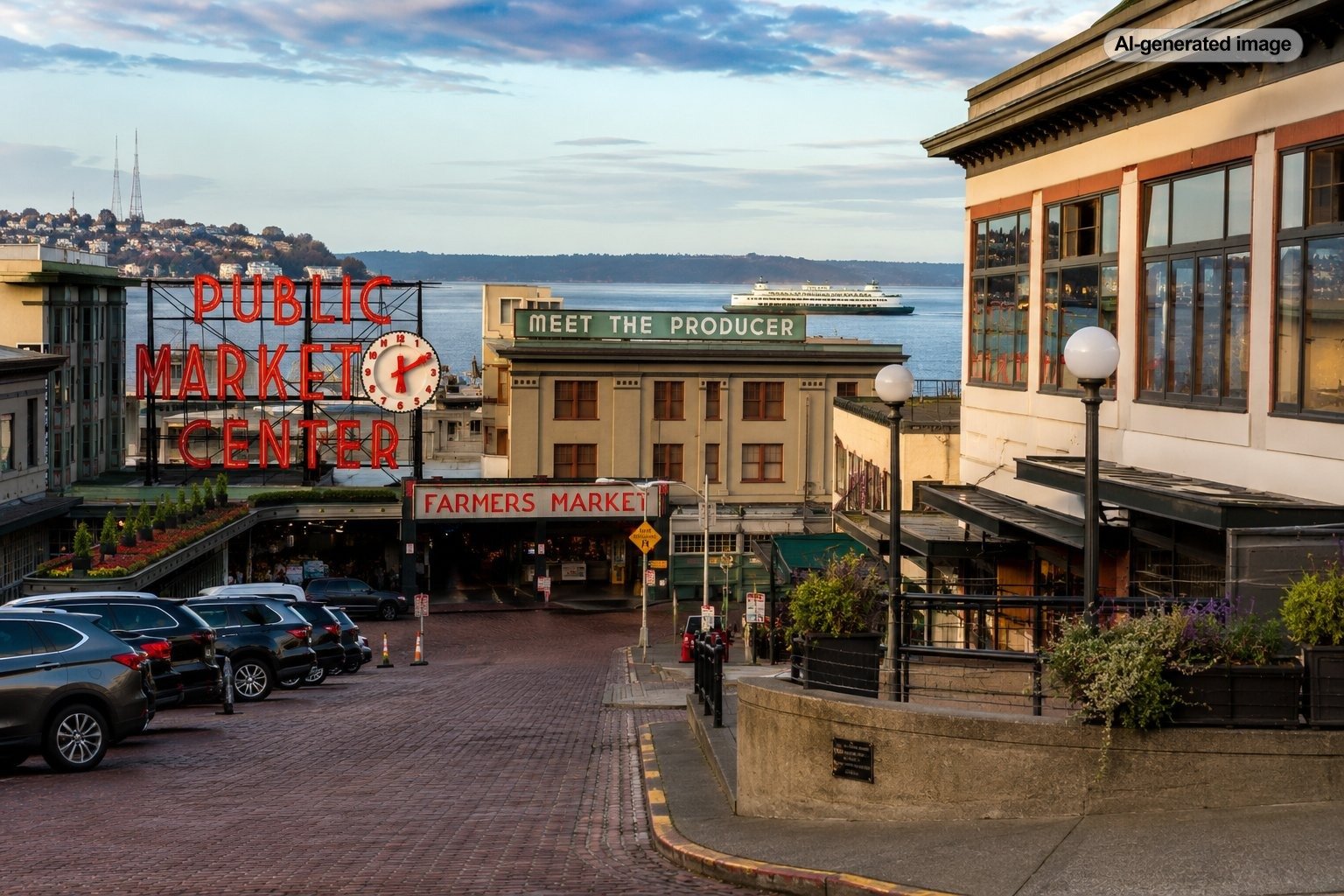
The area around Pike Place Market is the strongest all-purpose base for travelers making a short first visit. It places you close to the market, Elliott Bay, the downtown waterfront, central shopping streets, and several cultural attractions. You can begin the morning at the market, walk toward the waterfront, and continue through the downtown core without needing to organize transportation for every stop.
This area is especially useful for travelers who want an immediately recognizable Seattle setting. Hotels near First Avenue, Pine Street, Pike Street, and the western side of downtown tend to provide convenient access to both the market and central transit connections. Westlake Station also makes it easier to reach neighborhoods served by Link light rail.
The tradeoff is that the terrain can be more demanding than a map suggests. Downtown Seattle rises sharply away from the water, so a route that looks short may include a significant hill. Travelers with limited mobility should examine the elevation between a hotel entrance, the nearest station, and the attractions they expect to visit. Staying directly beside the waterfront can provide attractive views, but reaching inland streets may involve stairs, elevators, or steep blocks.
Best for: First-time visitors, short stays, couples, solo travelers, and anyone prioritizing Pike Place Market and the waterfront.
Consider another area if: You want a calm residential atmosphere, expect to spend most evenings in neighborhood restaurants, or prefer to be beside the Space Needle rather than downtown.
Belltown: Best for a central location with more evening activity
Belltown sits between Pike Place Market and Seattle Center, giving it a useful middle position. From many parts of the neighborhood, visitors can walk south toward the market or north toward the Space Needle and surrounding museums. It also has a substantial concentration of restaurants, bars, cafes, and apartment-style buildings.
This is a practical choice for travelers who want to sightsee during the day and have several evening options nearby. It can feel less formal than the office-oriented parts of downtown, while remaining close enough to central attractions that a car is usually unnecessary for a typical city itinerary.
The main consideration is noise. A hotel above or beside an active nightlife corridor may not suit light sleepers, particularly on weekends. Room orientation, higher floors, window construction, and proximity to late-night businesses can matter as much as the hotel’s general location. Belltown also covers several blocks, so the experience near Pike Place Market differs from the quieter northern edge closer to Seattle Center.
Best for: Couples, adult travelers, weekend visits, dining-focused trips, and visitors who want to divide their time between downtown and Seattle Center.
Consider another area if: Early nights, minimal street noise, or a strongly residential atmosphere are priorities.
Seattle Center and Lower Queen Anne: Best for the Space Needle and major museums
Staying near Seattle Center makes sense when the Space Needle, Chihuly Garden and Glass, the Museum of Pop Culture, performances, or family-oriented attractions are central to the trip. These destinations are grouped within the Seattle Center campus, allowing visitors to spend a full day in the area without repeatedly crossing downtown.
Lower Queen Anne, sometimes called Uptown, extends around the campus and offers restaurants, cafes, grocery options, and a more neighborhood-like rhythm than the commercial core. The Seattle Center Monorail provides a direct connection to Westlake in central downtown, while buses and walking routes provide additional options.
The drawback is that Pike Place Market, Pioneer Square, and the southern waterfront are no longer immediately outside the hotel. They remain accessible, but the visit becomes less centered on spontaneous walks through downtown. Travelers should also distinguish Lower Queen Anne from accommodations farther uphill on Queen Anne, where attractive residential streets may come with more demanding slopes and less direct access to major visitor sights.
Best for: Families, museum-focused travelers, event attendees, and visitors who consider the Space Needle a top priority.
Consider another area if: The market, ferries, historic downtown, or late-night neighborhood dining will occupy more of the itinerary.
Capitol Hill: Best for nightlife, dining, and a neighborhood experience
Capitol Hill is a strong alternative for travelers who want Seattle to feel like more than a collection of downtown landmarks. The neighborhood is known for its restaurant, cafe, music, nightlife, and cultural scenes, with a mixture of busy commercial streets and quieter residential blocks.
Link light rail connects Capitol Hill with downtown stations, the University District, and other parts of the regional network. That connection makes the neighborhood more practical for visitors than its location on a map might initially suggest. A hotel near the station can provide a convenient combination of local atmosphere and straightforward transportation.
Capitol Hill is less suitable for travelers who want to step directly from their hotel into Pike Place Market or the waterfront. Although central Seattle is close, most sightseeing days will begin with a train, bus, rideshare, or a downhill walk followed by an uphill return. The neighborhood can also be lively at night, so visitors should distinguish between accommodations near entertainment corridors and those on calmer side streets.
Best for: Nightlife, independent restaurants, repeat-city travelers, LGBTQ+ travelers, and visitors who value neighborhood character over landmark proximity.
Consider another area if: You have only one or two days, dislike using transit, or want the simplest possible sightseeing base.
Pioneer Square: Best for history, architecture, and stadium events
Pioneer Square offers historic architecture, galleries, restaurants, and access to Seattle’s early urban core. It is convenient for visitors attending events at Lumen Field or T-Mobile Park, and it is served by central transit connections. The International District, ferry terminals, and southern downtown are also relatively close.
This area can suit travelers who prefer older buildings and a more distinctive streetscape than the modern business district. It also works as a strategic base for itineraries that combine downtown sightseeing with a sporting event, rail journey, or time in the Chinatown-International District.
The atmosphere changes considerably by block and time of day. Travelers should evaluate the immediate surroundings of a specific property rather than relying on the neighborhood name alone. Some streets are active around events and business hours but become quieter later. As in any downtown district, personal comfort depends on the exact route, lighting, activity level, and time of travel rather than a broad claim that an entire area is uniformly suitable or unsuitable.
Best for: History, architecture, stadium events, train travelers, and visitors who want access to the southern end of downtown.
Consider another area if: You want constant evening activity beside the hotel or plan to spend most of the visit around Seattle Center.
South Lake Union: Best for modern hotels and a quieter business-district feel
South Lake Union provides a different version of central Seattle. The neighborhood has modern offices, newer residential buildings, hotels, restaurants, and access to the lakefront. It can feel calmer and more orderly than nightlife-heavy areas, particularly outside weekday business hours.
The location works well for travelers visiting nearby companies, attending meetings, or combining leisure with business. It can also appeal to guests who prefer contemporary accommodations and do not mind taking transit or walking farther to reach the main sightseeing core.
For a first leisure visit, the main disadvantage is that the neighborhood is not as closely tied to Seattle’s best-known attractions. Distances are manageable, but visitors may spend more time moving between the hotel and Pike Place Market, the waterfront, or Pioneer Square. The immediate dining environment can also vary between busy weekday periods and quieter evenings.
Best for: Business travelers, longer stays, travelers seeking newer accommodations, and visitors comfortable using local transportation.
Consider another area if: You want to maximize sightseeing on foot during a short weekend.
How to choose the right Seattle location
Choose based on your most important two days
Instead of asking which neighborhood is best in general, identify where you will spend the busiest portion of the itinerary. A traveler planning Pike Place Market, the waterfront, a ferry outing, and the Seattle Art Museum will benefit more from downtown than from Capitol Hill. Someone prioritizing the Space Needle, Chihuly Garden and Glass, and the Museum of Pop Culture may save time by staying near Seattle Center.
Check the hill, not just the distance
Seattle’s elevation changes are an important but frequently overlooked lodging factor. A hotel may be only a few blocks from the waterfront while sitting well above it. Review walking routes carefully when traveling with a stroller, heavy luggage, mobility limitations, or anyone who finds steep grades tiring.
Stay close to the transit you will actually use
Link light rail serves downtown stations, Capitol Hill, the University District, and Seattle-Tacoma International Airport, among other destinations. For airport convenience, confirm the walking route between the hotel and the relevant station rather than assuming every downtown hotel is equally convenient. Current station and service information should be checked shortly before travel on the official Sound Transit website.
Do not rent a car automatically
Many first-time itineraries focused on downtown, Seattle Center, Capitol Hill, and nearby neighborhoods can be completed with walking, transit, ferries, and occasional rideshares. Hotel parking can add complexity, while driving downtown may not save time for closely grouped attractions. A car becomes more useful when the itinerary includes destinations outside the central transit network or substantial regional travel.
What first-time visitors often overlook
- Micro-location matters: Two hotels described as downtown may have very different access to Pike Place Market, light rail, hills, and evening dining.
- Views and convenience are not the same: A waterfront-facing property may provide a memorable outlook while requiring extra effort to reach inland transit and shopping streets.
- Event calendars can change the atmosphere: Stadium games, conventions, concerts, and festivals may affect crowds, room availability, and street activity in specific districts.
- Seattle is easier when plans are grouped geographically: Combine Pike Place Market with the waterfront, Seattle Center attractions with Lower Queen Anne, and Pioneer Square with stadium or International District plans.
- Hotel room placement can matter: In Belltown and Capitol Hill, request details about street-facing rooms when nighttime noise is a concern.
Frequently asked questions
Is downtown Seattle the best place to stay without a car?
For most first-time visitors, yes. Downtown provides the easiest combination of walkable sightseeing, light rail access, waterfront connections, and proximity to Pike Place Market. Capitol Hill and Seattle Center can also work without a car, but each shifts the center of the trip away from the traditional downtown core.
Should I stay near Pike Place Market or the Space Needle?
Stay near Pike Place Market when the waterfront, downtown sightseeing, ferries, and central transit are the priorities. Stay near the Space Needle when Seattle Center museums, family attractions, performances, or events will occupy a large part of the visit.
Is Capitol Hill too far from downtown for a first visit?
No, particularly when staying near the light rail station. However, it is less convenient than downtown for travelers who want to walk to Pike Place Market several times or return to the hotel frequently during the day.
Which Seattle area is best for a weekend trip?
The Pike Place Market, downtown waterfront, or southern Belltown area usually provides the most efficient base for a two- or three-night visit. These locations reduce transportation time and place several major sights within a compact area.
Where should families stay in Seattle?
Seattle Center and Lower Queen Anne are particularly practical when the itinerary emphasizes the Space Needle, museums, and family attractions. Downtown near Pike Place Market can be better for families who want broader sightseeing access and convenient transit, provided the hotel’s surrounding hills and room configuration are suitable.
Final recommendation
For a first Seattle visit, begin the hotel search around Pike Place Market, Westlake, and the southern part of Belltown. This area offers the best balance of recognizable sights, transportation, restaurants, and walkability. Choose Seattle Center instead when its museums and attractions dominate the itinerary, or choose Capitol Hill when dining and neighborhood atmosphere matter more than staying beside the waterfront.
The most useful decision is not simply downtown versus neighborhood. Compare the exact hotel entrance with the nearest station, the steepness of common walking routes, expected nighttime activity, and the attractions you will visit more than once. Those details will shape the stay more than a broad neighborhood label.