Where Can You Hang Wet Clothes in a Cruise Cabin?
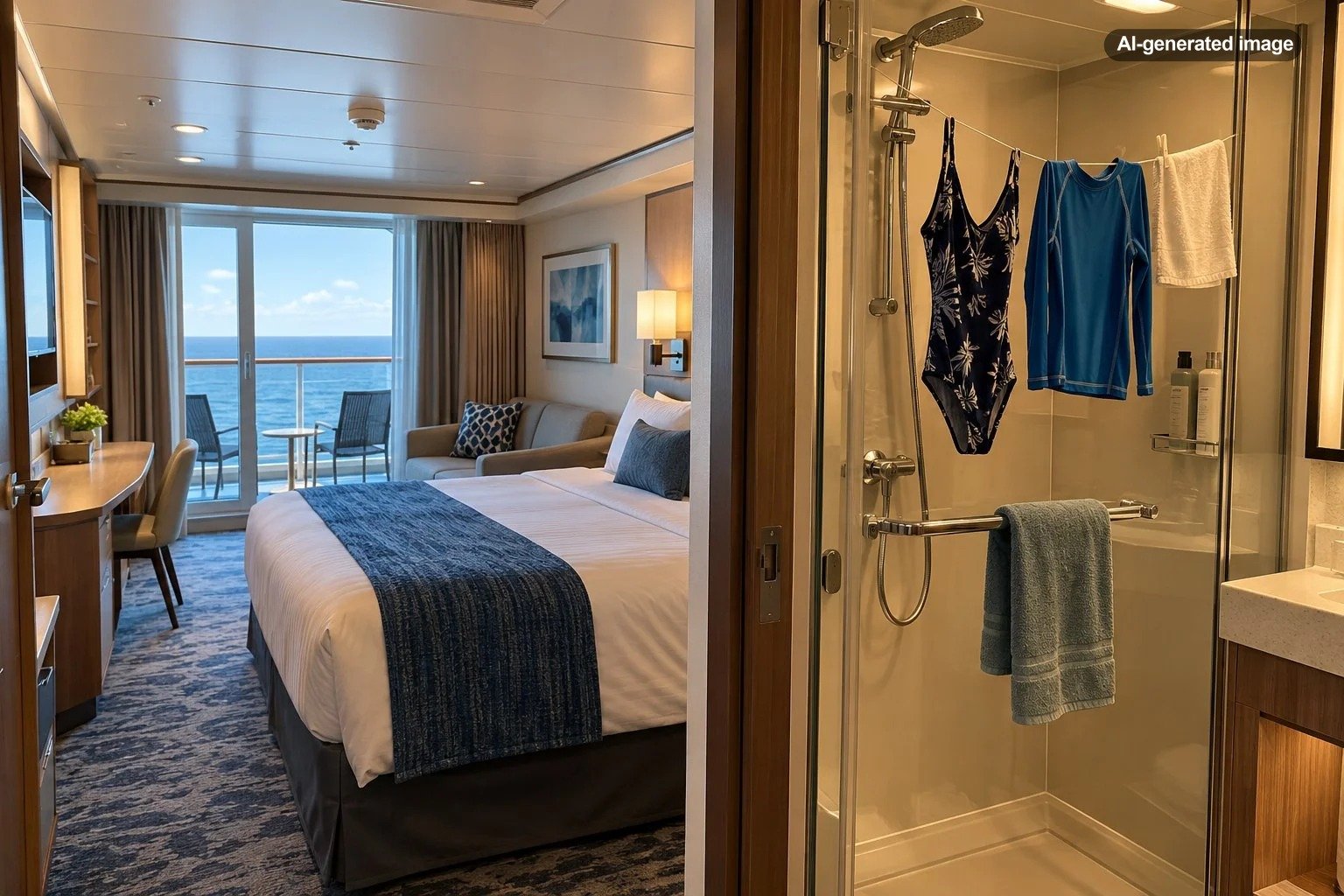
Wet swimsuits and hand-washed clothing are easiest to manage in a cruise cabin when you keep them in the bathroom and use whatever drying fixtures the cabin provides. Many travelers start with the shower area, where some cabins have a retractable clothesline, hooks, or another place designed for damp items. If there is no suitable fixture, removable travel hangers or other non-damaging solutions can help, provided they comply with the cruise line’s rules and do not block doors, sprinklers, ventilation, or walkways.
The important distinction is that a cruise cabin is not a normal hotel room. Space is limited, airflow varies, and a balcony may not be an appropriate place to leave clothing unattended. The best setup keeps moisture contained, allows air to circulate, and avoids creating a slipping hazard or dripping water onto furnishings.
Quick answer: the most practical places for wet clothes
- Inside the shower: Usually the first place to check for a retractable clothesline, hook, or rail intended for lightweight items.
- Bathroom hooks: Useful for swimsuits, rash guards, and light garments that are not dripping heavily.
- Clothes hangers: Damp garments can sometimes be hung from an appropriate bathroom hook or other permitted location where water will not reach furniture or flooring.
- Cabin laundry facilities or services: On ships that provide them, self-service dryers or paid laundry can be much more practical for heavier clothing.
- A portable drying accessory: A compact travel clothesline can be useful only if it can be installed without damaging the cabin or attaching it to prohibited fixtures.
Start by checking the shower for a retractable clothesline
The shower is the most logical drying zone because it is already designed to handle water. Some cruise cabins include a retractable line that pulls across part of the shower enclosure. When present, this is particularly convenient for swimsuits, socks, underwear, lightweight shirts, and other small garments.
Cabin layouts vary substantially by ship and stateroom category, so do not assume a clothesline will be available. Check the shower walls and upper corners when you arrive. A retractable line may be easy to overlook when it is fully stored.
If you do use one, avoid loading it with several heavy, waterlogged pieces. Lightweight items dry more effectively, and distributing garments with space between them improves airflow.
Bathroom hooks work well for swimsuits and light garments
Hooks are useful when you only have one or two damp items. A swimsuit can be squeezed gently in a towel first and then placed on a hook, preferably where any remaining moisture will fall onto a water-resistant surface rather than the cabin carpet.
The towel step makes a noticeable practical difference. Instead of twisting a swimsuit aggressively, lay it flat on a dry towel, roll the towel around it, and press gently. Removing excess water before hanging reduces dripping and can shorten drying time considerably.
Hooks are less suitable for heavy jeans, thick sweatshirts, or multiple layers of wet fabric. Those items may remain damp for a long time in the relatively confined environment of a cabin.
Use cabin hangers strategically rather than covering the room with clothing
Hangers can provide extra drying capacity, especially for shirts, dresses, or lightweight pants. The challenge is choosing an appropriate place for the hanger. The bathroom is preferable when possible because moisture stays away from bedding, upholstery, and electronics.
Avoid improvising with sprinkler heads, smoke detectors, lamps, ceiling fixtures, ventilation openings, or other safety equipment. These are not drying racks. Similarly, do not arrange clothing where it obstructs a doorway or creates a head-level obstacle in a narrow cabin.
If a garment is only slightly damp, hanging it in the closet with plenty of separation may eventually work, but enclosing genuinely wet clothing in a crowded closet usually slows evaporation and can leave neighboring clothes feeling damp.
Be cautious about drying clothes on the balcony
A balcony may appear to be the obvious answer because of the outdoor air, but it is not necessarily the best drying location. Wind can move surprisingly light items, salt spray or humidity may work against drying, and cruise lines can have rules about what guests may place or leave on balconies.
Do not drape clothing over a balcony railing or leave loose garments outside unattended. Even aside from ship-specific rules, losing a swimsuit to the wind is an unnecessary problem. If you are considering any balcony drying setup, check the current rules for your particular cruise line and ship first.
A small travel clothesline can help, but choose the attachment points carefully
Travel clotheslines designed for temporary indoor use can add useful capacity for families or travelers who regularly wash small garments by hand. A line that does not require screws, adhesives, or permanent modifications is generally more practical for travel.
The limiting factor is not the clothesline itself but where it can safely be installed. Never attach anything to fire-safety equipment or a fixture that was not designed to support weight. The setup should also be removable without leaving marks or damage.
In a particularly small bathroom, a line can also make the shower difficult to use. Treat it as a temporary drying setup rather than something that needs to remain in place throughout the cruise.
For hand washing, remove as much water as possible before hanging
Drying strategy matters almost as much as hanging location. A dripping garment can take a very long time to dry in an enclosed cabin. After hand washing, press out water gently without stretching the fabric. Then use a dry towel to absorb additional moisture.
Light synthetic fabrics generally make cabin drying easier than thick cotton, denim, or bulky materials. Travelers planning to wash clothing during a sailing can reduce the inconvenience simply by packing pieces that dry quickly.
Give garments room rather than stacking them together. Two shirts touching each other may stay damp much longer than the same two shirts separated by several inches.
When ship laundry is the easier solution
Not every wet item needs to become a cabin-drying project. Depending on the cruise line and ship, travelers may have access to paid laundry service, professional cleaning, or self-service laundry facilities. Availability varies, so check the current options for your sailing rather than assuming a washer and dryer will be accessible.
Laundry service becomes especially attractive when clothing is genuinely soaked, when several people are sharing one cabin, or when you need heavier garments ready again soon. Families returning from a rainy shore excursion can quickly exceed the useful capacity of a shower clothesline.
Self-service facilities, where provided, can also simplify longer itineraries because they let travelers pack fewer garments rather than repeatedly filling the bathroom with drying clothes.
What travelers often overlook
The cabin air may be more important than the temperature. Warm clothing does not necessarily dry quickly when humid air is trapped around it. Leave space around each garment and avoid packing wet items tightly into the bathroom.
Your second swimsuit solves a common problem. A suit that feels dry enough after an afternoon ashore may still be damp the next morning. Packing two allows one to dry while the other is in use.
Do not put damp clothing straight into luggage. Even near the end of the cruise, allow garments to dry as much as practical before packing them. If something must be packed damp, keep it separated from dry clothing until it can be dealt with after disembarkation.
Cabins on the same cruise line are not necessarily identical. Bathroom dimensions, hooks, shower configurations, storage, and laundry access can differ among ships and stateroom categories. Treat cabin-specific drying features as something to confirm rather than something guaranteed across an entire fleet.
FAQ
Do cruise cabins usually have a clothesline?
Some do, particularly retractable lines in or near the shower, but the feature is not universal. Cabin equipment varies by ship and stateroom type, so check your actual cabin rather than relying on assumptions from another vessel.
Can you hang wet swimsuits in the cruise cabin bathroom?
Yes, the bathroom is generally the most practical area for a damp swimsuit because it keeps residual water away from bedding and carpet. Use an available clothesline or appropriate hook, and remove excess water with a towel first.
Can you dry clothes on a cruise ship balcony?
Do not assume that balcony drying is permitted or advisable. Wind, humidity, and cruise-line rules can make it problematic, and loose clothing should never be draped over a railing. Check the rules applying to your specific sailing.
What is the fastest way to dry a swimsuit in a cruise cabin?
Press excess water from the suit, roll it in a dry towel and press again, then hang it with as much exposed surface area and airflow as possible. Avoid twisting delicate or stretchy fabric aggressively.
What if several people in the cabin have wet clothes?
Prioritize quick-drying items on the shower line or hooks and consider the ship’s laundry options for heavier garments. A compact removable travel clothesline may provide additional capacity if it can be installed safely and within the ship’s rules.