What Does Do Not Disturb Really Mean at a Hotel?
A hotel Do Not Disturb sign generally tells staff that you do not want routine interruptions, particularly housekeeping, while the sign or electronic privacy indicator is active. It does not necessarily mean that nobody can enter the room under any circumstances. Hotels may have policies allowing or requiring entry for emergencies, safety and welfare concerns, maintenance problems, security issues, or periodic room checks.
The practical meaning is therefore closer to please do not provide ordinary room service right now than to an absolute guarantee of uninterrupted privacy. The exact rules vary by property, brand, location, and length of stay, so travelers who need privacy for a particular reason should understand what the sign can and cannot accomplish.
Quick answer: what a Do Not Disturb sign usually does
- It normally asks housekeeping not to clean or service the room while the privacy request is active.
- It commonly discourages routine staff visits, knocking, and deliveries that have not been specifically requested.
- It may cause housekeeping to skip the room entirely if the sign remains displayed during the property’s servicing hours.
- It does not necessarily prevent management or authorized staff from entering when hotel policy, an emergency, or a safety concern requires it.
- Policies differ, so the front desk is the best source for how a particular hotel handles prolonged Do Not Disturb requests.
Do Not Disturb primarily affects routine hotel service
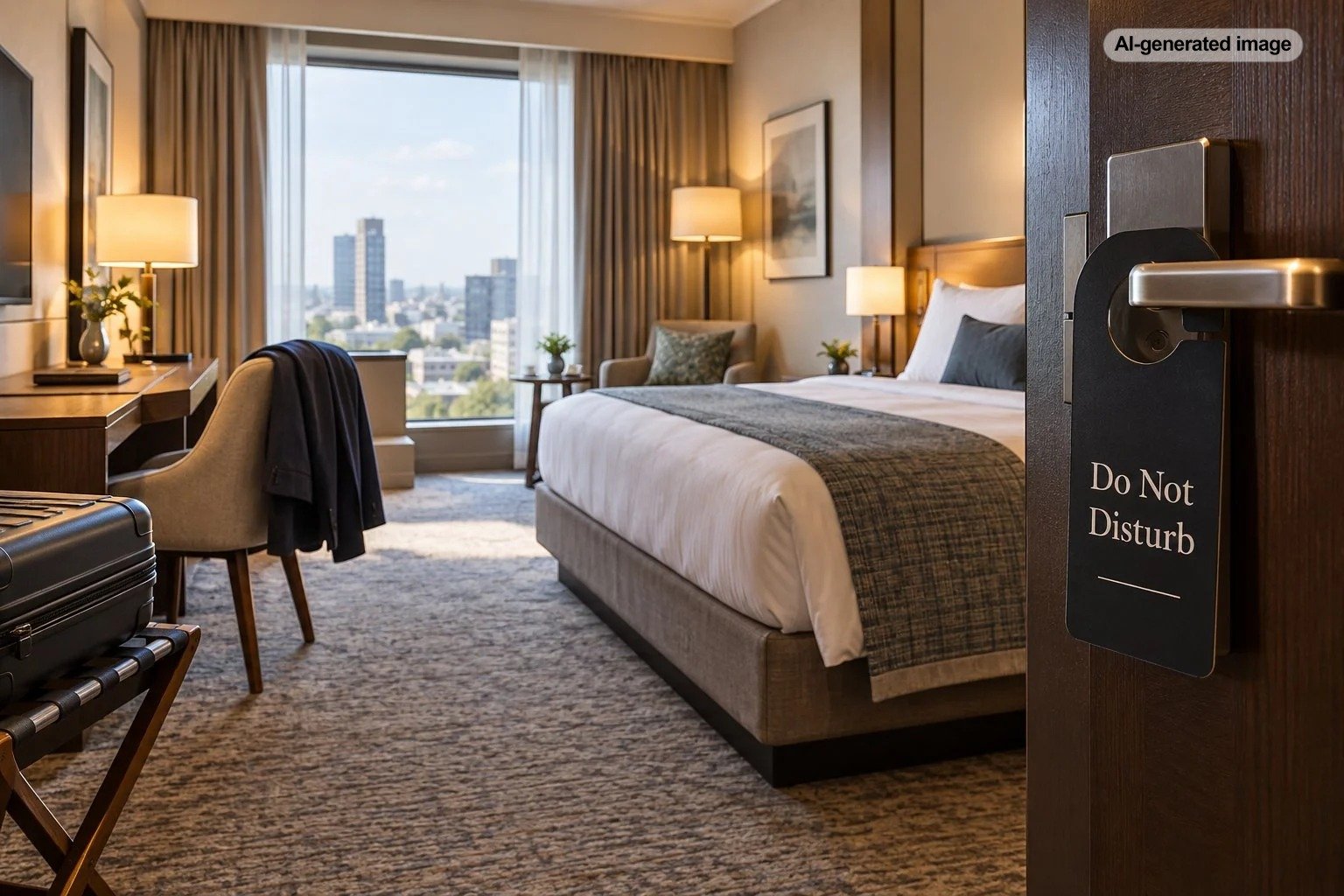
The familiar door hanger, privacy light, or electronic Do Not Disturb switch is mainly a communication tool. It tells hotel employees that the guest prefers not to be interrupted at that time.
Housekeeping is the service most directly affected. When the indicator is active, an attendant will generally move on rather than perform the usual stayover cleaning. Depending on the hotel, that can mean no bed-making, towel replacement, trash removal, amenity replenishment, or other routine room servicing during that visit.
There can be an important timing consequence. If you remove the sign late in the day, the housekeeping team may already have completed its assigned floor or ended regular servicing hours. Taking down the sign does not necessarily mean the room will immediately be cleaned. If service matters that day, contact the front desk or housekeeping rather than assuming the room will automatically return to the schedule.
It is a request for privacy, not an absolute barrier to entry
This is the distinction travelers most often overlook. A locked hotel room is still part of a property managed by the hotel, and the Do Not Disturb indicator does not normally eliminate every circumstance in which authorized staff might enter.
Published hotel policies illustrate how much practices can differ. Park South Hotel in New York states that its Do Not Disturb sign alerts staff not to knock or enter during normal circumstances, while reserving management’s right to enter in an emergency or when illegal activity is suspected. Hyatt Regency Tysons Corner Center states that occupied guestrooms are entered at least once within a 24-hour period even when a guest has requested privacy. These examples should not be treated as universal rules; they demonstrate why guests should check the policy of the property where they are actually staying.
Situations that can override an ordinary privacy request may include suspected fire or water damage, an alarm, urgent maintenance, concern for a guest’s welfare, or another matter requiring immediate attention. The precise circumstances and procedures depend on the property and applicable requirements.
Leaving the sign up can mean missing housekeeping
Travelers sometimes treat the sign as a temporary way to avoid an early knock, then forget that it remains on the door. The result may be a room that receives no scheduled housekeeping that day.
This matters most when you expect fresh towels, trash removal, coffee supplies, toiletries, or another routine service. Housekeeping schedules also vary substantially among hotels. Some properties provide daily service, while others service certain stays less frequently or allow guests to customize the schedule. Hilton, for example, publishes different default housekeeping frequencies across portions of its brand portfolio and notes that guests can request additional service or communicate preferences with the hotel.
If you want privacy in the morning but cleaning later, the most reliable approach is to remove the Do Not Disturb indicator and communicate your preferred servicing time. A direct request is clearer than expecting housekeeping staff to notice the exact moment the sign disappears.
Deliveries and requested services can be affected too
A Do Not Disturb request may extend beyond housekeeping. Depending on the hotel, employees delivering requested amenities, laundry, food, luggage, or other items may hesitate to knock when the privacy indicator is active.
Some properties interpret the setting broadly. Grand Hyatt Jeju, for example, states in its published hotel policy that activating Do Not Disturb halts housekeeping, item delivery, and other services while the privacy setting remains on.
If you order something and then activate Do Not Disturb, there is an obvious conflict between the two instructions. Calling the hotel can resolve it. You can ask the employee to knock, call first, leave an item according to the property’s procedure, or arrange delivery for a particular time.
Do Not Disturb does not always silence the telephone
The door sign and the room telephone can be separate systems. A physical Do Not Disturb hanger may stop someone from knocking but do nothing to prevent calls from reaching the room.
Some hotels allow guests to separately request that calls be routed to voicemail or otherwise limited. If uninterrupted sleep or work is important, check the room controls or ask the front desk whether the property’s privacy setting also affects telephone calls.
Longer stays may be handled differently
Keeping a Do Not Disturb sign displayed for several hours is ordinary hotel behavior. Keeping it displayed continuously for an extended stay can be different because a hotel’s operating, security, maintenance, or welfare procedures may eventually require contact with the guest or access to the room.
There is no single universal time limit that applies to every hotel. Some properties publish specific room-entry practices, while others handle extended privacy requests under internal procedures. This is one reason travelers should avoid assuming that the sign creates an unlimited period in which staff will never enter.
If you are working unusual hours, sleeping during the day, recovering from a long journey, or simply prefer minimal housekeeping, tell the front desk. Explaining that you want reduced service can prevent repeated attempts to determine whether the privacy request was accidental.
When you want privacy but still need supplies
You do not necessarily need full room cleaning to replace essentials. Many hotels can arrange towels, toiletries, trash pickup, or other permitted housekeeping requests separately from a complete room service.
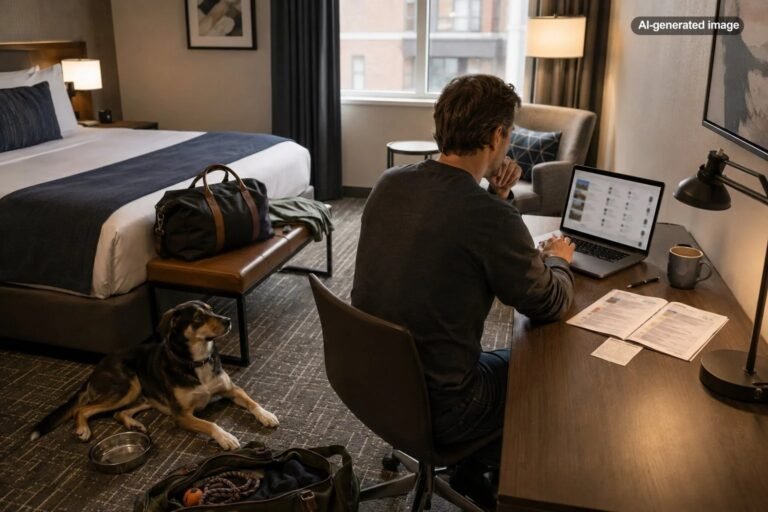
For example, someone working from a hotel room might want privacy throughout the afternoon but still need fresh towels in the evening. Another traveler may prefer not to have staff enter at all that day but may need additional toiletries. Contacting the hotel and stating exactly what you want is generally more effective than relying on the door sign to communicate a complicated preference.
What travelers often overlook
Removing the sign does not guarantee immediate housekeeping. Staff may already have passed the room or completed their shift.
Electronic and physical privacy indicators serve the same broad purpose but may operate differently. Some rooms have a switch that illuminates a privacy light in the corridor, while others use a traditional door hanger.
A privacy request and a service request can conflict. If you order something to the room while Do Not Disturb is active, clarify how you want the delivery handled.
The hotel-specific policy matters more than assumptions based on another stay. Two properties, even within a large hospitality portfolio, may have different operating practices because of property procedures or local requirements.
Frequently asked questions
Can housekeeping enter when Do Not Disturb is on?
For ordinary cleaning, the sign generally tells housekeeping not to enter. However, hotel policies can permit or require authorized entry in certain circumstances. Some properties also conduct periodic checks of occupied rooms. Ask the hotel about its specific policy if this is important to your stay.
Will housekeeping come back after I remove the sign?
Possibly, but it is not guaranteed. If the attendant has already passed your room or regular housekeeping hours are ending, service may not happen automatically. Contact the hotel if you still want the room serviced.
Can I leave Do Not Disturb on for my entire stay?
You can request privacy, but continuous use does not guarantee that the room will remain unentered for the entire stay. Hotels may have room-access, welfare, maintenance, or security procedures that supersede the ordinary privacy request.
Does Do Not Disturb stop hotel phone calls?
Not necessarily. Some properties treat telephone privacy separately. If you do not want calls, check the room’s phone settings or ask the front desk whether calls can be routed to voicemail.
What should I do if I need uninterrupted privacy for several hours?
Use the room’s Do Not Disturb indicator and, when the timing really matters, communicate your preference to the front desk. Direct communication is particularly useful when you also need housekeeping, deliveries, maintenance, or another service later in the day.