How to Choose a Safari Camp If You Want Wildlife Without Constant Long Drives
If you want excellent wildlife viewing without spending most of each day covering long distances in a safari vehicle, camp location matters at least as much as comfort. Look for a camp positioned inside or immediately beside productive wildlife habitat, with reliable access to water, varied ecosystems, and enough nearby game-viewing routes that guides do not routinely need to travel far before the search begins.
The important distinction is between a camp that is simply located in a famous safari region and one that sits close to the wildlife activity you actually want to experience. A beautiful camp can still involve lengthy transfers and game drives, while a strategically located camp may put meaningful sightings within a relatively compact operating area.
Quick answer: prioritize location over the size of the safari area
- Ask how far guides typically drive before reaching productive wildlife habitat. A camp inside the viewing area usually has an advantage over one requiring a lengthy approach.
- Look for permanent or seasonal water nearby. Rivers, floodplains, channels, pans, and waterholes can concentrate wildlife at certain times of year.
- Favor varied habitat. A combination of woodland, grassland, riverfront, floodplain, or scrub can create more viewing possibilities without requiring enormous distances.
- Check whether alternative activities are available. Walking, boating, canoe excursions, hides, or observation decks can reduce the amount of time you spend in a vehicle.
- Ask about the actual daily schedule. Two camps in the same region may organize their game drives very differently.
Start by asking where the camp sits relative to the wildlife
A safari map can be misleading if you focus only on the name of the reserve or ecosystem. What matters is the camp’s precise relationship to rivers, floodplains, waterholes, migration corridors, woodland edges, and other habitats animals regularly use.
A camp deep within productive habitat may begin game viewing almost immediately after leaving camp. Another property technically associated with the same famous destination might require a significant drive before reaching the areas guides consider most productive.
Before booking, ask a specific question: On a typical morning, how long are guests usually driving before they begin actively looking for wildlife? That tends to be more useful than asking whether wildlife is abundant in the broader region.
Understand why water can change the amount of driving required
Water strongly influences wildlife distribution in many safari ecosystems, although the pattern changes by destination and season. During drier periods, rivers, pools, wetlands, and waterholes may concentrate animals. In wetter periods, wildlife can disperse as temporary water becomes more widely available.
That means a riverfront camp can be extraordinarily convenient in one season without necessarily producing the same experience year-round. Similarly, a camp overlooking a seasonal floodplain can change dramatically as water levels rise or fall.
Ask what the landscape is normally like during your specific travel month. The useful question is not simply whether a camp is near water, but whether that water is likely to influence wildlife movement when you will be there.
Favor habitat diversity when you want shorter searches
A compact area containing several habitat types can be more useful than a huge but relatively uniform landscape. Woodland may attract one collection of species, open grassland another, and river margins or wetlands another.
When these habitats sit close together, guides can change their strategy without spending hours traveling between distant zones. That can be especially appealing to travelers who enjoy wildlife but become uncomfortable after long periods on rough tracks.
Ask the camp to describe the habitats normally covered during one morning drive. If the answer includes several distinct environments within a practical circuit, that can be a positive sign for travelers who prefer variety without excessive mileage.
Private concessions can provide a different style of game viewing
The rules governing safari activities vary by country, park, reserve, and concession. In Botswana, for example, official tourism information distinguishes between national parks and reserves, where activities such as off-road driving and night driving are restricted, and some private concession areas where additional activities may be possible.
That distinction can affect how efficiently guides respond to wildlife sightings. However, a private concession is not automatically better, and it does not guarantee closer wildlife or shorter drives. The quality of the habitat, seasonal animal movements, camp position, guiding approach, and local regulations still matter.
Instead of choosing solely on the words private reserve or private concession, ask what those arrangements allow guests to do and how they affect a normal day’s activities.
Consider camps that offer more than vehicle-based game drives
If reducing vehicle time is a major priority, one of the strongest strategies is to choose a camp where the safari does not revolve exclusively around driving.
Depending on the ecosystem and local regulations, activities may include guided walks, boat excursions, traditional canoe trips, photographic hides, birding, or simply watching wildlife from camp. Botswana’s official tourism information, for example, lists camps and concessions where game drives are combined with activities such as guided walks, boating, or mokoro excursions.
This is particularly useful for a stay of three or four nights. Even travelers who enjoy game drives can appreciate alternating a morning in a vehicle with an afternoon on the water or on foot where permitted.
Ask whether game drives are fixed or flexible
Driving distance is partly a scheduling issue. Some camps operate fairly standardized morning and afternoon drives. Others may offer more flexible departures, longer excursions, private vehicles, or opportunities to return earlier if guests have had enough vehicle time.
Neither model is inherently superior. A long drive can be worthwhile when guides are following unusual wildlife activity, while a shorter circuit may be preferable for travelers whose main goal is a comfortable, unhurried experience.
If you have back discomfort, young children, limited mobility, or simply dislike spending five or six hours in a vehicle, tell the safari operator before booking. Ask whether shorter outings can realistically be arranged without disrupting other guests.
Do not confuse a short drive with guaranteed sightings
Wild animals move freely, and no responsible camp can guarantee that particular species will appear near camp on demand. Even in excellent habitat, a guide may decide that traveling farther is worthwhile because tracks, calls, recent sightings, weather, or animal behavior suggest better opportunities elsewhere.
The goal should therefore be high-quality habitat with the option for efficient viewing, not an expectation that every major species will remain within a few minutes of camp.
A camp that promises spectacular sightings without meaningful driving should be treated cautiously. A more useful description explains how the camp’s location, habitats, water sources, seasonal conditions, and guiding area shape the experience.
Decide what kind of wildlife experience matters most
Travelers often say they want abundant wildlife when they actually have a more specific priority. One guest may be focused on large predators, another on elephants, another on birds, and another on photographing animals around water.
Your preference can affect the ideal camp location. A river corridor may suit travelers interested in animals gathering around water, while an open plain may provide broader visibility. A woodland environment can produce rewarding encounters but may require more patient searching because vegetation limits sight lines.
Ask camps what their surrounding habitat is especially well suited to rather than requesting a generic list of species found somewhere in the region.
Look closely at transfers between camps
Even if individual game drives are short, an itinerary can still become exhausting if it includes frequent long road transfers. Travelers who dislike extended vehicle time may prefer fewer camps with longer stays rather than moving every night or two.
Also distinguish between a transfer and a game drive. A three-hour journey between properties may involve occasional wildlife sightings but still function primarily as transportation. Ask how each camp-to-camp movement is normally handled and whether flying, boating, or another transfer method is available where appropriate.
Questions worth sending to the camp before booking
- How long does it normally take to reach productive wildlife-viewing areas from camp?
- What habitats can guests usually explore during a standard game drive?
- How do wildlife patterns change during my travel month?
- Are morning and afternoon drives normally shared, and approximately how are they structured?
- Can guests sometimes request a shorter drive?
- What non-vehicle wildlife activities are offered?
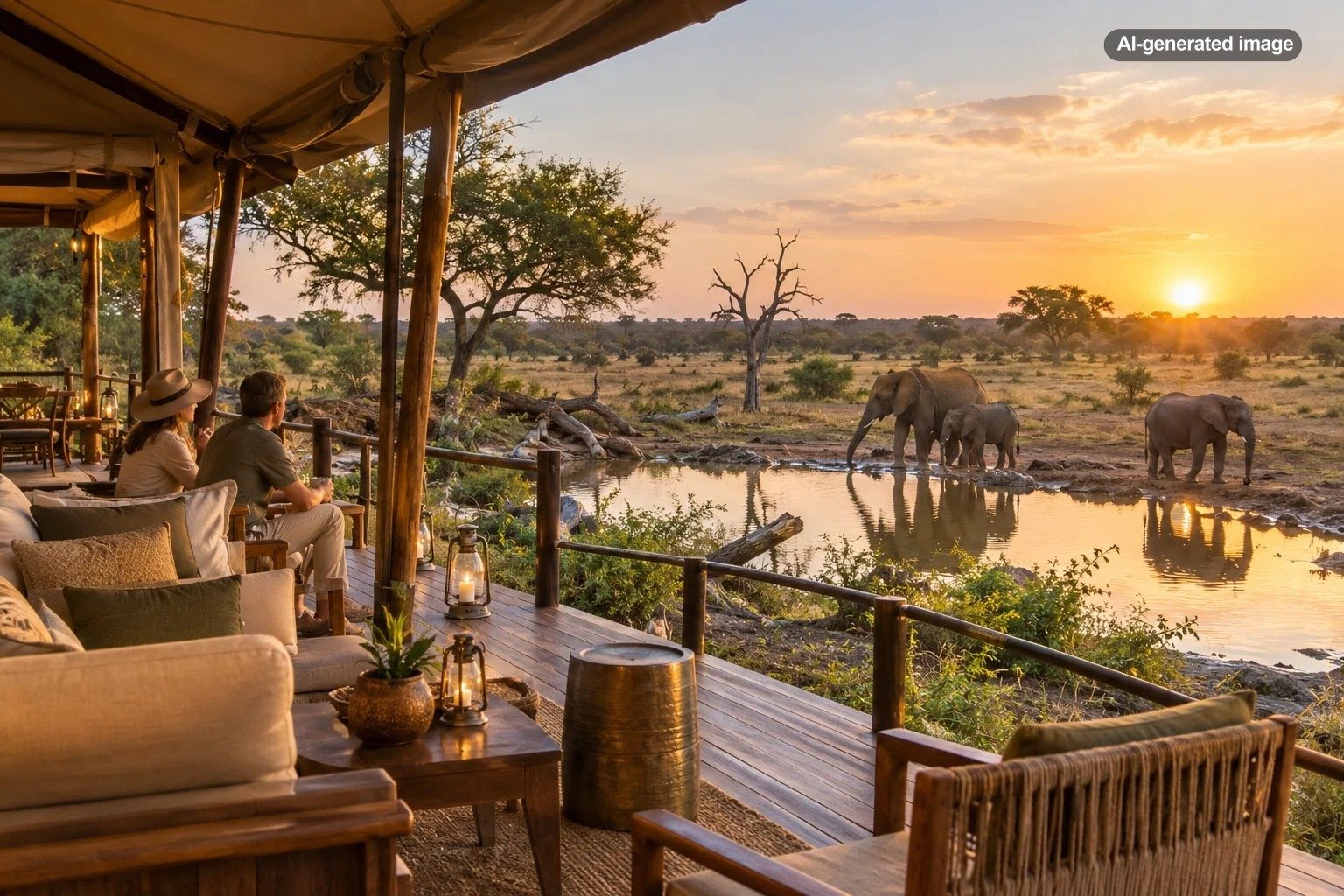
- Does the camp overlook a river, floodplain, waterhole, or other area where animals may naturally pass?
- Are full-day drives common, optional, or unusual?
- How is the transfer from the nearest airstrip, airport, or previous camp handled?
Who should prioritize this type of camp?
A wildlife-rich camp with compact viewing circuits can be particularly appealing to photographers who prefer waiting patiently at promising locations, older travelers who find rough roads tiring, families who want shorter outings, and anyone who enjoys observing animal behavior rather than trying to cover the maximum possible territory.
Travelers determined to seek particular species may prefer a different approach. Finding wild animals sometimes requires distance, patience, and changing plans. If seeing a difficult species is your highest priority, you may need to accept longer drives when guides believe the conditions justify them.
What travelers often overlook
The most luxurious tent, impressive dining room, or dramatic swimming pool does not determine how much time you will spend driving. For a wildlife-centered trip, the map deserves as much attention as the accommodation photographs.
Compare the camp’s position, nearby habitat, seasonal water, activity options, operating area, and transfer logistics before comparing decorative details. A strategically located camp with several ways to experience the surrounding ecosystem can make a safari feel fuller while requiring less time bouncing along distant tracks.
FAQ
Are camps near water always better for wildlife?
No. Water can concentrate animals, particularly during dry periods, but conditions vary by ecosystem and season. Ask how nearby water typically influences wildlife during your travel dates.
Does a private concession mean shorter game drives?
Not necessarily. Private areas may permit activities or guiding practices unavailable in some national parks, but driving distance still depends on camp location, habitat, wildlife movements, and the day’s objectives.
How many nights should I stay at one safari camp?
There is no universal number, but travelers trying to reduce transportation fatigue often benefit from spending several nights in one well-chosen location rather than changing camps constantly. More time in one area also lets guides respond to changing wildlife conditions across multiple mornings and evenings.
Can I ask for shorter game drives?
Often it is worth asking, but flexibility depends on the camp’s operating model and whether you are sharing a vehicle. A private vehicle can provide more control where available, while shared drives require balancing the preferences of several guests.
What is the single most useful question to ask before booking?
Ask how long guests typically travel from camp before reaching the areas where guides begin serious wildlife viewing. The answer can reveal far more about your likely time in the vehicle than the size or reputation of the broader reserve.