Why Hotel Rooms Above Banquet Halls Can Be Noisier Than Expected
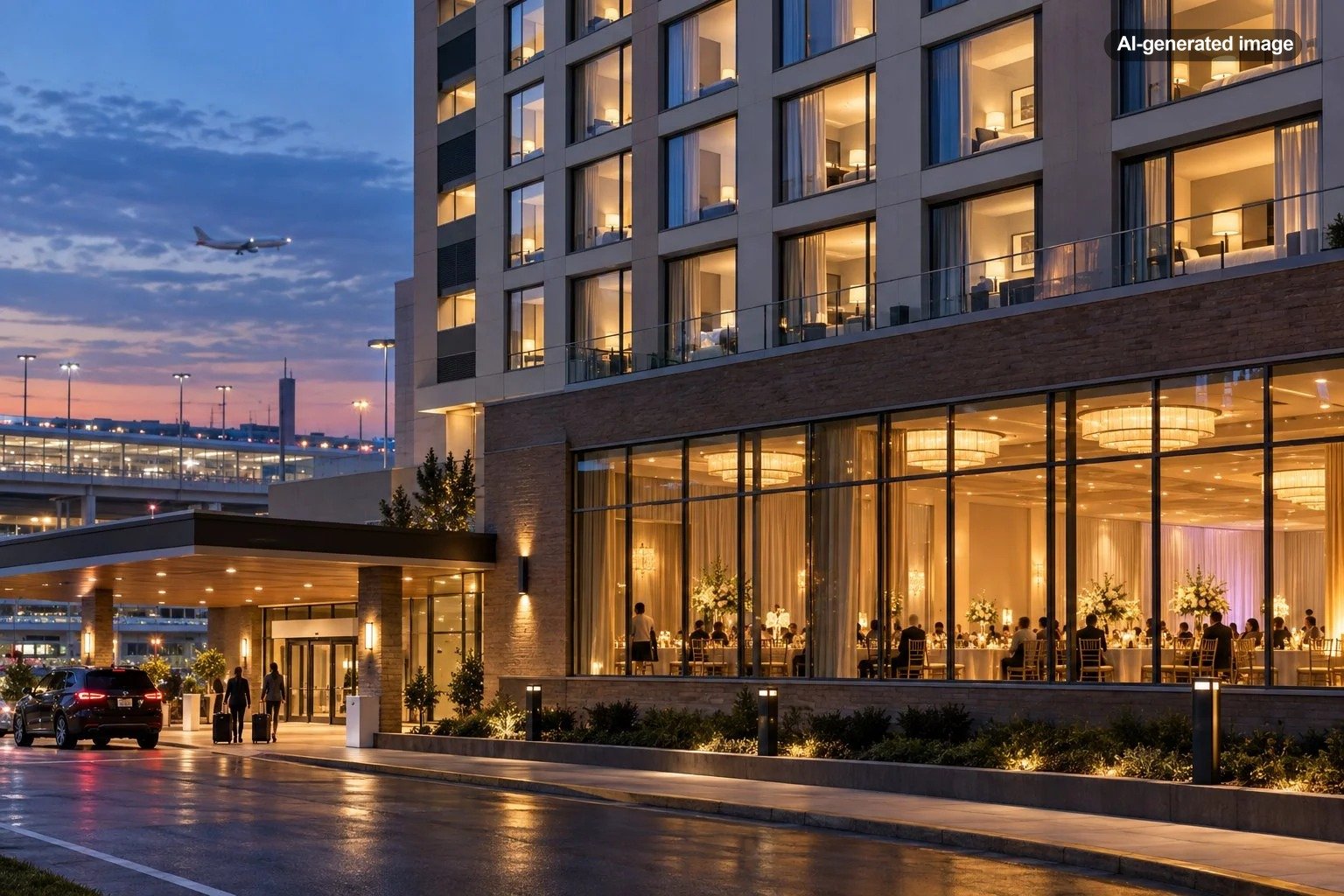
A hotel room several floors above the lobby can sound like a safe choice for a quiet night, but vertical location alone does not tell the whole story. If the room sits directly above a ballroom, banquet hall, conference space, or other event venue, music, dancing, furniture movement, and event operations may travel upward through the building in ways that ordinary conversation does not.
The main reason is that event noise can reach a guest room through more than one path. Music and voices create airborne sound, while dancing, speakers, rolling equipment, movable staging, and other activity can introduce vibration into floors and structural elements. Low-frequency bass can also be particularly difficult to contain. The result may be a faint rhythmic thump, vibration, or intermittent impact noise that is more noticeable in a quiet bedroom than it seemed in the event space below.
Quick answer
- Banquet halls can generate both airborne sound and structure-borne vibration.
- Low-frequency music and bass may be more noticeable through floors and structural elements than ordinary speech.
- Dancing, chairs, staging, carts, and event setup can create impact noise even when the music is not exceptionally loud.
- A room directly above an event space may sometimes be less desirable for a light sleeper than a room farther away on the same floor.
- If quiet is important, ask about proximity to ballrooms, function rooms, service areas, and scheduled events rather than requesting a high floor alone.
Why sound can travel upward from a banquet hall
Hotel soundproofing is not simply a matter of putting a thick floor between two spaces. Buildings contain structural slabs, beams, columns, walls, ducts, shafts, ceilings, penetrations, and other connected elements. Sound or vibration introduced in one area can sometimes follow these paths into another.
Airborne sound is the familiar form: voices, music, applause, and announcements travel through the air and strike walls, ceilings, doors, and other surfaces. Well-designed separating assemblies can substantially reduce this transmission, but their performance depends on the complete construction rather than one material alone.
Structure-borne sound works differently. When something physically excites the building – dancing on a floor, moving heavy equipment, dropping an object, or operating a powerful loudspeaker – vibration can enter the structure itself. Portions of that structure can then radiate audible sound elsewhere. This helps explain why a guest might hear a muted thump or feel a faint rhythmic vibration without clearly hearing the song or conversation responsible for it.
Low-frequency bass is often the difficult part
Wedding receptions, corporate functions, parties, and other events may use amplified music with substantial low-frequency energy. Bass behaves differently from higher-frequency sounds, and controlling it can require more than conventional absorptive finishes.
This creates an important distinction for hotel guests. A room may seem well insulated against speech, hallway conversation, and television sound yet still reveal a repetitive bass beat from an event below. The sound may not even seem especially loud in the conventional sense. In a dark room late at night, however, a steady low-frequency pulse can be much harder to ignore.
It is also why reading reviews that simply describe a hotel as quiet or noisy provides limited information. Noise can depend on the particular room location, the event calendar, the type of event, its sound system, and the building’s construction.
Dancing and event operations create a different kind of noise
Music is only one potential source. Banquet spaces are working environments that can change rapidly between events. Chairs and tables may be moved, dance floors used, portable equipment positioned, carts rolled, staging assembled, and service operations carried out before and after guests leave.
These activities can produce short impact sounds rather than continuous background noise. That distinction matters because an occasional bang, scrape, or rolling sound can wake a sleeper even when the average sound level in the room seems modest.
Timing can also be counterintuitive. The reception itself may end, but breakdown activity can continue afterward. Conversely, morning setup for a conference or breakfast function may begin before a leisure traveler planned to wake. A guest concerned about sleep therefore has reason to think about both the event and the work surrounding it.
Being on a higher floor does not automatically solve the problem
Requesting a high floor is common advice for travelers trying to avoid street and lobby noise. It can be useful, but it is not a universal solution.
Consider two rooms. One is on a moderately high floor but directly above a large ballroom. Another is slightly lower but in a different wing, separated from event spaces and major service routes. Depending on the building, the second room could provide the calmer location.
Horizontal distance can therefore matter as much as vertical height. The location of elevators, service elevators, ice machines, mechanical equipment, connecting doors, restaurants, lounges, and function rooms can all be relevant. There is no single floor or room position that guarantees silence.
How to spot a potentially noisy room before arrival
You usually will not have access to architectural drawings, but a few practical clues can improve your odds. Start by looking at the hotel’s public floor plan or meeting-space information when available. Large ballrooms, conference centers, wedding facilities, and substantial event operations are signs that room location may be worth discussing.
Then make the request specific. Instead of simply asking for a quiet room, explain what quiet means to you. A useful request might be for a room away from ballrooms, function rooms, elevators, service areas, and nightlife spaces. Hotel staff understand their building better than a generic booking note does and may know which areas are normally preferred by guests sensitive to noise.
If you are traveling during a weekend, holiday period, convention, or known wedding date, you can also ask whether large functions are scheduled during your stay. The hotel may not be able to disclose private event details, but it may be able to consider your room-location request with its event schedule in mind.
What to ask at check-in
Room assignments can change, so check-in is another useful opportunity. Keep the question practical rather than demanding an impossible guarantee of silence.
- Is this room near or directly above a ballroom or meeting space?
- Are there major functions scheduled beneath this part of the hotel tonight?
- Is another comparable room available farther from event facilities?
- Which section of the hotel is generally removed from function and service areas?
A front-desk employee may not know the acoustic behavior of every room, and availability can limit alternatives. Even so, a precise request gives the hotel more useful information than simply saying you want the highest floor possible.
Who should pay particular attention to banquet-space location?
Light sleepers have the clearest reason to ask. Repetitive bass and irregular impact sounds can be more distracting to someone who wakes easily than relatively steady background noise.
Business travelers may also want extra separation when an early meeting or presentation makes uninterrupted sleep especially valuable. A room near conference facilities can be convenient during the day while creating a different tradeoff if another event occupies those spaces at night.
Families with young children may prefer distance from late functions if maintaining a normal bedtime matters. On the other hand, guests attending the wedding or conference themselves may value the convenience of staying close to the event and consider the potential noise a reasonable compromise.
The useful question is therefore not whether rooms above banquet halls are universally bad. They are not. It is whether the location matches the priorities of a particular stay.
What travelers often overlook
One overlooked point is that a hotel’s overall reputation for quiet does not necessarily describe every room. Large properties can contain acoustically very different zones. Rooms facing a street, above a ballroom, beside an elevator bank, near a rooftop mechanical area, or deep inside a quiet guest-room wing may provide substantially different experiences within the same building.
Another is that noise complaints are highly dependent on timing. A traveler staying Tuesday night may experience a completely different environment from someone occupying the identical room during a Saturday wedding reception.
Finally, there is no reliable way for a traveler to judge acoustic isolation merely by looking at photographs or knowing the hotel’s age, style, or price category. Building design, renovations, event operations, sound systems, and room placement all influence what ultimately reaches the bed.
FAQ
Are hotel rooms directly above ballrooms always noisy?
No. Acoustic construction, the type of event, music levels, event timing, room placement, and building design all matter. Some rooms may experience little noticeable disturbance, while others can pick up bass or impact noise during active functions.
Is a high floor always the quietest hotel-room choice?
No. A high floor may reduce some street or public-area noise, but distance from ballrooms, lounges, elevators, service spaces, and mechanical equipment can be equally important. Asking for a quiet location is more useful than relying on floor number alone.
Can I ask a hotel for a room away from banquet halls?
Yes. You can request a room away from ballrooms and function areas when booking or checking in. Requests normally depend on availability and should not be treated as guarantees.
Why can I hear bass but not the actual music?
Low-frequency sound and vibration can travel through building assemblies differently from higher-frequency details such as vocals. As a result, the clearest sign of an event below may be a rhythmic thump or vibration rather than recognizable music.
Should I avoid hotels with banquet facilities?
Not necessarily. Event facilities are common in many hotels and do not mean every guest room will be affected. If sleep is a major priority, the more useful approach is to ask for a room well separated from function spaces and other likely noise sources.
The practical takeaway
Hotel rooms above banquet halls can be noisier than travelers expect because event sound is not limited to voices traveling through the ceiling. Bass, dancing, impact noise, equipment movement, and vibration can interact with the building structure, while setup and breakdown may extend activity beyond the event itself.
For travelers who care strongly about quiet, the best room request is therefore specific: ask for separation from ballrooms, function rooms, elevators, service zones, and other active public spaces. A higher floor can still be helpful, but knowing what is underneath and around the room may matter just as much as knowing its floor number.