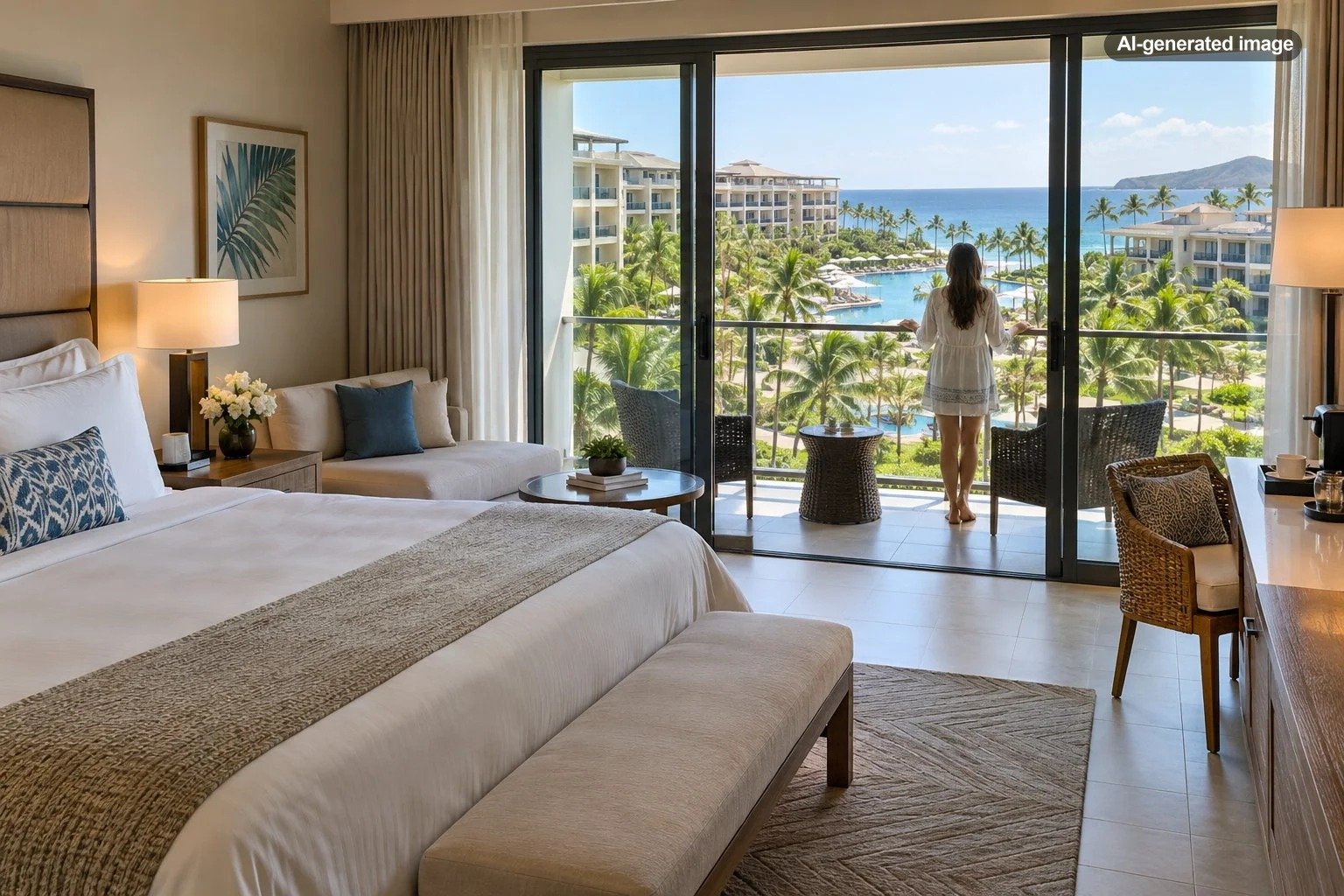
How to Choose the Best Building at a Large All-Inclusive Resort
Choosing the best building at a large all-inclusive resort is less about finding one universally superior location and more about matching the resort layout to your daily priorities. A building beside the main pool may be ideal for a family that wants easy access to activities, while the same location could frustrate a couple hoping for quiet afternoons and early nights.
The most useful approach is to study the property map, identify the places you expect to visit most often, and decide which inconvenience you are most willing to accept. At a sprawling resort, no building is likely to be equally close to the beach, restaurants, entertainment, children’s facilities, and lobby.
Quick answer: what should you prioritize?
- Choose near the beach if swimming, ocean access, and minimizing walks in wet clothing matter most.
- Choose near the main pool for activities and convenience, but expect more daytime noise.
- Choose near restaurants or the lobby if mobility, young children, or frequent departures make shorter walks important.
- Choose an outer or adults-oriented section when quiet matters more than immediate access to the resort’s busiest facilities.
- Confirm what the room category guarantees because a request for a particular building is not necessarily a confirmed assignment.
Start with the resort map, not the room photos
Room photographs reveal finishes and furnishings, but they rarely explain how the building functions within the property. Find the most current official resort map available and mark the lobby, beach entrances, pools, restaurants, evening venues, children’s areas, fitness center, and transportation stops.
Look closely at scale. Two buildings that appear adjacent on a stylized map may still be separated by gardens, stairs, winding paths, or elevation changes. Likewise, a room described as being near the beach may be close to the shoreline while remaining far from the safest or most convenient swimming area.
Recent guest reviews can help reveal recurring layout issues, but individual accounts need context. A traveler who describes a building as remote may have disliked walking, while another may have valued precisely the same building for its privacy.
Decide which place you will visit most often
Many guests focus on the most glamorous view and underestimate the importance of repeated trips. A family might walk between its room and the children’s pool several times a day. Another traveler may care more about breakfast access, evening entertainment, or a short route to the lobby for excursions.
Think through a typical day rather than a single arrival. Consider where you will get morning coffee, spend the afternoon, eat dinner, and end the evening. The best building usually reduces the walks you expect to repeat, not every possible walk across the resort.
Beach-focused stays
A beachfront or beach-adjacent building can simplify swimming and make it easier to return to the room for sunscreen, dry clothes, or forgotten items. The tradeoffs may include greater exposure to wind, more distant restaurants, or activity along a popular beach path. An ocean-facing position also does not automatically guarantee an unobstructed ocean view.
Pool-focused stays
Buildings near a central pool suit guests who enjoy organized activities and want refreshments or restrooms nearby. Families may appreciate this convenience, especially when children need breaks. However, music, announcements, games, and chair setup can make these areas lively well beyond the hours a particular guest plans to swim.
Dining- and lobby-focused stays
A central building can be practical for travelers who expect to use several restaurants, meet tour transportation, or visit guest services. It may also reduce exposure to heat or rain during long walks. Central locations often have more pedestrian traffic, service movement, and evening activity, so convenience can come with less seclusion.
Separate daytime noise from nighttime noise
Noise is not a single issue. A poolside room may be active during the afternoon but settle down after dinner. A building near a theater, plaza, bar, or event lawn could remain energetic later. Service roads, loading areas, elevators, ice machines, and housekeeping storage can create a different kind of disturbance early in the morning.
Travelers who sleep lightly should look beyond labels such as “quiet section.” Ask what is adjacent to the building, what lies behind it, and whether the room faces an entertainment area or internal courtyard. Upper floors may reduce some foot traffic, but they do not eliminate amplified music or sound carried across open grounds.
Account for mobility, weather, and elevation
Walking distance is only part of accessibility. A route can include slopes, stairs, uneven paths, bridges, or long uncovered sections. These details matter to guests with limited mobility, families using strollers, and anyone who finds prolonged heat or humidity tiring.
If the resort operates internal shuttles, ask where they stop and whether service frequency changes throughout the day. Shuttle access can make an outer building workable, but it may not suit a traveler who wants to leave the room spontaneously without waiting. Guests who require step-free access should confirm the accessible route and room features directly rather than relying only on a map.
Understand building names and room-category limits
Large resorts may organize accommodations by numbered buildings, themed sections, club levels, or distinct room collections. A premium category might include a particular zone, but it may instead describe the room itself, its service package, or its view. Never assume that a category name confirms proximity to a specific pool or beach.
Read the room description carefully and distinguish guaranteed features from preferences. Bedding, occupancy, view category, floor, and building location may be handled differently. If location is the main reason for paying more, ask the resort or booking provider what the category contractually includes before reserving.
Choose the right view without overlooking exposure
View labels can influence both price position and room placement, but the practical experience depends on direction and surroundings. An ocean-facing room may receive strong morning or afternoon sun. A garden-facing room could be cooler and quieter, although landscaping or pathways may reduce privacy on a lower floor.
Pool views often provide an energetic sense of place but can increase noise. Rooms facing away from central facilities may feel calmer while overlooking service areas, parking, neighboring buildings, or undeveloped land. If the outlook matters, ask how the resort defines each view category and remember that partial, lateral, and direct views are not interchangeable.
Match the building to your travel party
| Traveler priority | Building position to consider | Likely tradeoff |
|---|---|---|
| Families with young children | Near the family pool, casual dining, or children’s facilities | More daytime activity and foot traffic |
| Couples seeking quiet | Outer section or building away from entertainment | Longer walks to restaurants and the lobby |
| Guests with mobility concerns | Central, step-free building near essential facilities | Potentially busier surroundings |
| Beach-first travelers | Near the preferred beach access point | Possible distance from dining or evening venues |
| Excursion-heavy travelers | Near the lobby or designated pickup area | Less secluded resort atmosphere |
Make a precise request, then prepare for alternatives
A useful room request explains the desired outcome. Instead of asking only for “the best building,” request a quiet room away from evening entertainment, a short step-free route to dining, or a location close to the family pool. This gives the assignment team more than one way to accommodate the underlying need.
Submit the request through the appropriate booking channel and consider confirming that it was recorded before arrival. Keep the wording concise and prioritize one or two needs. Unless the room category explicitly guarantees the location, treat the request as a preference rather than a promise.
At check-in, ask about the assigned building before accepting a move. A different section may offer a better floor, renovated room, quieter exposure, or more practical route than the building originally requested. If a change is available, clarify whether it affects the room category or included services.
What travelers often overlook
- Room orientation: Two rooms in the same building can have very different noise, sun, privacy, and walking routes.
- Construction or maintenance: Temporary closures can change the usefulness of a location, so verify current conditions close to the trip.
- Restaurant patterns: A nearby venue may not serve every meal or operate every day.
- Departure logistics: Remote rooms can add time when meeting transfers or handling luggage.
- Competing priorities: The quietest building and the most convenient building are rarely the same.
Frequently asked questions
Can a resort guarantee a particular building?
Only when the booked room category or written reservation terms explicitly include that building or section. Otherwise, location requests are generally subject to assignment and availability.
Is an upper floor always better?
No. Upper floors may provide more privacy and less passing foot traffic, but they can be less convenient for strollers or mobility needs. Elevator proximity and the direction the room faces can matter as much as floor level.
How can I find the quietest building?
Use the resort map to identify distance from pools, theaters, bars, plazas, roads, elevators, and service zones. Then ask the resort which section is typically least affected by organized entertainment, while recognizing that programming and operations can change.
When should I submit a building request?
Add the request when booking if possible, then verify that it is attached to the reservation before arrival. Repeating the request does not make it guaranteed, but clear and consistent wording can reduce confusion.
Should I pay more for a preferred section?
It can be worthwhile when the category guarantees a location that materially improves the trip, such as step-free access or proximity to the facilities used daily. Paying more is harder to justify when the advertised benefit is vague or the desired building remains only a request.