How Many Game Drives per Day Are Usually Included at a Safari Lodge?
At many safari lodges, two game drives per day is the standard rhythm: one beginning around dawn and another starting in the late afternoon and sometimes continuing after dark. This twice-daily structure is especially common at safari lodges in private reserves and conservancies where guided wildlife viewing is a central part of the stay.
That does not mean every lodge, every destination, or every rate plan works exactly the same way. Some properties combine game drives with walking safaris, boat excursions, mokoro trips, birding, or other activities. Others offer more flexible schedules for guests using private vehicles. Understanding what a lodge means by ‘included safari activities’ is therefore just as important as counting the number of drives.
Quick answer: two drives per day is common
- Many safari lodges schedule one early-morning drive and one late-afternoon drive.
- The afternoon outing may extend beyond sunset where local rules and reserve conditions permit night driving.
- Game drives are often included in safari lodge rates, but inclusions should always be checked before booking.
- Arrival and departure times can mean you participate in fewer drives on your first or last day.
- Private vehicles, specialist safaris, and alternative activities can change the usual schedule.
Why safari lodges commonly schedule two game drives
The morning-and-afternoon pattern follows the natural rhythm of both wildlife and the environment. Temperatures are generally more comfortable at the beginning and end of the day, while the hotter middle portion of the day often becomes quieter.
An early drive also gives guides a chance to look for tracks and signs left during the night. The afternoon outing provides a different experience as temperatures ease and the landscape transitions toward evening. Where night driving is permitted, guests may also have opportunities to look for nocturnal species that are rarely active during a daytime outing.
The break between drives is deliberate rather than wasted safari time. Guests typically return to the lodge for breakfast or brunch, lunch, relaxation, swimming, reading, photography, spa treatments, or simply watching wildlife from the property. Safari days can begin very early, so this slower middle period helps make the schedule sustainable over a multi-night stay.
What a typical morning game drive is like
A morning game drive often begins before or around sunrise. Exact departure times vary by lodge, season, daylight, climate, and reserve procedures, so travelers should treat any published schedule as a guide rather than a guarantee.
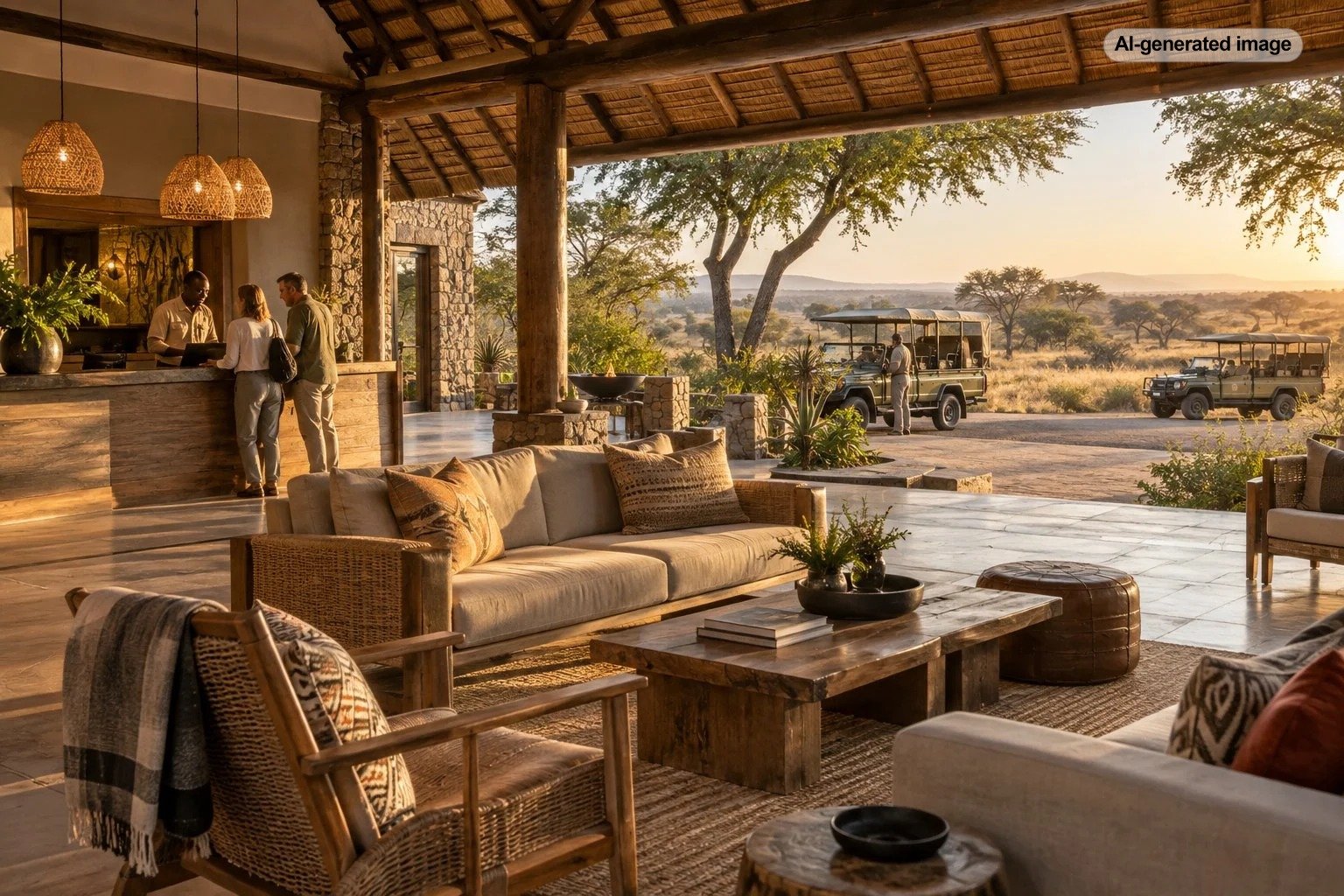
Guests normally meet their guide and, at some properties, a tracker before departing in a specialized safari vehicle. The route is rarely fixed. Guides may change direction in response to tracks, animal movements, weather, recent sightings, or information from other guides.
Morning drives can be particularly interesting for tracking. Guides may interpret footprints, calls, alarm behavior, disturbed vegetation, or other clues to understand what moved through the area overnight. Many lodges also include a brief refreshment stop during longer drives.
Afterward, guests generally return to the lodge for a substantial meal and several hours of downtime before the next scheduled activity.
What happens on the afternoon game drive
The second drive usually departs in the later afternoon. As the heat diminishes, wildlife activity can change considerably, making the outing feel different even if the vehicle explores some of the same habitat visited earlier.
Some lodges incorporate a sundowner stop, while others continue driving through sunset. In private reserves or conservancies where night drives are allowed, the guide may use the early evening to look for nocturnal wildlife before returning for dinner.
This is one reason taking both daily drives can be worthwhile. A morning and evening outing are not simply repetitions of the same experience. Light, temperature, animal behavior, routes, and sightings can all differ.
Are both game drives normally included in the lodge rate?
At many safari-focused lodges, twice-daily game drives are part of the accommodation package. However, travelers should never assume this solely because a property describes itself as a safari lodge.
Check the rate inclusions for phrases such as ‘twice-daily game drives,’ ‘scheduled safari activities,’ or ‘morning and afternoon game drives.’ Also determine whether conservation fees, park fees, private vehicles, specialist guides, transfers, premium drinks, and optional excursions are included or charged separately.
A lodge may offer two drives each day while a particular package includes only certain activities. Conversely, an inclusive safari package may let guests choose between a drive and another guided activity rather than requiring everyone to take two drives.
Why your first and last days may include fewer drives
A three-night safari does not automatically mean six game drives. Your arrival and departure schedule matters.
If you arrive after the afternoon vehicle has left, your first drive may not take place until the following morning. Likewise, an early flight or road transfer on departure day may prevent you from joining that morning’s activity.
When comparing safari itineraries, look beyond the number of nights and consider your actual arrival and departure times. Two itineraries with the same number of lodge nights can produce different amounts of time in the field.
When a lodge may offer more flexibility
Private safari vehicles can substantially change the experience. Rather than following the normal shared-vehicle schedule, guests may have greater flexibility over departure times, drive length, photography stops, and the balance between game drives and other activities.
This arrangement can be particularly useful for serious photographers, families, birders, travelers with specialized wildlife interests, or guests who prefer a slower pace. Flexibility still depends on reserve rules, guide availability, daylight, and operational conditions.
Some safari camps also operate in areas where wildlife activities differ from the classic vehicle-based model. A property in a wetland environment, for example, might combine drives with boat excursions or other forms of wildlife viewing. In those cases, asking how many safari activities are included each day may be more useful than asking only about game drives.
Do you have to take every game drive?
No. Even when two drives are included, guests generally do not need to participate in every outing. After several early mornings, skipping a drive to sleep, relax, enjoy the lodge, or watch wildlife from a deck can be appealing.
The tradeoff is simple: every missed drive reduces your time actively searching for wildlife, and sightings cannot be scheduled. Someone staying only two nights may value every available outing, while a traveler spending a week across several camps may prefer a more measured pace.
It is also worth remembering that game drives can involve several hours in a vehicle, sometimes over uneven tracks. Travelers who find long drives tiring can ask the lodge about shorter outings, private vehicles, accessible arrangements, or alternative activities before arrival.
What to confirm before booking a safari lodge
The phrase ‘game drives included’ leaves several practical questions unanswered. Before choosing a property, check:
- How many scheduled game drives are normally offered each full day?
- Are both the morning and afternoon drives included in your specific rate?
- Approximately how long are typical drives?
- Can afternoon drives continue after dark?
- How many guests normally share a safari vehicle?
- Are private vehicles available, and are they separately priced?
- Can guests substitute walks, boating, or other activities for a drive?
- Will your planned arrival time allow you to join the first afternoon activity?
- Can you join a morning drive before your departure transfer?
These details can matter more than a property’s total list of activities because they determine what your actual safari days will feel like.
How many drives are enough for a safari stay?
There is no universal ideal because wildlife viewing is unpredictable. A traveler taking four drives might have remarkable sightings, while another could spend several outings patiently searching for a particular species.
For that reason, multiple drives are valuable not simply because they increase the quantity of safari time, but because they expose you to different conditions. Weather changes, animals move, guides explore different sections of a reserve, and each morning or afternoon can unfold differently.
If wildlife viewing is the main reason for your trip, prioritize the number of realistic safari opportunities in your itinerary rather than assuming every lodge night provides two complete outings.
Frequently asked questions about safari game drives
Are two game drives per day standard?
They are common at many traditional safari lodges, particularly where guided vehicle safaris are the primary activity. Individual properties and destinations can operate differently.
What time do game drives usually start?
Morning drives typically begin around first light, while afternoon drives usually depart later in the day. Exact schedules vary with season, daylight, climate, reserve rules, and lodge operations.
Can you do a game drive at night?
Some safari areas permit afternoon drives to continue after sunset, while others restrict driving hours. Whether night driving is possible depends on the property’s location and applicable reserve or park rules.
Are game drives guaranteed to see major wildlife?
No. Game drives take place in natural environments where animals move freely, so specific sightings cannot be guaranteed. Experienced guides use tracking skills and local knowledge to search for wildlife, but every outing is different.
Is a private game-drive vehicle worth considering?
It can be useful when schedule flexibility, photography, family needs, mobility considerations, or specialized wildlife interests are especially important. For travelers comfortable with the standard schedule, a shared vehicle may provide everything they need.
The practical takeaway
For a traditional safari lodge stay, planning around two game drives per full safari day is a reasonable starting expectation: one in the morning and one in the afternoon. The important word, however, is ‘expectation.’ Actual inclusions depend on the lodge, reserve, package, season, and your arrival and departure schedule.
Before booking, verify the number of scheduled activities included in your specific rate and determine whether your travel logistics allow you to participate in them. That small amount of checking makes it much easier to compare safari lodges accurately and understand how much time you will genuinely spend exploring the wildlife area.