How to Choose an All-Inclusive Resort for Weak Swimmers
The best all-inclusive resort for a weak swimmer is not necessarily the property with the largest water park or most dramatic beach. It is one where the guest can enjoy the water without being pressured into conditions beyond their ability. Look for clearly separated pool depths, dependable supervision, easy ways to avoid deep water, appropriate flotation equipment, and a beach whose typical conditions match the swimmer’s comfort level.
A resort can provide helpful safeguards, but no amenity makes swimming risk-free. The goal is to choose a setting that supports good decisions and makes safer alternatives convenient.
Quick answer
- Favor pools with gradual entry, shallow zones, visible depth markings, and simple layouts.
- Ask exactly when lifeguards are present and which pools or beach sections they cover.
- Confirm whether properly sized life jackets are available; inflatable toys are not substitutes.
- Evaluate the beach separately from the pool because waves, currents, drop-offs, and visibility can change.
- Choose a resort where non-swimming activities are appealing, so water participation never feels mandatory.
Start with the swimmer’s actual comfort level
The term weak swimmer covers several different situations. One traveler may be comfortable standing in chest-deep water but unable to tread water. Another may swim adequately in a quiet pool yet panic in waves. A child may have completed lessons but still need constant adult supervision. An older adult may once have been confident but now have limited stamina, balance, or mobility.
Before comparing resorts, identify the environments that are comfortable and those that are not. Consider whether the traveler can float, recover after losing footing, swim a short distance without stopping, and exit a pool using a ladder. This is not a test to pass. It is a practical way to recognize which resort features matter most.
Examine pool design, not just the number of pools
A large pool complex can look impressive while being difficult for a hesitant swimmer to navigate. Photographs rarely reveal depth transitions, submerged ledges, strong water features, or how far a guest must travel to reach an exit.
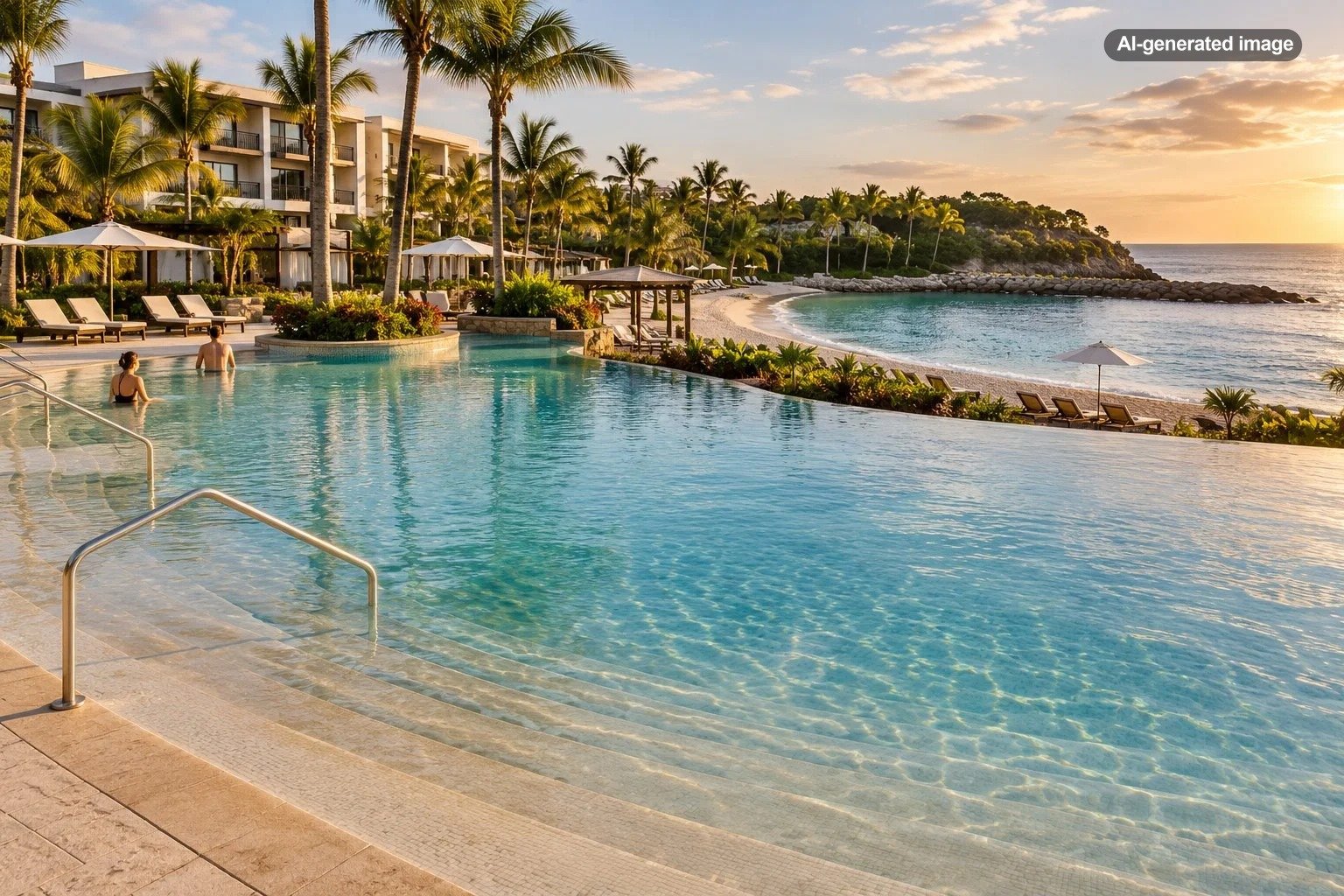
Useful features include zero-entry or beach-entry access, broad shallow sections, handrails, conventional steps, frequent exit points, and depth markings that are easy to see from the deck. A compact pool with a predictable shape may be more comfortable than a sprawling lagoon pool with islands, bridges, and hidden changes in depth.
If a resort advertises swim-up rooms, lazy rivers, water slides, or connected pools, ask whether those areas have currents, minimum swimming requirements, restricted flotation devices, or sections where guests cannot stand. Swim-up accommodations also place water immediately outside the room, which may be an unwanted concern for families with children or anyone prone to wandering.
Verify lifeguard coverage precisely
Do not treat the phrase “lifeguards on duty” as a complete answer. Coverage may apply only to a water park, one activity pool, or a designated beach area. Hours can differ among facilities and may change with weather, season, or staffing.
Ask the resort which aquatic areas are supervised, whether coverage continues throughout published pool hours, and how closures or schedule changes are communicated. It is also helpful to know whether the beach has a flag system and whether staff restrict swimming when conditions deteriorate.
A lifeguard is an important layer of protection, not a replacement for attentive supervision or the buddy system. This distinction is particularly important when children, medical conditions, alcohol, or unfamiliar open water are involved.
Confirm that suitable life jackets are available
The American Red Cross advises weak swimmers to wear life jackets around pools and water parks, and it recommends checking that a life jacket is approved for its intended use, fits the wearer, and has functioning straps and buckles. Before booking, ask whether the resort supplies life jackets, what sizes it carries, where guests obtain them, and whether they may be used in each pool or activity area.
If the answer is vague, consider bringing a properly fitted life jacket appropriate for the planned activity. Do not assume that arm bands, inflatable rings, pool noodles, or other air-filled toys provide equivalent protection. Some resorts also restrict personal flotation devices in certain pools or on slides, so confirm the policy in writing.
Treat the beach as a separate decision
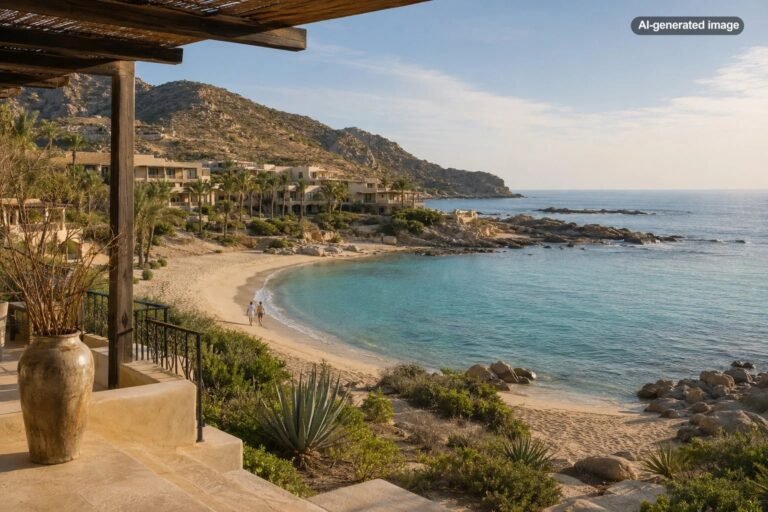
A calm-looking beach in promotional photography can behave differently with wind, tides, storms, or seasonal changes. Even normally gentle water may include uneven footing, sudden drop-offs, rocks, limited underwater visibility, or currents.
Ask whether the resort has a designated swimming zone, on-duty beach lifeguards, posted warning flags, and a sheltered or shallow section. Find out whether guests enter from sand, steps, a pier, or a rocky shoreline. A protected bay may feel more manageable than an exposed oceanfront, but conditions are never guaranteed.
Weak swimmers should not plan around snorkeling from shore, swimming to an offshore platform, or keeping up with a group in open water. If snorkeling is important, ask whether a supervised beginner session is available in a controlled setting and what flotation equipment is required.
Review water activities one by one
“Nonmotorized water sports included” can encompass activities with very different demands. A calm, guided boat ride is not equivalent to paddleboarding, kayaking, sailing, or open-water snorkeling. Request the operator’s participation requirements rather than relying on a general resort description.
Ask whether life jackets are mandatory, whether guides remain nearby, whether the activity enters deep water, and whether a guest must demonstrate swimming ability. Travelers should feel free to decline an activity even if it is included in the room rate. An all-inclusive plan does not create an obligation to use every amenity.
Consider the route around the water
Pool safety also depends on the surrounding environment. Look for uncluttered deck routes, adequate lighting, stable handrails, and paths that do not force guests to cross wet or crowded areas. Travelers with limited mobility may want a room close to the main pool but not directly beside an unfenced water feature.
Families should examine whether children’s pools are physically separated from deeper pools and whether young guests can leave a kids club for an aquatic area. Ask how the resort identifies adults authorized to collect a child and what supervision applies during scheduled water activities.
Choose a resort that is enjoyable without swimming
A weak swimmer may have a better vacation at a resort where water is optional rather than the center of every day. Comfortable shaded seating, gardens, fitness classes, entertainment, spa facilities, cooking activities, and convenient excursions can reduce the social pressure to enter a pool or ocean.
This is also where resort scale matters. A huge property built around multiple aquatic zones may suit a family with confident swimmers but frustrate a traveler who mainly wants dining, relaxation, and easy access to dry-land activities. A smaller resort with one manageable pool may provide a calmer experience, even if its amenity list is shorter.
Questions to send the resort before booking
- Which pools have zero-entry access, shallow sections, steps, and handrails?
- What are the minimum and maximum depths of the main pool?
- Which pools and beach areas have lifeguards, and during what hours?
- Are life jackets available in adult and child sizes, and where may they be worn?
- Does the beach have a marked swimming area and a warning-flag system?
- Do any water activities require a swimming test or experience in deep water?
- Can the resort assign a room away from unfenced pools or canals if requested?
Policies, equipment, and staffing can change, so save the resort’s written response and reconfirm important details shortly before arrival. If an answer is unclear, treat that uncertainty as part of the booking decision.
What travelers often overlook
Alcohol, fatigue, heat, unfamiliar medication effects, and the desire to follow a group can all change a person’s judgment or physical ability. The CDC recommends avoiding alcohol before or during swimming and using the buddy system. It also advises extra caution when a medical condition or medication can affect balance, coordination, judgment, or drowning risk.
Travel insurance and resort waivers do not prevent an incident. The most useful plan is behavioral: stay within known limits, wear appropriate safety equipment, choose supervised areas, and skip an activity when conditions or instructions feel unsuitable.
Frequently asked questions
Is a zero-entry pool automatically suitable for a weak swimmer?
No. It provides a gradual entrance, but the pool may still become deep or include currents and crowded areas. Confirm the depth layout and available exits.
Are adults allowed to wear life jackets in resort pools?
Policies vary. Ask before booking, especially if wearing one is essential. Confirm that the resort permits the specific type of jacket you intend to use.
Is a lifeguarded beach safer than an unguarded beach?
Professional supervision is a valuable safeguard, but it cannot remove waves, currents, weather changes, or personal limitations. Follow posted warnings and remain with a capable buddy.
Should a weak swimmer book a swim-up room?
Usually only if immediate pool access is genuinely desirable and everyone sharing the room can manage that exposure responsibly. A conventional room may offer greater peace of mind.
Can swim lessons before the trip help?
Instruction can improve skills and confidence, but a few lessons should not be treated as proof that someone is ready for open water. Practice in the type of environment the traveler expects to encounter.