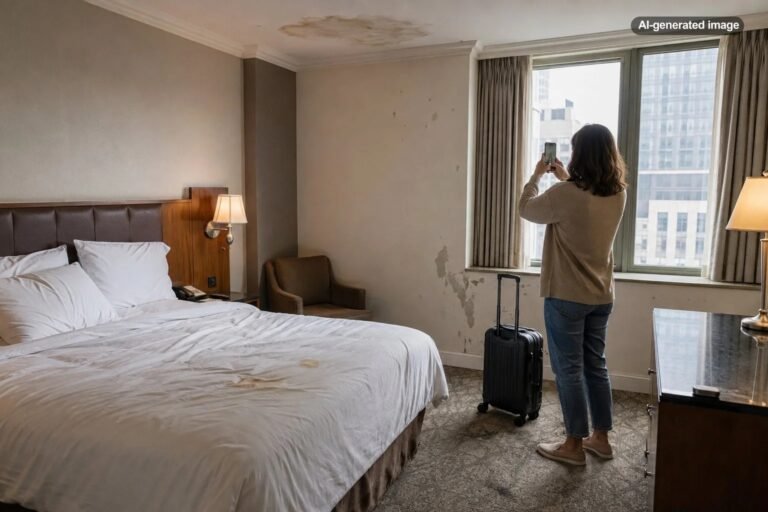
What to Do If Your Hotel Room Has Mold or a Musty Smell
A musty hotel room deserves attention, especially when the odor is accompanied by visible spotting, damp carpet, water stains, condensation, or signs of a leak. A musty smell by itself does not prove that mold is present, but it can signal excess moisture or another indoor-air problem that the property should investigate.
If you encounter either visible mold or a persistent musty odor, avoid trying to clean the room yourself. Keep your belongings away from visibly damp or affected surfaces, document what you found, and contact the hotel promptly to request another room or another practical resolution.
Quick answer: what to do first
- Do not disturb visible mold. Avoid rubbing, scraping, brushing, or attempting to clean it.
- Take a few clear photographs of visible staining, moisture, damaged surfaces, or other relevant conditions if you can do so without touching the area.
- Notify the front desk or hotel management promptly and describe the location and extent of the problem.
- Ask to move to a different room if the room has visible mold, substantial dampness, a strong persistent odor, or conditions that make you uncomfortable remaining there.
- Pay attention to respiratory or allergic symptoms. People with asthma, mold allergies, immune suppression, or underlying lung disease may need to be particularly cautious about exposure.
A musty smell is a warning sign, not a diagnosis
Mold needs moisture to grow, which is why visible mold and musty conditions often occur around leaks, condensation, wet building materials, poorly dried carpeting, or other persistent moisture problems. The U.S. Environmental Protection Agency emphasizes that controlling moisture is central to controlling indoor mold growth.
However, travelers generally cannot determine the cause of an odor simply by smelling a room. A musty odor could be associated with damp materials, an HVAC issue, old carpeting, plumbing moisture, or microbial growth that is not immediately visible. You do not need to identify the species of mold or prove exactly what is causing the smell before bringing the problem to the hotel’s attention.
Look for moisture clues without conducting your own investigation
A brief visual check can help you explain the problem to hotel staff. Pay particular attention to areas where moisture commonly becomes apparent, such as around windows, ceilings, bathroom walls, air-conditioning units, plumbing fixtures, carpet edges, and exterior walls.
Useful observations include visible spotting or fuzzy growth, discolored drywall, peeling finishes, swollen baseboards, damp carpet, ceiling stains, active dripping, or heavy condensation. If you notice evidence behind furniture or around an HVAC vent, there is no need to dismantle anything or move heavy objects to investigate further.
This distinction matters because disturbing moldy material can release particles into the air. EPA guidance for evaluating mold and moisture problems advises avoiding contact with mold and avoiding breathing mold spores. Professional remediation guidance also calls for appropriate protective equipment when mold is being disturbed.
Document the condition before you change rooms
Documentation can make the conversation with the property simpler. Take photographs of the affected area, note your room number, and record roughly when you first noticed the odor or visible condition. If water is actively leaking, tell the property immediately rather than spending additional time documenting it.
When speaking with hotel staff, describe what you can directly observe rather than making a diagnosis. For example, saying that there is a strong musty odor, damp carpet next to the air-conditioning unit, and dark spotting on the wall gives the hotel more useful information than simply declaring that the building has a particular type of mold.
If the hotel offers a room change, it is reasonable to inspect the replacement briefly before unpacking again. A room on another floor or in another part of the building may be preferable when the original issue appears connected to a leak, localized water damage, or a particular HVAC unit, although the hotel is in the best position to understand its building systems.
Do not turn hotel-room mold into a do-it-yourself cleanup project
Travelers should generally report the condition rather than cleaning it. The CDC notes that mold cleanup can create health risks and recommends respiratory, skin, and eye protection for people performing cleanup. People with allergies, immune suppression, underlying lung disease, asthma, or COPD can face greater concerns during mold cleanup.
Wiping a small patch with a hotel towel, spraying it with a household cleaner, or trying to cover the odor with fragrance does not address the underlying moisture source. It can also disturb the affected material and complicate the hotel’s evaluation of the problem.
Even when mold is visible only in one location, the appropriate response involves both dealing with the affected material and addressing the moisture that allowed growth to occur. That is a maintenance responsibility for the property, not a task a guest should need to perform.
Know when health considerations should take priority
Mold exposure can cause allergic reactions and irritation of the eyes, skin, nose, throat, or lungs. According to the EPA, people who are allergic to mold may experience symptoms such as sneezing, a runny nose, red eyes, or skin irritation, and mold can trigger asthma attacks in some people with asthma who are allergic to mold.
If you begin experiencing significant breathing difficulty or another severe medical symptom, leave the affected environment and seek appropriate medical attention rather than waiting for hotel maintenance to investigate. For less urgent symptoms that concern you, a healthcare professional can provide advice based on your health history and the nature of your exposure.
Travelers with asthma, COPD, immune suppression, significant mold allergies, or other underlying respiratory conditions may reasonably choose a more conservative approach and avoid remaining in a room with obvious mold or substantial dampness.
What to ask the hotel for
Start with the simplest practical request: another room that does not have the same odor or visible moisture problem. If the property cannot provide a suitable replacement, ask what alternative it can offer. Depending on the reservation and property, that conversation could involve changing accommodations, shortening the stay, or discussing a refund for affected nights, but policies and remedies vary by hotel and booking arrangement.
If you booked through a third-party platform, preserve your photos and notes and contact the platform if the hotel cannot resolve the issue directly. Explain the condition, what you reported to the property, and what resolution was offered. Avoid assuming that a particular refund or relocation policy applies until you have reviewed the terms attached to your reservation.
Protect your luggage and clothing from damp surfaces
If the room contains visible moisture or mold, keep suitcases, clothing, shoes, and other belongings away from affected walls, carpet, upholstery, and cabinetry. Use the luggage rack or another dry, clean surface rather than placing bags on damp carpet.
If an item becomes wet because of a leak or direct contact with a damp surface, separate it from dry belongings. The EPA notes that moisture is fundamental to mold growth and recommends drying water-damaged materials promptly. For travelers, the practical lesson is simple: do not leave wet clothing or luggage sealed inside a suitcase for the remainder of a trip.
What travelers often overlook
The color of mold does not tell you how serious a situation is. Travelers do not need to identify whether a patch is so-called black mold or another variety before reporting it. Visible indoor mold and unresolved moisture are enough reason to bring the condition to hotel management’s attention.
An odor that disappears after the air conditioner starts is still worth mentioning. Temporary masking or increased airflow does not establish that the moisture source has been corrected.
A room change solves the guest’s immediate problem, not necessarily the building problem. Once you have reported the issue, determining the cause and arranging appropriate remediation is the property’s responsibility.
Frequently asked questions
Should I sleep in a hotel room that smells musty?
A faint unfamiliar odor does not automatically mean the room contains mold, but a strong persistent musty smell, especially when accompanied by dampness, water damage, or visible growth, is a reasonable basis for asking the hotel to investigate or move you. Travelers with respiratory conditions or significant mold sensitivity may prefer to avoid remaining in the room.
Should I wipe visible mold off a hotel wall?
No. Report it rather than disturbing it. Mold cleanup can involve exposure risks, and official guidance recommends precautions for people performing remediation. Hotel guests should not be expected to clean affected building materials.
Do I need a mold test before complaining to the hotel?
No. You can report observable conditions such as visible growth, staining, persistent musty odor, damp carpet, condensation, or a leak. Determining the cause and deciding whether professional assessment or remediation is necessary is a property-management matter.
Can mold in a hotel room make you sick?
Mold exposure can cause allergic reactions and irritation, and it may trigger asthma symptoms in susceptible people. Individual responses vary. If you develop concerning symptoms, especially breathing problems, seek medical advice appropriate to their severity.
What if the replacement room also smells musty?
Notify the hotel again and explain that the second room has a similar problem. If the property cannot provide accommodations you are comfortable using, discuss available alternatives with management and, when applicable, the company or booking platform through which you made the reservation.