Is a Hotel Kitchenette Enough for a Weeklong Stay?
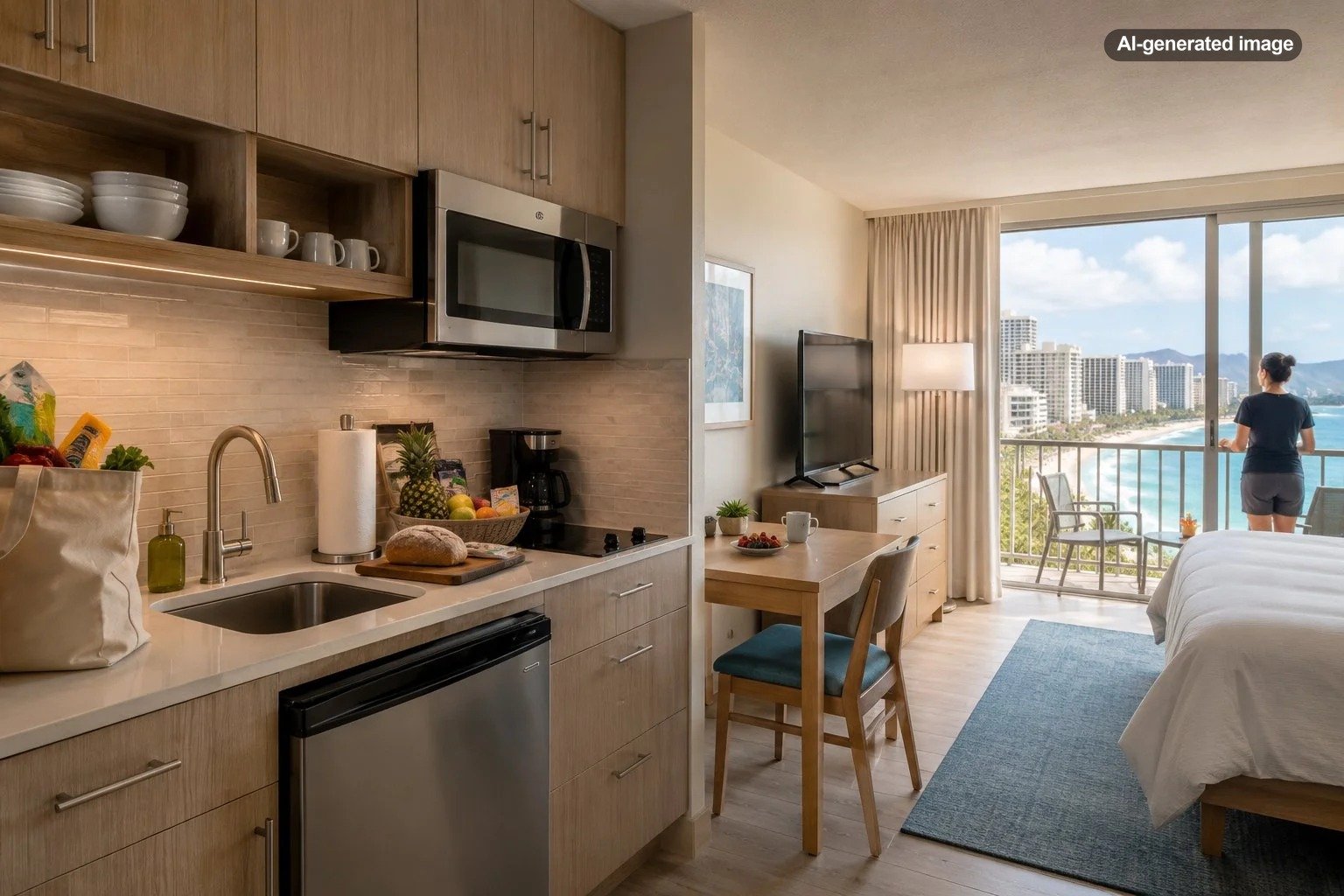
Yes, a hotel kitchenette can be enough for a weeklong stay, but the answer depends far more on what is actually in the kitchenette than on the word itself. A setup with a refrigerator, sink, microwave, and real cooktop can cover breakfast, simple lunches, and many dinners surprisingly well. A so-called kitchenette consisting only of a mini-fridge and microwave is much more limiting.
For a seven-night trip, the most useful question is not simply whether a room has a kitchenette. It is whether the room has the appliances, food storage, cookware, and preparation space needed for the way you realistically expect to eat.
Quick answer: when a hotel kitchenette is enough
- A kitchenette with a cooktop, refrigerator, microwave, sink, and basic cookware can be practical for most of a week.
- A microwave-and-mini-fridge setup is better for breakfast, snacks, leftovers, and reheating than for regular cooking.
- Travelers planning to eat some meals out usually need less kitchen capability than travelers preparing nearly every meal themselves.
- Families, long-stay business travelers, and people with specific food preferences should verify the exact appliance list before booking.
- The refrigerator size, cookware, counter space, and cleanup setup can matter almost as much as the cooking appliance.
Not all hotel kitchenettes mean the same thing
The term kitchenette is not a guarantee of one specific equipment list. One hotel may use it for a compact cooking area with a refrigerator, sink, microwave, and stovetop. Another room described similarly may have little more than a microwave, coffee maker, and small refrigerator.
This distinction becomes much more noticeable during a weeklong stay. For one or two nights, a mini-fridge and microwave may be perfectly adequate. By day five or six, travelers who expected to prepare real meals may find the limitations frustrating.
Before booking, look for an actual room description or amenity list rather than relying on the kitchenette label alone. The most important item to confirm is usually the presence of a stovetop or another approved cooking appliance. That single feature substantially expands what can be prepared.
What you can realistically cook in different kitchenette setups
| Setup | Best for | Main limitation |
|---|---|---|
| Mini-fridge and microwave | Breakfast foods, snacks, leftovers, prepared meals | Very limited traditional cooking |
| Refrigerator, microwave, and sink | Cold meals, reheating, simple food preparation | No conventional stovetop cooking |
| Refrigerator, microwave, and cooktop | Eggs, pasta, rice, soups, skillet meals, simple dinners | Limited burners and preparation space |
| Extended-stay style kitchen | Regular meal preparation throughout the week | Still usually more compact than a residential kitchen |
A traveler who wants yogurt and fruit in the morning, sandwiches at lunch, and restaurant dinners may be completely satisfied with a basic kitchenette. Someone planning to make eggs every morning and cook dinner most evenings will probably want a stovetop, a larger refrigerator, and proper cookware.
A stovetop often determines whether the room feels genuinely useful
The difference between reheating food and cooking food is significant over seven days. A microwave can handle oatmeal, reheated leftovers, frozen meals, and many convenience foods. It does not provide the same flexibility as a burner for eggs, pasta, vegetables, soups, or skillet meals.
For travelers who intend to prepare more than one substantial meal per day, a room with at least one or two burners is considerably easier to live with. Extended-stay accommodations are often designed around this use case, although individual properties and room types can differ, so the exact amenities should still be checked.
Refrigerator size matters more during a seven-night trip
A small refrigerator may be adequate for beverages, a few breakfast items, and restaurant leftovers. It can become crowded quickly when storing ingredients for several days of meals.
If grocery shopping is part of the plan, check whether the room description specifies a full-size refrigerator, compact refrigerator, or mini-fridge. Travelers who rely on frozen foods should also consider whether usable freezer space is mentioned. A tiny freezer compartment may not accommodate the same amount of food as a separate freezer section.
This is particularly relevant for families and travelers trying to reduce restaurant meals. Buying groceries for several people only works conveniently when there is enough cold storage to hold them.
Cookware and utensils can be the overlooked problem
A cooktop is not particularly useful without a pan. Before assuming the kitchenette is ready for cooking, see whether the hotel specifies pots, pans, plates, bowls, flatware, cooking utensils, or dishware.
Some extended-stay rooms are furnished with basic kitchen equipment, while other hotel setups may be more minimal. If the published room information does not say what is supplied, it is reasonable to contact the property before arrival rather than discovering the limitation after buying groceries.
Travelers should also check whether the room has basic food-preparation space. Even a well-equipped kitchenette can feel awkward if there is almost no counter area available after appliances and personal belongings are placed on it.
Think about how many meals you actually plan to prepare
A kitchenette does not need to replace a home kitchen to make a weeklong stay easier. For many travelers, its value is in reducing the number of meals that must be purchased elsewhere.
A practical pattern might be preparing breakfast in the room, assembling a simple lunch, and going out for dinner. Another traveler might cook dinner on several evenings but deliberately choose easy one-pan or one-pot meals. Both approaches place much less pressure on a small kitchenette than trying to reproduce a complete home cooking routine.
If the main purpose is saving time or having more control over meals, even a modest kitchenette can be worthwhile. If the goal is cooking three complete meals every day for several people, choosing an extended-stay room with a more fully equipped kitchen may provide a noticeably better experience.
Families and travelers with dietary needs may need more capability
Kitchen requirements become more important when several people share the room. A family may need enough refrigerator capacity for drinks, breakfast foods, snacks, and leftovers at the same time. Two burners can also be more useful than one when preparing multiple parts of a meal.
Travelers who prefer to control their own ingredients may similarly place greater value on a usable sink, cookware, food storage, and an actual cooking surface. The point is not that every such traveler needs a full kitchen, but that the tolerance for a bare-bones kitchenette may be lower.
Do not forget cleanup, dining space, and food storage
Cooking is only half of the equation. A week of preparing meals also means washing dishes, storing groceries, managing trash, and finding somewhere comfortable to eat.
A sink located within the kitchenette is much more convenient than trying to manage food preparation without one. A dishwasher can be useful but is not essential for many travelers if basic dishwashing supplies and a practical sink are available.
Dining space also deserves attention. A desk or movable table may work well for one or two people, while a family may find eating every meal in a room with minimal seating less comfortable than expected.
When you should choose a full kitchen instead
A more complete kitchen is worth prioritizing when cooking will be a central part of the stay rather than an occasional convenience. This may apply when you plan to prepare most meals, are traveling with several people, expect to buy groceries for the entire week, or simply prefer a routine closer to what you have at home.
Look for accommodations that explicitly describe a full or fully equipped kitchen and then verify the listed appliances. A larger refrigerator, stovetop, sink, microwave, cookware, and adequate storage provide considerably more flexibility than a basic hotel refreshment area.
What travelers often overlook before booking
The biggest mistake is seeing the word kitchenette and assuming it means the same thing everywhere. For a weeklong stay, a few minutes spent checking the detailed amenity list can prevent a significant mismatch between expectations and reality.
- Cooktop: Confirm whether there is an actual burner rather than assuming one is included.
- Refrigerator: Determine whether it is mini, compact, or full size when food storage matters.
- Cookware: Check whether pots, pans, plates, utensils, and basic cooking tools are supplied.
- Sink: A dedicated kitchenette sink makes preparation and cleanup much easier.
- Counter and dining space: Consider where food will be prepared and where everyone will eat.
- Room-specific amenities: Do not assume every room type at the same property has identical kitchen facilities.
FAQ
Can you cook every day in a hotel kitchenette?
Potentially, yes, if the room includes an approved cooking surface, refrigerator, sink, and appropriate cookware. A microwave-only kitchenette is better suited to reheating and simple food preparation.
Is a mini-fridge enough for a week?
It can be if you are storing beverages, breakfast foods, and a small number of leftovers. It may be restrictive if you plan to keep several days of groceries or ingredients for a family.
What should I verify before booking a hotel with a kitchenette?
Check the exact appliances, refrigerator size, presence of a sink and cooktop, available cookware and utensils, and whether those amenities apply to the specific room type you are reserving.
Is a kitchenette better than a standard hotel room for seven nights?
For travelers who want to keep food cold, prepare breakfast, reheat leftovers, or cook some meals, it can make a weeklong stay substantially more practical. Travelers who expect to eat nearly every meal outside the hotel may place less value on it.
Should I book an extended-stay hotel for a one-week trip?
It can be a strong option when kitchen facilities, food storage, laundry access, or a more residential room layout matter to you. The right choice depends on the specific property, room features, location, and how you plan to spend the week.