How to Tell If an All-Inclusive Resort Beach Is Swimmable
A beautiful beach outside an all-inclusive resort is not automatically a good swimming beach. The most reliable way to judge whether it is swimmable is to look at several factors together: current surf and weather conditions, warning flags, lifeguard guidance, water-quality advisories, shoreline characteristics, and how those conditions change by season and even by hour.
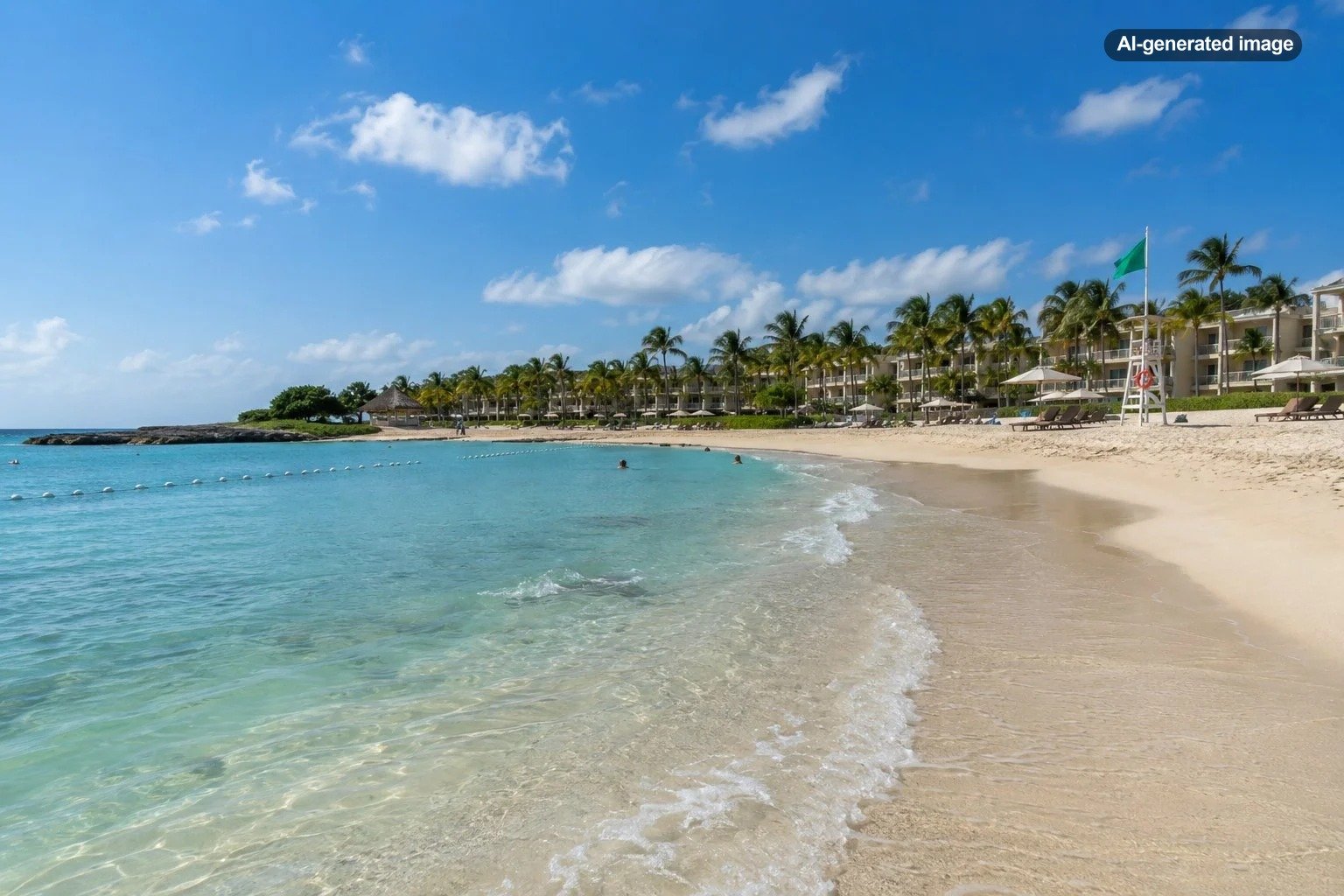
Photos on a resort website can tell you what the shoreline looks like, but they cannot establish what the water will be like during your stay. A calm turquoise sea photographed on one morning may become rough after a weather system, while a beach known for waves may occasionally have quiet conditions. Treat swimmability as a current condition rather than a permanent resort amenity.
Quick answer: signs that a resort beach may be suitable for swimming
- Beach patrol or lifeguards indicate that swimming is permitted in the designated area.
- Local warning flags and posted signs indicate acceptable conditions for your swimming ability.
- There is no current beach closure, water-quality advisory, or harmful algal bloom warning.
- Surf, shore break, currents, and underwater terrain are manageable for the people in your group.
- The conditions you see in person match current local forecasts rather than old photos or reviews.
Start with official warnings, not the appearance of the water
Clear water and sunshine can create a false sense of security. Rip currents and other surf hazards can occur even when the beach looks inviting. Before entering, check posted beach signs, flags, lifeguard instructions, and any local marine or surf forecast available for the area.
Flag systems are especially useful, but travelers should not assume that every destination uses identical colors or definitions. The National Weather Service notes that warning systems can vary by location. Read the signs posted at the particular beach and follow instructions from the local beach patrol rather than relying entirely on a flag meaning you remember from another trip.
If a resort has a lifeguarded swimming zone, ask about the conditions that day. A lifeguard can often identify currents, changing wave patterns, dangerous sections of shoreline, and areas where entering or leaving the water is easier. When the water is closed, treat that as a firm boundary rather than an invitation to decide for yourself whether it looks calm enough.
Understand the difference between calm-looking water and safe water
One of the most important distinctions for resort guests is that a beach can look calm and still have hazardous currents. Rip currents are channels of water moving away from shore and can carry swimmers offshore. They may occur on otherwise attractive beach days and can be difficult for an inexperienced visitor to recognize.
The National Weather Service advises swimmers to check local beach conditions before entering and, where possible, swim at beaches with lifeguards. Travelers who are comfortable in a swimming pool should also remember that surf swimming requires different skills. Waves, moving water, changing depth, wind, and currents can make an ocean swim substantially more demanding.
This matters particularly when comparing all-inclusive resorts. Two properties a short distance apart can have very different swimming experiences because one beach is protected by a bay, reef, or natural landform while another faces open water. Even within one resort frontage, one section may have gentler entry conditions than another.
Look closely at the shoreline and water entry
Swimmability is not only about waves. Consider how easily you can enter and leave the water. A gradual sandy entry is often simpler for casual swimmers than a beach with exposed rock, coral, steep drop-offs, or a powerful shore break. This can make an especially large difference for children, older travelers, hesitant swimmers, and anyone with limited mobility.
When researching a resort, look for consistent descriptions of the actual swimming area rather than general statements that the property is beachfront. Useful questions include whether the bottom is predominantly sand or rock, whether water shoes are commonly recommended, whether the depth changes quickly, and whether swimming is generally concentrated in a particular marked section.
Do not infer these characteristics from aerial photographs alone. Water depth, submerged objects, and currents may not be visible in an image, and seasonal changes can alter the shoreline.
Check water quality as well as wave conditions
A beach can be physically calm yet temporarily unsuitable for swimming because of water-quality concerns. Public agencies may issue swimming advisories or closures when monitoring identifies conditions that could increase health risks. The U.S. Environmental Protection Agency recommends checking beach advisories and paying attention to signs indicating that swimming is not recommended.
The CDC also advises travelers to avoid natural water that is unusually cloudy, discolored, or foul-smelling and to follow local swimming advisories. Heavy rainfall can wash contaminants into swimming areas, so conditions after significant rain may differ from those during a long stretch of dry weather.
Visible foam, scum, unusual discoloration, paint-like streaks, strong odors, or dead fish can also warrant caution because they may accompany harmful algal blooms. Not every unusual patch of water is dangerous, and harmful toxins cannot always be identified visually, which is why official advisories are more useful than trying to diagnose water conditions yourself.
Season can change the answer dramatically
When reading resort reviews, pay attention to the month of travel. A guest who describes glassy water in one season may not be contradicting another guest who encountered strong surf several months later.
Weather patterns, prevailing winds, distant storms, tides, and swell direction can all affect the swimming experience. Distant tropical systems can also influence surf even when the resort itself has pleasant weather. For that reason, comments such as “the beach is always calm” or “you can never swim there” deserve caution unless they refer to a genuinely protected physical setting and are supported by broader local information.
For travelers who consider ocean swimming central to the vacation, seasonal beach conditions deserve almost as much attention as the resort’s rooms, restaurants, or pools. A property may be an excellent fit for travelers who mainly want ocean views and beach lounging while being a weaker choice for someone expecting long, easy swims every morning.
Match the beach to the weakest swimmer in your group
There is no single definition of a swimmable beach. A confident open-water swimmer may be comfortable in conditions that are unsuitable for a young child or an adult who only occasionally swims. When choosing a resort for a group, evaluate the beach according to the person who needs the easiest conditions.
Families may place more importance on a gradual entry, designated swimming areas, lifeguard coverage, and predictable shallows. Strong swimmers may care more about currents, surf forecasts, and whether the shoreline allows sustained swimming rather than simply wading. Travelers with mobility concerns may need to consider the firmness of the sand, steps, slopes, rocks, and distance from the resort facilities to the water.
If the beach is a major reason for booking, consider identifying more than one acceptable lodging option. That makes it easier to compare shoreline characteristics and broad seasonal conditions instead of selecting a resort first and discovering later that its beach does not match your preferred style of swimming.
What travelers often overlook
A beachfront resort is not necessarily a swimming resort. Some properties are appealing because of scenery, surfing, dramatic coastline, snorkeling access, or spacious beaches rather than calm swimming water.
A protected-looking cove is not a guarantee. Local currents, tides, marine life, weather, and water quality still matter.
Recent conditions are more useful than old reviews. Reviews can help identify recurring patterns, but current warnings and forecasts should guide the decision to enter the water on a particular day.
The absence of a warning flag is not proof of safety. Some beaches do not use flag systems or may not have staffed lifeguard stations. When information is unclear, seek local guidance rather than assuming no warning means no hazard.
Questions to ask a resort before booking
- Is there a designated swimming area directly in front of the property?
- Are lifeguards normally present, and if so, during what parts of the day?
- Is the usual entry sandy, rocky, reef-like, or mixed?
- Are there seasons when surf or currents commonly make swimming more difficult?
- Where are current beach closures, warning flags, or water-quality notices posted?
- Is there another nearby swimming area guests commonly use when the main beach is rough?
Answers to these questions should be treated as planning information, not guarantees of future conditions. Weather and ocean conditions can change quickly.
FAQ
Can you tell whether a resort beach is swimmable from photos?
Not reliably. Photos can show the type of shoreline and general setting, but they cannot establish current surf, currents, depth, water quality, or seasonal conditions.
Does a green or favorable beach flag mean there is zero risk?
No. Flag meanings vary by jurisdiction, and even favorable conditions still require normal water precautions. Follow the specific posted guidance at the beach and consider your own swimming ability.
Should I avoid the ocean after heavy rain?
Heavy rain can wash contaminants into natural swimming areas. Check local advisories and water-quality information, particularly when runoff appears to be affecting the beach.
What if the resort beach is rough during my stay?
Use the resort pool or another officially open swimming area rather than entering hazardous surf. Conditions may also change later in the day, so check again with lifeguards or local beach authorities.
What is the best single indicator that a beach is safe to enter?
No single visual clue is enough. The strongest approach is to combine current official guidance, lifeguard advice, posted warnings, water-quality information, and an assessment of whether the conditions suit your swimming ability.