How to Avoid Getting a Hotel Room With a Connecting Door
If you prefer a hotel room without a connecting door, the most effective approach is to make that preference explicit before arrival and repeat it when your room is assigned. Instead of asking only for a quiet room, request a room with no interior connecting or communicating door to another guest room. That wording is more precise and gives the hotel a clearer idea of what you are trying to avoid.
A connecting door is a normal feature in many hotels, especially properties designed to accommodate families and groups. It does not mean the neighboring guest can enter your room: the doors are normally secured from each respective side when the rooms are occupied separately. Still, some travelers dislike the layout because of privacy preferences, concern about sound transmission, or simply the feeling of having another door inside the room.
Ask for a non-connecting room when you book
The best time to state your preference is when making the reservation. If there is a field for special requests, use direct wording such as, Please assign a room without a connecting door to another guest room.
Be careful with hotel terminology. Connecting rooms generally have an interior door between them. Adjoining or adjacent rooms may simply be located beside or near one another. Because hotels and booking systems do not always use these words identically, describing the physical feature you want to avoid is clearer than relying on a single industry term.
A special request is also different from booking a particular room type. A reservation may confirm a king room, two-queen room, suite, or another category while leaving the exact room number and location to be assigned later. For that reason, a note on the reservation should usually be treated as a preference unless the property specifically confirms otherwise.
Contact the property directly when the preference matters
If avoiding a connecting door is important to your stay, consider contacting the hotel after booking. The goal is not to obtain an unrealistic guarantee but to make sure the preference is visible to the property that will actually assign your room.
Keep the request simple. You can explain that you would prefer a room that does not have an interior door connecting it with another guest room. If privacy or noise is the concern, saying so briefly may help the staff understand why the request matters.
This is especially useful when your reservation was made through an intermediary. Information entered during booking may reach the hotel in different ways, so direct confirmation can reduce ambiguity. Record any useful details from the conversation, but remember that room assignments can still change before arrival.
Repeat the request before accepting your room
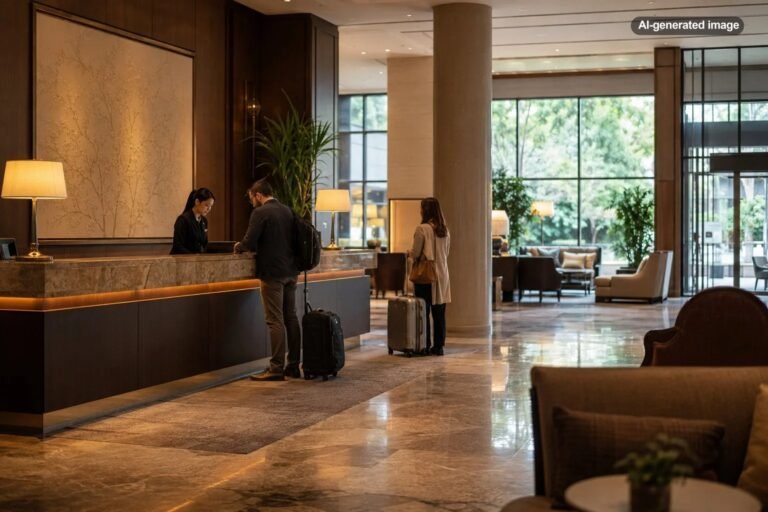
Check-in is one of the most useful moments to raise the issue because the front desk is working with the rooms available for assignment at that time. Before taking the key, politely ask whether the assigned room has a connecting door.
A useful question is: Could you please confirm that this room does not have an interior connecting door to another room? That is more specific than asking whether the room is quiet, secluded, or private.
If the assigned room does have a connecting door, ask whether another room in the same reserved category is available without one. Depending on occupancy, housekeeping progress, maintenance, and other operational factors, the hotel may or may not have another suitable room ready. Being flexible about floor or exact location can sometimes make the preference easier to accommodate.
Do not combine too many room requests
Travelers sometimes submit a long list of preferences: highest floor, far from the elevator, specific view, near the ice machine, early check-in, particular bedding, and no connecting door. The more restrictions you add, the smaller the pool of rooms that can satisfy every request.
If the connecting door is what matters most, make it your primary preference. A lower-floor non-connecting room may be a better choice for you than a higher-floor room with exactly the feature you wanted to avoid.
- Highest priority: no interior connecting door.
- Secondary priority: a quiet location, if available.
- Optional preferences: floor, distance from elevator, or other location details.
Ranking preferences this way gives hotel staff more flexibility without losing sight of the issue that matters most.
Inspect the room shortly after arrival
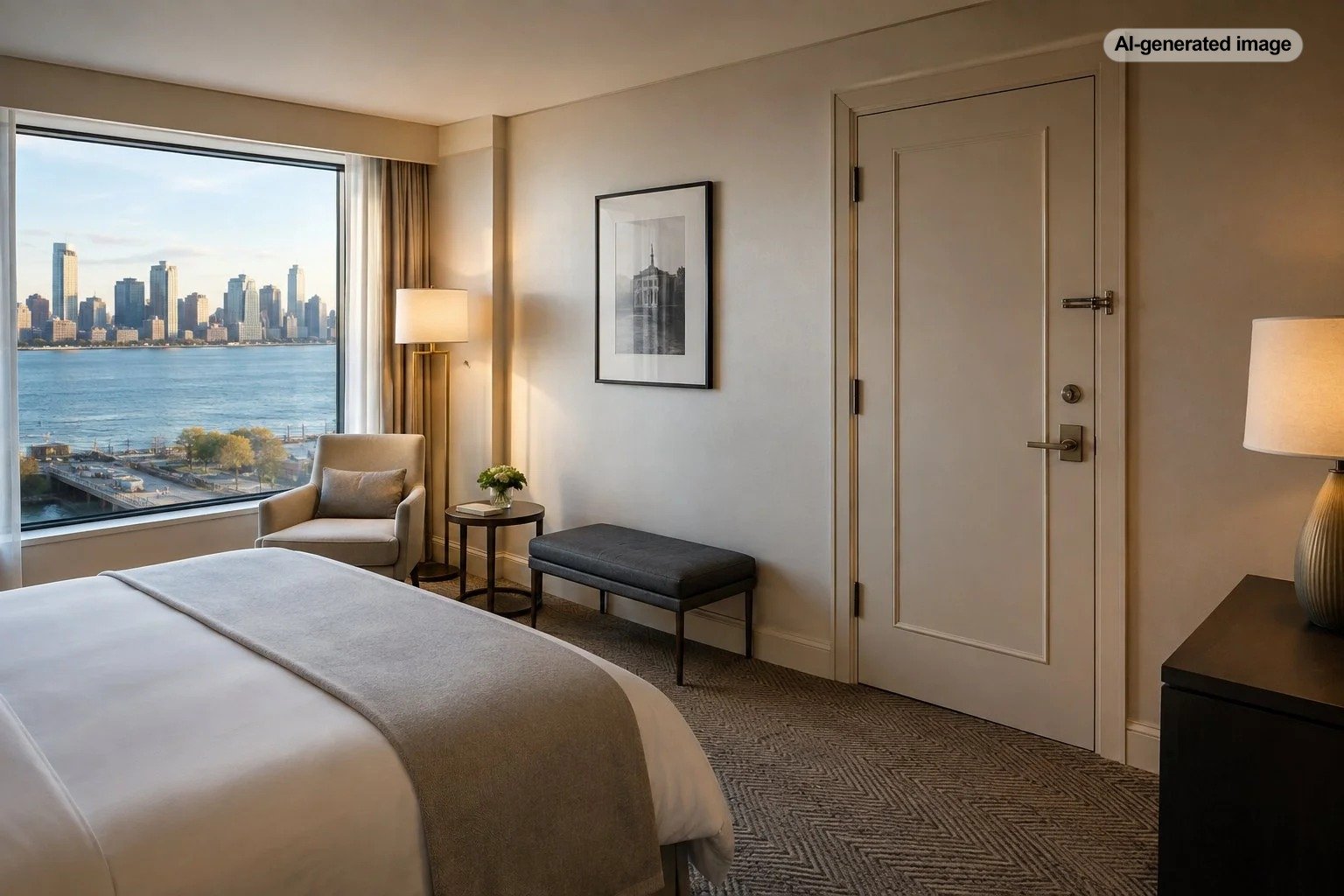
Once inside, take a quick look at the room before fully unpacking. A connecting door is normally easy to identify as an additional full-size interior door positioned along a wall that would otherwise separate your room from the neighboring guest room.
Do not confuse it with the main corridor door, bathroom door, closet door, or a door leading to another area within a suite. If you are uncertain, the front desk can clarify the room configuration.
If you discover a connecting door after you have entered the room and the layout genuinely bothers you, contact the front desk promptly. Asking before you have unpacked extensively makes a room change simpler from the traveler’s perspective, although an alternative room will still depend on what the property can offer at that time.
Understand what a connecting door does and does not mean
A room with a connecting door is not automatically a poor room. For families or groups occupying both rooms, the feature can be extremely useful. For unrelated guests occupying the rooms separately, the connecting doorway remains secured rather than functioning as shared access.
The main objection for many travelers is therefore not access but comfort. Interior connecting doors may feel less private than a continuous wall, and some travelers are particularly sensitive to voices, television sound, or activity from the neighboring room. Others notice no meaningful difference at all.
If noise is your actual concern, avoiding a connecting room can be one part of your request, but room location may matter as well. You might also prefer to be away from elevators, vending or ice areas, housekeeping work spaces, or other places where activity can be more noticeable. Again, prioritize rather than creating an overly restrictive list.
Consider room configuration when comparing places to stay
If this preference consistently affects your hotel stays, room configuration deserves a place alongside location, bedding, cancellation terms, and other factors you consider before booking. Properties vary substantially in layout. Some buildings contain many pairs of connecting rooms, while others may have relatively few.
When the available room information does not answer the question, contacting the property can be more useful than trying to infer the layout from photographs. Photos may show one example room rather than every configuration within a category.
This distinction matters for travelers who are light sleepers, solo travelers who feel more comfortable without an interior connecting door, and business travelers who need a quieter environment for calls or rest. Families traveling together may have exactly the opposite preference and actively seek connecting rooms.
What travelers often overlook
The biggest mistake is assuming that a general request for a quiet room automatically excludes connecting rooms. It may not. Quiet-room requests can involve floor location, elevators, exterior noise, or other factors without addressing the interior doorway at all.
Another common issue is waiting until after unpacking to decide that the room configuration is unacceptable. If this feature matters to you, check as soon as you enter the room.
Finally, remember that the exact room is often an operational assignment rather than a permanent part of the reservation. Even when your preference has been recorded, repeating it courteously at check-in gives you another opportunity to catch an unsuitable assignment before settling in.
Frequently asked questions
What should I say when requesting a room without a connecting door?
Use specific wording: Please assign me a room without an interior connecting or communicating door to another guest room. This avoids confusion over terms such as adjoining and adjacent.
Does requesting a quiet room mean I will not receive a connecting room?
Not necessarily. A quiet-room request and a non-connecting-room request address different features. If the door itself matters, mention it separately.
Can I ask to change rooms if mine has a connecting door?
Yes, you can ask. Whether the hotel can move you depends on the rooms available and the reservation conditions that apply to your stay. It is generally best to raise the issue promptly.
Are connecting rooms the same as adjoining rooms?
Not always. Connecting rooms specifically have an interior doorway between the rooms. Adjoining or adjacent can sometimes mean rooms located beside or near one another without an interior connection. Because terminology can vary, describe the physical feature you want or do not want.
What is the simplest strategy for avoiding a connecting room?
State the preference during booking, contact the property if it is especially important, repeat the request when your room is assigned, and inspect the room before unpacking. Clear wording and reasonable flexibility give the hotel the best opportunity to accommodate the preference.