South Africa Safari vs. East Africa Safari for First-Time Travelers
South Africa is generally the easier and more flexible choice for a first safari, while East Africa is often the stronger choice for travelers who want expansive savannas, guided multi-park circuits, and the possibility of seeing the Great Migration. Neither region is universally better. The right decision depends on whether you value independence and varied trip extensions or a more immersive, safari-centered itinerary.
For this comparison, East Africa refers primarily to the classic safari regions of Kenya and northern Tanzania, including the Maasai Mara, Serengeti, Ngorongoro, and Tarangire. Other East African countries offer distinct experiences, but combining them all under one label would obscure the practical differences first-time travelers need to understand.
Quick answer: Which safari should you choose?
- Choose South Africa if you want simpler logistics, a wider range of lodging styles, self-drive possibilities, or an easy combination with Cape Town and the coast.
- Choose East Africa if open plains, large herds, guided overland travel, and a classic Kenya or Tanzania circuit are central to the trip.
- Choose South Africa for flexibility: It is easier to mix a shorter safari with cities, wine regions, beaches, or a road trip.
- Choose East Africa for safari depth: A typical itinerary can connect several wildlife areas, making the safari the main structure of the vacation.
- Do not choose solely for the Big Five: Both regions can offer excellent wildlife viewing, but no sighting is guaranteed.
South Africa versus East Africa at a glance
| Consideration | South Africa | East Africa |
|---|---|---|
| Typical format | One reserve or lodge, sometimes paired with self-driving | Guided circuit connecting several parks or reserves |
| Landscape | Bushveld, woodland, river systems, and open areas | Broad grasslands, volcanic terrain, and varied savanna |
| Planning flexibility | High, with more independent options | Usually more structured around guides and transfers |
| Broad cost position | Wider range from park camps to high-luxury lodges | Often higher once a vehicle, guide, and transfers are included |
| Best fit | Flexible, mixed-interest, and independent trips | Wildlife-focused and guided multi-stop trips |
The wildlife experience feels different
South Africa’s best-known safari region is Kruger National Park and the private reserves adjoining the broader ecosystem. Vegetation can be denser than on the East African plains, so sightings sometimes emerge at closer range or require more patient tracking. Travelers can explore parts of Kruger in their own vehicle, join scheduled park activities, or stay at a private lodge where guided drives are normally central to the experience.
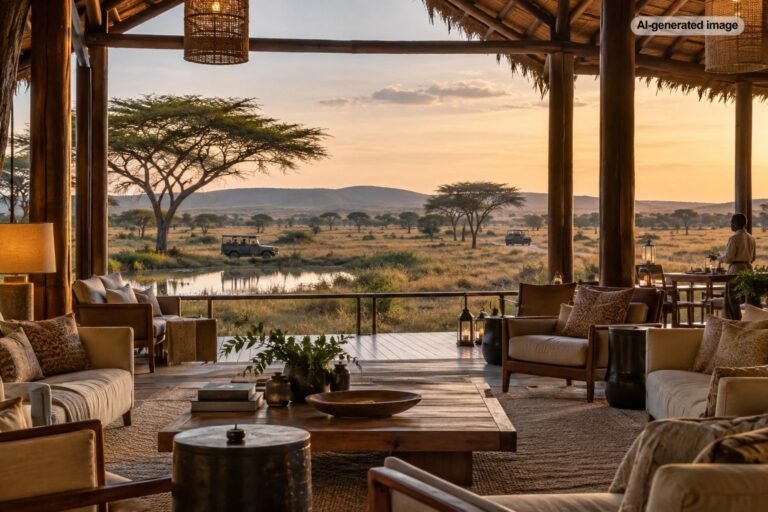
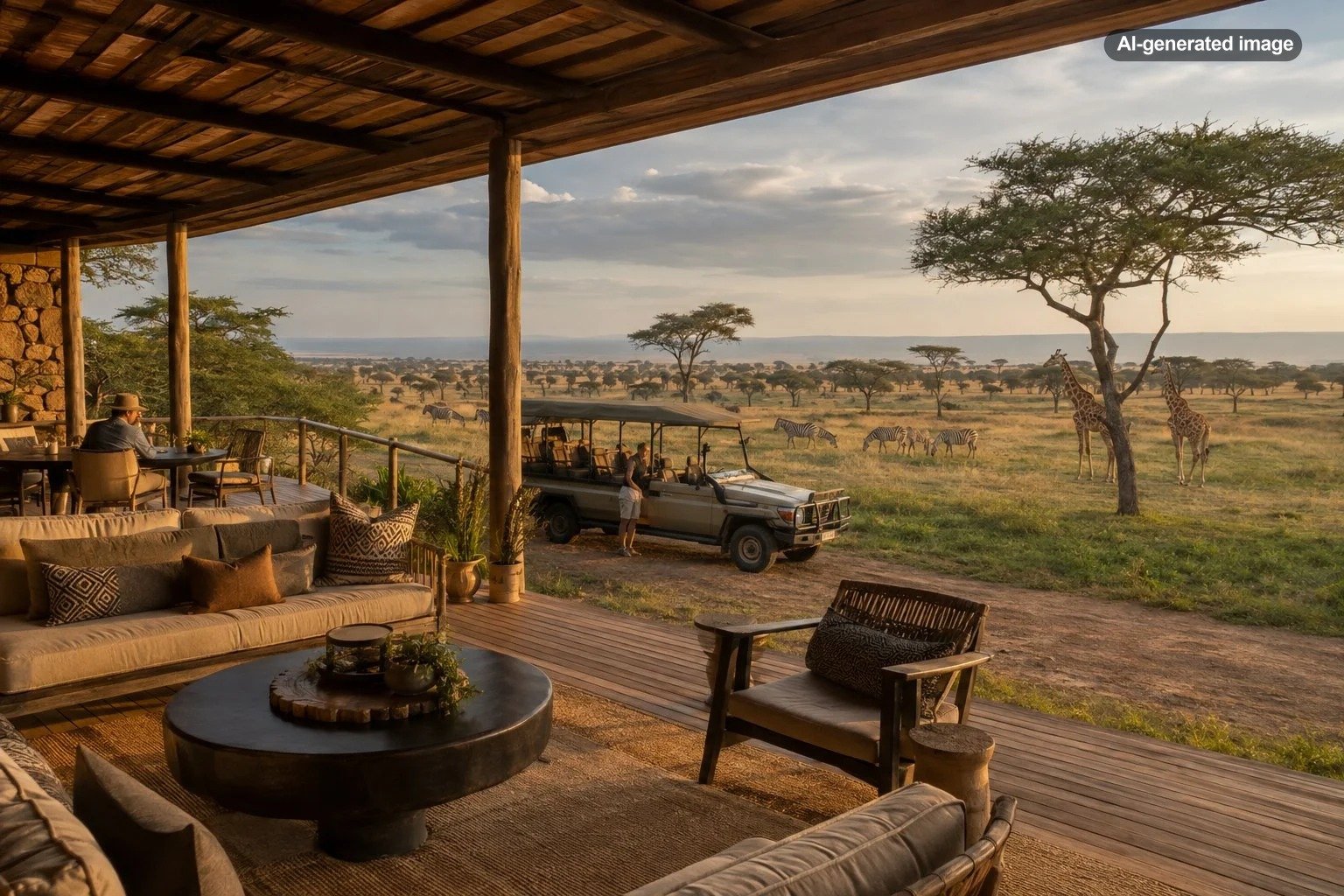
Kenya’s Maasai Mara and Tanzania’s Serengeti are associated with long horizons, grassland ecosystems, and substantial concentrations of grazing animals. Northern Tanzania circuits may also include the enclosed terrain of Ngorongoro Crater and the baobab landscapes of Tarangire. This variety can make an East African itinerary feel like a progression through several distinct environments rather than an extended stay in one reserve.
The Great Migration is an important distinction, but it should not be treated as a scheduled performance. Herd movements respond to rainfall and grazing conditions. River crossings are especially unpredictable, and staying in the right general area does not guarantee witnessing one. Travelers whose dates do not align with the most publicized migration periods can still have rewarding wildlife viewing in both regions.
South Africa offers more control over the itinerary
South Africa works particularly well for travelers who do not want every day organized by a tour operator. Kruger has an established network of roads, rest camps, fuel points, and visitor facilities. Self-driving allows travelers to set their own pace, although it also places responsibility for navigation, park rules, timing, and wildlife spotting on the driver.
A private reserve offers a more supported alternative. Lodges commonly structure stays around guided morning and afternoon wildlife activities, with meals and downtime between outings. This format can reduce planning effort, but the experience is less independent and usually occupies a higher market position than a self-drive stay in a national park camp.
South Africa is also easier to treat as a broader vacation. A safari can be followed by Cape Town, the Winelands, or another region without requiring the entire trip to remain centered on game viewing. That range is useful for couples or families whose interests are not identical.
East Africa rewards travelers who want a guided circuit
Classic Kenya and Tanzania itineraries are commonly built around a driver-guide and a sequence of wildlife areas. Road transfers reveal more of the landscape, while scheduled or charter flights can reduce long driving days at additional cost. Either approach requires more coordination than remaining in one reserve.
This structure suits travelers who want the guide, vehicle, accommodations, and park visits planned as a coherent journey. The tradeoff is less spontaneity. Moving between camps means packing more often, and transfer days can be tiring when distances or road conditions are underestimated.
First-time visitors should resist adding too many parks. Three well-paced areas are usually more satisfying than a rushed checklist of short stays. Wildlife drives start early, roads can be rough, and repeated transfers consume energy that might be better spent watching animals rather than pursuing another pin on the map.
How the costs compare
South Africa has the clearer entry point for travelers trying to control costs because national park accommodations and self-driving can separate lodging, transportation, and activities. It also has an extensive high-end lodge market, so South Africa is not inherently inexpensive.
East African safari quotes often bundle a private or shared vehicle, driver-guide, meals, park-related charges, and transfers. The total may initially look higher, but comparisons are misleading unless the same components are included. Ask whether the quote covers internal flights, road transfers, beverages, laundry, gratuities, conservation or park charges, and transfers between the airport and the first accommodation.
Travel season, location, vehicle-sharing arrangements, and lodge category can change the total substantially in either region. Broad labels such as budget or luxury are more dependable for early planning than an old sample price.
When to travel
Dryer periods are often favored because vegetation may be thinner and animals may gather around dependable water sources. They can also bring stronger demand and higher lodging costs. Greener periods may offer dramatic landscapes, young animals, birdlife, and fewer visitors, although rain can affect roads and wildlife may be more dispersed.
South Africa’s safari regions do not all share one climate, and conditions in Kenya and Tanzania also vary by ecosystem. If migration viewing matters, choose the region only after checking current seasonal guidance, then maintain realistic expectations. A safari should still be worthwhile if the herds or a hoped-for river crossing are elsewhere.
Which region fits your travel style?
Choose South Africa if this sounds like you
- You want to combine safari days with a city, food, wine, or coastal itinerary.
- You prefer a choice between self-driving and a fully guided lodge stay.
- Your group includes travelers who may not want a long, safari-only vacation.
- You want a broad range of accommodation positions and trip formats.
Choose East Africa if this sounds like you
- You want the safari to be the principal purpose of the journey.
- You are comfortable traveling with a guide and following a planned circuit.
- Open grasslands, large herds, and changing landscapes are major priorities.
- You would rather connect several wildlife areas than remain at one lodge or reserve.
What first-time safari travelers often overlook
Vehicle time shapes the experience. A longer itinerary is not automatically better if it involves repeated full-day transfers. Ask how many hours are expected in the vehicle on both game-drive and transfer days.
The reserve matters as much as the country. A private reserve in South Africa differs significantly from a Kruger self-drive, just as a conservancy stay near the Maasai Mara can differ from staying within the main reserve. Compare access rules, vehicle policies, drive schedules, and the location of the accommodation.
Health planning must follow the exact route. Malaria risk and yellow fever guidance depend on the countries, regions, connections, and personal medical considerations involved. Review the complete itinerary with a qualified travel-health professional rather than relying on a country-level generalization.
Safari days are physically repetitive. Early starts, dust, temperature changes, and long periods seated in a vehicle can be demanding. A slower itinerary with deliberate rest time may deliver a better first safari than an ambitious circuit.
Frequently asked questions
Is South Africa or East Africa better for families?
South Africa often provides greater itinerary flexibility and can be easier for families wanting a shorter safari or varied vacation. East Africa can suit older children who are comfortable with longer drives and a structured circuit. Individual lodge age rules, room arrangements, and activity restrictions must be checked directly before booking.
Where is it easier to see the Big Five?
Both regions contain areas known for the Big Five, but sightings remain dependent on habitat, season, guide skill, time in the field, and chance. A well-located multi-night stay is more useful than choosing a country solely from a wildlife checklist.
How many safari nights should a first trip include?
Four to seven safari nights is a practical starting range for many travelers. A single-reserve stay can work at the shorter end, while a circuit needs more time because transfers reduce the hours available for wildlife viewing.
Can first-time travelers self-drive in East Africa?
Independent driving is possible in some circumstances, but classic Kenya and Tanzania circuits are generally easier with an experienced operator or driver-guide. South Africa, particularly Kruger, has the more established self-drive format for visitors who want independence.
The decision in one sentence
Choose South Africa for flexibility, independent options, and an easy mixed-interest vacation; choose Kenya or Tanzania for a guided, safari-centered circuit defined by broad landscapes and multiple wildlife areas.