Should You Avoid Cruise Cabins Below the Buffet?
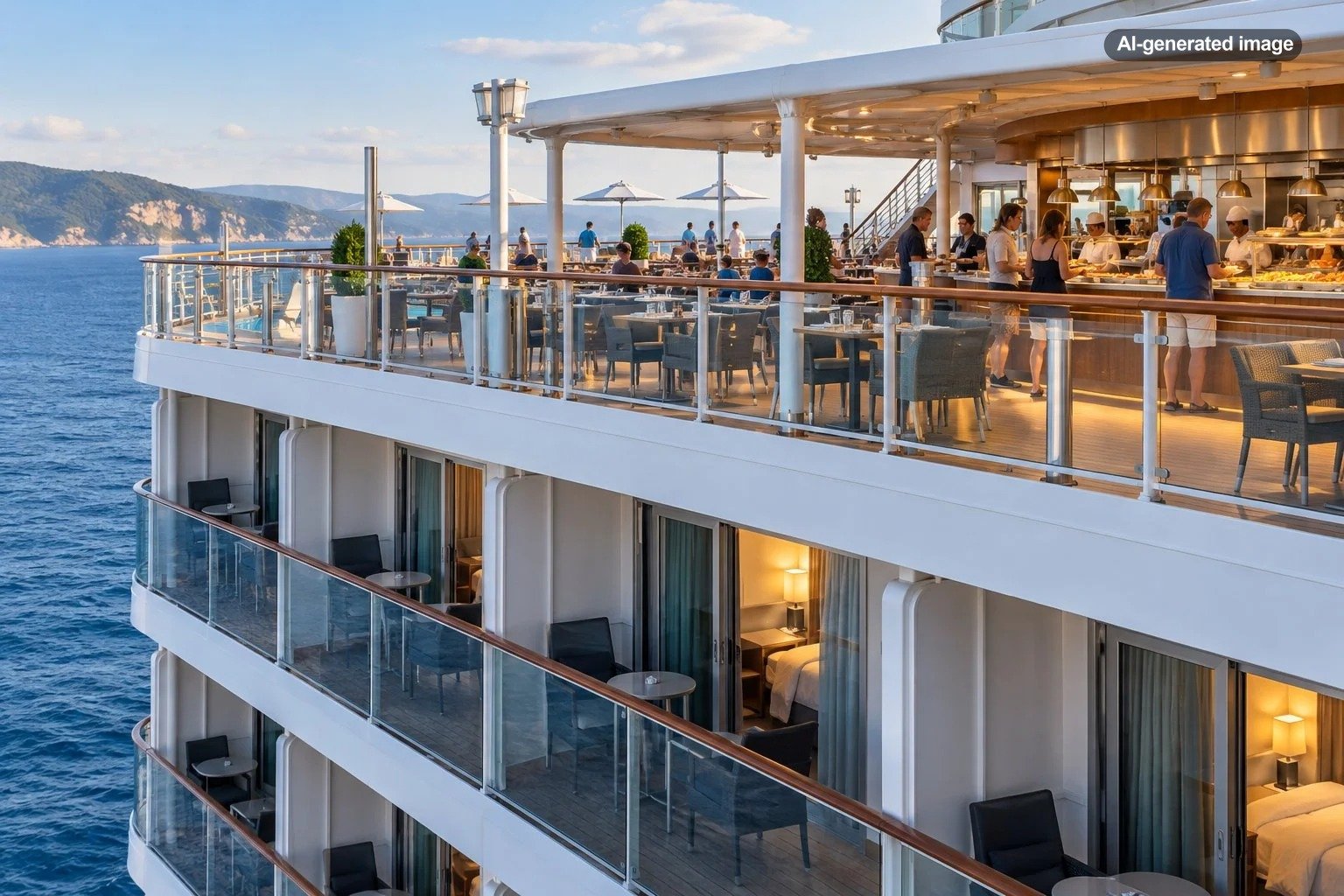
Booking a cruise cabin directly below the buffet is not automatically a mistake, but it deserves closer inspection than a cabin surrounded by other staterooms. Buffet dining areas can generate early-morning furniture movement, rolling-cart sounds, and cleaning activity that may be audible in rooms beneath them. The actual disturbance depends on the ship’s layout, the particular section of the buffet above your cabin, and how effectively the structure limits sound transmission.
The practical answer: Light sleepers should generally favor a cabin with other guest staterooms immediately above and below. However, a room beneath a carpeted buffet seating section may be perfectly acceptable for travelers who wake early, tolerate occasional noise, or value quick access to dining and outdoor decks.
Quick Answer: When Should You Avoid a Cabin Below the Buffet?
- Consider avoiding it if: You are a light sleeper, sleep late, have young children who nap, or need a consistently quiet environment.
- Investigate further if: The cabin appears directly below buffet food stations, service entrances, dish-return areas, or frequently rearranged seating.
- It may be acceptable if: The buffet section above has carpeting, limited furniture movement, and a favorable record in cabin-specific passenger reviews.
- Do not rely on deck number alone: Two cabins on the same deck can experience very different conditions depending on what sits immediately overhead.
- For the lowest-risk choice: Look for a stateroom on a deck with passenger cabins above and below it.
Why Can Cruise Cabins Below the Buffet Be Noisy?
A buffet is more than a dining room. Depending on the ship, it includes seating, serving counters, food preparation support areas, service routes, cleaning stations, and passenger circulation space. Each creates a different potential sound source.
Chairs Moving Across the Floor
One of the most recognizable complaints about rooms below public dining areas involves furniture being moved across the deck. Passengers slide chairs away from tables, crew members rearrange seating, and cleaning teams may move furniture before or after service.
When furniture moves across a hard surface, some vibration can travel through the deck structure. A sound that seems modest inside the dining room may be more noticeable in the otherwise quiet cabin beneath it.
Carpeting and furniture designed to reduce movement noise can help, but they do not guarantee that nothing will be heard.
Early-Morning Breakfast Preparation
Buffets often begin operating early to accommodate shore excursions, morning activities, and passengers with different schedules. Preparations can begin before guests arrive.
Potential disturbances include carts crossing service routes, equipment movement, dishes being handled, and staff preparing the dining area. The precise timing varies by ship, itinerary, and operating arrangements.
For someone accustomed to waking around sunrise, these sounds may be inconsequential. For a traveler hoping to sleep until midmorning, they could be frustrating.
Late-Night Cleaning and Food Service
The end of a meal period does not necessarily mean the end of activity. Dining spaces may require cleaning, restocking, equipment servicing, and preparation for their next use.
Some buffet venues also accommodate evening dining or operate near other food-service areas that remain active later. Consequently, assuming that a buffet is silent whenever meals are not being served can be misleading.
Foot Traffic and Rolling Equipment
Ordinary footsteps may be relatively unobtrusive, especially over carpeted surfaces. Hard-soled shoes, concentrated traffic, and wheeled equipment can be more noticeable in certain locations.
Passengers should distinguish between general restaurant activity and a cabin located directly beneath an operational service route. The latter may present a more persistent disturbance risk.
Not Every Section Beneath the Buffet Is Equally Risky
The most useful question is not simply whether the buffet is overhead. It is which part of the buffet occupies the space directly above the cabin.
| Area above the cabin | Potential concern | Booking consideration |
|---|---|---|
| Carpeted dining seating | Footsteps and occasional chair movement | Potentially acceptable after checking reviews |
| Hard-floor dining area | Scraping furniture and impact sounds | Greater caution for light sleepers |
| Buffet serving stations | Equipment and passenger activity | Investigate specific cabin reports |
| Galley or service corridor | Carts, doors, and operational activity | Prefer another location when feasible |
| Adjacent quiet public space | Activity depends on the space’s actual use | Review the complete overhead layout |
These are relative considerations, not verified noise ratings. The structural design of the particular vessel and the way each space is operated matter more than a simple category.
How to Check Whether a Specific Cabin Is Below the Buffet
Comparing official deck plans is the most valuable step before booking. A cabin number provides a much more precise basis for evaluation than a broad description such as upper deck balcony.
Step 1: Find the Exact Cabin Number
Identify the stateroom being offered, including its deck and position along the ship. If you are booking a fare that allows the cruise line to assign your cabin later, you may not be able to assess its exact location in advance.
Step 2: Open the Deck Plan Immediately Above
Use the cruise line’s current official deck plans for the exact vessel. Ships within the same cruise line, or even similarly named classes, may have different layouts.
Find your cabin’s approximate position using nearby elevators, stairways, and the ship’s forward and aft orientation. Compare that position with the buffet’s footprint on the next deck.
Step 3: Check the Space Directly Overhead
A cabin near the middle of a restaurant on the plan might lie beneath seating, serving counters, or a corridor. Deck plans do not always reveal these details, so consider the overhead arrangement uncertain unless it can be confirmed.
Also remember that printed deck-plan boundaries may not identify every crew workspace or service passage.
Step 4: Search for Reports About That Cabin
Look for reviews mentioning the actual cabin number and ship. Reviews from neighboring cabins can also help, although sound may differ just a few doors away.
Give greater weight to descriptions of specific disturbances, such as furniture scraping before breakfast, than to general statements that an entire deck is noisy.
Check the review date and whether the ship’s layout has changed since the reported sailing. A report from a substantially different configuration may be less useful.
Step 5: Ask About Alternative Cabin Locations
If the overhead space remains unclear, ask the cruise line or your travel advisor whether other cabins in the same category are available on a deck surrounded by guest accommodations. They may be able to identify alternatives, although they cannot reliably guarantee silence or precisely predict cabin noise.
Is Being Below the Buffet Better or Worse Than Being Below the Pool Deck?
Both locations deserve attention, but their noise profiles can differ considerably.
A buffet may create repeated dining-related activity, particularly around meal preparation, service, and cleanup. A pool deck may introduce the sounds of loungers being arranged, entertainment, music, walking traffic, and outdoor activities.
The buffet may therefore be the more comfortable choice when the alternative is beneath a busy poolside entertainment area. Conversely, a cabin beneath a relatively quiet buffet seating section could be preferable to one directly under a frequently used outdoor furniture area.
Neither location is automatically worse across all ships. Evaluate the exact overhead space, its likely hours of use, and your own sleeping schedule.
When a Cabin Below the Buffet Can Actually Be Convenient
There are reasons some travelers are comfortable selecting these rooms despite potential noise.
Convenient access to meals: Cabins on the deck below a buffet can make breakfast and casual dining convenient, particularly when nearby stairs or elevators connect the spaces.
Access to upper-deck activities: Depending on the vessel, the buffet may be near pools, observation areas, and other public facilities. Travelers who spend much of the day on upper decks may appreciate the location.
Compatibility with an early schedule: Passengers who routinely wake early for port excursions may be less affected by morning preparation sounds.
A reasonable compromise: If the cabin has the desired layout, view, or accessibility features, a manageable noise risk may be worth accepting when quieter alternatives do not meet those needs.
Still, proximity to dining should not automatically outweigh nighttime comfort. A short walk to breakfast is usually easier to accommodate than repeated sleep disruption.
Who Should Be Especially Careful About This Location?
Light Sleepers
Travelers who wake readily from irregular sounds should prioritize staterooms with other passenger cabins overhead. Intermittent impacts and scraping can be more difficult to ignore than steady background sound.
Families With Young Children
Children who nap during the day or follow an early bedtime may be disturbed by dining activity at times adults would normally be awake. A quieter location may help protect a family’s daily routine.
Travelers Recovering From Long Flights
Passengers arriving after a long journey may particularly value uninterrupted rest during the first part of a cruise. A noisy cabin can be more frustrating when sleep schedules are already disrupted.
Travelers Who Spend Significant Time in Their Cabins
Some passengers use their stateroom primarily for sleeping and changing clothes. Others enjoy reading, resting, or spending quiet afternoons indoors. The more time you expect to spend in the cabin, the more attention its surrounding spaces deserve.
What If You Have Already Booked a Cabin Below the Buffet?
Finding the buffet overhead after confirming a reservation does not mean that a change is essential. First, establish whether the room is actually beneath an active or potentially noisy part of the dining venue.
Review the deck plan and look for cabin-specific feedback. If concerns remain, contact the cruise line or booking provider to ask about moving to another stateroom in the same category.
Whether you can change cabins, and whether any fare adjustment or additional charge applies, depends on the booking conditions, timing, and available inventory. Review these details before authorizing a change.
If moving is not practical, consider bringing comfortable earplugs and planning around expected activity. A personal white-noise option may help some travelers, provided it complies with the cruise line’s electrical and equipment policies. Neither solution will necessarily eliminate structural vibration.
If an actual disturbance occurs onboard, report the problem promptly to guest services. Describe when the noise happens and its apparent source. Staff may be able to investigate or discuss available alternatives, but relocation and noise reduction cannot be guaranteed.
How to Choose a Quieter Cruise Cabin Overall
Looking beyond the buffet can prevent exchanging one potential disturbance for another. Other areas worth checking include theaters, nightclubs, lounges, pool decks, fitness facilities, connecting staterooms, and operational service spaces.
For many noise-sensitive travelers, the strongest starting point is a cabin located between two decks of passenger staterooms. Selecting a room away from unusually active public spaces can further reduce the likelihood of disturbance.
However, quietness is only one part of cabin selection. A lower or more central location may also appeal to passengers concerned about ship movement, while a higher deck might provide more convenient access to particular facilities. Travelers who require an accessible cabin should prioritize the necessary layout and accessibility features rather than relying on generalized noise advice.
If you are still comparing vessels, itineraries, or sailing dates, you can search cruise itineraries and then examine the exact ship’s deck plan before selecting accommodations.
Frequently Asked Questions
Can You Hear Chairs Scraping From a Cabin Under the Buffet?
Yes, chair movement can sometimes be heard through the deck, particularly where furniture moves across hard flooring. The extent of sound transmission varies by ship construction, furniture arrangement, and the cabin’s exact location.
Are Cruise Buffets Noisy Throughout the Night?
Not necessarily. Activity depends on the venue’s operating hours and cleaning or preparation schedules. Some areas may become quiet after service, while others can experience occasional overnight operational activity.
Is One Deck Below the Buffet Worse Than Two Decks Below?
Directly adjoining the buffet generally presents a greater potential for transmitted activity than having another deck between your cabin and the restaurant. Nevertheless, the intervening space, structural design, and other nearby noise sources also matter. Two decks below is not a universal guarantee of quiet.
Does a Balcony Cabin Below the Buffet Have the Same Risk as an Interior Cabin?
Either cabin type may experience noise from above. The determining factors are the precise locations and structures involved, not simply whether a cabin has a balcony. A balcony stateroom beneath an active dining section may be noisier than an interior cabin beneath guest accommodations.
Should You Pay More to Move Away From the Buffet?
That depends on your sensitivity to noise, the length of the cruise, the evidence about the specific cabin, and the cost of the alternative. For a light sleeper on a longer itinerary, securing a quieter location may be worthwhile. For someone who sleeps soundly and wakes early, the original cabin may be an acceptable choice.
The Bottom Line: Choose the Cabin, Not Just the Deck
Cabins directly below the buffet deserve scrutiny, but they do not all deserve rejection. The greatest concern is usually intermittent noise from furniture, service equipment, and operational activity rather than the mere presence of a restaurant overhead.
If quiet sleep is a priority, a stateroom with passenger cabins above and below is generally the safer selection. If a buffet-adjacent location offers meaningful convenience, investigate the exact cabin number, compare the official deck plans, and consider reliable reports from passengers who stayed nearby.
The best cabin is not necessarily the highest, most central, or closest to the amenities. It is the one whose location, comfort, and practical tradeoffs fit the way you intend to use your cruise.