How to Request a Quiet Hotel Room That Is Actually Quiet
A quiet hotel room is rarely secured by writing only “quiet room, please” in a reservation note. The more effective approach is to identify the likely sources of noise, request a room location that avoids them, and confirm the request directly with the hotel before arrival. No hotel can guarantee complete silence, but a precise request gives the front desk a much better chance of assigning a room that suits a light sleeper.
The key is to describe the result you need without presenting a long list of rigid demands. Ask for a room away from elevators, ice machines, housekeeping areas, event spaces, street traffic, and other predictable noise sources. Then explain which kind of noise affects you most. A guest disturbed by hallway conversations may need a different room from someone sensitive to traffic, nightlife, or mechanical humming.
Quick answer: make the request specific
- Place the request on the reservation, but do not rely on the reservation note alone.
- Call the hotel directly a few days before arrival to confirm that the preference is visible.
- Name the two or three noise sources that matter most instead of requesting every possible condition.
- Ask whether the quieter side of the building faces a courtyard, residential area, or another low-activity setting.
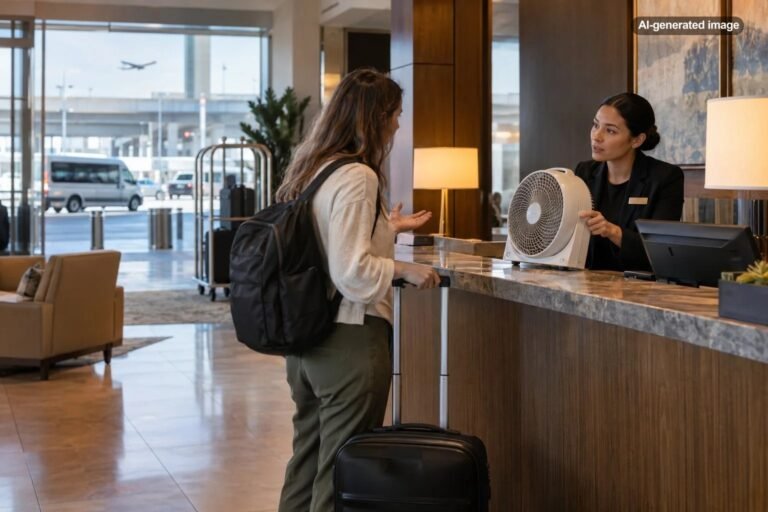
- At check-in, politely confirm the room location before accepting the keys.
Start by identifying the noise you want to avoid
“Quiet” means different things to different travelers. Some people can sleep through steady road noise but wake whenever a door closes in the hallway. Others are comfortable near an elevator yet find music from a restaurant or rooftop venue impossible to ignore. A useful request begins with the type of sound that is most likely to interrupt your sleep.
Interior noise may come from elevators, vending or ice machines, housekeeping closets, connecting doors, stairwells, service areas, guest laundry rooms, and rooms used by groups. High-traffic corridors can also become noisy in the morning when departing guests and housekeeping teams begin moving through the floor.
Exterior noise can include traffic, trains, aircraft, nightlife, loading activity, construction, sirens, and people gathering near an entrance. A high floor may reduce some street sound, but it can place a room closer to a rooftop bar or mechanical equipment. Height alone is not a reliable measure of quiet.
Use wording that helps the hotel assign the right room
A concise, courteous request is easier for hotel staff to interpret. One practical version is: “I am a light sleeper. If available, could you assign a room in a low-traffic area, away from elevators, ice machines, housekeeping closets, and event spaces? I would also prefer the quieter side of the building.”
If one issue matters more than everything else, say so. For example: “Street noise is my main concern, so I would prefer an interior-facing room even if it does not have the most scenic view.” That final distinction is useful because a room marketed for its view may face a busy road, entertainment district, pool deck, or gathering area.
Avoid making the request so broad that no room can satisfy it. Asking simultaneously for the highest floor, a particular view, proximity to the elevator, an early check-in, and complete isolation may create conflicting priorities. Decide which preference is essential and which ones are optional.
Add the request at more than one stage
When booking
Enter the preference in the special-request field if one is provided. Reservation notes generally communicate a preference rather than a guaranteed room assignment, so save a copy of the confirmation and note the room category booked. A quiet-room request does not normally authorize an upgrade to a different category.
A few days before arrival
Contact the hotel directly and ask whether the request appears on the reservation. This is also the right time to ask a practical question: “Which part of the hotel is usually least exposed to street, elevator, or event noise?” Staff members familiar with the building may know that a lower courtyard room is quieter than a high room facing nightlife, for example.
At check-in
Repeat the request calmly before the room is assigned. Ask where the room sits in relation to elevators, ice machines, event rooms, loading areas, and any late-night venues. If the location sounds unsuitable, it is easier to discuss alternatives before unpacking.
Choose room location according to the property
The quietest location depends on the hotel’s design and surroundings. These distinctions are more useful than a universal rule:
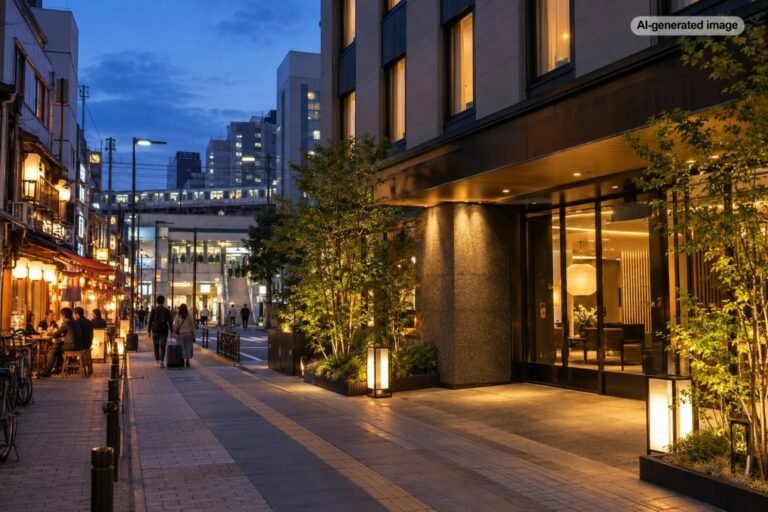
- Urban hotel: An interior-facing room may sacrifice a city view but reduce traffic and nightlife noise.
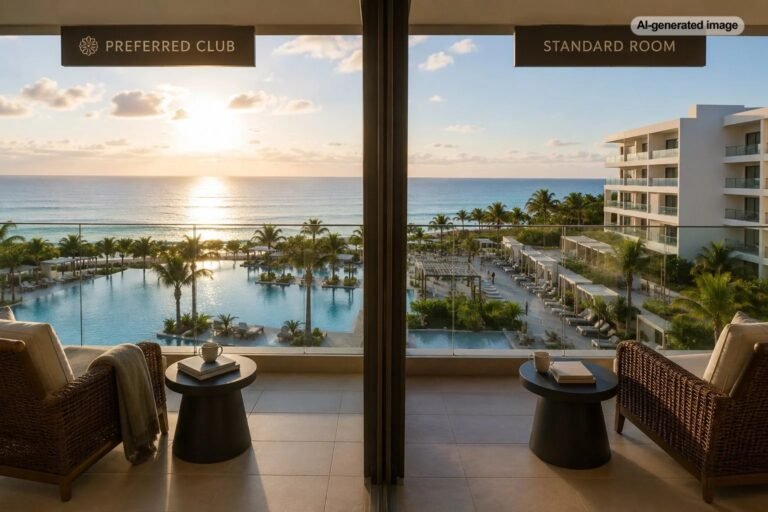
- Resort: A room away from pools, elevators, entertainment stages, and main pedestrian routes may be calmer, although it could require a longer walk to shared facilities.
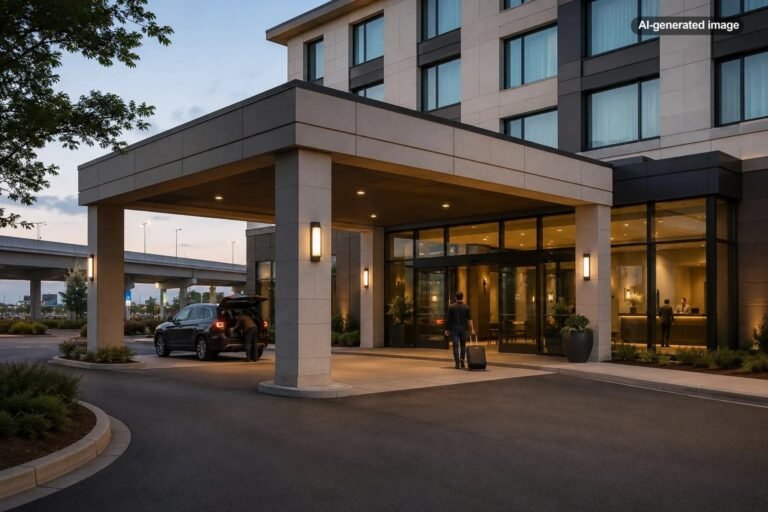
- Airport hotel: Aircraft exposure may vary by building orientation, while entrances and shuttle-loading zones can create their own early-morning noise.
- Convention hotel: Rooms far from ballrooms, hospitality suites, and elevator banks may be preferable during a large event.
- Roadside property: A room facing away from the highway and parking-lot entrance may help, but exterior corridors can introduce foot traffic and vehicle noise.
Floor level also involves tradeoffs. Upper floors can be farther from entrances and road-level activity, yet lower floors may avoid rooftop equipment or venues. Asking staff which side and section of the particular building is quieter is usually more productive than insisting on the top floor.
Look for warning signs before booking
Hotel descriptions and recent guest reviews can reveal recurring noise patterns. Search reviews for terms such as “noise,” “elevator,” “street,” “bar,” “club,” “train,” “construction,” “thin walls,” and “connecting door.” Focus on repeated observations rather than treating one complaint as proof that every room has the same problem.
Study the surrounding area as well. Entertainment districts, hospitals, major roads, railway lines, event venues, and active loading zones can affect different sides of a building. The hotel’s own facilities matter too: rooftop venues, ballrooms, pool decks, restaurants, parking structures, and 24-hour fitness rooms may produce localized sound.
When sleep is a major priority, contact the hotel before booking and ask direct questions. Useful examples include whether events are scheduled during the stay, whether some room categories are located above public spaces, and whether quieter rooms tend to have a particular orientation. Treat the answers as guidance rather than an absolute promise.
Inspect the room before settling in
Once inside, pause before unpacking. Listen for elevator chimes, slamming service doors, mechanical vibration, music, traffic, and sound passing through a connecting door. Check whether the room is near a housekeeping closet or directly above an active public area.
If the room is clearly unsuitable, contact the front desk promptly and describe the specific problem. “There is a strong mechanical hum beside the bed” is more actionable than “This room is not quiet.” If another room is available, ask to see or evaluate its location before moving. Availability may be limited, especially when the hotel is busy, but an early, precise report gives staff more options.
What travelers often overlook
Room condition is only part of the equation. Connecting doors can transmit more conversation and television noise than a solid wall. End-of-corridor rooms often have less passing traffic, but they may sit beside stairwell doors or service equipment. Rooms close to elevators are convenient for travelers with mobility concerns, while that same convenience may create more foot traffic.
Arrival time can also affect flexibility. Guests checking in late may have fewer unassigned rooms from which to choose. If quiet is essential, confirming the request in advance and arriving within the hotel’s normal check-in period may provide more opportunity to discuss placement, though no arrival time guarantees a particular room.
Finally, bring a backup plan. Soft earplugs, a white-noise application, or a compact sound machine can reduce unpredictable disturbances. These tools should complement a thoughtful room request rather than replace it.
Frequently asked questions
Can a hotel guarantee a quiet room?
Usually, a hotel can record and try to honor the preference, but complete silence is difficult to guarantee. Occupancy, room category, maintenance needs, neighboring guests, and unexpected outside activity can all affect the final assignment.
Is the top floor always quieter?
No. A top-floor room may reduce hallway and street exposure, but it can be near rooftop equipment, bars, or other mechanical systems. Building orientation and nearby facilities matter more than floor level alone.
Should I request a room near or far from the elevator?
Light sleepers generally benefit from being away from elevator banks because of chimes, conversations, and foot traffic. Travelers who prioritize accessibility or shorter walking distances may reasonably choose the opposite tradeoff.
When should I call the hotel about the request?
Calling a few days before arrival is often practical because the hotel can confirm that the preference is attached to the reservation. Repeat it at check-in, since final room assignments can change.
What should I do if the assigned room is noisy?
Report the exact source promptly and ask whether another suitable room is available. Remain flexible about views or floor level if quiet is the higher priority, and avoid fully unpacking until the issue is resolved.