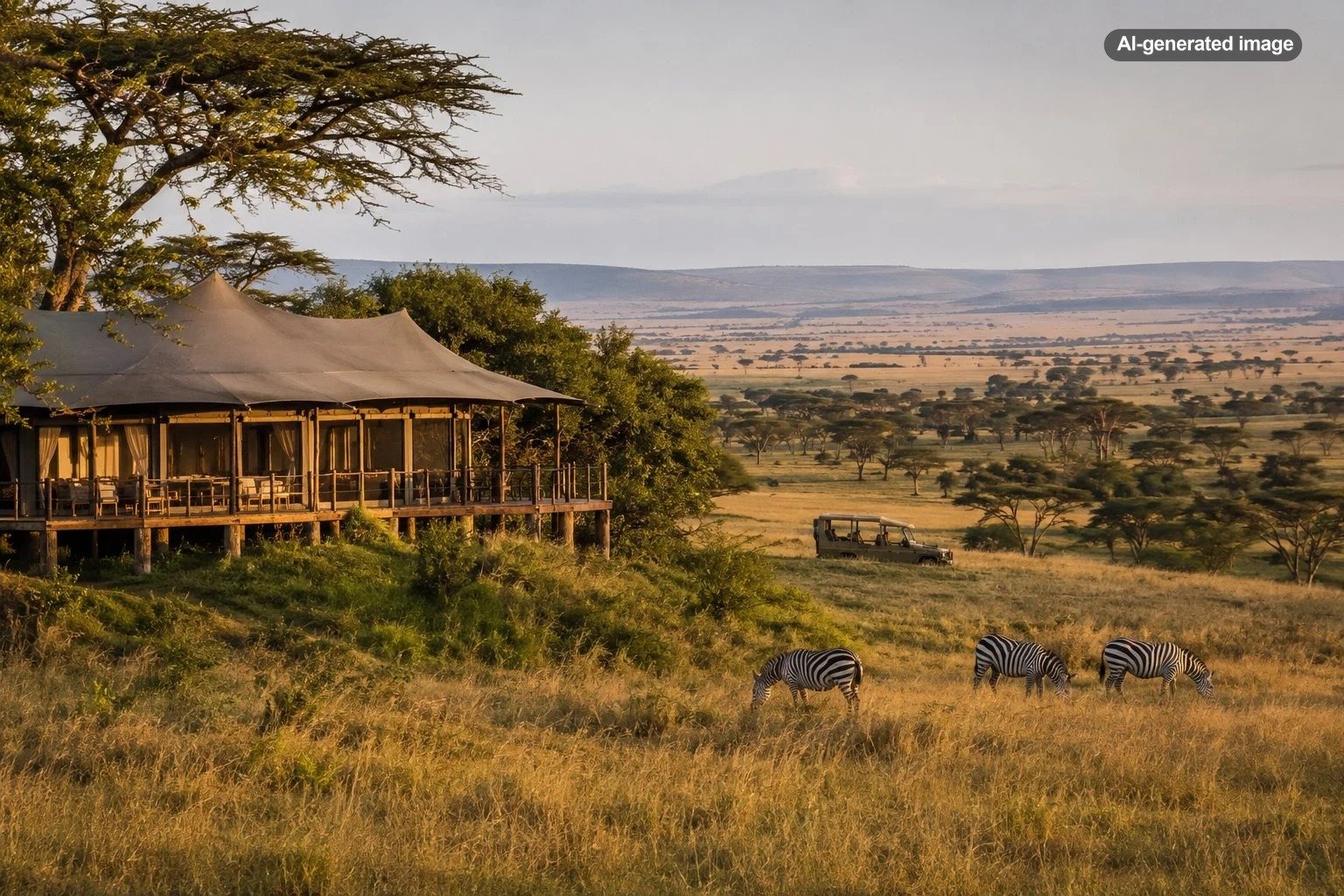
Safari in Kenya vs. Tanzania for a First-Time Visitor
Choosing between Kenya and Tanzania for a first safari is less about finding a clear winner and more about deciding what kind of trip you want. Both countries offer exceptional wildlife viewing, experienced safari operators, dramatic landscapes, and access to the connected Serengeti-Mara ecosystem.
Kenya is often the easier choice for travelers who want a shorter, more flexible safari with varied destinations. Tanzania is especially compelling for travelers who want a longer, more immersive journey through expansive protected areas. For the Great Migration, the better country depends on the season and where the herds have moved, not on a permanent border-based advantage.
Quick comparison: Kenya or Tanzania?
- Choose Kenya for a compact itinerary, easier combinations of safari areas, and a trip centered on the Maasai Mara, Amboseli, or both.
- Choose Tanzania for a sweeping northern-circuit journey through places such as Tarangire, Ngorongoro, and the Serengeti.
- Choose Kenya for a shorter trip when you have roughly one week and want to limit long transfers.
- Choose Tanzania for a longer trip when you can devote eight to twelve days to a slower, landscape-rich safari.
- Do not choose solely by migration month. Rainfall and grazing conditions influence herd movement, so exact timing is never guaranteed.
Kenya and Tanzania offer different styles of first safari
Kenya’s safari map can feel more modular. A traveler might focus on the Maasai Mara, add Amboseli for elephant viewing and Mount Kilimanjaro scenery, or combine wildlife areas with time in Nairobi or on the coast. This makes Kenya well suited to travelers who value flexibility and want to build a trip from several distinct experiences.
Tanzania’s classic northern circuit feels more like a continuous overland journey. Many itineraries begin around Arusha and progress through Tarangire, the Ngorongoro highlands, and the Serengeti. The route creates a strong sense of geographic progression, with changing ecosystems rather than a collection of disconnected stops.
Neither approach is inherently better. Kenya can feel efficient and varied. Tanzania can feel expansive and deeply immersive.
Maasai Mara vs. Serengeti: the central comparison
The Maasai Mara and Serengeti form parts of the same broader ecosystem, but the visitor experience differs.
The Maasai Mara is geographically more compact than the Serengeti. This can translate into concentrated game viewing and shorter distances between wildlife sightings, particularly when animals gather in productive areas. Its open grasslands are strongly associated with big-cat viewing and the seasonal movement of migratory herds.
The Serengeti covers a much larger and more varied landscape. Different regions become more relevant at different points in the year, from the southern plains to the central valleys, western corridor, and northern reaches. A Serengeti itinerary therefore requires careful attention to camp location and season.
| Consideration | Kenya | Tanzania |
|---|---|---|
| Signature area | Maasai Mara | Serengeti and Ngorongoro |
| Typical trip style | Flexible combinations and shorter circuits | Longer, continuous northern-circuit journeys |
| Landscape impression | Compact reserves, conservancies, highlands, and savanna | Vast plains, volcanic highlands, woodlands, and crater scenery |
| Best fit | First-timers prioritizing convenience and variety | First-timers prioritizing scale and immersion |
Wildlife viewing is excellent in both countries
A first-time visitor should resist the idea that one country has all the animals and the other does not. Both destinations support major populations of predators, elephants, buffalo, antelope, giraffes, zebras, and abundant birdlife. Sightings still depend on habitat, season, guide skill, weather, and chance.
Kenya has an advantage when travelers want sharply contrasting wildlife areas in a relatively concise itinerary. Amboseli, for example, is known for its elephant herds, wetlands, open plains, and views toward Mount Kilimanjaro when conditions are clear. The Maasai Mara offers a different grassland ecosystem and safari rhythm.
Tanzania stands out for the diversity contained within its northern route. Tarangire’s woodlands and baobab landscapes differ markedly from the Ngorongoro highlands, while the Serengeti changes character across its enormous range. The result is not necessarily a longer animal checklist, but a stronger sense of moving through interconnected ecosystems.
Which country is better for the Great Migration?
The migration is a continuous movement through the Serengeti-Mara ecosystem, not a single event staged in one reserve. Tanzania generally contains the herds for a greater portion of the annual cycle because the Serengeti ecosystem covers such a broad area. Kenya becomes especially relevant when herds move into the Maasai Mara region.
However, migration predictions should be treated as informed estimates. Rainfall, grass growth, water availability, and herd behavior affect timing. River crossings are particularly unpredictable; no responsible planner can guarantee that a traveler will witness one.
Travelers focused on the migration should first choose their travel window, then select the country and exact safari region that usually align with that period. Camp location is often more important than the country name on the itinerary.
Travel time and safari pace
Kenya often works better for travelers with limited vacation time. Nairobi serves as a major gateway, and itineraries can use road transfers, light-aircraft flights, or a combination of both. A focused Kenya trip can feel complete without covering a vast amount of territory.
Tanzania’s northern circuit often involves longer drives, particularly when traveling overland toward the Serengeti. Those drives are not merely dead time; they reveal towns, farmland, escarpments, highlands, and shifting landscapes. Still, travelers who dislike extended road journeys should consider internal flights for one or more segments.
For either country, a schedule that changes accommodations every night can become tiring. Two or three nights in an important wildlife area usually creates a more relaxed rhythm and allows for changing conditions between game drives.
How safari costs tend to differ
Both Kenya and Tanzania can support moderate, upscale, luxury, and highly exclusive safaris. The largest cost drivers are usually travel season, camp style, private versus shared vehicles, internal flights, park or conservation fees, itinerary length, and the number of single-night stops.
Kenya can be easier to manage on a tighter schedule because travelers may need fewer transfer days. It also offers a broad mix of accommodations and routing options. Tanzania can become more expensive when a long northern-circuit itinerary includes several protected areas, multiple fees, private transportation, and remote camps.
That does not mean Kenya is always cheaper. A premium conservancy camp in Kenya may cost considerably more than a straightforward lodge itinerary in Tanzania. Compare complete proposals rather than headline nightly rates. Confirm whether park fees, transfers, flights, meals, beverages, and gratuities are included.
Accommodation styles and location matter
Both countries offer permanent lodges, tented camps, seasonal migration camps, private villas, and simpler safari accommodations. The most important question is not whether a property is called a lodge or camp. It is whether the location supports the itinerary you are buying.
In the Serengeti, a camp in the wrong region for your travel season can create long game-drive distances. In the Maasai Mara area, travelers should understand whether they are staying inside the national reserve, in a neighboring conservancy, or beyond the main wildlife areas. Each setting can involve different access arrangements, driving rules, crowd levels, and activities.
Ask how much time is required to reach the primary wildlife-viewing area each morning. A beautiful property can be a poor fit when its location adds excessive commuting to every game drive.
Who should choose Kenya for a first safari?
Kenya is a strong first choice for travelers who want recognizable wildlife experiences without committing to a long overland circuit. It is especially suitable for:
- Travelers with approximately six to eight nights available.
- Families that want to limit repeated full-day drives.
- Visitors who want to combine the Maasai Mara with Amboseli or another contrasting area.
- Travelers interested in conservancy-based stays and a range of safari formats.
- People who want to pair a safari with time elsewhere in Kenya.
The tradeoff is that a tightly scheduled trip can feel fragmented when it includes too many distant areas. Choose fewer stops and stay longer in each.
Who should choose Tanzania for a first safari?
Tanzania is particularly rewarding for travelers who want the safari itself to be the central purpose of the trip. It is a strong match for:
- Travelers with eight to twelve days or more.
- Visitors drawn to large landscapes and a gradual overland journey.
- Wildlife enthusiasts who want to explore several parts of the northern circuit.
- Photographers who value changing habitats and extended time in the field.
- Travelers who want to combine safari areas with a later stay on Zanzibar.
The tradeoff is that longer distances can make the trip more tiring. Flights can reduce transfer time, but they may increase the overall cost and impose stricter baggage limits.
What first-time safari travelers often overlook
The guide matters as much as the destination
A skilled guide interprets animal behavior, reads tracks, manages viewing etiquette, and knows when to wait rather than chase another vehicle. Ask whether the trip includes a private guide, a shared camp vehicle, or different guides in each location.
Vehicle configuration affects comfort
Confirm how many passengers will share the vehicle and whether every traveler has a window position. Long drives feel very different in a crowded vehicle than in one with adequate space.
Migration locations are not guaranteed
Marketing calendars simplify a natural process. Build a trip around strong year-round wildlife areas, then treat migration activity as an additional opportunity rather than the only measure of success.
More parks do not automatically create a better trip
A rushed itinerary may produce more destination names but fewer meaningful wildlife encounters. Time in the field is generally more valuable than collecting one-night stays.
How to make the final decision
Choose Kenya when convenience, flexibility, and a shorter itinerary are the priorities. Choose Tanzania when scale, landscape variety, and a longer continuous safari matter more. Travelers with enough time and budget can also combine the two, but border logistics and transfer arrangements should be planned carefully by an experienced operator.
For many first-time visitors, the best decision is the itinerary with the strongest pacing, most suitable camp locations, and clearest inclusions, regardless of country. A thoughtfully planned seven-night Kenya safari is better than a rushed twelve-stop regional tour. Likewise, a well-paced Tanzania circuit can be more rewarding than choosing Kenya simply because it initially appears easier.
Frequently asked questions
Is Kenya or Tanzania better for families?
Both can work well. Kenya may be easier for families seeking shorter transfers and a compact itinerary. Tanzania can suit families with older children who are comfortable with longer drives and a slower circuit.
Which country is better for a honeymoon safari?
Both offer secluded camps and polished lodges. Kenya suits couples who want a shorter safari or several contrasting stops. Tanzania suits couples who want a longer, immersive journey followed by a beach stay.
Can I visit Kenya and Tanzania on one trip?
Yes, but the route requires more planning than simply driving across the wildlife ecosystem. Border procedures, vehicle changes, flight schedules, and entry requirements can affect the itinerary. Confirm current arrangements before booking.
How many days should a first safari last?
Six to eight safari nights is a useful starting range for many travelers. A Tanzania northern-circuit trip may benefit from additional time because of the distances between major areas.
When should I book?
Book well ahead for popular travel periods, specialized camps, private guides, and family rooms. Availability and policies change, so verify current terms directly with the operator or accommodation provider.