What to Do If Your Hotel Shower Has Very Low Water Pressure
A hotel shower with very low water pressure can turn a routine part of the day into an unexpected inconvenience. If the flow is noticeably weaker than you would reasonably expect, start with a few simple checks that do not require taking anything apart. If those do not help, contact the hotel rather than attempting a repair yourself.
The practical question is not only whether the shower feels weak, but whether the problem appears to be a normal characteristic of the fixture, a temporary building issue, or a maintenance problem limited to your room. That distinction helps you decide whether to adjust the shower, report the issue, or request another room.
Quick answer: what to try first
- Make sure the shower control is fully turned on and set correctly.
- Check whether the showerhead has adjustable spray settings and try another setting.
- Compare the hot and cold water flow if the controls allow you to do so safely.
- Notice whether the bathroom sink also has unusually weak flow.
- If the shower remains inadequate, contact the front desk or hotel maintenance.
Avoid unscrewing the showerhead, removing internal parts, or attempting to modify plumbing fixtures. Even if a restriction appears easy to fix, hotel equipment belongs to the property and may require maintenance staff to diagnose it properly.
First, make sure the shower is actually set for maximum flow
Hotel shower controls vary considerably. Some use a single lever for both temperature and flow, while others separate those functions. A control can therefore appear to be fully open when it is primarily adjusting temperature.
Turn the control through its normal operating range and see whether the amount of water changes. Do not force a stiff handle or knob. If there is a separate volume control, make sure it is opened fully.
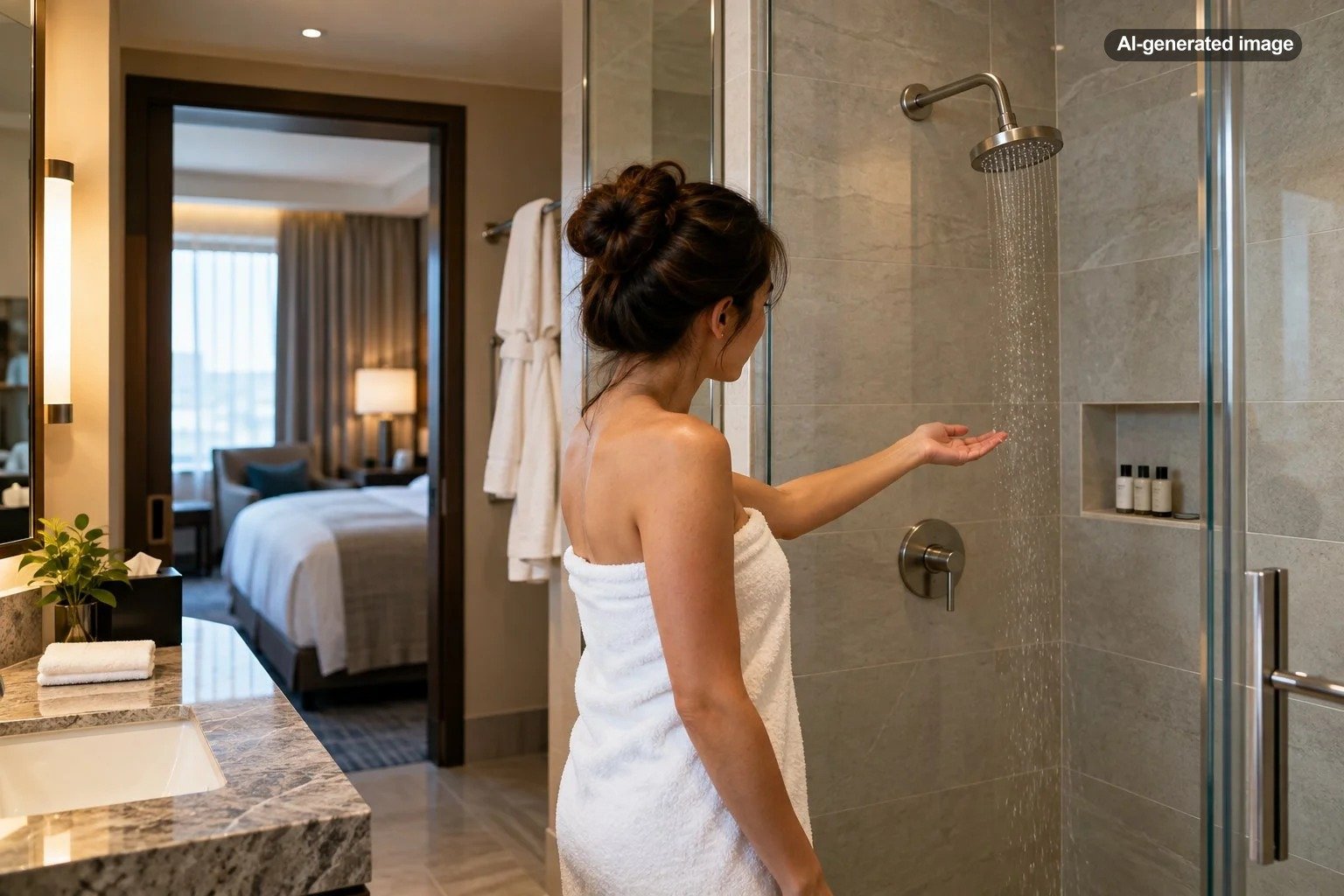
Also inspect the showerhead for an obvious selector ring, button, or lever. A massage, mist, concentrated, or water-saving spray pattern can feel dramatically different even when the underlying water supply has not changed. Switching to a broader or stronger spray mode may make the shower substantially more usable.
Check whether the problem affects only the shower
One of the most useful observations you can make is whether other fixtures in the room behave normally. Turn on the bathroom sink briefly and compare its flow with what you would ordinarily expect.
If the sink seems normal but the shower is exceptionally weak, the issue may be associated with the shower fixture or its controls. If both fixtures seem unusually weak, the cause may be broader than the showerhead itself.
This comparison is useful information for hotel staff. Saying, for example, that the sink works normally but the shower barely flows gives maintenance a clearer starting point than simply reporting that the shower is bad.
See whether the pressure changes with water temperature
If the shower controls make it easy to do so, observe whether the flow seems different when the water is cooler versus warmer. A substantial difference can be worth mentioning when you report the problem.
You do not need to diagnose the underlying plumbing. Simply describe what happens: perhaps the shower flows adequately when cool but becomes much weaker as you turn toward hot, or perhaps it remains weak at every temperature.
Be cautious when experimenting with temperature. Hotel water can become hotter than expected, and there is little benefit in repeatedly moving the control into uncomfortable ranges simply to investigate a pressure problem.
Give the shower a moment, but do not assume the problem will fix itself
In some buildings, water conditions can feel different at different times, especially when many guests are using bathrooms simultaneously. A brief change in flow does not necessarily mean something is broken.
However, consistently poor performance throughout your shower is different from a short fluctuation. If the flow stays weak enough that rinsing shampoo, washing comfortably, or preparing for the day becomes difficult, it is reasonable to report it.
You do not need to determine whether other guests are experiencing the same issue before contacting the hotel. Staff can investigate whether the problem is limited to your room or affects a larger part of the property.
Contact the front desk while the problem can still be addressed
If the basic checks do not solve the issue, report it sooner rather than waiting until checkout. Hotels have much more opportunity to help when you are still staying in the room.
Keep the explanation concise and specific. Tell the front desk that the shower has unusually low water pressure, whether the sink seems normal, and whether the problem changes with temperature. If you have already tried the showerhead’s normal adjustment settings, mention that as well.
The property may send someone to inspect the room, provide operating guidance if the controls are unfamiliar, or offer another solution depending on the circumstances. What a hotel can offer will vary with staffing, room availability, maintenance access, and the nature of the problem.
When requesting another room may be reasonable
A room change becomes more worth considering when the shower remains difficult to use and the hotel cannot correct the problem promptly. This is especially relevant if you have several nights left, need to get ready on a tight schedule, or require a dependable shower before meetings, events, or travel days.
Before moving, ask whether staff believe another room is likely to have different water pressure. If the issue affects a larger section of the building, changing rooms may accomplish little. If maintenance believes the problem is isolated to your bathroom, a move may be the simpler solution.
There is a tradeoff. Moving rooms takes time and requires repacking, so a quick maintenance fix may be less disruptive. On the other hand, repeatedly dealing with an unusable shower can be more frustrating than changing rooms once.
What not to do with a weak hotel shower
It can be tempting to troubleshoot a hotel shower as though you were at home, but that is usually a poor idea. Do not remove the showerhead, extract flow components, loosen fittings, use tools on the controls, or attempt to clear internal parts.
Those actions could damage the fixture, create a leak, or make it harder for staff to determine what was originally wrong. Even a seemingly harmless modification can become a problem if a fitting does not reseal properly.
Also avoid improvising with towels or other objects around plumbing connections. If you see active leaking, water collecting outside the shower area, or another condition that could damage the room, notify the hotel promptly.
Low pressure versus a low-flow showerhead
A shower can feel gentle without necessarily having a plumbing defect. Some showerheads are designed to use less water while producing a particular spray pattern. The result may feel different from the shower you use at home.
The more useful question is whether the shower is functional. A modest but consistent spray that allows normal washing is different from a weak trickle that makes rinsing difficult. The latter is much more reasonable to raise with hotel staff.
Spray design also matters. A concentrated pattern can feel stronger than a broad rain-style spray even when both are working as intended. Trying the available spray settings is therefore one of the simplest checks before assuming the room has a pressure problem.
What travelers often overlook
Timing matters when reporting room problems. Mentioning weak shower pressure shortly after discovering it gives the hotel more options than raising it on the morning you leave.
It also helps to separate inconvenience from diagnosis. You do not need to tell the hotel what part is broken. Describe what you can observe: the shower is very weak, the sink is normal or weak, the problem affects hot water or all temperatures, and the showerhead settings have already been checked.
If reliable bathroom facilities are especially important to your trip, keep the issue in perspective when evaluating your stay afterward. A maintenance problem that was reported and quickly corrected is a different experience from one the property was unable or unwilling to address.
Frequently asked questions
Should I remove the hotel showerhead to check for a blockage?
No. Leave the fixture intact and ask hotel staff to inspect it. Removing parts can cause leaks or damage and may create unnecessary responsibility for something the property’s maintenance team should handle.
Can I ask for another room because of low shower pressure?
You can ask. Whether a move is available or useful depends on the property, room availability, and whether the problem is isolated to your bathroom. It is usually sensible to give the hotel an opportunity to investigate first unless you need an immediate solution.
Does weak shower pressure mean the hotel has a plumbing problem?
Not necessarily. The sensation can be influenced by the showerhead’s spray pattern, fixture design, controls, or a temporary condition. If the shower is extremely weak or remains difficult to use after basic adjustments, hotel maintenance is better positioned to determine the cause.
Should I report low shower pressure even for a one-night stay?
If it materially affects your ability to use the shower, yes. Reporting it gives the hotel an opportunity to help you and alerts staff to a room issue that may also affect the next guest.
What information should I give the front desk?
Explain that the shower flow is unusually weak, mention whether the sink has normal pressure, say whether the problem changes with temperature, and note any showerhead settings you already tried. Those observations are usually more useful than guessing at the mechanical cause.