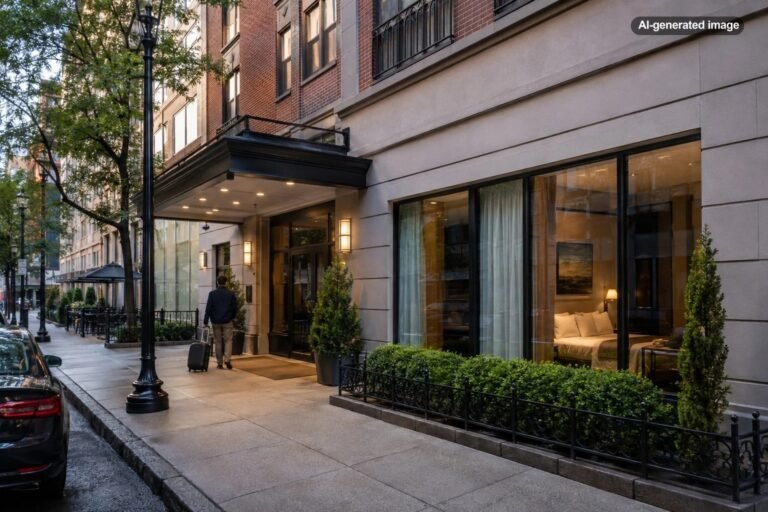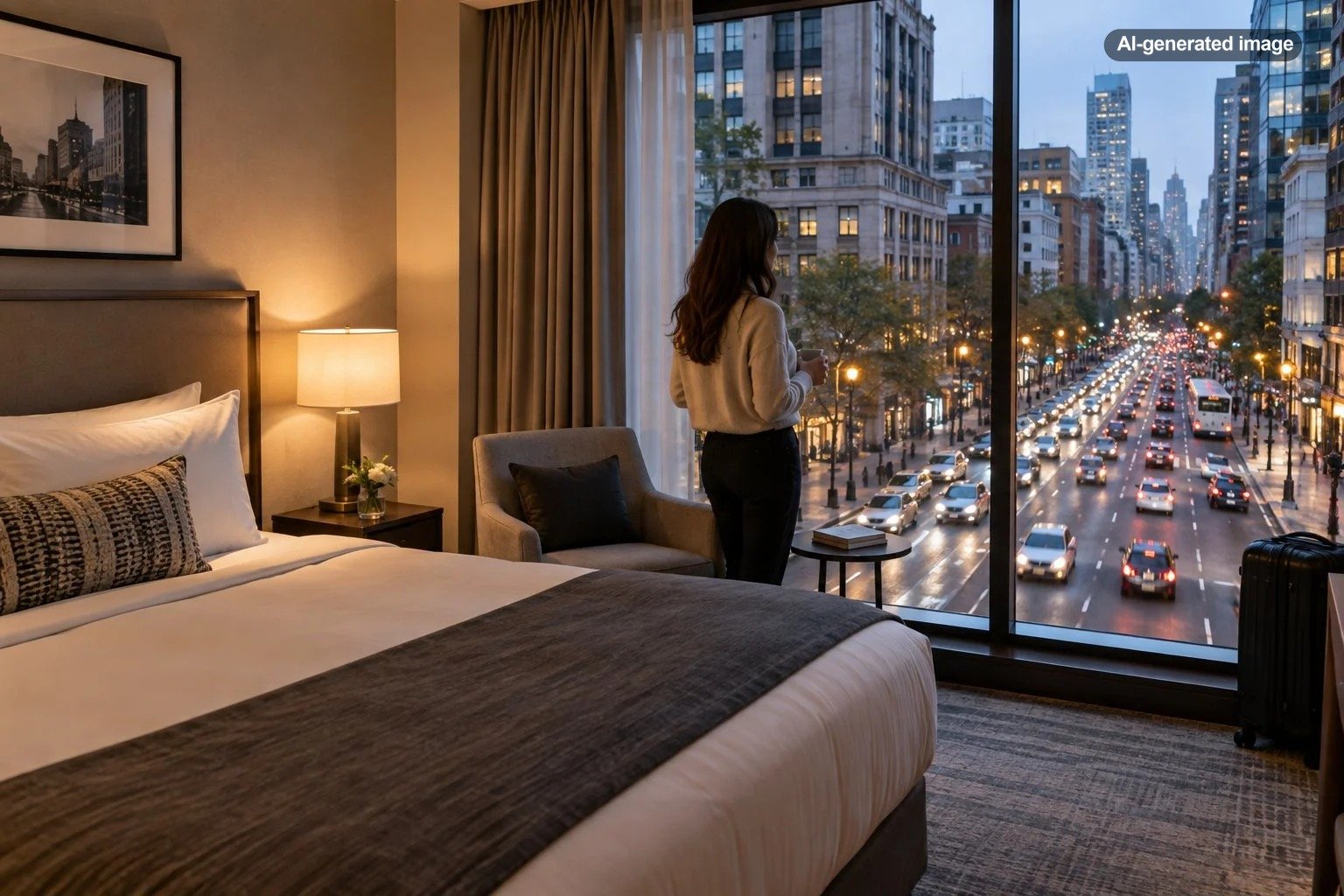
How to Avoid a Hotel Room Facing a Busy Road
A room facing a busy road can turn an otherwise comfortable hotel stay into a frustrating one, especially if traffic continues late at night or begins before sunrise. The most effective way to avoid that problem is to treat room orientation as something to request deliberately rather than assuming the hotel will assign the quietest available room.
Ask for a room away from the main road before arrival, repeat the request at check-in, and use specific wording such as courtyard-facing, rear-facing, or away from street traffic when those descriptions make sense for the property. Requests are rarely guarantees, but clear preferences give the front desk more useful information than simply asking for a quiet room.
Quick answer: improve your odds before you arrive
- Add a request for a room away from the main road when you make the reservation.
- Contact the hotel before arrival if road noise is especially important to you.
- At check-in, ask whether the assigned room faces the street or a quieter side of the building.
- Do not rely on floor level alone. A high-floor room can still face a major roadway.
- Inspect the room promptly so you can request a change before fully unpacking.
Ask for a location, not just a quiet room
The phrase quiet room can mean different things. One employee may interpret it as a room far from elevators. Another may think of a high floor. Neither interpretation necessarily keeps you away from traffic.
A more useful request describes the noise source you want to avoid. You might ask for a room away from the main road, on the quieter side of the building, or not facing street traffic. If you know the property has an interior courtyard, garden, pool area, or rear elevation, you can ask whether rooms face one of those areas, but avoid assuming that any particular orientation is quieter until the hotel confirms it.
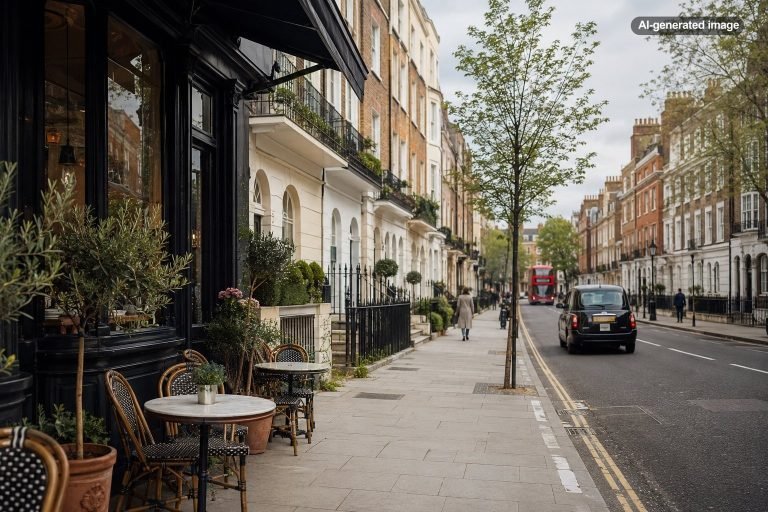
This distinction matters in cities where a hotel’s front entrance sits on a busy avenue while another side faces a smaller street. It can also matter at suburban properties beside highways, airport access roads, or commercial corridors.
Put the request on your reservation early
If road noise matters to your sleep, make the request as soon as you book. Adding the preference early does not guarantee a particular room, but it gives the hotel a chance to see the request before room assignments are finalized.
Keep the wording short and practical. A note such as Please assign a room away from the main road if available is clearer than a long explanation. If you are particularly sensitive to traffic noise, you can say so, but the key information is the preferred location.
It is also worth remembering that room requests can compete with one another. A traveler asking for a high floor, connecting rooms, a specific bed configuration, and a road-free orientation may find that not every preference can be satisfied at once. Decide which request matters most.
Confirm the orientation at check-in
Do not assume a request attached to the reservation automatically determined your room assignment. When you check in, politely ask whether the assigned room faces the main road. This gives the front desk an opportunity to reconsider the assignment before you take your luggage upstairs.
If the property has several building wings, ask which side tends to be farther from traffic. The employee may know practical details that are not obvious from a booking page, such as which rooms face a side street or which section sits deeper inside the property.
If your original request cannot be accommodated immediately, you can ask whether another suitable room is available. Whether a change is possible will depend on occupancy, room categories, housekeeping status, and other operational factors.
Do not assume a high floor solves traffic noise
A higher floor can reduce some street-level sounds, but it is not a reliable substitute for room orientation. Traffic noise can travel upward, particularly where there are open sight lines between a roadway and hotel facade.
If choosing between a high room facing a major road and a somewhat lower room on a quieter side of the building, the quieter orientation may matter more to a noise-sensitive traveler. Building design, windows, surrounding structures, and traffic conditions all affect the result, so there is no universal floor that guarantees silence.
Look at maps before booking
A basic map can reveal whether a hotel sits beside an interstate, arterial road, intersection, nightlife corridor, or access road. That does not tell you exactly how noisy an individual room will be, but it can help you identify properties where room orientation deserves extra attention.
Satellite imagery can also clarify the shape of the building. A long rectangular hotel beside a road may have one set of rooms facing traffic and another facing away from it. An enclosed or U-shaped property may have interior-facing rooms. Treat these visual clues as planning information rather than proof of actual room conditions.
Reviews can provide additional context when multiple recent guests independently mention road noise, but individual experiences vary substantially. A light sleeper near an intersection may have a very different reaction from a traveler who routinely sleeps with background noise.
Check the room before you fully unpack
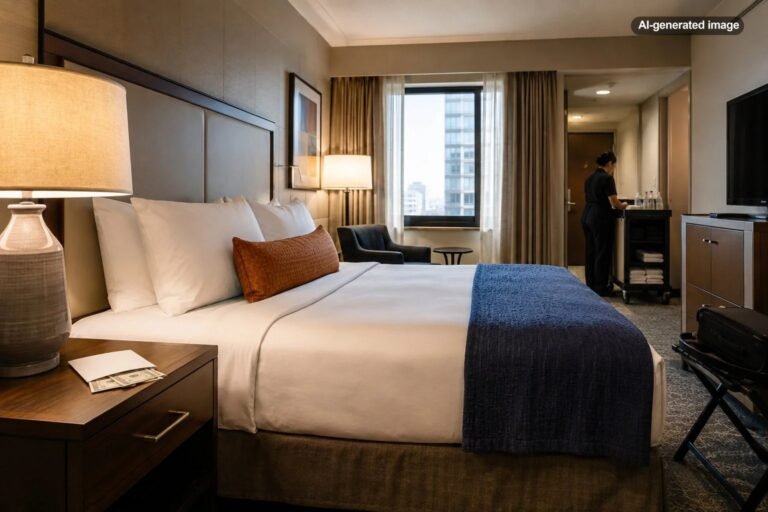
Once you enter the room, take a moment to listen. Look out the window and identify what the room faces. If the roadway is directly below and traffic noise is already distracting, contact the front desk promptly rather than waiting until bedtime.
A room move is generally easier to discuss before you have unpacked everything or spent several hours in the room. Explain the specific issue calmly: the room faces the road, traffic noise is noticeable, and you would prefer another orientation if one is available.
If another room cannot be offered, simple measures such as closing curtains, using existing climate-control fan noise, or using your own earplugs may make the room more comfortable. These are fallback measures, however, rather than substitutes for choosing a better location when that option exists.
Know the tradeoffs of quieter room locations
A road-free room is not automatically the quietest room in the hotel. A courtyard-facing room might be exposed to guests gathering outside. A pool-facing room may be active during the day. Rooms at the rear might be closer to service areas, loading zones, or neighboring buildings.
That is why the strongest request is often not for a specific feature but for the outcome you care about: a room away from significant traffic noise. Hotel staff may be able to balance road exposure with elevators, event spaces, service areas, and other potential noise sources more effectively than a traveler working only from a map.
Who should make road orientation a priority?
This request is especially useful for light sleepers, families with children who have early bedtimes, travelers adjusting to a different time zone, and anyone staying several nights in the same property. Business travelers with early meetings may also prefer to resolve potential noise issues before the first night rather than discovering them after traffic builds.
For a short stay in which location and convenience matter more than absolute quiet, accepting some street exposure may be a reasonable tradeoff. The goal is not to eliminate every possible sound but to match the room location to your own priorities.
Frequently asked questions
Can a hotel guarantee a room away from the road?
Usually, a room-location preference should be treated as a request unless the hotel explicitly confirms otherwise. Availability and room assignments can change, so verify the request directly with the property if it is important to your stay.
Is a courtyard-facing room always quieter?
No. Courtyards can sometimes have guest activity, restaurants, pools, events, or mechanical noise. Ask the hotel which side of the property is generally less exposed to significant traffic rather than assuming a particular view is quiet.
Should I request the highest floor?
A high floor may help in some situations, but orientation can be more important. If traffic noise is your primary concern, ask for a room away from the road first and make floor height a secondary preference.
What should I do if my assigned room faces the road?
Contact the front desk soon after entering the room and ask whether a room on another side of the building is available. Be specific about the traffic noise concern and remain flexible about floor or exact location if quietness is your main priority.
Can hotel reviews tell me which rooms are quiet?
They can reveal recurring noise concerns, but they should not be treated as guarantees about individual rooms. Building conditions, traffic patterns, room assignments, and personal sensitivity to sound can all produce different experiences.
The best strategy is simple: identify road exposure before booking, request a quieter orientation in advance, confirm the room location at check-in, and evaluate the room before you unpack. Those steps cannot guarantee silence, but they can substantially improve your chances of avoiding an unwanted roadside room.