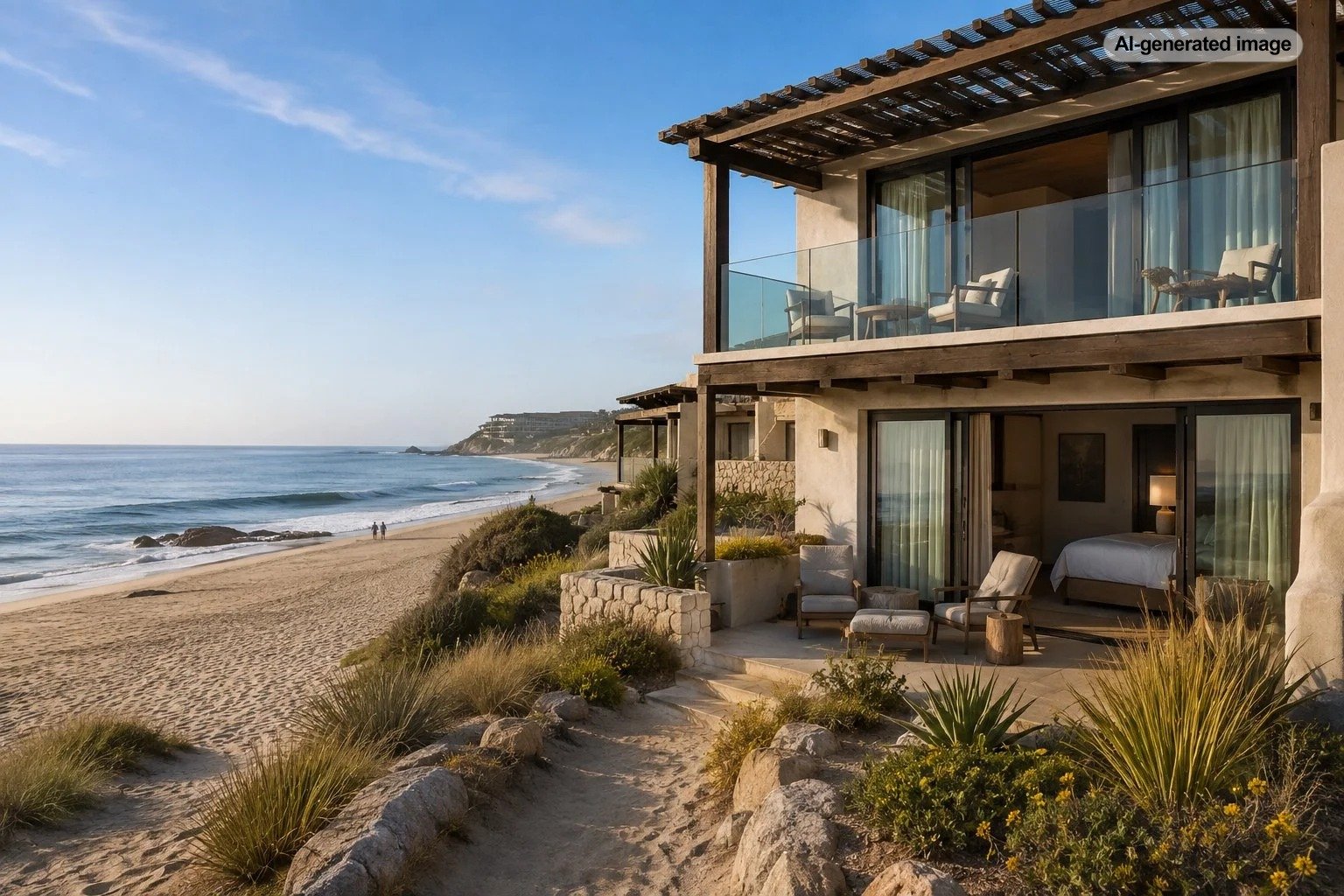
Oceanfront vs. Beachfront Resort Room: What Is the Difference?
An oceanfront room usually faces the ocean directly, while a beachfront room is generally located on or immediately beside the beach. The distinction sounds simple, but hotel terminology is not standardized across the industry. An oceanfront label tends to describe the room’s orientation and view, whereas beachfront more often describes proximity to the sand. Neither term automatically guarantees an unobstructed panorama, a private beach, or a room only a few steps from the water.
The better choice depends on what matters most during the stay. Travelers who plan to spend time on a balcony watching the water may favor oceanfront accommodations. Guests who want an easy route between their room and the sand may find beachfront positioning more useful. Before paying a premium for either category, confirm the room’s view, building location, floor, and route to the beach.
Quick answer
- Oceanfront usually means the room directly faces the ocean, although landscaping, dunes, or another structure may affect the view.
- Beachfront usually means the room or building sits directly along the beach, but the room itself may face a garden, pool, courtyard, or neighboring wing.
- Ocean view is typically a broader category and may include partial, angled, or distant water views.
- Hotels define these labels independently, so the property’s written room description and location map matter more than the category name alone.
- Beach access, balcony availability, floor level, and view obstructions should be verified separately.
Oceanfront usually describes the direction the room faces
At many resorts, an oceanfront room is positioned so its main windows or balcony face the ocean. This often provides a more direct view than an ocean-view or partial-ocean-view category. It can be appealing for couples, special-occasion travelers, and guests who expect to spend meaningful time in the room or on the balcony.
The word front, however, does not establish a universal standard. One resort may reserve the label for rooms with broad, unobstructed views, while another may use it for any room oriented toward the water. A lower-floor room might face the ocean but have palms, dunes, cabanas, or other resort features between the window and the shoreline. Weather, seasonal vegetation, and nearby construction can also influence what is visible.
Oceanfront does not necessarily mean the room opens directly onto the beach. The accommodation could be in a tower set behind a pool deck, lawn, promenade, or protected dune area. It may provide the stronger view while requiring a longer walk to reach the sand.
Beachfront usually describes proximity to the beach
Beachfront generally indicates that the property, building, villa, or room is situated directly along a beach. In practical terms, the category often emphasizes convenient access to the shoreline. It can be a strong fit for families carrying towels and beach equipment, swimmers who expect to move between the room and water several times a day, or travelers who consider time on the sand more important than the view from indoors.
A beachfront room does not always face the ocean. A ground-floor unit may open toward a garden path near the sand, while a beachfront building may contain side-facing rooms. Some resorts also use beachfront to describe an entire wing even though individual rooms have different orientations.
Access can also be less direct than the label suggests. Guests may need to follow a designated walkway, cross a landscaped resort area, use stairs, or leave through a central access point. Local environmental protections and the property’s layout can prevent rooms from opening straight onto the beach.
Oceanfront, beachfront, and ocean view compared
| Room label | What it usually emphasizes | What it may not guarantee | Often best for |
|---|---|---|---|
| Oceanfront | A room facing the ocean | Unobstructed views or immediate sand access | Travelers prioritizing scenery |
| Beachfront | A location directly along the beach | A direct ocean view from the room | Travelers prioritizing beach proximity |
| Ocean view | Some visible portion of the ocean | A direct, close, or panoramic view | Travelers balancing view and room cost |
| Partial ocean view | A limited or angled water view | A view from every part of the room | Travelers who only need a glimpse of the water |
Which room type is likely to suit your trip?
Choose oceanfront when the view is part of the experience
Oceanfront is often the better match when the room will be used as more than a place to sleep. A direct water orientation may matter for a honeymoon, anniversary, restorative trip, or slower resort stay. It can also be worthwhile for travelers who enjoy sunrise or sunset views, depending on the property’s coastline and the room’s exact direction.
The tradeoff is that a view-focused room may sit farther from elevators, restaurants, pools, or beach entrances. Wind and the sound of surf can also be noticeable in exposed locations. Travelers who are sensitive to sound should ask how well balcony doors and windows seal rather than assuming every oceanfront room will be quiet.
Choose beachfront when frequent beach access matters more
Beachfront positioning is usually more practical for guests who want to reach the sand with minimal effort. Families, active beachgoers, and travelers planning repeated swims may value a shorter route more than a higher-floor panorama. Ground-level beachfront accommodations can be especially convenient, provided the property’s access design matches the guest’s mobility needs.
The main compromise is privacy. Rooms near beach paths, pools, restaurants, or public shoreline areas may receive more foot traffic. A convenient ground-floor location can also offer a less expansive view than an upper-floor oceanfront room.
Consider a lower-priced view category when the room is secondary
If most of the trip will be spent sightseeing, dining, or participating in resort activities, an oceanfront premium may provide limited practical value. An ocean-view, garden-view, or resort-view room can be a sensible alternative when the property’s shared spaces already offer easy access to the scenery. The savings, when available, may be more useful for a longer stay or a room with additional interior space.
What to verify before booking either category
Room names should be treated as a starting point rather than a complete description. Check the exact language attached to the room category and look for qualifiers such as partial, limited, angled, or located in a beachfront building. These details often explain more than the headline label.
- View orientation: Ask whether the room faces the ocean directly or at an angle.
- Possible obstructions: Confirm whether vegetation, dunes, roofs, pools, or other buildings may interrupt the view.
- Floor and building: Find out whether the category spans several floors or resort wings.
- Beach route: Ask how guests reach the sand and whether stairs, elevators, paths, or road crossings are involved.
- Balcony or terrace: Do not assume an ocean-facing room includes private outdoor space.
- Beach conditions: Beach width, swimming conditions, and seasonal access can vary and are separate from the room category.
- Accessibility: Confirm step-free routes and accessible room features directly with the property when needed.
It is also useful to compare the room description on the property’s own website with the wording shown by a booking service. If the descriptions differ, contact the resort before reserving. Keep a copy of the category description and any written clarification, particularly when the view or location is a major reason for choosing the room.
Comparing resorts and alternative accommodations
Travelers deciding between a conventional resort and a larger residential-style accommodation should compare more than the shoreline label. Space, housekeeping arrangements, on-site services, beach access, cancellation terms, and the location of the specific unit can all affect the stay. A vacation rental within a coastal community, for example, may offer more living space while providing fewer resort services or a less direct route to the water.
Affiliate disclosure: HotelInfo.com may earn a commission when you book or purchase through links on this page. This does not affect the price you pay. Learn more.
For another way to compare lodging formats, travelers can browse Homes & Villas by Marriott Bonvoy. Rates, taxes, fees, availability, property standards, cancellation terms, and amenities vary, so review the individual listing rather than assuming every coastal accommodation offers the same services or beach relationship.
Details travelers often overlook
The most scenic room and the most convenient room are not always the same. A high-floor oceanfront room may offer a broader horizon but require a longer walk to the beach. A beachfront room may simplify swimming and sunbathing while placing guests closer to busy paths or activity areas. Families may prefer convenience, while couples or remote workers may place greater value on privacy and an uninterrupted outlook.
The time of day can matter as well. A room facing the ocean may receive strong morning or afternoon sun based on the coast’s orientation. This can affect balcony comfort and interior temperature. If sunrise, sunset, or shade is important, ask which direction the room faces instead of relying solely on the word oceanfront.
Finally, neither label establishes whether the beach is private. Many coastlines allow public access even when a resort sits directly beside the sand. The relevant question is not simply whether the hotel is beachfront, but how the shoreline is accessed, managed, and shared.
Frequently asked questions
Is oceanfront better than beachfront?
Not universally. Oceanfront is usually preferable for a direct water-facing orientation, while beachfront is generally better for proximity to the sand. The right choice depends on whether the view or access matters more.
Does an oceanfront room guarantee a full ocean view?
No industry-wide rule guarantees an unobstructed panorama. The room may face the ocean while landscaping, dunes, resort structures, or its floor level affect the view. Verify the property’s definition before booking.
Can a beachfront room have no ocean view?
Yes. A room can be located beside the beach but face a garden, pool, courtyard, or another direction. This is especially possible when beachfront describes a building or section rather than the orientation of an individual room.
What does ocean view mean compared with oceanfront?
Ocean view generally means some portion of the ocean is visible, potentially from an angle or at a distance. Oceanfront more often indicates that the room faces the water directly, although each property sets its own terminology.
Should I contact the resort before reserving?
Contacting the property is worthwhile when the view, balcony, beach route, floor, accessibility, or room location is central to the trip. Ask specific questions and request written confirmation when possible.