River Cruise vs. Ocean Cruise for Travelers Who Get Seasick
For travelers who are prone to seasickness, a river cruise is generally the more comfortable choice. Rivers usually have smaller waves and less pronounced rolling or pitching than open seas, so the movement often feels gentler. That does not make river cruises completely motion-free, but they typically expose passengers to less sustained movement than ocean itineraries.
An ocean cruise can still be realistic for motion-sensitive travelers, especially when the itinerary uses sheltered waters, the ship is large and modern, and the cabin is located near the vessel’s center. The better choice depends not only on ship type, but also on the route, season, weather, cabin position, and how strongly a traveler reacts to movement.
Quick answer
- Choose a river cruise when minimizing movement is the highest priority.
- Consider an ocean cruise when ship amenities, sea days, and a wider range of destinations matter more, provided you can plan carefully for motion.
- Route matters as much as ship size. Sheltered coastal waters can feel calmer than an exposed ocean crossing, while river conditions can occasionally become choppy.
- Cabin location matters most on ocean ships. A lower, centrally located cabin generally experiences less movement than one high up or near the bow or stern.
- Prevention works best before symptoms begin. Travelers with a history of significant motion sickness should discuss medication options with a healthcare professional before departure.
River cruise vs. ocean cruise at a glance
| Factor | River cruise | Ocean cruise |
|---|---|---|
| Typical movement | Usually mild and less sustained | Can include rolling, pitching, and noticeable swells |
| Best fit | Travelers prioritizing calm water and frequent port stops | Travelers prioritizing onboard variety, sea days, and broad itineraries |
| Cabin strategy | Usually less critical, though lower and central remains sensible | Lower deck and midship are generally preferable |
| Time away from land | Usually limited, with frequent stops | May include full sea days or multi-day crossings |
| Onboard scale | Smaller ships and fewer large-scale amenities | Larger ships with more dining, entertainment, and recreation |
Why river cruises usually feel calmer
River ships travel on inland waterways, where waves are generally smaller than those found at sea. The ship may still vibrate, turn, pass through locks, or react to wind and traffic, but the long rolling movement associated with ocean swells is usually reduced.
River itineraries also tend to spend substantial time close to shore and stop frequently. For a traveler who becomes anxious about being unable to leave a moving vessel, regular port calls can make the experience feel more manageable. There are also fewer extended sea days during which symptoms might persist without a break on land.
The tradeoff is that river ships are smaller and offer fewer onboard diversions. Cabins may be compact, entertainment is generally more limited, and water levels can affect navigation or itinerary logistics. A river cruise should be chosen for its route and style, not treated simply as a smaller version of an ocean cruise.
When an ocean cruise can still work
Large ocean ships are designed to operate in open water and commonly use stabilizing systems that can reduce, though not eliminate, certain types of movement. Their size can make modest conditions feel less noticeable than they would on a small boat. Nevertheless, no ship can guarantee a motion-free sailing when wind and sea conditions become unfavorable.
An ocean cruise may be a reasonable choice for someone with mild or occasional motion sensitivity who values resort-style amenities, multiple dining venues, entertainment, children’s facilities, or access to islands and coastal destinations that river ships cannot reach.
Itinerary selection is especially important. A short cruise through relatively sheltered waters may be more comfortable than a transoceanic voyage or an itinerary that spends long periods in exposed seas. Conditions vary by route, season, and weather, so broad claims that one ocean region is always calm should be treated cautiously.
Affiliate disclosure: HotelInfo.com may earn a commission when you book or purchase through links on this page. This does not affect the price you pay. Learn more.
Travelers comparing routes, departure ports, sailing lengths, and ship styles can explore cruise options before deciding whether a river or ocean itinerary is the better fit. Fares, taxes, gratuities, onboard charges, itineraries, health requirements, and cancellation terms vary by sailing and should be checked before booking.
How to choose an ocean cruise cabin when motion matters
A cabin near the ship’s center is usually the most practical starting point. The bow and stern tend to move through a wider arc as the vessel pitches, while higher decks may make side-to-side movement feel more pronounced. A lower-deck, midship cabin is therefore commonly preferred by passengers concerned about motion.
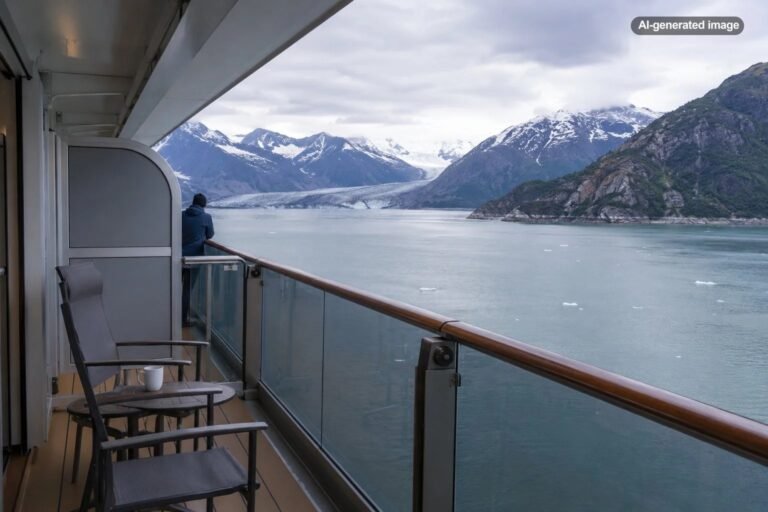
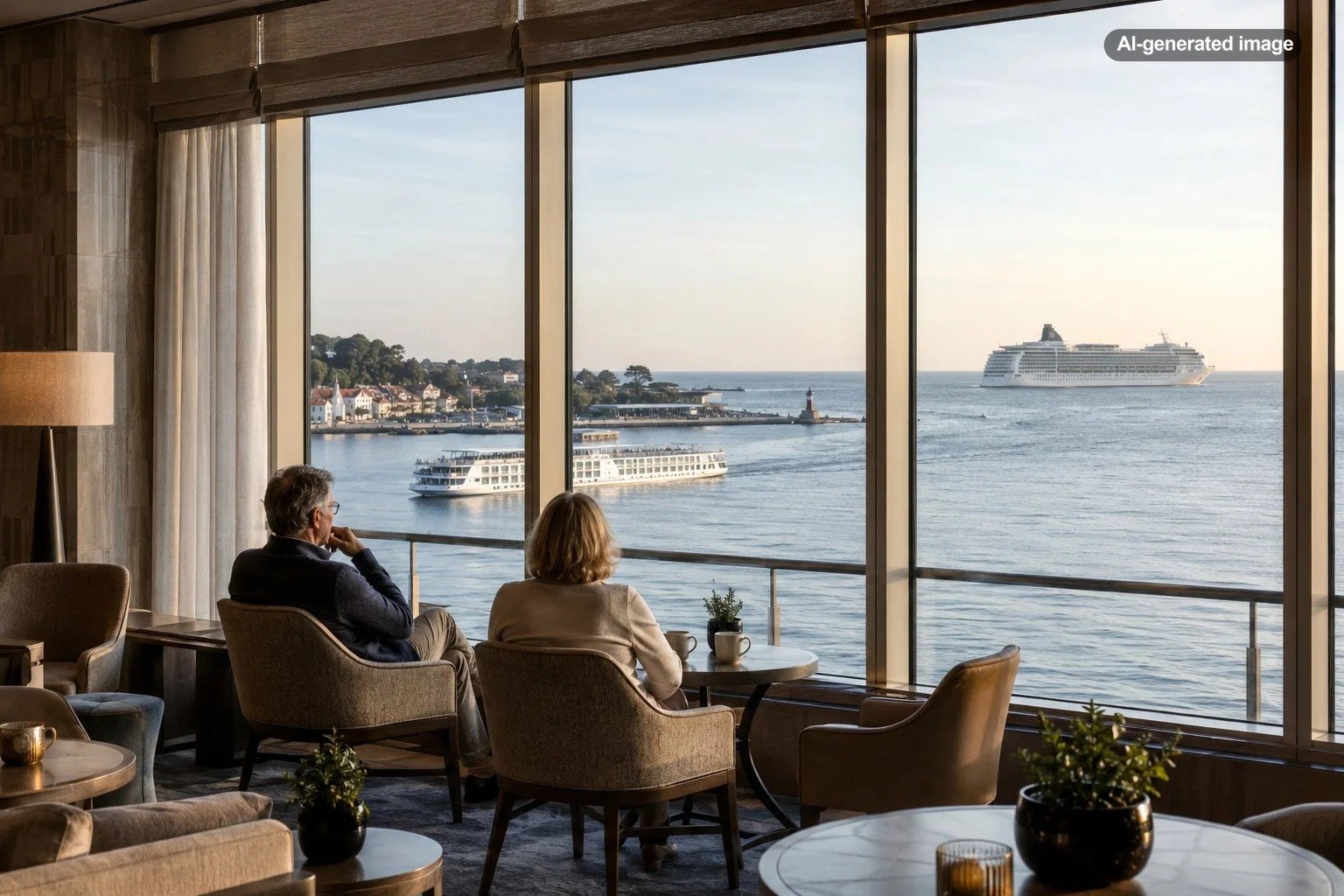
An outside view can also be useful. Seeing the horizon may help the brain reconcile the movement sensed by the inner ear with what the eyes observe. A window or balcony can additionally provide access to daylight and fresh air, although travelers should not assume that a premium cabin category will automatically feel steadier.
Location involves tradeoffs. Lower central cabins may be farther from pools, restaurants, or observation decks. They can also be near operational areas depending on the ship’s layout. Reviewing a deck plan for elevators, theaters, service spaces, and machinery is worthwhile before choosing solely by deck number.
What actually causes seasickness
Motion sickness occurs when the brain receives conflicting information from the eyes, inner ear, and other parts of the body that sense movement. A passenger may feel the ship moving while looking at a wall, book, or screen that appears stationary. The mismatch can lead to nausea, dizziness, sweating, headache, pallor, fatigue, or vomiting.
Susceptibility varies considerably. A traveler who felt fine on one voyage may become ill on another because the route, weather, ship, sleep, alcohol intake, meal choices, or medication use differs. Previous comfort on a ferry or harbor cruise is not a guarantee of comfort during several days at sea.
Practical ways to reduce motion sickness
Plan before embarkation
Travelers with a known history of significant seasickness should speak with a physician or pharmacist before traveling. Some motion-sickness medicines work best when taken before movement begins, and they may cause drowsiness, blurred vision, dry mouth, or other side effects. They can also interact with health conditions or other medications.
Use visual and physical cues
- Look toward the horizon or another distant, stable reference point.
- Spend time in fresh air when conditions and ship rules permit.
- Keep the head relatively still and rest in a supported position.
- Avoid reading or focusing on a phone when the ship is moving noticeably.
- Move to a lower, central part of the vessel if symptoms begin elsewhere.
Manage meals and routines
Large, rich, or spicy meals and excessive alcohol can make nausea harder to manage for some travelers. A light meal, hydration, and adequate sleep may be more comfortable before departure or during rough conditions. Skipping food entirely is not necessarily helpful, particularly when medication is involved, so travelers should follow the instructions provided with any treatment.
Who should choose a river cruise
A river cruise is the stronger fit for travelers who have experienced severe seasickness, dislike extended periods away from land, or want a destination-focused trip with frequent walking tours and port calls. It may also suit first-time cruisers who are unsure how their bodies will respond to sustained marine movement.
However, a river cruise is not automatically ideal for someone seeking extensive nightlife, large production shows, water parks, dozens of restaurants, or several full days devoted to onboard activities. The gentler movement comes with a more intimate and itinerary-centered style of travel.
Who may prefer an ocean cruise
An ocean cruise may be preferable for travelers whose motion sickness is mild, predictable, or manageable with appropriate planning. It also suits groups whose priorities include family facilities, entertainment, broad dining choices, or destinations accessible primarily by sea.
Travelers who are highly sensitive should avoid choosing an ocean voyage solely because the ship is large. Ship size, stabilizers, and cabin location may improve comfort, but the itinerary and sea state remain consequential. A short sailing with limited exposed-water time can be a more cautious first test than a long crossing.
What travelers often overlook
Embarkation-day movement can be misleading. A ship may feel completely still in port and begin moving noticeably only after reaching open water.
Tender boats may feel different from the main ship. Some ports require passengers to transfer in smaller vessels, where movement can be more pronounced. Travelers who tolerate the cruise ship well may still feel uncomfortable during a tender ride.
River water is not always flat. Wind, passing traffic, wide estuaries, and exposed sections of a route can create movement. The distinction is about typical conditions, not an absolute guarantee.
Medication decisions should not be postponed. Waiting until vomiting begins can make symptoms harder to control. Travelers should understand timing, side effects, and contraindications before the trip.
Frequently asked questions
Can you get seasick on a river cruise?
Yes, although it is generally less common or less intense because river ships usually encounter smaller waves. Sensitive travelers can still react to turns, vibration, wind, locks, or movement on wider stretches of water.
Are bigger ocean ships always better for seasickness?
Not always. Size and stabilizing technology can help, but route, weather, speed, cabin position, and an individual’s sensitivity also matter. A large ship crossing rough water may move more than a smaller vessel traveling in sheltered conditions.
What is the best cabin location for someone who gets seasick?
On an ocean ship, a lower-deck cabin near the middle is generally the preferred location because it tends to experience less pronounced movement than cabins high up or near the bow and stern.
Should a first-time cruiser start with a river cruise?
A river cruise is a sensible starting point for someone whose primary concern is motion. A short ocean itinerary in relatively sheltered waters can also be a reasonable trial for travelers who want the amenities of a larger ship.
Is seasickness a reason to avoid cruising entirely?
Not necessarily. Many motion-sensitive travelers cruise successfully by choosing an appropriate itinerary and cabin, preparing in advance, and using prevention strategies recommended by a healthcare professional. Those with severe symptoms, relevant medical conditions, or concerns about medication should obtain individualized advice before booking.
Which cruise type is the better choice?
For the lowest typical risk of seasickness, choose a river cruise. Its calmer waters, frequent stops, and limited time in open seas make it the more conservative option.
Choose an ocean cruise when the destinations and onboard experience justify accepting more potential movement. Select the route carefully, favor a lower midship cabin, avoid treating ship size as a guarantee, and prepare for motion sickness before departure rather than after symptoms appear.