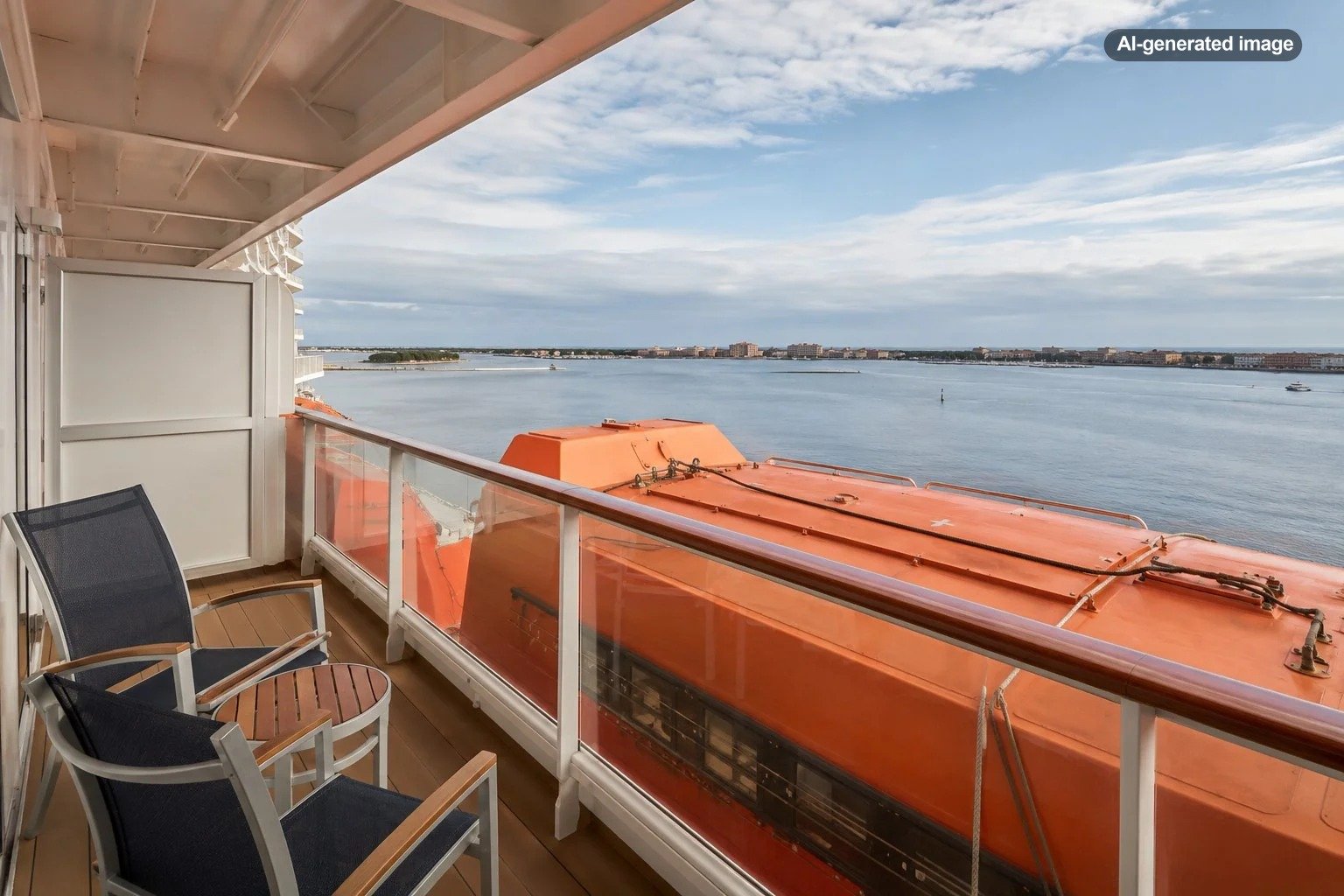
What Does an Obstructed View Balcony Mean on a Cruise Ship?
An obstructed view balcony on a cruise ship is a cabin with a private outdoor balcony whose outward view is partly or, in some cases, substantially blocked by part of the ship. The obstruction may be a lifeboat, rescue equipment, structural framing, a steel railing, an overhang, or another fixed feature.
You can normally still open the balcony door, step outside, sit in the fresh air, and see at least some sky or water. What changes is the quality of the sightline. An obstructed balcony is therefore not the same as an interior cabin, but it may not provide the uninterrupted ocean panorama travelers expect from a standard balcony.
Quick answer
- The balcony is real: You generally receive a private outdoor space rather than a simulated or window-only view.
- The obstruction varies: It may block only the lower portion of the view, sit off to one side, or occupy much of the sightline.
- Lifeboats are common obstructions: Ship structures, railings, equipment, and overhangs can also interfere with the view.
- The cabin may cost less: Cruise lines often position obstructed-view cabins below comparable cabins with clearer views.
- The exact cabin matters: Two rooms in the same category can have noticeably different obstructions.
What can block an obstructed balcony view?
The term describes a broad category rather than one standardized design. Cruise lines may use similar wording for cabins with very different views, so the category name alone does not reveal how severe the obstruction will be.
Lifeboats and rescue craft
A lifeboat may sit directly in front of the balcony, below the railing, or between neighboring cabins. A boat positioned below railing height might block the downward view of the water while leaving the horizon relatively open. A taller lifeboat or its supporting machinery may interfere with the view while you are seated as well as standing.
Structural supports and equipment
Metal columns, davits used to support lifeboats, external stairways, maintenance platforms, and other ship hardware can create narrow or irregular obstructions. These may be less visually dominant than a lifeboat but can still interrupt photographs and panoramic views.
Solid balcony railings
Some balconies have a solid steel barrier rather than a clear glass panel. This can limit the view of the sea from inside the cabin or while sitting in a low chair, even when the horizon remains visible while standing.
Overhangs and recessed positions
A balcony beneath an extended deck may receive less open sky and direct sunlight. Other balconies are recessed into the ship’s structure, creating a more enclosed feeling. These conditions may be categorized differently by each cruise line, but they can affect the experience in much the same way as a conventional obstruction.
Partially obstructed versus fully obstructed
A partially obstructed balcony usually retains a usable sightline around, above, or beside the blocking feature. You might see the horizon clearly while losing the view directly downward, or one side of the balcony may be clearer than the other.
A fully or significantly obstructed balcony can have a lifeboat or structural feature occupying most of the outward view. Fresh air and outdoor space remain the principal benefits, but the room may be a poor choice for travelers booking specifically for scenery.
Terminology is not perfectly consistent across ships. A cabin described as obstructed may be entirely acceptable to one traveler and disappointing to another. The cabin number and its location on the deck plan are more informative than the category label by itself.
Is an obstructed view balcony worth booking?
It can be a sensible choice when the fare is closer to an oceanview or interior cabin than to an unobstructed balcony. The value depends on why you want a balcony in the first place.
An obstructed balcony is often a good fit for travelers who primarily want fresh air, a private place to sit, and convenient access to the outdoors. It can also work well on port-intensive itineraries where relatively little time will be spent in the cabin.
Travelers who picture long scenic mornings, wildlife watching, landscape photography, or unobstructed views from bed may prefer another category. This distinction is especially important on itineraries where the scenery is a major part of the trip.
| Traveler priority | How an obstructed balcony may fit |
|---|---|
| Fresh air and private outdoor space | Often a practical choice if the balcony remains fully usable. |
| Lowest possible cabin cost | An interior or promotional oceanview cabin may still cost less. |
| Clear scenic views | Usually worth comparing with an unobstructed balcony. |
| Privacy | Potentially good, though nearby equipment or maintenance areas should be considered. |
| Natural light | Usually better than an interior cabin, but a large obstruction or overhang may reduce it. |
How to evaluate a specific obstructed balcony
Begin with the cruise line’s deck plan for the exact ship and sailing period. Ships can be modified, and cabin classifications may change, so make sure the plan applies to the dates you are considering.
Check the cabin number, not only the category
Identify the exact room and look at the surrounding ship structures. Cabins near the middle of a row of lifeboats may have a different view from rooms positioned between two boats or near the end of the row.
Consider the height of the obstruction
An obstruction below the railing may matter little when standing but become prominent when seated. If you expect to read, eat breakfast, or spend extended periods sitting outside, the seated sightline deserves particular attention.
Look above, below, and beside the cabin
View quality is only one part of the decision. A lower fare may come with proximity to a theater, promenade, tender station, service space, or other active part of the ship. Conversely, some obstructed cabins occupy convenient locations near elevators and public areas.
Compare the actual fare difference
Do not assume the obstructed room is automatically the best value. Compare it with a standard balcony, an oceanview cabin, and any guarantee-category offers. A modest upgrade may be worthwhile for a scenic itinerary, while a larger price gap may make the obstructed option more attractive.
Affiliate disclosure: HotelInfo.com may earn a commission when you book or purchase through links on this page. This does not affect the price you pay. Learn more.
When comparing ships, cabin categories, and sailing dates, travelers can explore cruise options through Expedia Cruises. Fares, itineraries, taxes, gratuities, onboard charges, and cancellation terms vary, so review the final booking details carefully.
What travelers often overlook
The view from inside may differ from the balcony view
A lifeboat might be relatively unobtrusive once you step outside but dominate the view through the glass door from the bed or sitting area. Travelers who enjoy looking outside without leaving the cabin should assess both perspectives.
Operational equipment may move
Lifeboats and tenders may be lowered during port operations or drills. This can temporarily improve the view, but it may also create activity near the cabin. Such movement should be treated as an occasional operational event, not as a reliable way to obtain an unobstructed view.
A clear horizon is not the same as a clear panorama
Some cabins offer an open horizon above a lifeboat but little visibility of the water alongside the ship. This may be perfectly adequate for daylight and sea air, yet less satisfying for watching the ship arrive in port or observing marine life close to the surface.
Cabin guarantees reduce control
A guarantee booking generally means selecting a category while allowing the cruise line to assign the specific cabin. This can be useful when price matters most, but it provides less control over the severity and position of an obstruction. Travelers with strong preferences should consider selecting a particular cabin when that option is available.
Who should choose another cabin?
Consider paying for an unobstructed balcony when the itinerary includes dramatic coastlines, glacier viewing, scenic fjords, wildlife-rich waters, or long stretches where the private view is central to the experience. A clearer balcony can also be worthwhile for travelers who expect to spend substantial time in the room because of mobility needs, a preference for quiet, or a desire to avoid crowded public decks.
An oceanview cabin may be the better compromise when you want daylight but do not expect to use an outdoor space. An interior cabin may make more sense when the room is mainly for sleeping and the fare difference can be spent on other parts of the trip.
Frequently asked questions
Can you still go outside on an obstructed view balcony?
Normally, yes. The term generally refers to the view rather than access to the balcony. Confirm the cabin description because configurations vary by ship.
Are obstructed balcony cabins always cheaper?
They are often positioned as a value-oriented balcony category, but promotional pricing and demand can narrow or reverse the difference. Compare the final fare and included terms rather than relying only on the category hierarchy.
Does obstructed view mean no ocean view?
Not necessarily. Many cabins retain some view of the water, sky, or horizon. The obstruction may affect only part of the sightline, although some cabins are much more heavily blocked than others.
Will a lifeboat block all natural light?
Usually not, but a large or high obstruction can reduce brightness and make the cabin feel more enclosed. Overhangs and recessed balcony designs may also affect natural light.
How can I know exactly what the view will look like?
Start with the official deck plan and cabin description for the exact ship. Then look for reliable photographs or videos labeled with the same cabin number or a directly adjacent room. Treat images from sister ships cautiously because structural details can differ.
The practical conclusion
An obstructed view balcony is best understood as a standard private balcony with a compromised sightline, not as a balcony without any view at all. Its appeal lies in obtaining outdoor space and fresh air while potentially paying less than the price of an unobstructed category.
The decision becomes easier when you separate the value of the balcony itself from the value of the view. Travelers who care most about private outdoor access may be satisfied. Those booking a balcony primarily for scenery should examine the exact cabin carefully or choose an unobstructed option.