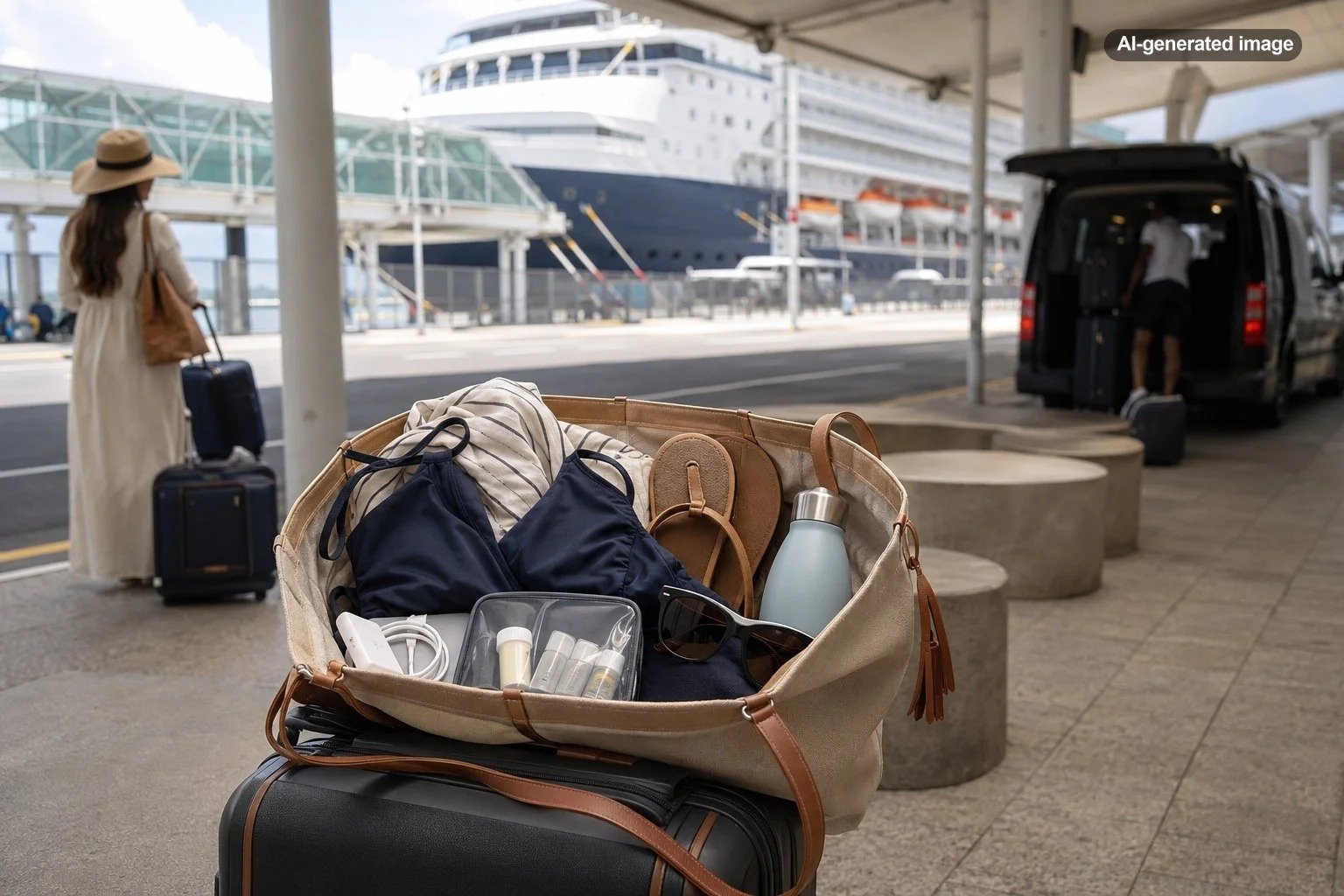
What to Pack in Your Cruise Carry-On Before Your Luggage Arrives
When you hand over your larger suitcases at the cruise terminal, you may not see them again until later that afternoon or evening. Your cruise carry-on should therefore contain everything required to board the ship, protect essential belongings, manage personal needs, and enjoy the first several hours without opening a checked bag. The goal is not to carry a second suitcase, but to create a compact embarkation-day kit that remains useful until your stateroom and luggage are available.
The most important items are travel documents, medication, valuables, a phone and charger, basic personal-care supplies, and clothing appropriate for your first afternoon. Add a swimsuit, sun protection, or a dinner-ready change of clothes when those items fit your plans. Keep the bag light enough to carry comfortably through the terminal and around the ship.
Quick answer: Cruise carry-on essentials
- Passport or other required identification, boarding documents, and any necessary travel paperwork
- Prescription medication, medical supplies, and essential over-the-counter medication
- Wallet, payment cards, cash, jewelry, electronics, and other valuables
- Phone, charging cable, portable battery, and headphones
- Swimsuit, sunscreen, sunglasses, and a change of clothing
- Travel-size toiletries and personal-care items needed before luggage delivery
- Essential items for children, including diapers, feeding supplies, and comfort items
Start with documents you cannot board without
Keep every document required for check-in in your personal possession. Depending on the sailing and itinerary, this may include a passport, government-issued identification, cruise boarding documents, visas, proof of citizenship, or documents for children traveling with one parent or another guardian.
Do not place these items in luggage that will be handed to a porter. A document pouch or zippered interior pocket makes them easier to retrieve while preventing loose papers from slipping out during security screening. Digital copies can be helpful as backups, but they should not be treated as replacements when original documents are required.
Include your wallet, payment cards, emergency contact details, and any travel insurance information you may need. Cruise lines, destinations, and transportation providers can have different documentation requirements, so review the current instructions for your specific booking before leaving home.
Keep medication and medical necessities with you
Prescription medication belongs in your carry-on, not in checked luggage. Bring enough for the full trip, plus an additional supply appropriate to the possibility of delays. Keep medication in its original labeled packaging when practical, and carry supporting prescription information or a physician’s note when required for a particular medication or destination.
Pack any item that would be difficult or risky to replace, including inhalers, insulin supplies, hearing-aid batteries, eyeglasses, contact lenses, mobility-related accessories, and required medical devices. Travelers who need refrigerated medication, sharps disposal, oxygen arrangements, or accessibility assistance should contact the cruise line before departure rather than assuming that every ship provides the same facilities.
A small personal health kit can also be useful. Consider motion-sickness medication you already know you tolerate, pain reliever, adhesive bandages, and any allergy or stomach medication you routinely use. Onboard shops and medical centers may carry basic products, but selection, access, and cost can vary.
Protect valuables and irreplaceable belongings
Keep jewelry, cash, cameras, laptops, tablets, keys, and valuable documents in the bag that remains with you. Checked luggage passes through several handling and screening stages, so it is not the right place for anything fragile, expensive, confidential, or essential to the trip.
Organize electronics in a padded compartment, and avoid packing more valuables than you genuinely plan to use. A small crossbody bag, backpack, or structured tote is generally easier to manage than several separate bags.
Affiliate disclosure: HotelInfo.com may earn a commission when you book or purchase through links on this page. This does not affect the price you pay. Learn more.
Travelers replacing worn luggage or building a more organized packing system can review Hartmann travel luggage. Check the dimensions and weight of any bag against the current rules of your airline, cruise line, and departure terminal before relying on it as a carry-on.
Pack for the first afternoon, not the entire cruise
Embarkation-day clothing should reflect what you intend to do before dinner. For a warm-weather sailing, that may mean a swimsuit, cover-up, sunscreen, sunglasses, and sandals. Wearing the swimsuit beneath comfortable boarding clothes can reduce what you need to carry, although you should still bring dry undergarments or a change of clothing.
For a cool-weather itinerary, use the same principle with different items: a light jacket, warm layer, hat, or rain protection may matter more than swimwear. The forecast at the departure port may also differ from conditions later in the itinerary.
A simple dinner-ready outfit can be useful when luggage arrives later than expected. It does not need to be formal unless your plans call for formal attire. A clean shirt, casual dress, or wrinkle-resistant outfit is usually enough to move comfortably from the pool deck or open areas to an indoor dining venue.
Add a compact personal-care kit
Pack only the toiletries you may need before your suitcase arrives: toothbrush, toothpaste, deodorant, facial products, hairbrush, lip balm, and any specialized skincare items. A stain-removal wipe and a small packet of tissues can solve common embarkation-day annoyances without taking much space.
Liquids should be sealed in a leak-resistant pouch. Travelers flying to the port must also follow their airline and airport-security rules, which may be more restrictive than the cruise line’s policy. Do not assume that an item permitted aboard the ship will automatically be permitted through airport security.
Prepare your phone and essential electronics
Your phone may serve as a boarding document, camera, schedule, map, messaging device, and connection to the cruise line’s app. Charge it fully before arriving, then keep a charging cable and compact portable battery in your carry-on. Download the cruise line’s app, save important confirmations, and complete available check-in steps while you still have dependable internet access.
Bring headphones if you expect to wait in the terminal, but remain attentive to boarding announcements. Expensive cameras and other fragile electronics should stay with you even when you do not expect to use them immediately.
Plan separately for babies, children, and special routines
Families should treat the carry-on as a short-duration care bag. Include diapers, wipes, feeding supplies, formula or approved snacks, a change of clothes, required medication, and one familiar comfort item. Pack enough for a meaningful delay rather than assuming the stateroom will be ready immediately.
Adults with dietary, sensory, or accessibility needs should use the same approach. Keep the specific items required to remain comfortable and independent during boarding. Notify the cruise line in advance when an accommodation, medical arrangement, or specialized supply must be provided by the ship.
What should stay out of your carry-on?
Avoid filling the bag with items you will not use during the first few hours. Multiple evening outfits, full-size toiletry collections, extra shoes, and most of your vacation wardrobe can remain in checked luggage. Overpacking creates a different problem: you may need to carry the bag through lunch, safety procedures, elevators, and public areas before your room is accessible.
You should also review the cruise line’s prohibited-items list shortly before departure. Policies can differ by company and may cover alcohol, heating appliances, electrical devices, weapons, recreational equipment, and other restricted items. A bag containing a questionable item may be held for additional screening, which can further delay delivery.
Choose a bag you can manage for several hours
The ideal cruise carry-on is secure, easy to open during check-in, and comfortable to carry. A backpack distributes weight well, while a zippered tote offers fast access. A small wheeled bag may work for travelers who prefer not to carry weight, but it can be cumbersome in crowded elevators and buffet areas.
Keep the bag small enough to pass through terminal screening equipment and avoid packing it to the point that it becomes difficult to supervise. Place frequently requested items near the top, medication in a clearly identified pouch, and valuables in an interior compartment.
Travelers still comparing sailings can search cruise itineraries and then adjust the carry-on list to the ship, climate, departure port, and length of the voyage. Fares, itineraries, onboard charges, and booking conditions vary, so review the current details before reserving.
A practical final check before leaving home
Ask one question before closing the bag: What would create a serious problem if it were unavailable until tonight? The answers usually include identification, medication, money, valuables, communication devices, and essential care supplies. Pack those first.
Then ask what would make the first afternoon more comfortable. Add a swimsuit, suitable layer, sunscreen, toiletries, or a clean outfit according to the itinerary. Everything else can remain in the checked suitcase. This two-step method produces a lighter bag and a calmer embarkation day without trying to prepare for every unlikely scenario.
Frequently asked questions
How long does cruise luggage delivery take?
Delivery timing varies by ship, sailing, security screening, and the volume of luggage being handled. Checked bags may arrive several hours after boarding and, on some sailings, after departure.
Should I carry my passport around the ship?
Keep it secure during boarding. After gaining access to your stateroom, follow the cruise line’s guidance for storing documents and carrying identification ashore. Requirements can differ by destination.
Can I carry all of my luggage onto the ship?
Some cruise lines permit guests to carry luggage aboard if it meets their screening requirements, but staterooms may not be ready when you board. Carrying large bags through public areas can be inconvenient, so check your line’s current policy.
Do I need dinner clothes in my carry-on?
They are optional but useful. Pack a simple change of clothes when arriving in travel-worn clothing, planning an early dinner, or sailing with a line that notes luggage may arrive after sailaway.
Should medication remain in its original container?
Keeping prescription medication in its original labeled packaging is commonly recommended. Check the rules for the cruise line, departure country, and destinations, particularly when traveling with controlled medication.