What Makes a Hotel Good for Business Travelers?
A good hotel for business travelers removes friction from the work trip. It should make it easy to arrive, prepare, sleep, work, eat, and leave without turning routine tasks into logistical problems.
The most suitable property is not necessarily the most luxurious one. A well-located hotel with dependable Wi-Fi, a functional desk, quiet rooms, efficient service, and an early breakfast may be more useful than a grander property with elaborate leisure facilities but an inconvenient location.
Quick answer
- Location should support the actual itinerary, not simply place the traveler near the city’s best-known attractions.
- Wi-Fi and workspace should be genuinely usable, with adequate speed, lighting, outlets, and seating.
- Reliable sleep matters as much as productivity, especially before presentations, meetings, or early departures.
- Efficient service reduces wasted time, from check-in and luggage storage to breakfast and transportation.
- The right hotel type depends on trip length, meeting schedule, expense policy, and the amount of work that must be completed in the room.
Location that fits the workday
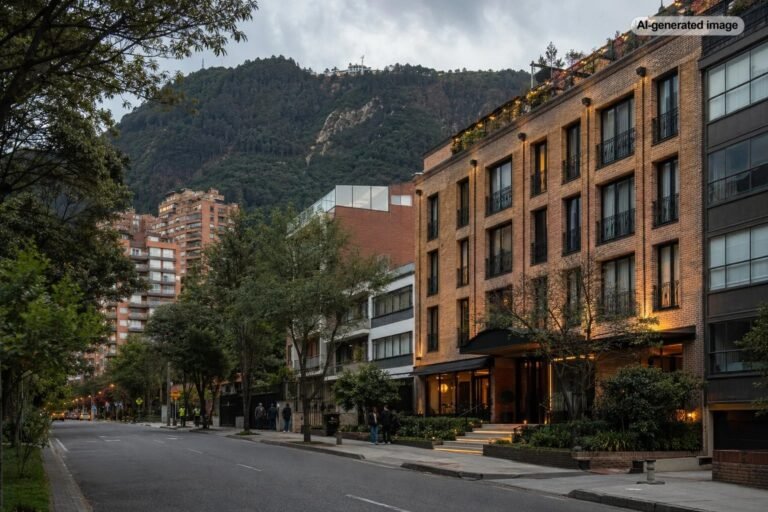
For a business trip, a hotel’s location should be judged by the traveler’s schedule rather than by its general tourism appeal. A central address may sound convenient, but it offers little practical value if every meeting is in a suburban office park, convention district, airport corridor, or neighboring city.
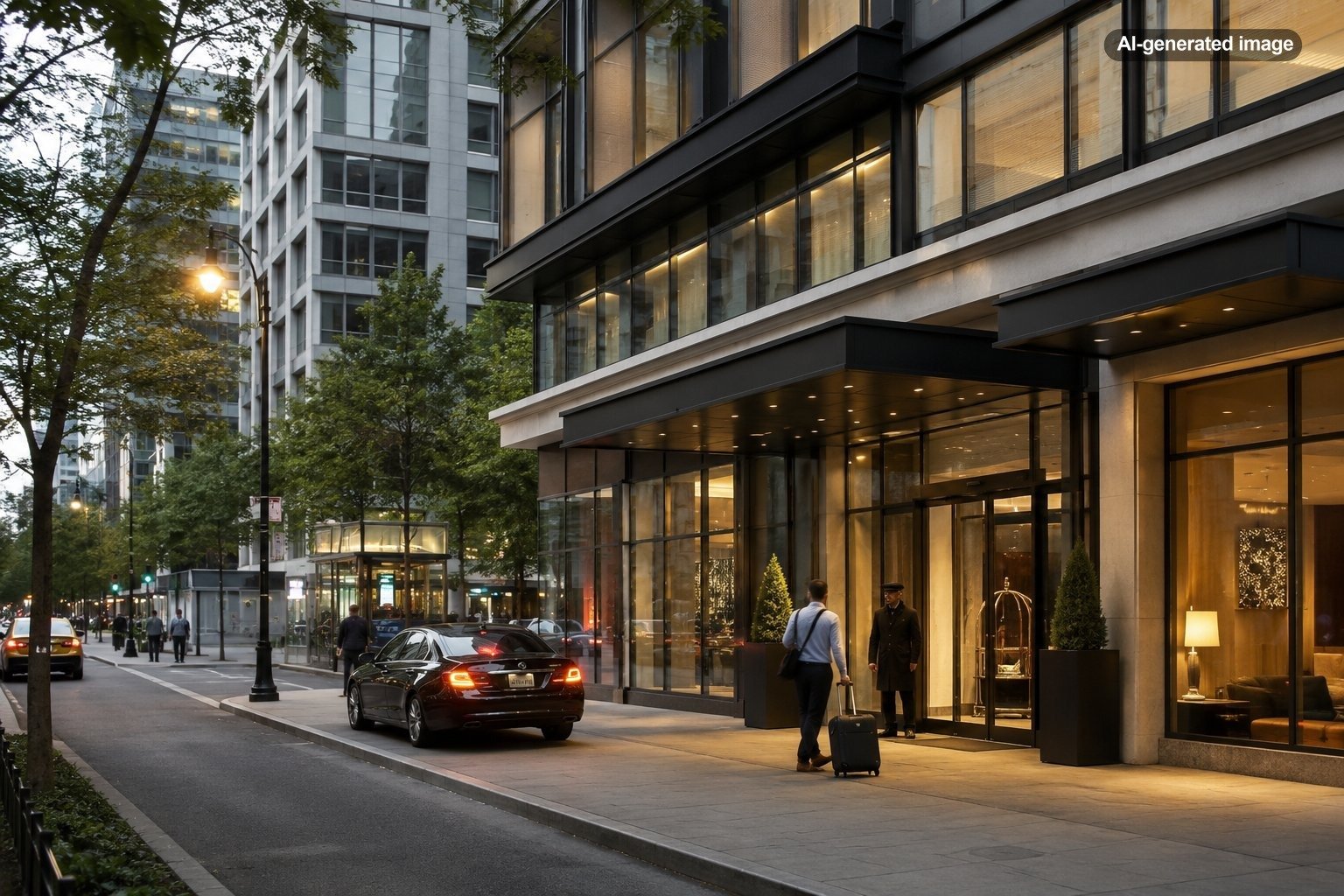
Travelers should map the places they expect to visit and consider how they will move between them. A hotel within walking distance of one major meeting can be useful, but proximity to a dependable transit line may be more valuable when appointments are spread across several districts. Those relying on a rental car may prioritize straightforward highway access, parking, and an entrance that is easy to find after dark or during poor weather.
There are tradeoffs. Hotels in business districts can be quiet on weekends but may have fewer late-night dining options. Airport hotels can simplify an early flight but create a long commute to downtown meetings. Convention hotels often handle large groups efficiently, although their lobbies, elevators, and restaurants may become crowded when major events are underway.
Wi-Fi that supports real work
Business travelers need more than a Wi-Fi symbol on the booking page. The connection should remain stable during video calls, cloud-based work, file transfers, and multi-device use. It is also worth checking whether standard access is included, whether faster service costs extra, and whether guests can connect several devices without repeated sign-ins.
Recent guest reviews can reveal patterns that a basic amenity list will not. Repeated comments about weak room signals, difficult login pages, or unreliable connections during busy periods deserve attention. Travelers handling sensitive company information should also follow their employer’s security requirements, which may include using a virtual private network or a mobile hotspot rather than relying solely on a shared hotel network.
A room designed for working
A decorative writing table does not automatically make a room suitable for work. A practical setup includes a comfortable chair, a desk at a usable height, good task lighting, reachable electrical outlets, and enough surface area for a laptop, notes, and charging devices.
The location of the workspace matters as well. A desk positioned beside the bed or directly under the television may be distracting. Rooms with a separate sitting area can be helpful for longer work sessions, informal conversations, or travelers who want to keep the bed associated with rest rather than email.
Travelers expecting several hours of focused work may prefer a property with a business lounge, library-style lobby area, coworking space, or bookable meeting room. These shared areas can be useful when a travel companion is resting in the room or when the traveler needs a more professional background for a call.
Sleep quality and room placement
A productive trip depends on adequate rest. Mattress preference is personal, but travelers can still evaluate several practical factors, including blackout curtains, climate control, sound insulation, hallway noise, elevator proximity, and the amount of light entering from under the door.
Room placement requests can improve the experience, although they are rarely guaranteed. A light sleeper might request a room away from elevators, ice machines, connecting doors, nightlife-facing streets, and housekeeping storage areas. Travelers arriving from another time zone may value effective blackout shades and quiet daytime conditions more than a view.
Temperature control deserves particular attention. A room that becomes too warm overnight or uses a noisy cycling unit can undermine sleep even when the bed itself is comfortable. Reviews that repeatedly mention air-conditioning noise or limited thermostat control may be more relevant to a business traveler than praise for the lobby design.
Efficient arrival and departure
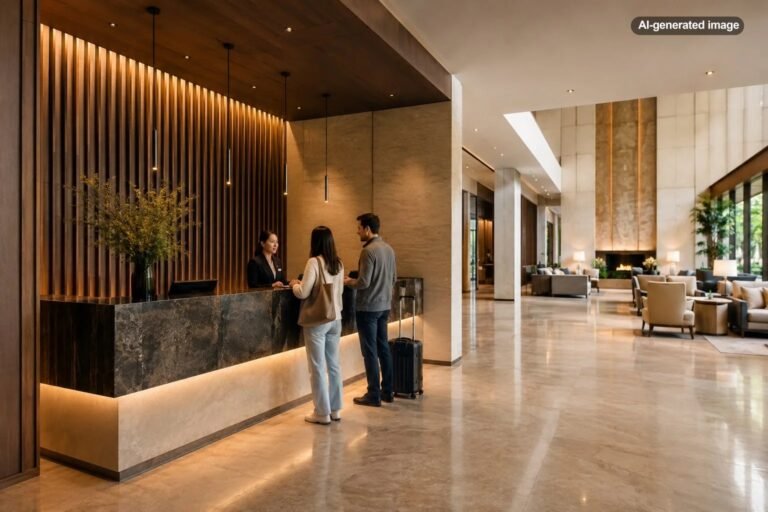
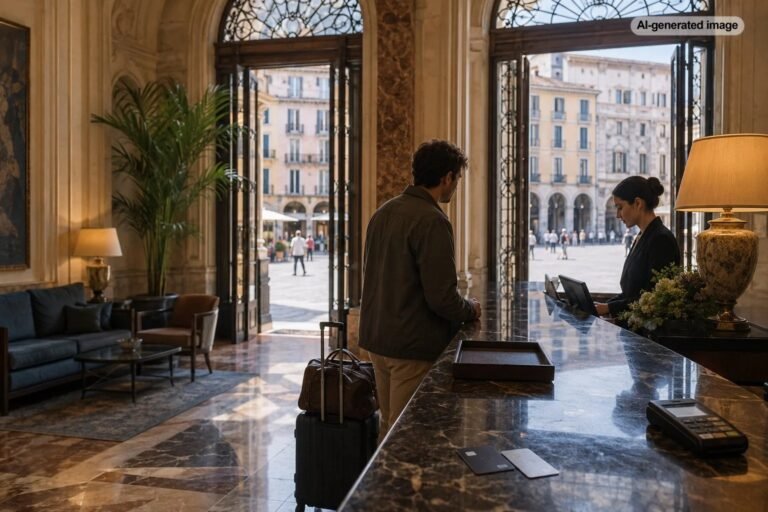
Late arrivals, early meetings, and changing flight schedules make operational flexibility valuable. A business-friendly hotel should clearly explain its front desk hours, luggage storage procedures, check-in requirements, and options for guests arriving after the normal check-in period.
Mobile check-in, digital keys, express checkout, and emailed receipts can save time, but technology is most useful when staff support remains available if something fails. A staffed front desk may be particularly important for travelers arriving internationally, carrying presentation materials, or dealing with disrupted transportation.
Receipt accuracy also matters. Business travelers may need room charges, taxes, parking, dining, and incidentals presented in a format that satisfies an employer’s expense policy. Asking about itemized folios before departure can prevent administrative problems later.
Food that works with a business schedule
Breakfast is valuable when it is served early enough for the day’s first appointment. Travelers should look beyond the phrase “breakfast available” and check the serving hours, whether it is included in the room rate, and whether a quick takeaway option exists.
An on-site restaurant is helpful for late arrivals, working dinners, and nights when leaving the property is impractical. Room service can also be useful, although hours may be limited. In hotels without full dining service, a lobby market, nearby grocery store, microwave, or small refrigerator can make an important difference.
The best choice depends on the itinerary. A traveler attending hosted dinners may have little need for a large hotel restaurant. Someone working through the evening may value simple, dependable food more than an ambitious menu. Extended-stay guests often benefit from a kitchenette and guest laundry, even when the property offers fewer traditional hotel services.
Meeting and collaboration facilities
Not every work trip requires a ballroom or formal conference center. Small meeting rooms, private call booths, a quiet lobby table, or a flexible lounge may be more relevant for interviews, client conversations, and brief team sessions.
Before relying on these spaces, travelers should confirm whether reservations or fees apply. They should also ask about closing times, privacy, power access, presentation equipment, and whether outside guests are permitted. An attractive lobby may not be suitable for discussing confidential information.
For conferences, staying in the host hotel can reduce commuting and make informal networking easier. The tradeoff is that the property may be busy, and room rates or minimum-stay rules may differ during major events. A nearby hotel can provide a quieter environment, but the traveler should account for the time and complexity of moving between properties.
Service that solves problems quickly
Good business-hotel service is often measured by consistency rather than ceremony. Travelers benefit from staff who can resolve billing questions, arrange a taxi, accept a delivery, print a document, store luggage, or explain the fastest way to reach a meeting.
A 24-hour front desk can be valuable when flights arrive late or plans change. Housekeeping flexibility also matters for travelers working in the room during the day. Some guests prefer scheduled service, while others want minimal interruption and easy access to replacement towels, water, or toiletries.
For longer stays, laundry service, self-service machines, a fitness room, and a small market can reduce the effort required to maintain a normal routine. These practical amenities often matter more over five nights than they do during a one-night airport stay.
Matching the hotel to the type of trip
For a one-night meeting
Prioritize location, a fast arrival process, quiet sleep, an early breakfast, and simple transportation to the next appointment or airport. Extensive leisure facilities are unlikely to justify a less convenient address.
For a conference
Consider the event venue, elevator capacity, lobby congestion, restaurant demand, and availability of quiet areas outside scheduled sessions. Staying at the conference hotel improves convenience, while a nearby alternative may offer better separation between work and rest.
For an extended assignment
Look for more living space, kitchen facilities, laundry access, storage, a comfortable work area, and a neighborhood with everyday services. A compact full-service room may feel polished at first but become restrictive during a multiweek stay.
For a client-facing trip
Evaluate whether the lobby, restaurant, and meeting spaces are appropriate for professional conversations. The hotel should match the tone of the meeting without exceeding company policy or creating unnecessary expense.
What business travelers often overlook
- Outlet placement: A room may have many outlets, but they are not useful if they are hidden behind furniture or far from the desk.
- Elevator delays: Large convention properties can require extra time during morning departure periods.
- Destination or facility fees: Review the complete rate terms rather than comparing only the initial room price.
- Parking logistics: Valet-only service can add waiting time, while self-parking may be located far from the guest rooms.
- Package handling: Hotels may have specific procedures or fees for receiving equipment, samples, or conference materials.
- Cancellation terms: Work schedules change, so flexibility may be more valuable than the lowest nonrefundable rate.
- Nearby essentials: Pharmacies, casual restaurants, coffee shops, and office-supply services can be useful during longer or disrupted trips.
Questions to ask before booking
A traveler does not need every possible amenity. The goal is to identify the features that support the actual assignment. Before booking, ask:
- How long will the commute be at the times I will actually travel?
- Will I need to complete focused work or join video calls from the room?
- Are breakfast, parking, Wi-Fi, and other expected services included in the total cost?
- Does the cancellation policy allow for realistic schedule changes?
- Would a full-service hotel, limited-service property, airport hotel, or extended-stay suite best fit this trip?
A good hotel for business travelers is ultimately one that performs reliably. It places the guest where they need to be, protects time and sleep, supports productive work, and handles routine needs without unnecessary complexity. The right choice may look different for every assignment, but convenience, function, and consistency should remain the central criteria.
Frequently asked questions
What is the most important hotel feature for a business traveler?
Location is often the starting point because an inconvenient hotel can add time and uncertainty to every day of the trip. Reliable Wi-Fi, quiet sleep, and a functional workspace are usually the next priorities.
Is an airport hotel a good choice for business travel?
It can be ideal for an early flight, a short layover, or meetings near the airport. It may be less suitable when most appointments are downtown or in another business district.
Are luxury hotels always better for work trips?
No. Luxury service and larger facilities can be useful, but a simpler hotel may provide a better location, quicker breakfast, easier parking, or a more efficient room layout.
What should I check about hotel Wi-Fi?
Confirm whether access is included, whether premium tiers cost extra, how many devices can connect, and whether recent guests report stable service in the rooms.
When is an extended-stay hotel preferable?
Extended-stay properties are especially useful for multiweek assignments or frequent repeat visits when a kitchenette, laundry facilities, storage, and additional living space matter more than full-service dining or formal public areas.