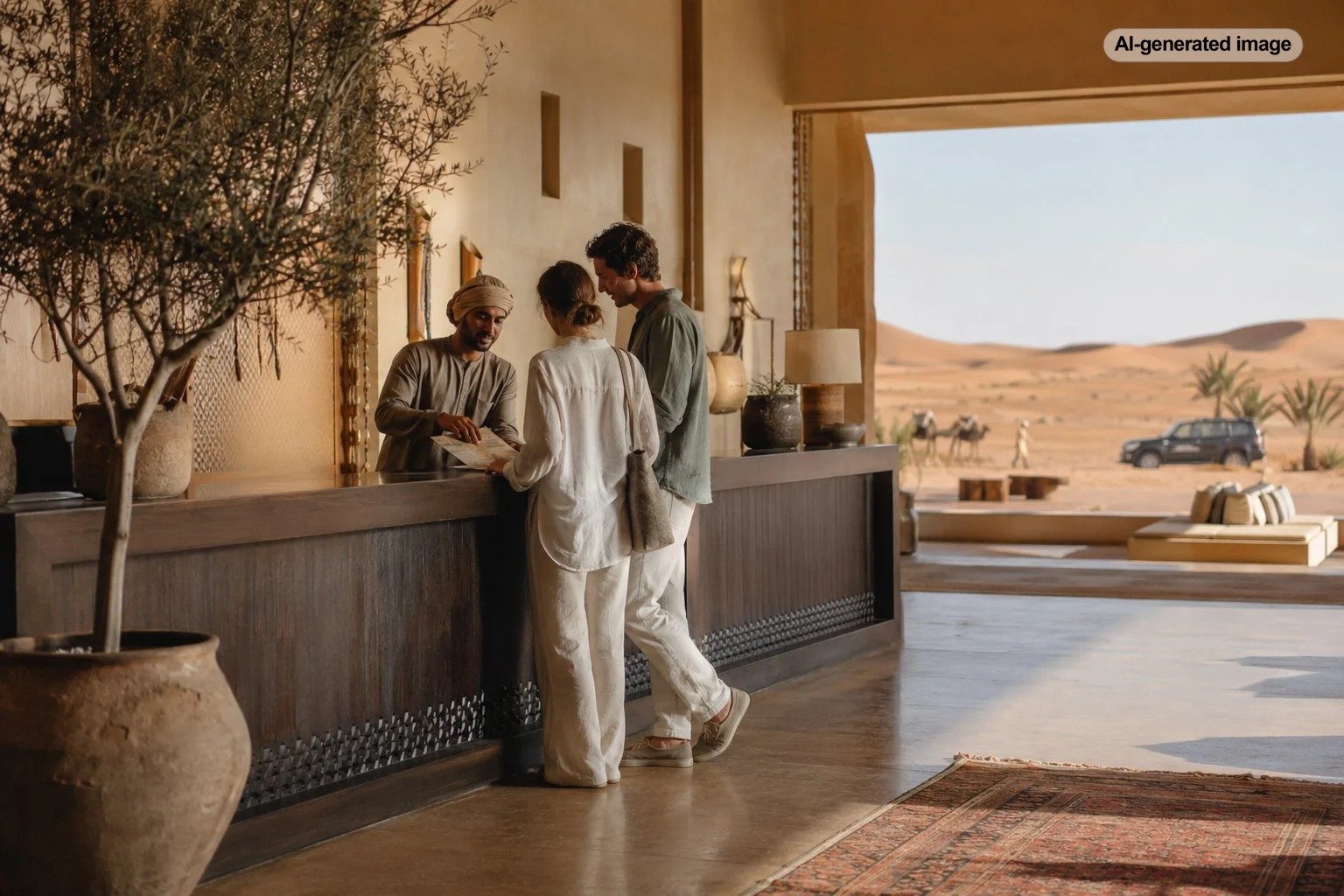
How to Book a Desert Tour
Booking a desert tour is easier when you evaluate the experience in the right order: choose the landscape and trip format first, compare the actual itinerary second, and investigate the operator before paying. The most appealing listing is not necessarily the best fit, because tours described with similar language can differ substantially in driving time, group size, physical intensity, accommodation, and time spent in the desert.
A good booking decision should leave you knowing where you are going, how you will get there, which activities are included, what conditions to expect, and what happens if plans change. That matters whether you are considering a short desert safari outside a major city, a multiday journey into the Sahara, a guided hike through a rocky desert, or an overnight camp among sand dunes.
Quick answer
- Choose the destination and desired landscape before comparing operators.
- Decide whether you want a short excursion, a full-day trip, or an overnight experience.
- Compare time in the desert rather than total advertised tour length.
- Confirm group size, transportation, meals, activities, sleeping arrangements, and bathroom facilities in writing.
- Review cancellation terms, pickup boundaries, physical requirements, and weather procedures before paying.
Start by choosing the type of desert experience
The phrase desert tour covers experiences that have little in common beyond the landscape. A city-based desert safari may combine four-wheel-drive transportation, a brief camel ride, dinner, and entertainment. A Sahara itinerary may require long overland transfers and include a night at a remote camp. A conservation-focused outing may prioritize wildlife, geology, or walking rather than high-speed activities.
Define the central purpose of the trip before opening booking pages. Travelers who mainly want sunset photographs may be satisfied with a half-day excursion. Those who want silence, dark skies, and a sense of remoteness may need an overnight or multiday itinerary. Families may prioritize manageable driving time and reliable facilities, while active travelers may prefer hiking, sandboarding, or a longer camel trek.
Common tour formats
| Tour format | Best for | Main tradeoff |
|---|---|---|
| Morning or sunset excursion | Travelers with limited time | Less time away from developed areas |
| Full-day tour | A broader mix of scenery and activities | May include substantial driving |
| Overnight camp | Sunset, stargazing, and sunrise | Facilities and comfort vary widely |
| Multiday expedition | Travelers seeking remote landscapes | More time, planning, and physical resilience required |
| Private tour | Families, couples, photographers, and flexible pacing | Usually positioned above shared tours |
Read the itinerary for time, not adjectives
Tour descriptions often emphasize sunsets, traditional hospitality, adventure, or luxury. Those words do not reveal how the day is allocated. Look for a chronological itinerary that identifies pickup time, transfer duration, stops, activities, meals, camp arrival, and return time.
Pay particular attention to the difference between total tour duration and meaningful time in the desert. A three-day itinerary can involve two long travel days. A six-hour safari might include hotel pickups across a wide area before the principal activities begin. Neither format is automatically undesirable, but the schedule should match your expectations.
Ask for clarification when the itinerary uses vague phrases such as extended camel ride, premium camp, local lunch, or convenient pickup. Useful answers include approximate activity duration, vehicle type, camp location, meal format, and the geographical limits of included transportation.
Compare the operator, not just the package
A polished marketplace listing can obscure which company will actually conduct the tour. Identify the operating company and check whether recent traveler feedback consistently describes punctuality, communication, vehicle condition, guide quality, group management, and accuracy of the advertised itinerary.
Do not rely on the average rating alone. Read detailed reviews from travelers who booked the same format you are considering. An operator may perform well on private tours but receive mixed feedback on large shared departures. Comments about surprise charges, rushed stops, vehicle crowding, aggressive sales visits, or unannounced itinerary substitutions deserve particular attention.
Before booking, confirm how the operator communicates after payment. A reliable process should explain where and when pickup will occur, what to bring, how to reach the company on the day of travel, and how operational changes will be handled.
Confirm exactly what the price includes
Two tours with similar names may have different inclusions. One price might cover transportation, dinner, camp accommodation, and activities, while another may treat meals, protective equipment, park access, or hotel pickup as extras.
Ask for a written list covering:
- Pickup and drop-off locations
- Shared or private transportation
- Maximum group size
- Meals, snacks, and drinking water
- Guided activities and their approximate duration
- Protective equipment or specialized clothing
- Entrance, conservation, or access fees
- Camp category and sleeping arrangement
- Private or shared bathroom facilities
- Optional activities that cost extra
For overnight tours, words such as standard, deluxe, and luxury are not universal classifications. Focus on concrete features instead: permanent bed or floor bedding, private or shared tent, electricity, heating or cooling, shower availability, toilet type, and distance between the sleeping area and common facilities.
Choose activities according to comfort and ability
Desert itineraries may include camel riding, dune driving, hiking, sandboarding, quad bikes, dune buggies, cultural demonstrations, or wildlife observation. Consider each activity separately rather than treating the package as indivisible.
Dune driving can be rough and may not suit travelers who experience motion sickness, have certain back or neck concerns, are pregnant, or simply dislike high-intensity rides. Camel rides can involve awkward mounting and sustained hip positioning. Walking on loose sand may be more tiring than the distance suggests. Ask whether activities can be skipped and what alternative is offered.
Families should verify minimum ages, child-restraint arrangements, helmet availability, supervision, and whether the itinerary includes long periods in direct sun. Travelers with mobility limitations should ask about vehicle access, surfaces, steps, bathroom layouts, and the distance from parking areas to camps or viewpoints.
Consider the season and daily timing
Desert conditions vary by destination, elevation, and season. Daytime heat can be intense, while nights may feel unexpectedly cold. Wind can affect visibility, comfort, and planned activities. Seasonal conditions may also influence road access or the feasibility of outdoor dining and camping.
Ask the operator what conditions are typical for your travel period and what clothing or equipment they recommend. Treat the answer as preparation guidance rather than a weather guarantee. Check a current forecast close to departure and bring adaptable layers, sun protection, closed footwear when appropriate, and more water than you would normally carry for a city excursion.
Timing also changes the character of a tour. Morning departures can offer cooler conditions and clearer schedules. Sunset outings emphasize changing light but may return late. Overnight trips provide access to evening and sunrise conditions but require greater tolerance for temperature swings and simpler facilities.
Understand shared and private tour tradeoffs
Shared tours are often suitable for solo travelers, social travelers, and those comfortable following a fixed schedule. Their main disadvantages are less control over departure timing, seating, stops, and group pace. Hotel pickups may also take longer when passengers are collected from several locations.
Private tours provide more control over pacing and can be valuable for families, photographers, older travelers, and groups with dietary or mobility considerations. Private does not necessarily mean luxurious, however. Confirm whether the vehicle, guide, camp, dining areas, and activities are private or whether only the transportation is exclusive.
Review cancellation and weather policies
Read the cancellation deadline before paying and determine whether the policy uses the operator’s local time. Check whether refunds return to the original payment method and whether optional activities have separate terms.
Weather procedures are equally important. Ask what happens if wind, rain, extreme heat, poor visibility, or road conditions affect the itinerary. The operator should be able to explain whether the tour is delayed, modified, moved, credited, or canceled. Avoid assuming that every uncomfortable condition qualifies for a refund.
Look for responsible operating practices
Desert environments can be fragile despite their rugged appearance. Favor operators that use established routes and camps, manage waste carefully, limit unnecessary off-road disturbance, respect wildlife, and explain how local guides, drivers, cooks, or camp staff participate in the business.
Animal-based activities deserve direct questions. Ask how long animals work, how they are housed and watered, whether riders face weight or mobility restrictions, and whether participation is optional. A responsible operator should answer without pressuring travelers to accept an activity.
Travelers can also reduce their impact by carrying reusable water containers where practical, keeping waste secured, avoiding the removal of rocks or plants, following designated paths, and respecting quiet areas and local customs.
What travelers often overlook
Pickup boundaries: A tour advertised with hotel pickup may serve only certain districts. Remote resorts, airports, ports, and vacation rentals may require a meeting point or supplement.
Luggage limitations: Shared vehicles and camps may have limited storage. Travelers transferring between cities should confirm whether full-size luggage can accompany them.
Connectivity: Mobile service and charging access may be limited. Save booking details, emergency contacts, maps, and identification information offline.
Dietary needs: Remote kitchens may need advance notice and may have fewer alternatives than urban restaurants. Describe allergies clearly rather than relying on broad labels.
Return timing: Do not schedule a desert tour to return immediately before a flight, train, cruise departure, or nonrefundable reservation. Transfers, traffic, weather, and group coordination can create delays.
A practical booking sequence
- Choose the destination, landscape, and preferred tour length.
- Decide which activities are essential and which you would rather avoid.
- Compare itineraries based on actual time allocation.
- Identify the operating company and review recent feedback.
- Request written confirmation of inclusions, group size, facilities, and pickup details.
- Review physical requirements, seasonal conditions, and cancellation rules.
- Pay through a traceable method and save the confirmation offline.
- Reconfirm pickup instructions shortly before departure.
Frequently asked questions
How far in advance should you book a desert tour?
Book earlier when your dates are fixed, you need a private vehicle, you want a particular camp format, or you are traveling during a busy period. Travelers with flexible schedules may find more options closer to arrival, but the most suitable departure can sell out.
Is an overnight desert tour worth it?
An overnight tour is most worthwhile for travelers who value sunset, stargazing, sunrise, and additional time away from the city. A day tour may be preferable for travelers who prioritize comfort, have limited time, or do not enjoy basic or remote accommodations.
Should you book through a hotel or directly with an operator?
Either approach can work. Direct booking may provide clearer communication with the operator, while a hotel can be convenient for arranging pickup and resolving local questions. Compare the itinerary, operating company, terms, and total inclusions rather than assuming one channel is always better.
Are private desert tours better than group tours?
Private tours are better for flexibility, tailored pacing, and specific logistical needs. Group tours may offer better value and a more social atmosphere. The right choice depends on budget position, group dynamics, comfort, and how much control you want over the schedule.
What should you wear on a desert tour?
Choose breathable clothing, sun protection, secure footwear, and layers for changing temperatures. The operator’s destination-specific advice and the current forecast should guide the final packing decision.