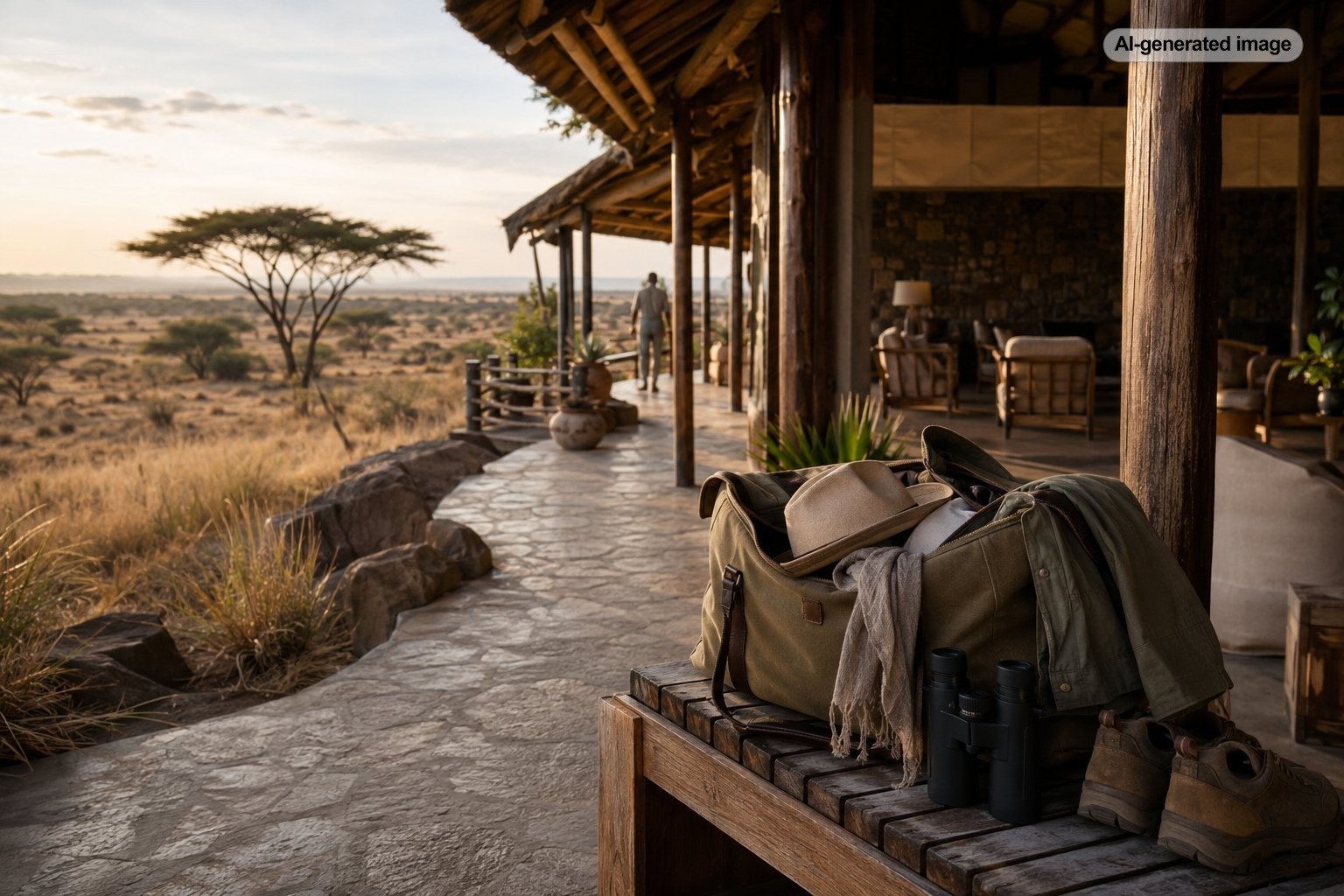
What to Pack for an African Safari
Packing for an African safari is less about buying a specialized wardrobe and more about choosing versatile layers, practical sun and insect protection, and luggage that works with the transportation in your itinerary. Most travelers need comfortable neutral clothing, a warm outer layer, a secure day bag, binoculars, essential medication, and protection for electronics.
The exact list should reflect the destination, season, altitude, activities, and whether the trip includes light-aircraft transfers. A vehicle-based safari in South Africa may have different requirements from a walking safari in Zambia, a high-altitude stay in Kenya, or a gorilla trek in Uganda.
Quick answer: the core safari packing list
- Lightweight, breathable shirts and pants in muted colors
- A fleece, insulated jacket, or warm mid-layer for early drives
- A light rain shell or wind-resistant jacket
- Comfortable closed-toe shoes and casual lodge footwear
- A wide-brimmed hat, sunglasses, sunscreen, and lip protection
- Insect repellent and destination-specific medication
- Binoculars, camera equipment, chargers, and spare memory cards
- A soft-sided bag if the itinerary includes small aircraft
- A compact day bag for game drives
- Copies of important documents and appropriate travel insurance details
Start with the luggage rules for your itinerary
Check luggage restrictions before deciding how many outfits to bring. Light aircraft used for remote safari camps have limited storage, and an allowance may include both checked and hand luggage. Operators may also require soft-sided bags because rigid suitcases do not fit easily into small or irregular cargo compartments.
There is no universal safari baggage allowance. Limits vary by airline, aircraft, route, and fare, so use the written guidance supplied by your safari operator or airline rather than assuming that a standard international allowance will apply. Ask whether wheels, frames, or rigid bases are accepted and whether camera equipment counts toward the total.
A soft duffel is often the most adaptable choice. Packing cubes help organize it without adding much weight. Keep medication, documents, basic toiletries, one change of clothing, and valuable electronics in your permitted hand luggage in case a checked bag is delayed.
Choose clothing that works in layers
Safari temperatures can change considerably over the course of a day. Open vehicles may feel cold before sunrise, while midday conditions can be hot and bright. Instead of packing separate outfits for every temperature, build a small layering system.
Useful tops and outer layers
- Three or four breathable short- or long-sleeved shirts
- One warm fleece, sweater, or packable insulated jacket
- One lightweight windproof or waterproof shell
- One comfortable outfit for dinner or time around the lodge
Long sleeves can provide additional protection from sun, insects, dust, and vegetation. Clothing with ventilation or roll-up sleeves is especially flexible. Technical fabrics dry quickly, although a familiar cotton shirt can still be comfortable in dry conditions.
Pants and shorts
Two or three pairs of lightweight pants are sufficient for many itineraries. Shorts may be comfortable at camp or during warm daytime drives, but long pants provide more coverage during walks and around insects. Convertible pants are useful for some travelers, though they are not essential.
Colors and patterns
Khaki, olive, tan, brown, gray, and other muted shades are practical because they show dust less readily and are appropriate for most safari activities. Bright white clothing tends to reveal dust quickly. Dark blue and black may absorb heat and can be less desirable in areas where certain biting flies are present.
Avoid treating camouflage as an automatic safari choice. Camouflage clothing may be restricted or culturally inappropriate in some countries. Check destination-specific guidance before packing it.
Bring footwear for your actual activities
Heavy hiking boots are unnecessary for a conventional vehicle safari unless the itinerary includes demanding walks or trekking. Comfortable, broken-in walking shoes or lightweight trail shoes are usually more practical for airstrips, camps, short walks, and uneven ground.
Add sandals, slip-on shoes, or other easy lodge footwear if space permits. For walking safaris or trekking, ask the operator about terrain, mud, water crossings, ankle support, and gaiters. New footwear should be worn before departure rather than tested for the first time in the bush.
Prepare for sun, dust, rain, and changing temperatures
A brimmed hat is generally more protective than a cap because it shades the ears and neck. Choose one that fits securely in an open vehicle. Sunglasses, broad-spectrum sunscreen, and lip balm with sun protection are useful throughout the day.
A buff, scarf, or bandana can help with dust on dry roads. A lightweight rain shell is preferable to a bulky coat in many regions, although the correct choice depends on the season. A compact dry bag, zippered pouch, or protective camera cover can help shield electronics from dust and sudden rain.
Do not assume that an African destination will be hot at every hour. Early game drives, high elevations, winter travel in Southern Africa, and open vehicles can all produce surprisingly cold conditions. A knit hat and light gloves may be worthwhile on colder itineraries.
Pack health and personal-care items thoughtfully
Bring enough prescription medication for the trip, plus a reasonable contingency supply when permitted. Keep it in labeled packaging and place essential medication in hand luggage. A compact personal kit might include adhesive bandages, blister care, pain relief, oral rehydration supplies, motion-sickness medication, and any items recommended by a clinician.
Health requirements and disease risks vary substantially across the continent. The CDC advises safari travelers to obtain destination-specific guidance and notes that malaria prevention can involve both prescribed medication and mosquito-bite avoidance. Arrange a travel-health consultation well before departure rather than choosing medication from a generic packing list.
Pack an effective insect repellent and clothing that provides coverage in the evening. Toiletries should be compact, securely sealed, and compliant with aviation rules. Lodges may supply common products, but travelers with allergies, sensitive skin, or strong preferences should bring their own.
Binoculars often matter more than extra clothing
Wildlife may be distant, partially concealed, or too small to appreciate with the unaided eye. A personal pair of binoculars prevents travelers from repeatedly passing one pair around the vehicle. Compact binoculars save space, while full-size models may provide a brighter view in low light. Comfort, weight, and ease of focusing matter more than choosing the most powerful specification.
Families may benefit from bringing a suitable pair for each older child who is genuinely interested in wildlife. Attach a comfortable strap and label each pair before departure.
Keep camera equipment practical
A phone may be sufficient for landscapes, lodge photographs, and nearby animals. Travelers who want detailed wildlife images generally benefit from a camera with a telephoto or zoom lens. Avoid carrying a larger system than you can comfortably manage in a vehicle with limited space.
- Bring more memory-card capacity than you expect to use.
- Pack spare camera batteries and the correct chargers.
- Use a dust-resistant bag or protective wrap.
- Carry a lens cloth and simple cleaning blower.
- Consider a beanbag support if your operator confirms it is suitable for the vehicle.
Power banks and spare lithium batteries require particular care when flying. TSA guidance states that power banks must be carried in hand luggage rather than checked baggage. Airlines may impose additional limits on battery size, quantity, storage, or use, so check every carrier in the itinerary, including regional flights.
Build a compact game-drive day bag
Your main duffel will usually remain at camp. Use a small, secure day bag for the items needed in the vehicle: binoculars, camera, sunglasses, sunscreen, repellent, a warm layer, tissues, medication, water, and a charging cable or permitted power bank.
Choose a bag that closes fully and fits near your feet without blocking other passengers. Large structured backpacks can be awkward in vehicles. A reusable water bottle is useful when the lodge provides safe drinking-water refills, but confirm local arrangements before relying on that system.
Documents and money should remain organized
Carry the documents required for the specific countries and routes on your itinerary. These may include a passport, entry documentation, vaccination records when applicable, insurance information, flight details, and safari confirmations. Requirements can change and differ by nationality, so verify them through official government and operator sources.
Store digital copies securely and keep paper copies separate from the originals. A small amount of appropriate cash may be useful for gratuities or incidental expenses, but ask the operator which currencies and payment methods are commonly accepted at the camps you will visit.
What travelers often overpack
Multiple formal outfits, large toiletry bottles, heavy books, excessive footwear, and a different outfit for every day quickly consume a limited baggage allowance. Many safari lodges offer laundry service, although turnaround time, cost, and restrictions vary. Some properties may not launder certain personal garments, so verify the policy rather than assuming full service.
Valuable jewelry and delicate clothing are usually unnecessary. Drones should not be packed without confirming aviation rules, park regulations, permits, and property policies. Avoid bringing food, plant products, or animal products across borders without checking customs restrictions.
Adjust the list to the safari style
Vehicle-based game drives
Prioritize layers, binoculars, sun protection, dust protection, and a compact day bag. Lightweight walking shoes are often adequate.
Walking safaris
Focus on durable long pants, broken-in footwear, sun coverage, and operator-approved colors. Ask whether a small backpack, hydration system, gaiters, or specific socks are recommended.
Gorilla or chimpanzee trekking
Expect a more demanding footwear and rain-protection requirement than on a standard game drive. Gloves, gaiters, waterproof layers, and a secure day pack may be recommended depending on the destination and season.
Safari followed by a beach stay
Add swimwear, lightweight resort clothing, and appropriate footwear, but keep the safari flight allowance in mind. Some operators can store a separate suitcase before the fly-in portion if this is arranged in advance.
Frequently asked questions
How many outfits do I need for a one-week safari?
Many travelers can manage with three or four shirts, two or three pairs of pants or shorts, one dinner outfit, sleepwear, undergarments, and layers for warmth and rain. Laundry availability can reduce the total.
Do I need special safari clothing?
No. Comfortable, breathable everyday outdoor clothing in muted colors is usually sufficient. Specialized garments are most useful when they provide practical features such as quick drying, ventilation, secure pockets, or sun protection.
Can I bring a hard-shell suitcase?
Possibly, but not on every itinerary. Light-aircraft operators may require soft-sided luggage and impose strict dimensions or weight limits. Follow the most restrictive flight in the itinerary.
Should I pack binoculars if the guide has a pair?
Yes, when space permits. Having a personal pair allows uninterrupted viewing and avoids relying on shared equipment.
What should stay in my carry-on bag?
Keep medication, documents, valuables, camera equipment, spare lithium batteries, permitted power banks, basic toiletries, and at least one change of clothing with you, subject to airline rules.