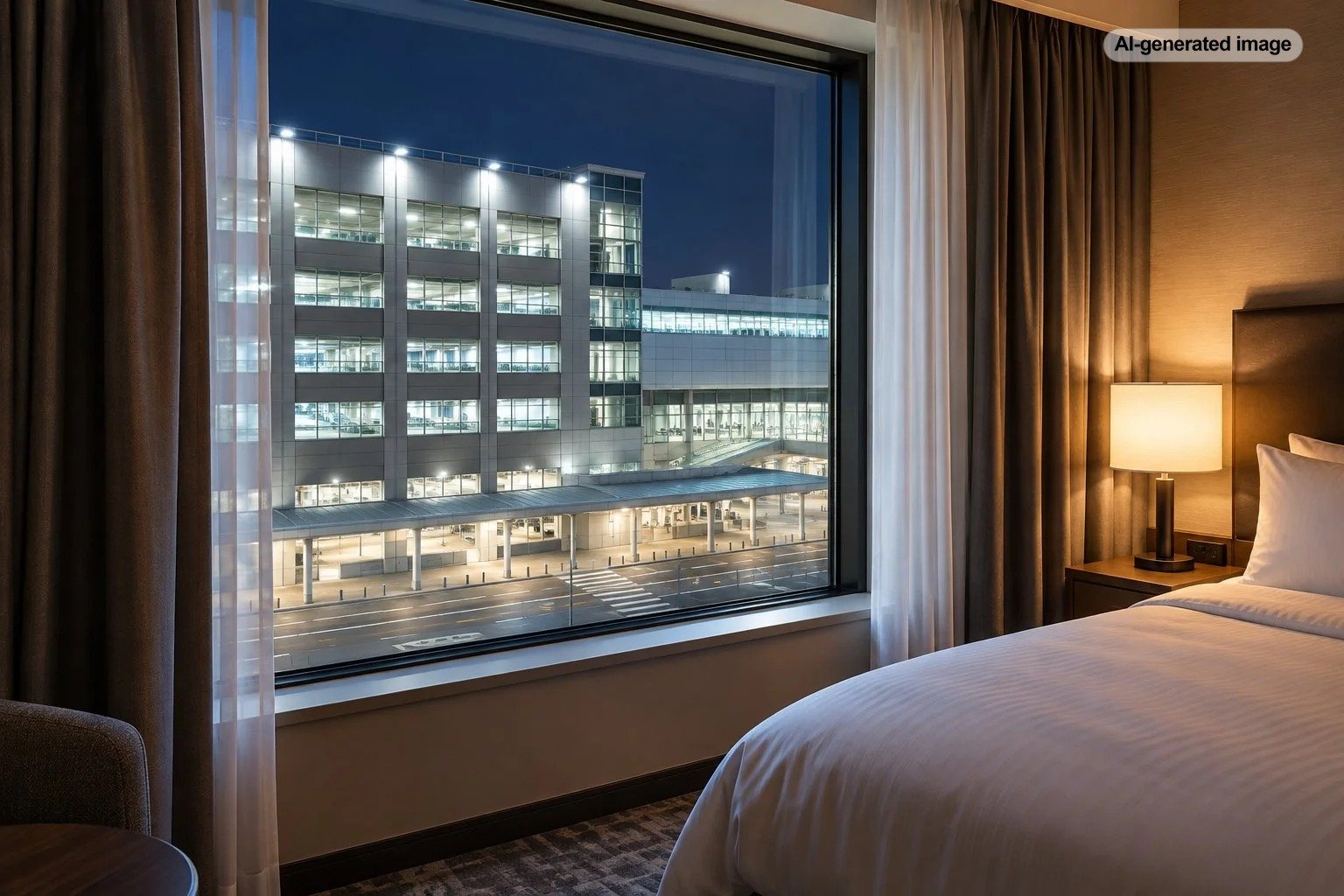
How to Tell If a Hotel’s Windows Face a Brightly Lit Building at Night
A hotel room can look wonderfully peaceful in daytime photographs and feel entirely different after sunset. A neighboring office tower, illuminated parking structure, advertising screen, or building facade can cast light directly toward the windows. For travelers who prefer sleeping in darkness, the issue is not simply whether a hotel has an attractive view, but what that view looks like when nearby buildings switch on their lights.
The most reliable way to tell whether a hotel’s windows face a brightly lit building at night is to combine exterior photographs, satellite mapping, street-level imagery, guest reviews, and a direct question to the hotel about the specific room category. None of these checks guarantees darkness, but together they can reveal potential problems before you reserve a room.
Quick Answer: How to Check for Bright Buildings Outside a Hotel Window
- Locate the hotel on a map: Look for nearby buildings directly opposite its guest-room windows.
- Examine guest-room photographs: Pay attention to visible neighboring facades, window reflections, and the distance between buildings.
- Search for nighttime reviews: Look for mentions of floodlights, illuminated signs, office lights, and curtains that do not block exterior lighting.
- Check nighttime photographs: Determine whether surrounding buildings use decorative facade lighting, advertising screens, or strong exterior fixtures.
- Contact the hotel: Ask which room orientations are least exposed to neighboring buildings and whether the curtains provide effective light blocking.
Start With the Buildings Immediately Surrounding the Hotel
Before studying individual room photographs, examine the hotel’s physical surroundings. A satellite map can show whether the property stands alone, occupies a narrow urban block, or sits directly beside another tall structure.
Look particularly carefully at buildings located across narrow streets, internal courtyards, and alleys. A hotel room facing an office building across a relatively narrow gap may receive more direct artificial light than a room overlooking a wider street, even if the wider street has more traffic.
Building height also matters. If a neighboring structure extends above the hotel’s guest-room floors, moving to a moderately higher floor might not eliminate the exposure. Conversely, an upper-level room that rises above surrounding rooftops may offer a substantially more open outlook.
Satellite imagery cannot tell you which lights operate at night, and some images may predate nearby construction. Its value is identifying potential exposure that deserves further investigation.
Use Street-Level Imagery to Work Out Which Windows Face the Problem
Street-level mapping provides another piece of the puzzle. Inspect the hotel’s exterior from multiple sides and identify where guest-room windows appear to be located.
Then rotate the view toward neighboring buildings. Look for glass office towers, illuminated commercial facades, parking garages, large signs, and outdoor lighting equipment positioned opposite hotel windows.
Consider three different situations:
- Windows facing an office tower: Interior office lighting may remain visible after sunset, although the number of illuminated floors can change throughout the evening.
- Windows facing a parking structure: Lighting in access areas, ramps, and parking levels may remain operational overnight.
- Windows facing an illuminated facade: Architectural lighting or advertising displays may be directed toward nearby buildings rather than simply illuminating the ground.
Not every illuminated building creates an uncomfortable room. The angle of the windows, distance between structures, glass treatments, and curtain design all influence the amount of light entering the room.
Study Actual Room Photographs, Not Just the Hotel’s Exterior
A photograph of a hotel’s entrance or skyline location rarely establishes what guests see from their assigned rooms. Instead, look for interior photographs taken toward the windows.
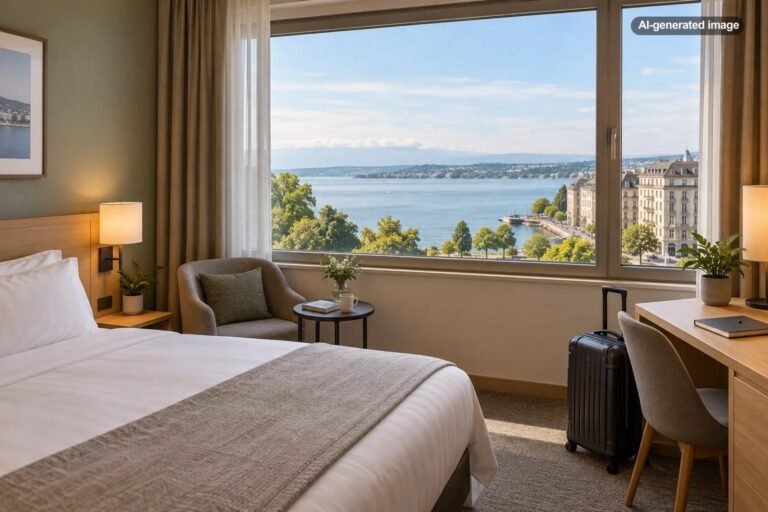
Guest-uploaded photographs can be particularly informative because they sometimes reveal ordinary views that promotional photographs do not emphasize. A room may overlook a neighboring wall, a row of office windows, or a brightly illuminated courtyard rather than the distant skyline shown in the property’s main gallery.
When examining photographs, note the visible distance to neighboring buildings. A nearby facade filling most of the window is a reason to investigate further, especially if it contains extensive glazing or permanent exterior illumination.
Watch for misleadingly bright interior photographs
Wide-angle photography, long exposures, and carefully balanced daylight can make a compact urban view appear more open than it feels in person. Professional room photographs may also be taken with curtains partially closed or from angles that minimize adjacent buildings.
Look for several images of the same room category rather than relying on one attractive photograph. Remember that different rooms within a single category may face different directions.
Find Nighttime Photographs of the Hotel and Its Neighbors
Nighttime imagery is especially useful when the concern involves decorative illumination, digital advertising, or lighting installed on neighboring structures.
Search for photographs of the hotel’s exterior after dark, then examine the buildings visible around it. Street photographs and publicly available visitor images may show lighting arrangements that daytime mapping cannot reveal.
Pay attention to whether the brightness comes from a few occupied offices, an illuminated exterior surface, or a large electronic display. These sources behave differently. Office windows may become darker as occupants leave, while lighting used for building identification or security may continue much later.
A photograph is still only a snapshot. Seasonal schedules, operating hours, changes in signage, and building renovations can affect the nighttime environment. Treat older photographs as clues rather than current guarantees.
Search Hotel Reviews for Specific Lighting Complaints
General comments about a room being comfortable or quiet are not enough to evaluate its nighttime brightness. Search reviews using language that describes the actual problem.
Useful search phrases include:
- Bright light outside window
- Office building opposite room
- Light through curtains
- Floodlights facing hotel
- Illuminated sign outside bedroom
- Could not darken the room
- Blackout curtains did not close
Reviews are most useful when they mention a floor, room category, orientation, or recognizable neighboring building. A complaint about strong light on a lower courtyard-facing floor may not apply to higher rooms facing a different direction.
Consider the dates of reviews as well. A recent account describing an ongoing lighting problem is generally more relevant than an isolated complaint from several years earlier. However, even a recent review cannot establish that every room has the same exposure.
Understand Why a Bright Exterior Does Not Always Mean a Bright Bedroom
The effectiveness of a hotel’s window coverings can matter as much as the brightness outside. A room directly opposite illuminated offices may still become adequately dark if its curtains block light well and close without substantial gaps.
There is an important difference between decorative curtains, room-darkening curtains, and blackout window treatments. Decorative curtains may provide privacy without preventing substantial light transmission. Room-darkening fabrics reduce brightness, while properly installed blackout treatments are designed to block much more incoming light.
Even blackout fabric cannot guarantee a completely dark room if light passes around its edges. Gaps at the top of a curtain track, along the sides of a window, or between overlapping panels can create noticeably bright strips.
For a traveler particularly sensitive to light, asking whether a room has blackout curtains is a useful starting point, but asking whether they close fully is more informative.
Compare the Different Sources of Nighttime Hotel Light
Recognizing the type of exterior lighting helps determine which room change might solve the problem.
| Light source | Potential concern | What to check |
|---|---|---|
| Office tower | Illuminated windows opposite guest rooms | Building proximity and room orientation |
| Parking garage | Consistent artificial lighting across parking levels | Garage height and windows facing the structure |
| Digital billboard | Bright or changing colors after dark | Screen position, direction, and operating hours |
| Decorative facade lighting | Light directed across neighboring walls and windows | Nighttime exterior photographs |
| Courtyard floodlights | Concentrated illumination near lower-level rooms | Courtyard-facing room positions |
The most troublesome source depends on the traveler. Someone bothered by intermittent changes in brightness may find a digital display particularly distracting, while someone who needs near-total darkness may be more concerned about steady light leaking around curtains.
Ask the Hotel About the Exact Room Orientation
When the mapping and photographs suggest a possible issue, contact the hotel before completing a restrictive reservation. A precise question is more useful than asking whether the property is generally dark at night.
For example, ask: Do any rooms in this category directly face illuminated office buildings, advertising signs, or floodlit facades at night? If so, is there a room orientation that avoids those lights?
You can also ask whether the room has fully closing blackout curtains and whether any particularly bright exterior lights are visible from the windows.
If darkness is an important requirement, request a particular orientation rather than simply asking for a quiet room. A quiet room can still face a brightly illuminated wall, and a city-view room can overlook nearby office buildings instead of an open skyline.
Some hotels may be able to record a room preference without guaranteeing the assignment. Ask whether the view or orientation can actually be reserved, and distinguish a confirmed room feature from a request subject to availability.
Do Higher Floors Always Solve the Problem?
No. A higher floor can improve the view when it rises above nearby structures, but it may offer little relief if the building opposite is equally tall or taller.
For example, moving from the fourth floor to the eighth floor may not meaningfully change exposure to an office tower with dozens of stories. Both rooms could still face illuminated windows directly.
In another property, moving to a floor above a low parking structure may eliminate much of the direct lighting from that building.
Floor height should therefore be evaluated alongside orientation and the height of neighboring buildings. A lower floor overlooking a dark residential garden may be better for sleeping than an upper floor facing illuminated commercial signage.
What Travelers Often Overlook About Nighttime Window Views
The difference between privacy and darkness
A room can feel private without being dark. Sheer curtains may obscure part of the view while allowing artificial light through, and tinted glass does not necessarily eliminate nighttime illumination.
Conversely, effective blackout curtains may produce a dark sleeping environment but prevent guests from enjoying an evening skyline view while the curtains are closed.
Courtyard rooms can be brighter than street-facing rooms
Internal courtyards are sometimes chosen to reduce street noise, but they may contain permanent lighting or face close neighboring windows. A room described as interior-facing should not automatically be assumed to be dark.
Room orientation can matter more than room category
Two rooms sold under the same category may have different exposures. One may face an open avenue, while another faces the side of a commercial building. Unless the hotel explicitly defines and guarantees a particular view, the category name alone may not establish the nighttime outlook.
Changing building lights can affect an otherwise familiar hotel
New signs, renovated neighboring facades, and commercial tenants can alter the environment outside a hotel. This is why recent guest photographs and current information from the property are more valuable than depending entirely on historic reviews.
What to Do If You Arrive and the Room Is Too Bright
Inspect the window coverings when you first enter the room rather than discovering a problem at bedtime. Close both the sheer curtains and heavier drapes, turn off the room lights, and check for noticeable gaps.
If the room is bright because of a neighboring structure, ask the front desk whether an available room faces another direction. Explain the source of the problem specifically. The staff may be better able to identify an alternative if you mention a floodlit building or advertising screen instead of simply requesting a better view.
When a room change is unavailable, an eye mask may make sleeping more comfortable. Carefully arranging the existing curtains so they overlap can also help. Avoid attaching materials to hotel fixtures, tampering with window hardware, or blocking equipment that needs to remain accessible.
If a particular room orientation was a confirmed element of your reservation, retain the booking description and discuss the discrepancy with the hotel. Any adjustment or remedy will depend on the booking terms and the circumstances.
Frequently Asked Questions
Can Google Maps tell me whether a hotel room will be bright at night?
Mapping tools can reveal nearby buildings, their approximate positions, and potentially exposed hotel windows. However, they cannot reliably confirm current nighttime lighting schedules or which specific room you will receive. Combine mapping with photographs, reviews, and information from the hotel.
Are city-view hotel rooms more likely to face bright buildings?
Not necessarily. A city-view room may overlook distant illuminated landmarks or directly face a neighboring tower. The important factors are the direction of the windows, surrounding structures, and the effectiveness of the window coverings.
Can blackout curtains completely eliminate light from a neighboring building?
Well-designed blackout treatments can block substantial exterior illumination, but gaps around the edges or between panels can allow light into the room. The quality of the installation matters as well as the fabric.
Should I choose a courtyard-facing room to avoid exterior lights?
Only after checking the courtyard itself. Some courtyards are relatively dark, while others contain decorative lighting, illuminated walkways, or closely spaced windows. A courtyard orientation is not automatically preferable.
Is it worth contacting a hotel before booking about nighttime brightness?
Yes, particularly when you are sensitive to light or plan to stay for several nights. Asking about specific room orientations and blackout curtains can provide information that photographs and general room descriptions do not supply. Request confirmation of any essential room feature before booking.
Make the Nighttime View Part of Your Hotel Selection
A hotel window is more than a source of daylight or a pleasant photograph. Its surroundings can influence privacy, the atmosphere of the room, and how comfortably you sleep after sunset.
Before reserving a room in a densely developed area, examine neighboring buildings, study actual window views, look for recent nighttime observations, and verify the window coverings. If you identify a likely source of bright light, ask the hotel which room orientations avoid it and whether that preference can be guaranteed.
The aim is not to avoid every illuminated city building. It is to choose a room whose nighttime environment matches your preferences, whether that means enjoying a brilliant skyline or closing the curtains on a genuinely dark bedroom.