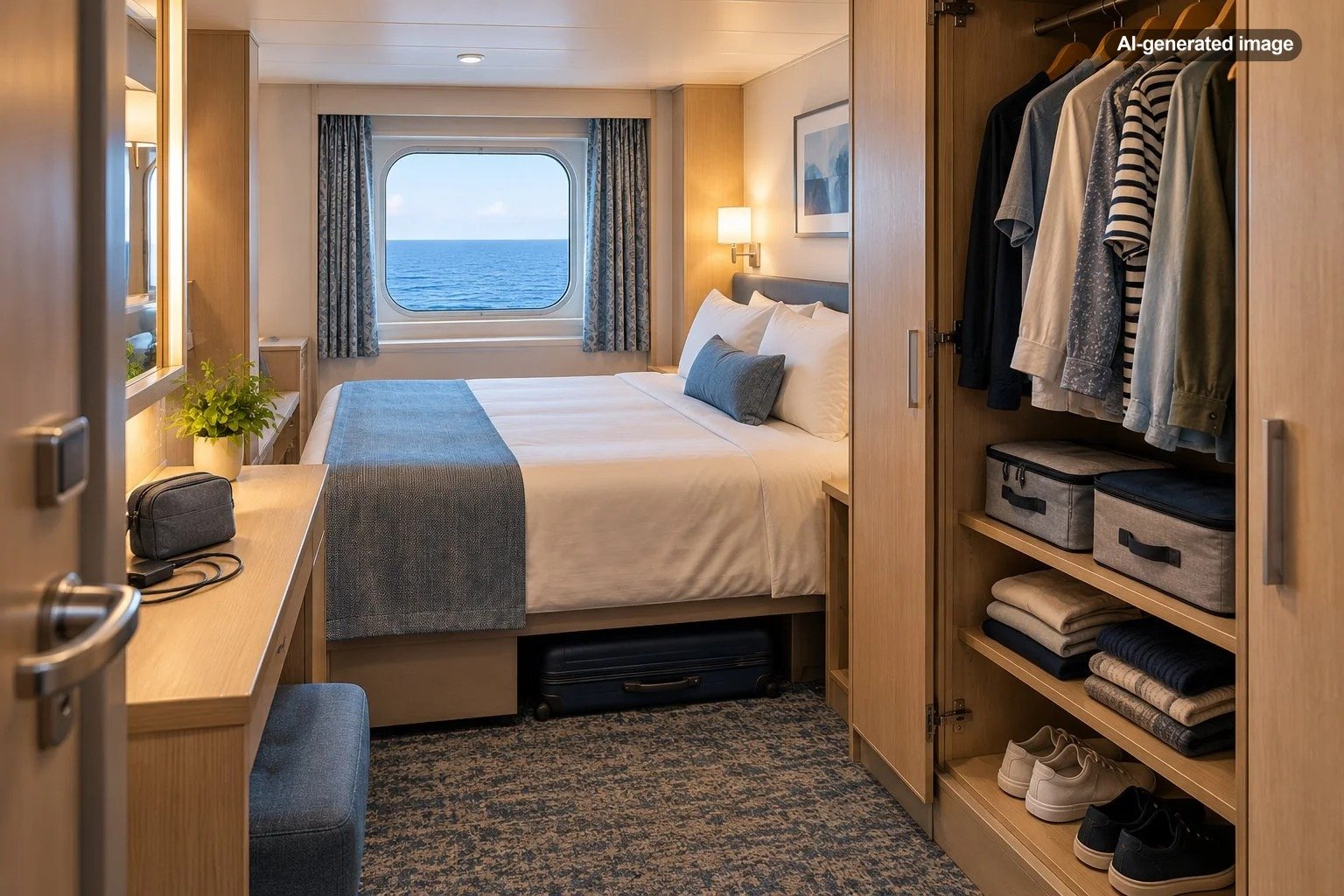
How to Organize a Small Cruise Cabin for a Seven-Night Trip
A small cruise cabin can feel remarkably comfortable for seven nights when everything has a designated place. The challenge is rarely the total amount of storage alone. It is the combination of luggage, clothing, toiletries, shoes, electronics, and everyday belongings competing for the same limited surfaces. An efficient setup keeps frequently used items accessible while moving everything else out of the way.
The most effective approach is to unpack deliberately on embarkation day, assign separate spaces for clean and worn clothing, establish a few simple routines, and resist bringing more organizational equipment than the cabin needs. You do not need to transform the room into a miniature storage system. You need a practical arrangement that remains easy to maintain throughout the voyage.
Quick Answer: The Best Way to Organize a Small Cruise Cabin
- Unpack completely: Put clothing into drawers, shelves, and closets rather than living out of suitcases.
- Store empty luggage: Use an appropriate space under the bed or inside the closet when available.
- Establish separate zones: Give toiletries, electronics, shoes, and daily essentials consistent locations.
- Keep surfaces clear: Avoid allowing the desk, vanity, and bedside areas to become collection points.
- Manage laundry daily: Separate worn clothing before it spreads across chairs and furniture.
Start With the Cabin Layout Before You Unpack
Before opening every suitcase, spend a few minutes looking at the cabin’s actual storage arrangements. Most cruise accommodations provide some combination of a wardrobe, drawers, shelves, a desk or vanity, bedside storage, and a bathroom with limited counter space. The exact configuration varies considerably by ship, cabin category, and accessibility design.
Open the closet and drawers, check the available shelves, and identify the outlets and lighting controls. Look for places where luggage can be stored without obstructing movement, doors, or emergency access. Do not assume the space beneath the bed will accommodate every suitcase.
If two people share the cabin, dividing the closet and drawer space at the beginning usually works better than combining everything and sorting it out later. For three or four travelers, assigning each person a drawer, shelf, or designated section can prevent constant searching.
A useful principle: Reserve the easiest-to-reach storage for items used every day. Formal clothing, backup supplies, and things needed only once can occupy less convenient spaces.
Pack for Seven Nights Without Filling Every Available Space
Cabin organization begins before departure. Seven nights aboard a ship do not necessarily require seven entirely separate daytime outfits plus a complete wardrobe of evening clothing.
Instead, consider how your particular itinerary changes what you will wear. A warm-weather cruise with beach excursions, for example, may call for additional swimwear and lightweight clothing. A sailing with cooler ports or active excursions may require layers, walking shoes, and weather protection.
Build a Wardrobe Around Repeatable Combinations
Choose clothing that can be combined in different ways rather than packing isolated outfits that work only once. Neutral shorts, trousers, skirts, or other versatile pieces can often support multiple combinations.
For a typical seven-night sailing, a practical starting point might include:
- Several interchangeable daytime tops and bottoms.
- Evening outfits appropriate to the ship’s published dining guidelines.
- Enough underwear and socks for the voyage, with a reasonable margin.
- One or two swimsuits if swimming or beach activities are planned.
- A light layer for air-conditioned interiors or cooler conditions.
- Comfortable walking shoes and only the additional footwear genuinely needed.
- Sleepwear, exercise clothing, and excursion-specific items according to your plans.
These are planning categories, not a universal packing allowance. Some itineraries call for more specialized clothing, and travelers who prefer fresh outfits daily may reasonably pack more.
Checking the cruise line’s current dining guidance and your excursion requirements is more useful than following a rigid packing list designed for another voyage.
Unpack Everything You Will Use Regularly
Living out of a suitcase can work for an overnight hotel stay, but it becomes inconvenient during a seven-night cruise. Every search for a shirt or pair of socks may require opening luggage in the limited walking space between the bed, furniture, and cabin entrance.
On embarkation day, place hanging garments in the wardrobe, folded clothing in drawers, and smaller essentials in accessible compartments. Packing cubes can simplify this process because each cube already contains a clothing category.
Some travelers prefer to leave frequently used clothing inside open packing cubes arranged on shelves. Others find it easier to transfer everything into drawers. Either approach works if garments remain visible and easy to retrieve.
Once unpacked, close and store the empty suitcases. If luggage does not fit beneath the bed, consider whether it can stand inside the wardrobe without blocking access to clothing or cabin equipment.
A suitcase that remains open on the floor throughout the voyage effectively becomes an additional piece of furniture, often in the least convenient location.
Create Dedicated Zones for Everyday Essentials
A small cabin becomes noticeably easier to use when each category of belongings has a predictable home.
The Entry Zone
Choose a convenient, permitted location for cruise cards, sunglasses, a compact day bag, and other items needed when leaving the room. A small pouch or tray can work well if there is suitable surface space.
Keep the cabin entrance, passageway, and door mechanisms unobstructed. Avoid hanging objects on safety equipment or attaching accessories where they interfere with operation.
The Clothing Zone
Arrange clothing by type or by traveler. Keep daily garments accessible and place specialty outfits or spare items farther back. A consistent layout saves time when dressing for excursions or dinner.
The Electronics Zone
Choose one suitable charging location for phones, watches, cameras, and other devices. Keeping charging accessories together reduces the likelihood of leaving cables in several different places.
Electrical rules can be restrictive aboard cruise ships. Many operators prohibit power strips, extension cords, or certain charging accessories, even when similar products are routinely used in hotels. Check your specific cruise line’s current prohibited-items policy before packing electrical equipment. Do not overload outlets or leave charging cables across walking areas.
The Nighttime Zone
Keep only essentials beside the bed: perhaps a phone, glasses, medication, and a small personal item. A crowded bedside surface is especially inconvenient when one traveler is sleeping and another needs to move around the room.
Make the Bathroom Easier to Share
Cruise cabin bathrooms are often compact, and their limited counter space can become crowded surprisingly quickly.
Instead of unpacking every cosmetic, skincare product, and toiletry onto the sink, group items by function. A compact toiletry bag with separate compartments can help keep grooming products organized and make it easier to put them away after use.
Use built-in shelves when available, but avoid placing unstable containers where they could fall during ship movement. A small waterproof pouch may be useful for shower-related essentials, provided it does not interfere with fixtures or drainage.
For couples or families sharing a bathroom, organizing belongings into individual pouches makes morning routines simpler. Each traveler can bring out their supplies and return them to a designated location afterward.
Keep medications in their appropriate packaging and follow their storage instructions rather than moving them into an unsuitable humid location. If medication requires refrigeration or special handling, confirm the available arrangements with the cruise line before sailing.
Use Hooks, Organizers, and Magnets Selectively
Cabin organization advice frequently recommends magnetic hooks, hanging organizers, and additional storage accessories. These can be useful, but they are not universally appropriate.
Some cruise cabins have metal wall or ceiling surfaces that allow magnets to attach. Others have finishes or materials that make magnetic accessories ineffective. Cruise lines may also restrict certain attachments or prohibit items that could damage surfaces.
Before purchasing hooks or hanging organizers, check the operator’s rules and consider whether the proposed accessory is compatible with your cabin.
A lightweight hanging organizer can help separate small objects when there is a suitable, permitted location. However, attaching it to a bathroom door or closet may interfere with normal operation, so placement matters.
The tradeoff: Every organizer occupies space in your luggage and cabin. Bringing several products to solve a storage problem you have not yet seen can create more clutter than it removes. For a seven-night voyage, packing cubes and a few existing travel pouches may be sufficient.
Keep Shoes and Laundry From Taking Over the Floor
Footwear and worn clothing are two of the most common sources of cabin clutter because neither always has a natural storage location.
Designate one place for shoes immediately after unpacking. Depending on the cabin’s layout, that may be the bottom of a wardrobe or another accessible storage compartment. Keep walking routes clear, particularly when the cabin is dark.
A lightweight laundry bag provides a dedicated place for clothing that has been worn and will not be used again before washing. A second small pouch can hold damp swimwear temporarily, although wet items should be dried appropriately rather than sealed away for long periods.
Separate clean and dirty clothes from the beginning. Otherwise, half-worn garments tend to accumulate on chairs, beds, and desk surfaces, leaving travelers uncertain about what remains fresh.
If you expect to use onboard laundry services, check whether the ship offers self-service facilities, professional laundry, or both. Availability, turnaround times, and charges vary by cruise line and ship.
Adapt the Setup to the Number of Travelers
The ideal organization system depends partly on who is sharing the cabin.
Solo Travelers
A solo traveler generally has more flexibility in allocating storage, but unnecessary belongings can still overwhelm a small room. Keeping the desk clear and luggage stowed may provide all the organization needed.
Couples
For two adults, divide major storage areas fairly and agree on shared locations for charging accessories, excursion supplies, and laundry. Consider differing sleep schedules and morning routines when deciding where to place frequently used items.
Families With Children
Families may benefit from individual packing cubes or clearly separated storage compartments for each child. Keep necessary daytime supplies accessible while storing backup clothing and less frequently used items elsewhere.
In cabins with pull-down beds, sofa beds, or other convertible sleeping arrangements, confirm how those features affect movement and storage. Never use temporary organizers in ways that interfere with ladders, sleeping equipment, doors, or emergency access.
For larger groups, the number of beds alone does not reveal how comfortably the cabin will function. Layout, usable floor area, bathroom arrangements, and accessible storage can matter just as much.
Build a Five-Minute Daily Reset Into Your Routine
Even a carefully organized cabin can become disordered during a busy day of shore excursions, pool visits, dining, and evening entertainment.
A short daily reset prevents minor clutter from accumulating over the week.
- Return shoes to their designated location.
- Place worn clothing in the laundry bag.
- Put toiletries away after the bathroom is used.
- Return electronics and charging accessories to their usual place.
- Clear cups, papers, and miscellaneous belongings from the desk and bedside surfaces.
- Prepare the next day’s excursion essentials before going to sleep.
This routine is particularly helpful when travelers share a cabin and follow different schedules. Instead of repeatedly reorganizing the entire room, each person maintains the system established on embarkation day.
Be considerate of housekeeping access as well. Storing belongings in designated areas makes it easier for crew members to service the cabin without navigating personal items scattered across the floor.
Adjust Your Organization for Sea Days and Port Days
Not every day of a seven-night cruise requires the same supplies.
On port days, you may need walking shoes, sunscreen, a weather layer, appropriate identification, medications, and excursion documents or tickets. Preparing a small day bag the evening before departure can reduce morning congestion inside the cabin.
On sea days, frequently used items may instead include swimwear, reading material, headphones, and casual clothing. Keep these accessible without leaving the entire collection spread across furniture.
A practical strategy is to designate one accessible area for the next day’s belongings while keeping the rest of the cabin in its normal organized state.
For travelers who have not yet selected a sailing, cabin layout is worth considering alongside itinerary and departure date. Comparing available ships and cabin categories can help identify whether a more spacious or differently configured room would be worthwhile for the group. You can also review sailing options before deciding which accommodation arrangement best fits your needs.
Affiliate disclosure: HotelInfo.com may earn a commission when you book or purchase through links on this page. This does not affect the price you pay. Learn more.
Travelers comparing future voyages can browse cruises with Expedia and then examine the specific ship’s cabin descriptions and deck plans before booking. A cabin’s stated capacity does not necessarily indicate how much convenient storage space it offers.
What Travelers Often Overlook in a Small Cabin
Some of the most useful organizational decisions involve details that are easy to miss during packing.
Suitcase Dimensions Matter
Large rigid suitcases may be difficult to store in compact cabins. Check available luggage guidance from the cruise line and consider whether your cases can nest together when empty.
Bathroom Ventilation and Damp Clothing
Wet swimsuits and towels can create unpleasant moisture problems when left in piles. Use designated drying facilities or permitted bathroom fixtures according to the ship’s guidance. Never hang anything from sprinklers, detectors, or other safety equipment.
Cabin Furniture Serves Multiple Purposes
A desk might function as a vanity, charging station, workspace, and temporary preparation area. Assigning it too many permanent storage duties can eliminate its usefulness. Leave at least part of the surface available for everyday activities.
Organization Should Be Easy to Reverse
Anything unpacked at the start of the cruise must be packed again before disembarkation. Keeping categories separate makes the final evening substantially easier. Consider leaving one packing cube or pouch available for last-day essentials.
Frequently Asked Questions
Should I fully unpack for a seven-night cruise?
Usually, yes. Seven nights is long enough that repeatedly opening suitcases can become inconvenient. Unpacking everyday clothing and storing empty luggage generally creates a more functional room, provided the available storage supports it.
Are magnetic hooks worth bringing on a cruise?
They can be useful in cabins with compatible metal surfaces, but they are not essential. Check the cruise line’s policies before bringing them and avoid relying on magnets without confirming the cabin’s wall materials.
How do I organize a cruise cabin with four people?
Assign individual storage areas, use separate packing cubes or pouches, designate one laundry location, and establish a shared routine for keeping floors and bathroom surfaces clear. Pay particular attention to how convertible beds affect movement.
Where should I store luggage in a small cruise cabin?
Under-bed storage is convenient when clearance permits. Otherwise, a wardrobe or another designated area may work. Never block doors, passageways, emergency equipment, or access to cabin fixtures.
What should I avoid bringing to organize a cruise cabin?
Avoid bulky organizers, excessive footwear, unnecessary duplicate toiletries, and accessories that may violate ship policies. Electrical extension devices, adhesives, and hanging hardware deserve particular attention because cruise-line restrictions differ.
A Comfortable Cabin Depends on a Simple System
Organizing a small cruise cabin for seven nights is less about finding clever places to hide belongings and more about reducing how many items compete for limited space. A thoughtful packing list, complete unpacking, designated storage areas, and a brief daily reset address most everyday problems.
The most successful setup is one that everyone sharing the room can maintain without effort. Keep essentials accessible, store everything else deliberately, and preserve enough open space for the cabin to function as a comfortable place to rest between activities.