Where Should I Stay in San Francisco, and Why?
The best place to stay in San Francisco depends less on finding one universally superior neighborhood and more on choosing the part of the city that fits your daily priorities. For a first visit centered on major sights and straightforward transportation, Union Square or the Embarcadero is often the most practical starting point. Families may prefer Fisherman’s Wharf, couples may appreciate Nob Hill or the Embarcadero, and travelers who care most about restaurants and neighborhood atmosphere may be happier in North Beach, the Mission, or Hayes Valley.
San Francisco is geographically compact, but its steep hills, microclimates, and distinct neighborhood centers can make short distances feel more significant than they appear on a map. Staying near the places you expect to visit most often can reduce unnecessary transit time and uphill walking.
Quick answer
- Best for first-time visitors: Union Square for central transportation and broad hotel choice.
- Best for waterfront views and a polished atmosphere: the Embarcadero.
- Best for families and easy access to visitor attractions: Fisherman’s Wharf.
- Best for classic San Francisco character: Nob Hill or North Beach.
- Best for dining and local nightlife: the Mission, with Hayes Valley as a quieter alternative.
Union Square: Best for a central, transit-friendly first visit
Union Square is a practical base for travelers who want a large selection of hotels, convenient public transportation, shopping, and relatively direct access to multiple parts of the city. Nearby BART and Muni connections make it easier to reach the Embarcadero, the Mission, Civic Center, and San Francisco International Airport without relying entirely on taxis or rental cars.
The area is especially useful for visitors building an itinerary that spans several neighborhoods. You can ride transit toward the waterfront, walk into Chinatown, or travel west toward museums and residential districts. It also offers accommodations across a wider range of styles than many smaller neighborhoods, from large full-service hotels to compact boutique properties.
The tradeoff is atmosphere. Union Square feels like a downtown shopping and hotel district rather than an intimate residential neighborhood. Street conditions can also change noticeably within a few blocks, so travelers should examine the exact hotel location, nearby transit stop, and walking route rather than evaluating every property under the broad Union Square label in the same way.
Best for: first-time visitors, business travelers, shoppers, travelers without a car, and short stays with busy itineraries.
Consider another area if: you want quiet evenings, immediate waterfront scenery, or a strong residential-neighborhood feel.
Embarcadero: Best for waterfront access and an upscale urban setting
The Embarcadero works well for travelers who value bay views, morning walks, access to the Ferry Building, and convenient transportation. Hotels near the waterfront can provide a calmer sense of space than the denser blocks around Union Square while keeping guests close to downtown offices, BART, Muni, and ferries.
This is a particularly good choice for couples, business travelers, and visitors who enjoy beginning or ending the day along the water. It is also convenient for reaching Oracle Park, the Financial District, Chinatown, and North Beach, although the most comfortable walking route depends on the hotel’s exact position along the waterfront.
The main compromise is that the neighborhood can feel quieter after office hours, especially away from the Ferry Building and restaurant clusters. It may also provide fewer casual late-night options than North Beach, the Mission, or Union Square.
Best for: waterfront walks, couples, business trips, bay views, and travelers who prioritize a polished setting.
Consider another area if: nightlife, neighborhood bars, or a broad selection of inexpensive dining options is central to your trip.
Fisherman’s Wharf: Best for families and attraction-focused itineraries
Fisherman’s Wharf is one of the simplest areas for families and travelers who want to be close to PIER 39, Ghirardelli Square, bay cruises, and the northern waterfront. Its visitor-oriented layout means that restaurants, souvenir shops, tours, and recognizable attractions are concentrated within a relatively manageable area.
The neighborhood can be especially convenient when traveling with children, older relatives, or anyone who prefers to minimize complicated transfers. Historic streetcars and other Muni services connect the waterfront with downtown, although travel to the Mission, Golden Gate Park, or neighborhoods on the western side of the city can take longer than it would from a more central base.
The tradeoffs are crowds, a more commercial atmosphere, and less of the everyday neighborhood character found elsewhere. Dining close to the busiest visitor blocks may also be geared more toward convenience than discovery. Walking a few blocks toward North Beach or the quieter edges of the waterfront can broaden the experience.
Best for: families, first-time visitors with a sightseeing-heavy itinerary, short stays, and travelers taking bay excursions.
Consider another area if: you prioritize nightlife, residential atmosphere, or convenient access to the Mission and southern neighborhoods.
Nob Hill: Best for classic San Francisco character
Nob Hill offers historic architecture, landmark hotels, cable cars, and a central location with a more composed atmosphere than the blocks immediately around Union Square. It suits travelers who want a traditional San Francisco setting and do not mind paying attention to elevation when planning walks.
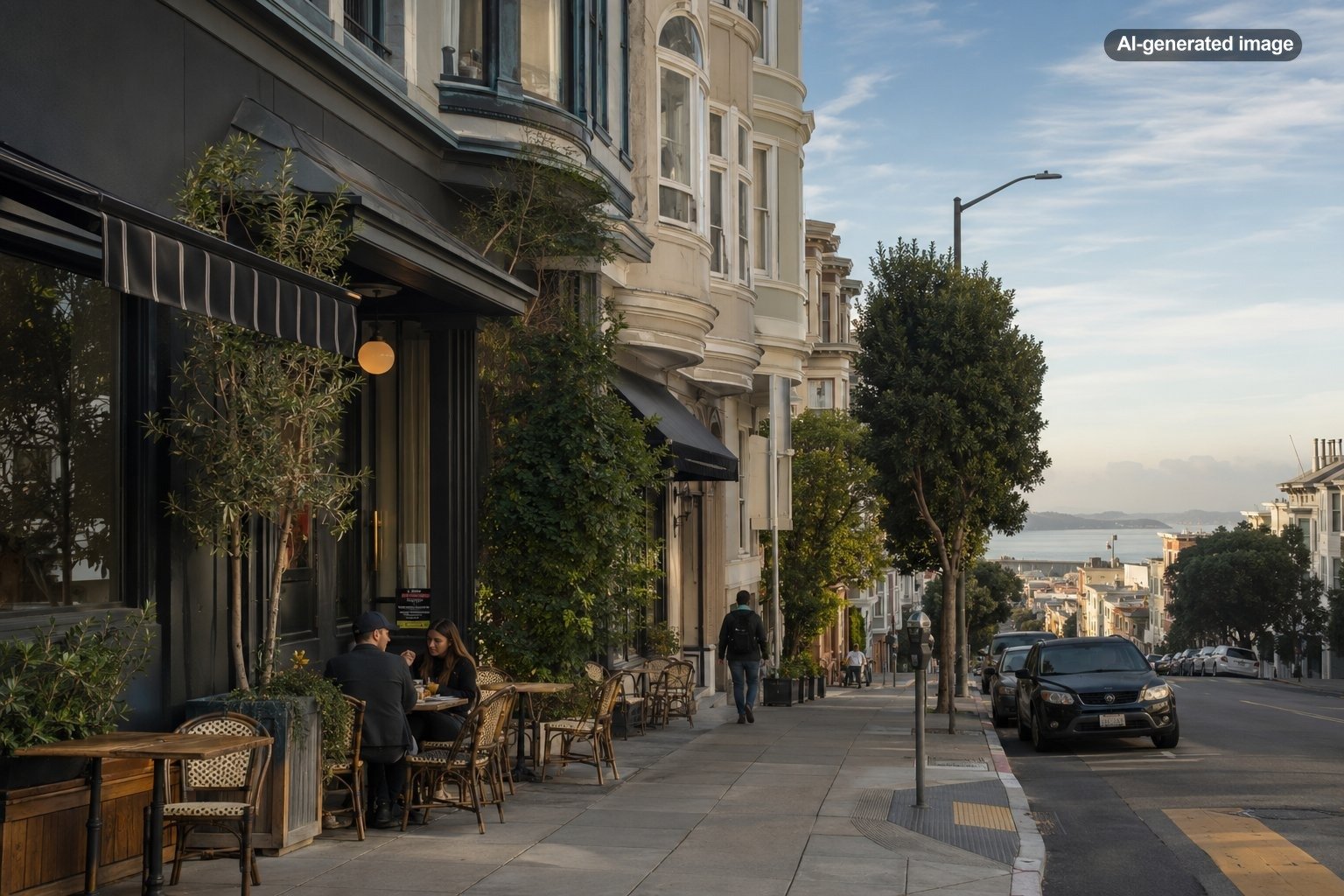
From parts of Nob Hill, visitors can reach Chinatown, Union Square, North Beach, and downtown without traveling far. However, the hills are not a decorative detail. A hotel that appears only a few blocks from a restaurant or transit station may involve a steep climb. Travelers with mobility limitations should study topography and entrance locations carefully before booking.
Best for: couples, architecture enthusiasts, special occasions, and travelers seeking an elegant city atmosphere.
Consider another area if: steep walking is a concern or you want immediate access to late-night dining and casual nightlife.
North Beach: Best for dining, cafes, and evening atmosphere
North Beach is a strong choice for travelers who want to step outside their hotel and find cafes, Italian restaurants, bars, and lively streets. It also places visitors near Chinatown, Coit Tower, Washington Square, and the northern waterfront.
The neighborhood feels more intimate and active at street level than a conventional downtown hotel district. It can be particularly appealing to couples and repeat visitors who would rather build their day around meals and neighborhood walks than around a checklist of distant attractions.
The principal drawback is rail access. North Beach is served by Muni, but it is not as directly connected to BART as Union Square, the Embarcadero, or the Mission. Some blocks can also be noisy in the evening, so light sleepers should look beyond promotional descriptions and review room location, window orientation, and recent guest feedback.
Best for: couples, food-focused trips, cafe culture, nightlife, and travelers who enjoy walking.
Consider another area if: direct airport rail access or a quiet early bedtime is a high priority.
The Mission: Best for restaurants, nightlife, and a neighborhood-centered trip
The Mission is one of the better bases for travelers who care more about dining, bars, murals, independent businesses, and local street life than proximity to Fisherman’s Wharf. BART stations provide useful connections to downtown and San Francisco International Airport, while Muni routes serve other parts of the city.
The neighborhood covers a substantial area, and the experience varies from block to block. Staying near Valencia Street provides easy access to restaurants and nightlife, while other sections may feel more residential or require additional walking. Warm, sunny afternoons are common relative to some waterfront neighborhoods, but San Francisco weather remains variable enough that layers are useful throughout the city.
The Mission is less convenient for travelers who plan to spend most of their time at the northern waterfront. It may also feel busier and louder than Hayes Valley, Pacific Heights, or the Marina.
Best for: dining, nightlife, repeat visitors, younger adult travelers, and people seeking a less visitor-centered base.
Consider another area if: your itinerary focuses on PIER 39, bay cruises, or the Golden Gate Bridge’s northern approaches.
Hayes Valley: Best for boutique atmosphere and central dining
Hayes Valley offers restaurants, cafes, boutiques, and an attractive neighborhood scale near the Civic Center and performing arts venues. It can provide a useful middle ground for travelers who want local atmosphere without being as far from central San Francisco as some western neighborhoods.
This area is well suited to couples, arts-focused visits, and travelers who prefer smaller hotels or design-conscious accommodations. Muni connections are useful, although airport access may require a walk, transfer, or short ride to a BART station depending on the property.
The tradeoff is that Hayes Valley does not place visitors next to the city’s best-known postcard sights. It works best for people comfortable using transit and treating the neighborhood itself as part of the trip.
Best for: boutique stays, restaurants, performing arts, and travelers seeking a balanced neighborhood base.
Consider another area if: you want to walk directly to the waterfront or prefer a large concentration of full-service hotels.
Marina District and Cow Hollow: Best for waterfront recreation and social energy
The Marina District and neighboring Cow Hollow appeal to travelers who want access to the Marina Green, the Presidio, Crissy Field, and views toward the Golden Gate Bridge. Chestnut and Union streets provide restaurants, cafes, shopping, and an energetic evening scene.
This area can be attractive to active travelers who expect to run, cycle, or spend considerable time near the northern waterfront. It also offers some motel-style properties that differ from the high-rise hotels found downtown.
The main drawback is transportation. The Marina is not served directly by BART, and cross-city trips can require buses, transfers, or rideshare services. It is therefore less efficient for travelers whose plans revolve around downtown, the Mission, or airport rail convenience.
Best for: active travelers, Golden Gate Bridge access, waterfront recreation, and social weekends.
Consider another area if: you need simple airport transportation or plan frequent trips across the city.
SoMa: Best for conventions, baseball, and modern city access
South of Market, commonly called SoMa, covers a broad and varied part of the city. It can be highly convenient for events at Moscone Center, baseball games at Oracle Park, museums, and Caltrain connections. Some sections also provide easy access to BART and Muni.
Because SoMa is large, the property’s exact block matters more than the neighborhood name alone. One hotel may be well positioned for a convention, while another may be more appropriate for a stadium visit or train connection. The pedestrian experience, restaurant availability, and evening activity can differ significantly across the district.
Best for: conventions, business travel, baseball trips, and travelers using Caltrain.
Consider another area if: you want classic architecture, compact neighborhood streets, or a romantic atmosphere.
What travelers often overlook
San Francisco hills can change the meaning of walkable
A hotel may be geographically close to a transit station or attraction while still requiring a strenuous climb. Check the walking route rather than relying only on mileage. Nob Hill, Russian Hill, and sections near Chinatown deserve particular attention from travelers with strollers, luggage, knee concerns, or limited mobility.
Your exact block matters
Broad neighborhood labels can conceal meaningful differences. Review the hotel’s immediate surroundings, entrance location, nearest useful transit stop, and route you would take after dinner. Recent guest reviews and street-level maps can provide more practical information than a general neighborhood description.
A rental car is often more burden than benefit
Many visitors can explore San Francisco with Muni, BART, walking, taxis, and rideshare services. Hotel parking may add complexity, and driving is not always the fastest way to move between central neighborhoods. A car becomes more useful when the itinerary includes substantial travel beyond the city, but travelers should compare parking arrangements and daily plans before reserving one.
Airport convenience is not evenly distributed
BART provides direct rail service between San Francisco International Airport and downtown San Francisco. Hotels near downtown BART stations or stations in the Mission can therefore simplify arrival and departure. Travelers staying in Fisherman’s Wharf, North Beach, Nob Hill, or the Marina will generally need an additional connection, walk, or road transfer. Current service details should be confirmed with BART before travel.
Frequently asked questions
Is Union Square or Fisherman’s Wharf better for a first visit?
Choose Union Square for central transit, broader hotel choice, and easier trips to multiple neighborhoods. Choose Fisherman’s Wharf when family attractions, bay cruises, and the northern waterfront will dominate the itinerary.
Where should couples stay in San Francisco?
The Embarcadero is well suited to waterfront walks and a polished atmosphere. Nob Hill offers classic architecture and historic character, while North Beach provides restaurants and evening energy. The best fit depends on whether the trip should feel quiet, traditional, or social.
Where should families stay?
Fisherman’s Wharf is often the simplest family base because several major attractions are close together. The Embarcadero can be a calmer alternative with waterfront space and useful transit, while Union Square works well for families planning activities throughout the city.
What is the best area without a car?
Union Square and the Embarcadero are among the most practical choices because they provide access to BART, Muni, and walkable central districts. The Mission is another useful option for travelers prioritizing restaurants and direct BART access over northern waterfront attractions.
How many nights should I stay in San Francisco?
Three nights can cover a focused first visit, while four or five nights provide more room for neighborhood exploration, museums, parks, and slower meals. Travelers adding destinations outside the city should avoid assuming that a San Francisco hotel will be the most efficient base for every regional excursion.