Where Should I Stay in Paris for Sightseeing and Walkability?
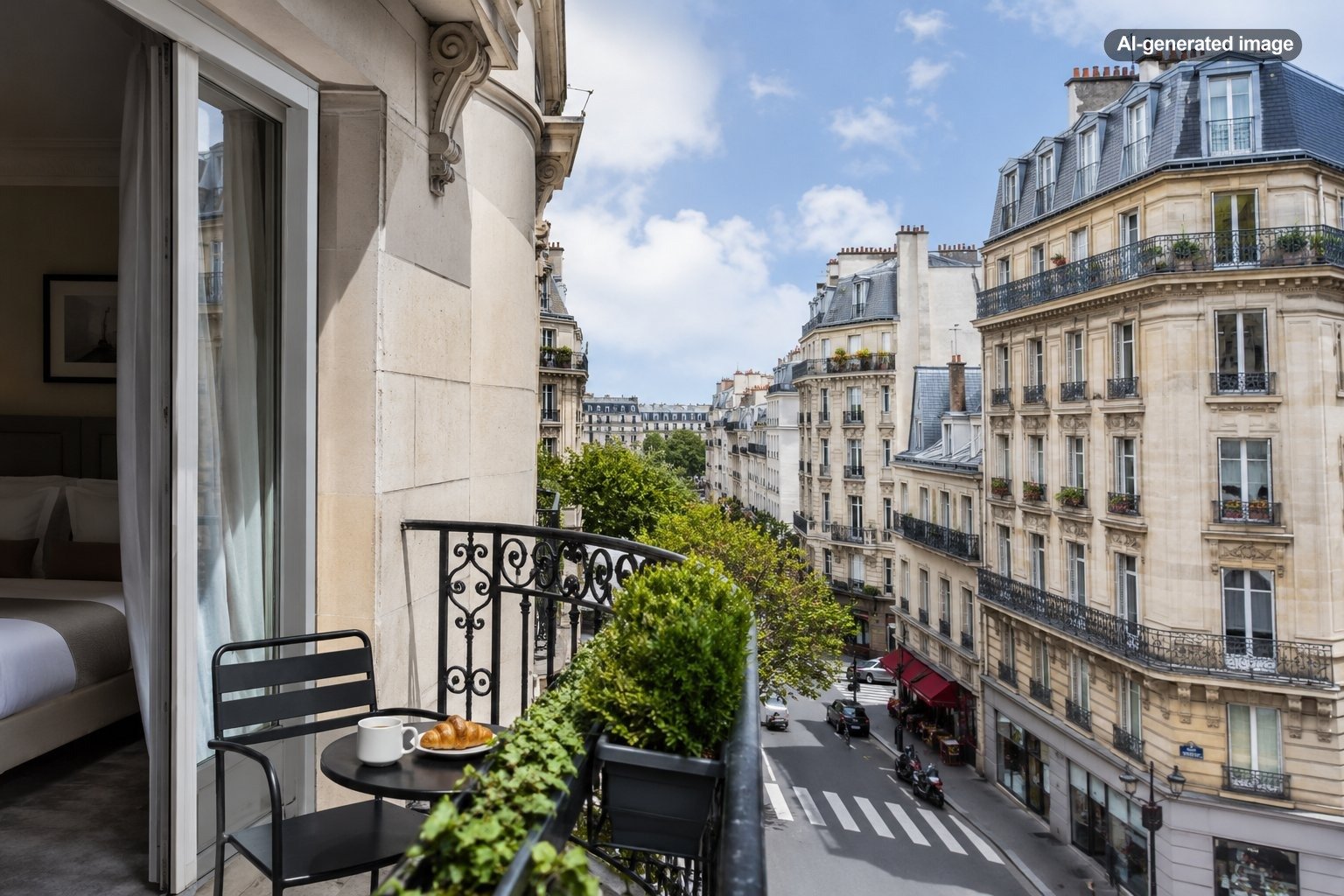
For the strongest combination of sightseeing and walkability, stay in central Paris near the Seine. The most practical choices are the Marais, Saint-Germain-des-Pres, the Latin Quarter, and the area around the Louvre and Palais Royal. Each places you within walking distance of major landmarks, restaurants, historic streets, and useful transit connections, but the atmosphere and tradeoffs differ.
The Marais is the best all-around choice for many first-time visitors, especially those who want historic streets, dining, shopping, and evening activity close together. Saint-Germain-des-Pres is a polished Left Bank alternative, the Latin Quarter is livelier and often more casual, and the Louvre-Palais Royal area is especially convenient for travelers who want to minimize the distance to headline sights.
Quick answer: the best Paris areas for walking and sightseeing
- Best overall: The Marais for central positioning, historic character, restaurants, and an active street scene.
- Best for classic Left Bank atmosphere: Saint-Germain-des-Pres for elegant streets, cafes, galleries, and easy Seine access.
- Best for lively streets and historic landmarks: The Latin Quarter for Notre-Dame access, older architecture, casual dining, and student energy.
- Best for maximum landmark convenience: Louvre and Palais Royal for short walks to major museums, the Seine, and central gardens.
- Best for a romantic hilltop setting: Montmartre, provided you accept hills and more frequent transit rides to central sights.
The Marais: best overall for variety and central positioning
The Marais, spanning parts of the 3rd and 4th arrondissements, is one of the most useful bases for travelers who want to spend much of the day on foot. Its narrow streets, historic buildings, boutiques, cafes, museums, and small squares make the neighborhood itself part of the sightseeing experience.
From many Marais hotels, travelers can walk toward the Seine, the Place des Vosges, the Hotel de Ville, the Centre Pompidou, Ile Saint-Louis, and Notre-Dame. Longer but realistic walks can continue toward the Louvre, the Latin Quarter, or the Canal Saint-Martin area, depending on the exact hotel location and the traveler’s comfort with walking.
Who should stay in the Marais?
The Marais is particularly well suited to first-time visitors, couples, solo travelers, shoppers, and travelers who enjoy choosing restaurants spontaneously. It works well when the goal is to leave the hotel in the morning and immediately feel surrounded by places worth exploring.
What are the tradeoffs?
The neighborhood can feel busy, especially near major shopping streets and popular squares. Some historic buildings have compact rooms, small elevators, or limited sound insulation. Travelers who value complete quiet should examine the hotel’s precise street, room orientation, and guest comments rather than relying only on the neighborhood name.
Saint-Germain-des-Pres: best for an elegant Left Bank stay
Saint-Germain-des-Pres, primarily in the 6th arrondissement, offers a refined and highly walkable base on the Left Bank. The area is associated with cafes, galleries, bookstores, restaurants, and handsome residential streets. It also places travelers near the Seine, the Luxembourg Garden, the Latin Quarter, and bridges leading toward the Louvre.
This is a strong choice for travelers who want central convenience without staying directly beside the busiest major attractions. The neighborhood feels established and polished, and its streets are pleasant for unstructured walks between planned sightseeing stops.
Who should stay in Saint-Germain-des-Pres?
Couples, repeat visitors, museum-focused travelers, and those who prioritize dining and atmosphere may prefer Saint-Germain. It is also a practical base for travelers who enjoy starting the day with a neighborhood walk rather than immediately entering a crowded attraction zone.
What are the tradeoffs?
Hotels in the most desirable streets can occupy older buildings with smaller rooms, and the area’s polished reputation can be reflected in lodging and dining costs. The neighborhood is central, but travelers planning substantial time around the Arc de Triomphe, Montmartre, or eastern Paris will still use the Metro or buses.
The Latin Quarter: best for history, energy, and casual exploration
The Latin Quarter, centered in the 5th arrondissement and extending toward parts of the 6th, is one of the oldest and most recognizable areas of Paris. It combines academic institutions, historic churches, Roman-era remains, bookshops, narrow streets, casual restaurants, and access to the Seine.
Its location is especially convenient for Notre-Dame, Ile de la Cite, the Pantheon, the Luxembourg Garden, and the eastern side of Saint-Germain. Travelers can also cross the river into the Marais or walk west along the Seine toward major museums.
Who should stay in the Latin Quarter?
This area suits first-time visitors who prefer a lively atmosphere, families with older children, students, solo travelers, and anyone who values casual dining options. It often feels less formal than Saint-Germain while retaining a deeply historic setting.
What are the tradeoffs?
Some streets are densely visited and can feel commercial, while quieter residential pockets may be farther from the river than travelers expect. The phrase “Latin Quarter” covers a meaningful area, so a hotel near the Pantheon creates a different walking pattern from one close to Saint-Michel or the Jardin des Plantes.
Louvre and Palais Royal: best for landmark proximity
Staying in the 1st arrondissement near the Louvre, Palais Royal, or Tuileries Garden gives travelers an exceptionally central sightseeing base. This area is practical for short visits, museum-heavy itineraries, and travelers who want to reduce the number of transit journeys during the day.
The Louvre, the Seine, the Tuileries, Place Vendome, parts of the covered-passage district, and bridges toward the Left Bank are readily accessible on foot. The central location also makes it easier to divide a day into shorter outings, which can be useful for families, older travelers, or anyone who prefers an afternoon break at the hotel.
Who should stay near the Louvre?
This is a strong fit for first-time visitors with limited time, art-focused travelers, and guests who place convenience above neighborhood nightlife. It can also be useful for a two- or three-night stay when the itinerary centers on the city’s most famous museums and monuments.
What are the tradeoffs?
Some blocks feel more institutional or commercial after museums and shops close. The immediate surroundings may offer less of a residential neighborhood experience than the Marais or Latin Quarter. Travelers should also distinguish between hotels genuinely near the Louvre and properties using broader “central Paris” language.
Montmartre: best for atmosphere, but not for effortless central sightseeing
Montmartre offers a distinctive hilltop environment, views, stairways, neighborhood streets, artistic associations, and the Sacre-Coeur area. It can be an appealing choice for travelers who want their hotel neighborhood to feel separate from the monumental center.
However, Montmartre is not the most efficient base for a traveler whose top priority is walking to the Louvre, Notre-Dame, the Marais, and the Left Bank. The hills can also make distances feel longer than they appear on a map. A location near a useful Metro station can reduce the inconvenience, but travelers should expect to combine walking with transit.
Choose Montmartre for neighborhood character and evening atmosphere, not because it offers the shortest walks to the broadest range of major sights.
Other central areas worth considering
Opera and the 9th arrondissement
The Opera area is practical for shopping, department stores, grand boulevards, and transit connections. It can work well for travelers who want access to both central sights and northern neighborhoods. The setting is generally busier and more commercial than Saint-Germain or the quieter parts of the Marais.
Canal Saint-Martin
Canal Saint-Martin offers restaurants, cafes, and a more neighborhood-oriented atmosphere. It can appeal to repeat visitors who do not need to be beside the Louvre or Notre-Dame. First-time visitors focused on classic sightseeing may find themselves relying more heavily on transit.
The 7th arrondissement near the Eiffel Tower
The 7th arrondissement can be attractive for Eiffel Tower access, broad avenues, and a quieter residential feeling. It is not always the best all-purpose sightseeing base, however, because many other major attractions lie farther east. A hotel near the river or a well-connected station is generally more convenient than one deep inside a residential section.
How to evaluate a Paris hotel for true walkability
A central arrondissement does not automatically guarantee a convenient hotel. Paris neighborhoods are compact, but exact positioning still matters. Before booking, examine the property on a map and consider the following details:
- Distance to the Seine: For many sightseeing itineraries, being within a comfortable walk of the river simplifies movement between the Left Bank, islands, and central Right Bank.
- Nearby Metro options: A station with useful connections provides flexibility when rain, fatigue, summer heat, luggage, or evening plans make walking less appealing.
- Street type: A hotel on a lively dining street may be convenient but noisier than one on a side street a few blocks away.
- Building access: Historic hotels may have stairs, small elevators, narrow corridors, or rooms on multiple levels.
- Your actual itinerary: A museum-focused trip, a food-focused trip, and a family trip can each have a different ideal center of gravity.
Use walking times as a planning tool rather than a promise. A route that seems easy in the morning may feel less practical after several hours inside museums, while cobblestones, crowds, hills, and repeated river crossings can add effort.
What travelers often overlook
The hotel entrance matters more than the arrondissement label. A property may market itself using a famous nearby district even when it sits near the district’s outer edge. Confirm the exact street and nearest stations.
Walkability and quiet do not always overlap. Busy streets near restaurants, nightlife, and major attractions can remain active late into the evening. Interior-facing rooms may offer a better balance, though views can be limited.
Paris walking days can become longer than expected. Travelers often add detours through gardens, markets, passages, and riverfront paths. Comfortable footwear and a willingness to take transit back to the hotel can improve the experience.
A central base does not eliminate transit. Even from the Marais or Saint-Germain, trips to Montmartre, the Arc de Triomphe, farther sections of the 16th arrondissement, or attractions beyond central Paris usually become more practical by Metro, RER, or bus. RATP provides official network and neighborhood maps that can help travelers compare routes before choosing a hotel.
Frequently asked questions
What is the best arrondissement for a first trip to Paris?
The 4th, 5th, and 6th arrondissements are especially practical for first-time visitors who prioritize central sightseeing and walking. The 1st is also highly convenient for major landmarks, while parts of the 3rd provide excellent access to the Marais.
Is it better to stay in the Marais or Saint-Germain?
Choose the Marais for a lively Right Bank setting, boutiques, restaurants, historic streets, and easy access to eastern central Paris. Choose Saint-Germain for a more polished Left Bank atmosphere, cafes, galleries, and convenient walks toward the Luxembourg Garden, Seine, and Latin Quarter.
Is the Eiffel Tower area the best place for sightseeing?
It is best for travelers who prioritize the Eiffel Tower and nearby attractions. For a broader itinerary covering the Louvre, Notre-Dame, the Marais, and both banks of the Seine, a more centrally positioned neighborhood may reduce overall travel time.
Can I see Paris mostly on foot?
Many central sights can be linked on foot, particularly when staying near the Seine. Most travelers will still benefit from public transportation for distant neighborhoods, airport journeys, poor weather, and the return trip after a long sightseeing day.
Where should I stay for a short Paris visit?
For a brief visit, prioritize the Marais, Saint-Germain, the Latin Quarter, or the Louvre-Palais Royal area. These neighborhoods reduce the need for long cross-city journeys and make it easier to fit sightseeing around hotel check-in, meals, and rest breaks.