Can You Request a Hotel Room Away From the Ice Machine?
Yes, you can request a hotel room away from the ice machine. It is a reasonable room-location preference, especially if you are a light sleeper, traveling for work, staying several nights, or simply want to minimize hallway noise.
The important distinction is that a request is usually a preference rather than a guarantee. The hotel still has to work with the rooms available when you arrive. Asking early, using specific but flexible wording, and checking the room location before you fully settle in can improve the chances of getting a quieter location.
Quick answer
- Ask for a room away from the ice machine when making the reservation or before arrival.
- Consider also requesting distance from elevators, vending areas, housekeeping closets, and other high-traffic locations if noise is your main concern.
- Phrase the request as a preference rather than a demand.
- Confirm the request politely at check-in because room assignments can change.
- If the room is noisier than expected, contact the front desk before unpacking completely and ask whether another room is available.
Why a room near the ice machine can be noisier
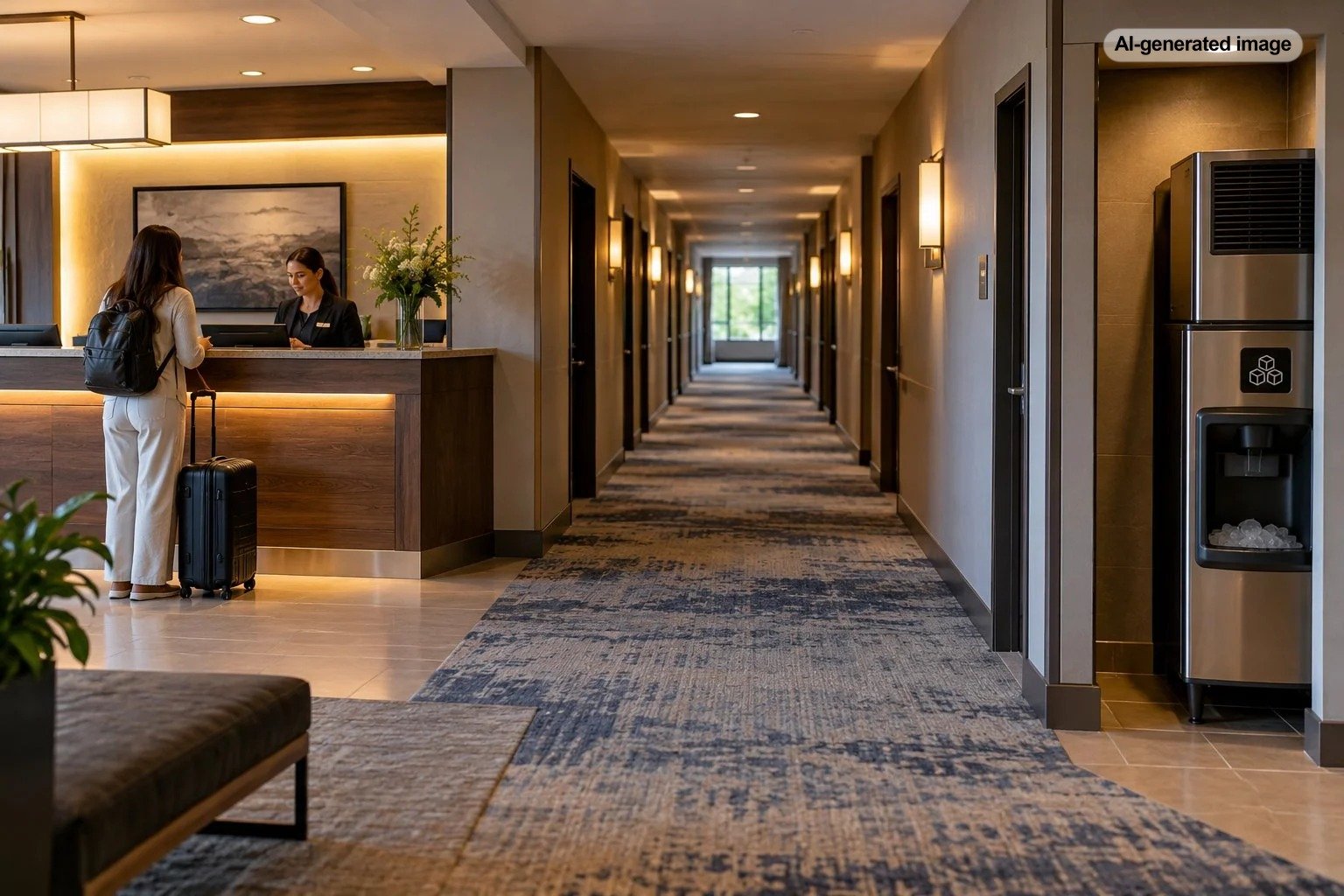
The ice machine itself is only part of the issue. The larger concern is often the activity surrounding it. Guests may walk down the hallway to fill ice buckets, open and close nearby doors, talk while waiting, or make repeated trips during the evening.
The machine may also produce mechanical sounds as it operates or replenishes ice. How noticeable those sounds are depends on the building layout, door placement, wall construction, hallway configuration, and the particular machine.
A room one door away from an ice machine is not automatically noisy, and a room at the opposite end of the hallway is not automatically silent. Room location is simply one factor that can influence the overall sound environment.
When should you make the request?
The most practical approach is to mention the preference as early as reasonably possible and then confirm it when you arrive.
When making the reservation
If the booking process provides a field for comments or special requests, you can enter a short note such as, Quiet room preferred, away from ice machines and elevators if possible.
Keeping the wording concise makes the request easy for hotel staff to understand. You generally do not need to explain why unless there is additional information that would genuinely help the hotel accommodate you.
Before arrival
If a quiet location is particularly important, contacting the hotel before your stay can give you another opportunity to have the preference noted. This can be useful for business trips, longer stays, early morning commitments, or travelers who know that hallway noise significantly affects their sleep.
At check-in
It is worth mentioning the request again when checking in. A simple question works well: Would it be possible to have a quieter room away from the ice machine and elevator?
This wording identifies what you want without assuming that every room location will be available.
Should you ask for a room away from the elevator too?
If your real priority is reducing hallway activity, requesting distance from both the ice machine and elevator can make sense. Elevator areas naturally attract more foot traffic because guests on the floor pass through them.
However, there is a tradeoff. A room farther from the elevator can mean a longer walk to your room. That may be insignificant for some travelers but inconvenient for someone carrying equipment, traveling with small children, managing mobility limitations, or making frequent trips in and out of the hotel.
Rather than automatically requesting the farthest room on the floor, consider what matters most. A moderately quiet location with convenient access may suit you better than the most isolated room available.
Other hotel locations that may generate hallway noise
If you are especially sensitive to noise, focusing only on the ice machine may be too narrow. Several parts of a hotel floor can create additional activity.
- Elevators: These can mean frequent footsteps, conversations, and arriving guests.
- Vending areas: Guests may stop for drinks or snacks throughout the day and evening.
- Housekeeping or service areas: Depending on the property layout, these may see staff activity during operating hours.
- Stairwell doors: Doors opening and closing can create intermittent hallway sound.
- Connecting rooms: A connecting door can affect how much sound you perceive from the neighboring room, depending on the building and occupants.
You do not necessarily need to request distance from every possible source of activity. If quiet is the goal, asking generally for a quieter location and mentioning your most important concern gives staff more flexibility in finding a suitable room.
What if the hotel cannot honor the request?
A room-location request can be reasonable without being possible on every stay. The hotel may have limited room inventory, specific room categories assigned to particular areas, or many guests making similar requests.
If your requested location is unavailable, ask whether there is another quieter option. A room that is not especially far from the ice machine could still be preferable if it has less hallway traffic or a different position on the floor.
Flexibility matters because hotel rooms are not interchangeable. A different location could also mean a different bed configuration, view, floor, connecting-room arrangement, or other characteristic. Before accepting a switch, confirm that the alternative still meets the features that are most important to your stay.
Check the room before you completely unpack
Once you enter the room, spend a few minutes listening to the environment before spreading your belongings around. Notice whether you can hear the ice machine, elevator traffic, doors, neighboring rooms, or substantial hallway activity.
This does not require sitting in silence for half an hour. The goal is simply to identify an obvious problem while changing rooms may still be relatively straightforward.
If the location seems unsuitable, contact the front desk promptly and politely explain the concern. Asking earlier is generally more practical than discovering the problem when you are already preparing to sleep.
How specific should your quiet-room request be?
Specific enough to communicate the problem, but not so restrictive that the hotel has almost no room-placement options.
For example, requesting a high-floor corner room at the end of the hallway, away from elevators, stairwells, ice machines, vending machines, connecting doors, and housekeeping areas creates a very narrow target. Even if such a room exists, it may not be available within the room category you reserved.
A simpler request such as quiet room away from the ice machine and major hallway traffic, if available gives the front desk more flexibility.
Who benefits most from making this request?
A room away from the ice machine can be especially worthwhile for light sleepers, travelers adjusting to a different time zone, guests with early departures, people preparing for meetings or events, families trying to keep children asleep, and anyone planning a longer stay.
Other travelers may care more about convenience. Someone who expects to use the ice machine frequently might actually prefer being nearby. A guest with limited mobility may place a higher priority on elevator access than maximum distance from common areas.
There is no universally ideal hotel room location. The useful approach is to identify which tradeoffs matter for your particular stay.
What travelers often overlook
A quiet-room request is most effective when it describes the outcome you want rather than treating one particular room location as the only acceptable solution. Hotel layouts vary considerably, and staff may know that a room that appears convenient on a floor plan is actually quieter than one farther down the hall.
It can therefore help to mention both the preference and the reason in a concise way: I am a light sleeper, so I would appreciate a quieter room away from the ice machine or other high-traffic areas if possible.
That gives the hotel useful context while leaving room for staff to work with the available inventory.
Frequently asked questions
Can a hotel guarantee a room away from the ice machine?
You can request the location, but you should not assume that a particular room placement is guaranteed unless the hotel has explicitly confirmed otherwise. Room availability and assignments can vary.
Is it better to request a quiet room online or call the hotel?
Using a special-request field during booking is a useful first step. If the preference is particularly important, you can also contact the property before arrival and mention it again at check-in.
Should I request the end of the hallway?
An end-of-hall location may reduce passing foot traffic, but it can also create a longer walk from the elevator. It is better to request a quiet location and let the hotel consider the layout and available rooms.
Can I change rooms if the ice machine is too loud?
You can ask the front desk whether another room is available. If you notice the problem shortly after arrival, raising it before you fully unpack can make a potential move easier.
What is the simplest wording for the request?
Try: Quiet room preferred, away from the ice machine and elevator if possible. It is specific, courteous, and flexible enough for the hotel to work with its available room inventory.