How to Choose a Cruise Cabin With a Larger Shower
A larger cruise cabin does not automatically mean a larger shower. Cruise ships squeeze remarkable functionality into compact bathrooms, and two cabins that sound substantially different on a booking page can still have very similar shower enclosures. If shower space matters to you, the most reliable approach is to investigate the bathroom layout itself rather than choosing solely by cabin category, balcony size, or total square footage.
Suites and some premium staterooms are often the first places to look, but ship design matters just as much as price. Accessible cabins can also have substantially more usable bathing space for travelers who genuinely need accessibility features. The goal is to identify the exact bathroom configuration before you commit to a particular cabin.
Quick answer: what to look for
- Compare the bathroom and shower layout, not just the cabin’s total square footage.
- Look at suites and upgraded cabin categories, but verify the actual shower configuration because layouts vary.
- Check whether the shower uses a rigid enclosure, curved door, curtain, or open roll-in design.
- Review deck plans, official cabin diagrams, and photos or videos of the exact ship and preferably the exact cabin type.
- If space is important for mobility, balance, or transferring, contact the cruise line about appropriate accessible accommodations rather than assuming a standard cabin will work.
Start with the bathroom, not the cabin size
Cabin square footage can be misleading when your real concern is shower room. Extra space may have been allocated to the sleeping area, sitting area, balcony, storage, or entryway rather than the bathroom.
A better comparison focuses on three separate questions: How large is the bathroom? How much of that space belongs to the shower? And how usable is the shower once the door, curtain, fixtures, grab handles, shelves, and controls are taken into account?
A slightly wider shower can feel considerably more comfortable than a narrow enclosure even when the numerical difference is modest. Shape also matters. A rectangular or generously curved enclosure may provide better elbow room than a narrow corner shower with an awkward door opening.
Do not assume every suite has a dramatically larger shower
Moving from an inside cabin to a balcony cabin does not necessarily change the bathroom very much. Even some mini-suite or junior-suite-style accommodations may devote most of their additional space to the living area rather than the shower.
Higher suite categories are more likely to introduce substantially different bathrooms. Depending on the ship, that might mean a larger shower enclosure, separate tub and shower, dual sinks, or a bathroom divided into multiple areas. None of these features should be assumed from the word suite alone.
When comparing upgraded accommodations, look for an actual bathroom diagram or description. If the cruise line simply lists a larger total cabin size without describing the bathroom, continue researching before treating the upgrade as a solution to a cramped shower.
Pay attention to the type of shower enclosure
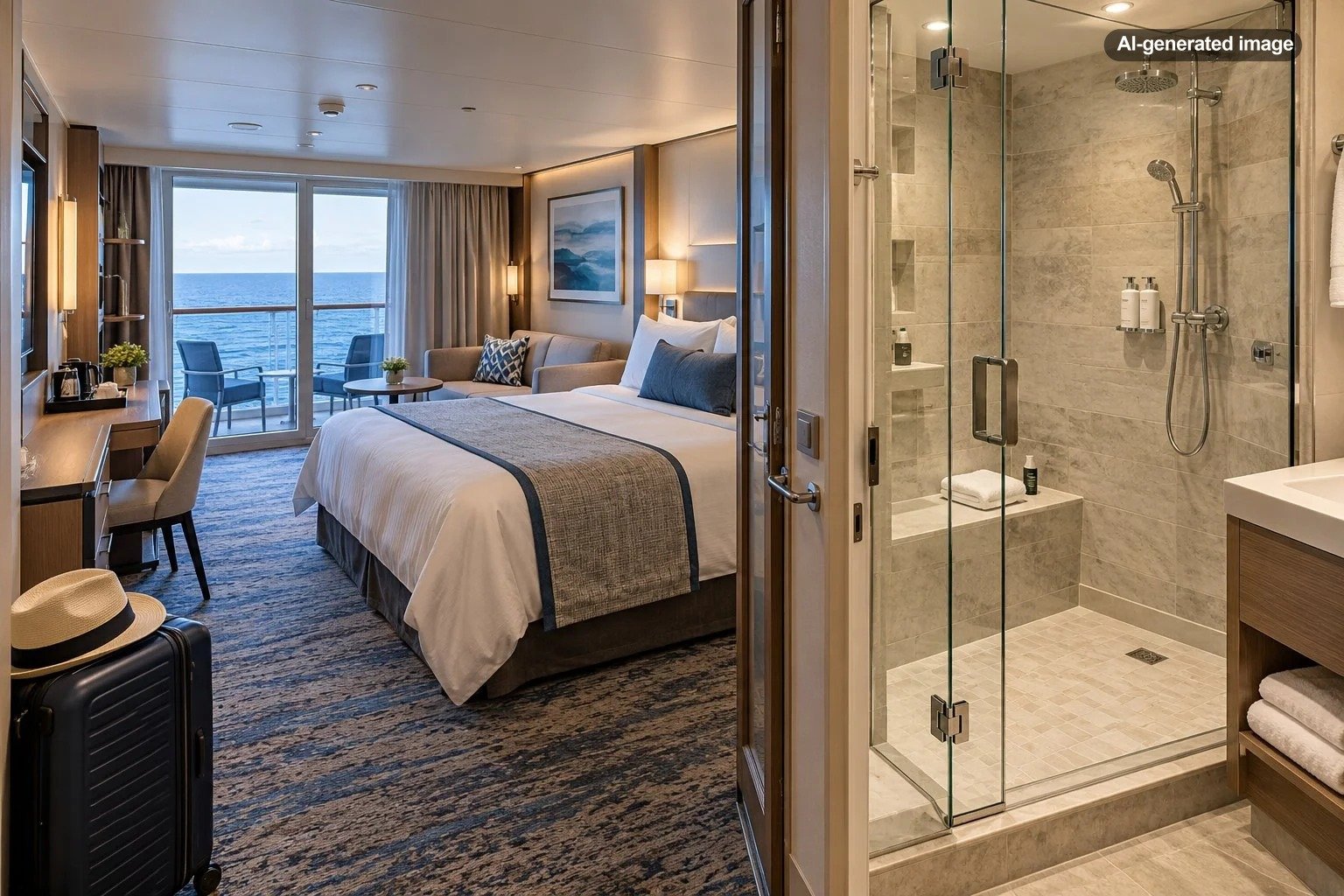
Two similarly sized showers can feel very different in practice. A shower curtain may preserve more shoulder room because there is no rigid enclosure, although a curtain can move inward while the shower is running. A sliding glass door provides a firmer boundary but takes up some usable space around its tracks and frame. Hinged doors require clearance and can make entering a compact enclosure more awkward.
Curved doors are common because they make efficient use of a small footprint. They can provide reasonable space in the center while still narrowing toward the edges. If you have broad shoulders, limited flexibility, or simply dislike tight enclosures, the shape can matter as much as the published measurements.
Also look at fixture placement. A showerhead, control panel, soap shelf, or grab bar can reduce the practical standing area even though it does not change the dimensions shown on a plan.
Accessible cabins are different for a reason
Fully accessible cruise staterooms commonly use bathroom layouts intended to accommodate wheelchair or scooter users, and cruise lines may provide features such as wider doorways, roll-in or transfer showers, grab bars, shower seats, and handheld showerheads. These configurations can offer much more maneuvering space than a conventional cruise bathroom.
However, accessible cabins should not be treated simply as a strategy for obtaining a bigger shower when you do not need accessibility accommodations. Their limited inventory serves travelers with specific mobility requirements, and cruise lines may have policies governing their use.
If you do have mobility, balance, transfer, or other accessibility needs, contact the cruise line’s accessibility team before booking. Describe what you need rather than asking only whether the bathroom is ‘accessible.’ A roll-in shower, transfer shower, shower seat, threshold height, doorway width, and clearance around the toilet can all matter differently depending on the traveler.
Research the exact ship, not just the cruise line
Bathroom design can change substantially from one generation of ships to another. A cabin category you liked on one vessel may have a different shower arrangement on a newer or older ship operated by the same company.
Start with the cruise line’s deck plan and cabin description for the specific vessel. Then look for official floor plans or virtual tours when available. Pay attention to notes stating that layouts or furnishings may vary, because cabins within the same broad category are not always identical.
If shower space is a major booking criterion, researching the exact cabin number can be worthwhile. Connecting cabins, accessible rooms, corner cabins, unusual structural locations, and cabins created or modified during a refurbishment may differ from the standard category diagram.
Use photos carefully
Bathroom photographs can reveal details that deck plans miss, but perspective can distort small spaces. Wide-angle lenses make cruise cabins and bathrooms look significantly larger than they feel in person.
Use images mainly to identify the layout: the type of enclosure, where the toilet sits relative to the shower, whether there is a step or threshold, how the door opens, and whether fixtures protrude into the bathing area. Avoid trying to estimate exact dimensions from a single photograph.
A video walkthrough can be more useful because movement provides scale. The most relevant example is one showing your ship and cabin category rather than a similarly named category on another vessel.
Ask specific questions before booking
If published information is unclear, contact the cruise line or your booking agent with precise questions. Asking ‘Is the shower large?’ invites a subjective answer. More useful questions include:
- What are the approximate interior dimensions of the shower enclosure?
- Does the shower have a curtain, sliding door, hinged door, or open roll-in layout?
- Is there a threshold or step into the shower?
- Is a shower seat built in or available when medically appropriate?
- Does this exact cabin have the same bathroom shown in the category diagram?
- Does the next cabin or suite category actually have a different bathroom layout?
Measurements may not always be available, but asking detailed questions makes it easier to distinguish a genuine layout difference from a general upgrade in cabin size.
Decide how much additional space you actually need
Not every traveler who dislikes compact cruise showers needs a large suite. If your concern is simply bumping your elbows while washing your hair, a modestly wider or better-shaped enclosure may solve the problem. If you need room to sit, transfer, use mobility equipment, or receive assistance, the requirements are considerably more specific.
Couples may value a larger overall bathroom because it makes getting ready easier, even if the shower itself changes only slightly. Families might care more about storage and bathroom traffic. Taller or broader travelers may prioritize shower dimensions above every other bathroom feature.
Thinking about the exact source of discomfort can prevent an expensive upgrade that improves the cabin but leaves the shower nearly unchanged.
What travelers often overlook
Bathroom doors can affect usable space. A door that opens inward or into a narrow entry can make a perfectly adequate bathroom feel awkward.
A bathtub is not automatically more convenient. A shower-over-tub arrangement may provide additional bathing space but introduce a higher step that some travelers dislike or find difficult.
Storage competes with space. Shelving and vanity areas are useful, but bathroom fixtures can make a compact room feel tighter.
Cabins in the same category can vary. Structural features of a ship sometimes create small differences in room shape and bathroom configuration.
A better bathroom may require a category jump. Moving up one cabin class may add a balcony or sitting area without changing the shower. The meaningful bathroom redesign may not appear until a higher suite tier.
A practical booking strategy
Begin by identifying two or three cabin categories that fit your overall budget and location preferences. Ignore their total square footage temporarily and compare only the bathroom layouts. Eliminate categories that clearly use the same compact shower design.
Next, investigate the remaining options on the exact ship. Compare official diagrams, descriptions, and representative imagery. When the difference still is not clear, ask the cruise line whether the shower dimensions or configuration actually change between the categories you are considering.
This approach keeps you from paying primarily for balcony space, lounge furniture, or a larger sleeping area when your real priority is a few more inches of room in the shower.
FAQ
Do balcony cabins usually have larger showers than inside cabins?
Not necessarily. On many ships, several standard cabin categories share broadly similar bathroom layouts even though the cabins themselves differ in size, location, and balcony access. Verify the bathroom rather than assuming the cabin upgrade changes it.
Do cruise suites always have bigger showers?
No. Suites are more likely to offer upgraded bathrooms, especially at higher tiers, but the word ‘suite’ does not guarantee a significantly larger shower. Review the exact layout for the ship and suite category.
Is a shower curtain better than a glass door for space?
It depends on the design. Curtains eliminate rigid framing but can move inward while the water is running. Glass doors feel more contained but may reduce usable room around the frame. Shape and dimensions matter more than the material alone.
Should I book an accessible cabin just to get a larger shower?
Accessible cabins are designed for travelers with accessibility requirements and are limited in number. If you have a mobility or accessibility need, contact the cruise line about the appropriate accommodation. Otherwise, look for standard cabins or suites with more generous bathroom layouts.
What is the safest way to confirm shower size before booking?
Use several sources of information for the exact ship and cabin category, then ask the cruise line directly when the layout remains unclear. An exact cabin number is especially useful when its configuration differs from the category’s standard diagram.
The key is verifying the layout before you pay for the upgrade
Choosing a cruise cabin with a larger shower is less about finding the biggest room and more about identifying where the ship actually allocates its space. Compare bathroom configurations first, pay attention to enclosure shape and accessibility features, and verify differences on the exact vessel you plan to sail.
When shower comfort is important enough to influence the booking, a few minutes spent studying floor plans and asking specific questions can be far more useful than simply moving one category higher and hoping the bathroom gets bigger too.