How to Tell If a Hotel Room Will Be Quiet Before You Book It
There is no foolproof way to know how quiet a hotel room will be before you arrive, but you can improve your odds considerably. The most useful clues are the hotel’s surroundings, recurring comments in recent guest reviews, the room’s position within the building, and whether the property can note a specific quiet-room request before arrival.
A room described simply as being on a high floor or away from the elevator is not automatically quiet. Street noise, neighboring rooms, connecting doors, mechanical equipment, event spaces, housekeeping activity, and even the building’s layout can matter. The goal is to identify the type of noise most likely to disturb you and then choose a room location that minimizes that particular risk.
Quick answer: what to check before booking
- Search recent reviews for repeated mentions of street noise, thin walls, elevators, nightlife, construction, air-conditioning noise, or hallway activity.
- Study the hotel’s map location for nearby highways, rail lines, nightlife districts, event venues, airports, and busy intersections.
- Ask whether a room can be placed away from elevators, ice machines, housekeeping areas, service doors, and other high-traffic locations.
- If you are sensitive to neighboring-room noise, ask whether a non-connecting room is available.
- Make your quiet-room preference before arrival, while remembering that a request may depend on the hotel’s room inventory and assignment process.
Start by identifying the noise outside the hotel
Before worrying about individual room numbers, look at the hotel’s immediate surroundings. A property can have excellent rooms and still face environmental noise that is difficult to avoid completely.
Open a map and examine what surrounds the building on every side. A main avenue may produce traffic noise. Entertainment areas can become louder at night. Rail lines, elevated roads, loading areas, hospitals, event venues, and airports can introduce intermittent noise that may not be obvious from the hotel’s marketing photographs.
The important distinction is between localized noise and area-wide noise. If the problem is a busy street on one side of the building, a room facing another direction could make a meaningful difference. If the entire area is active late into the night, changing sides of the building may help less.
Read reviews for patterns, not isolated complaints
Guest reviews are particularly useful for noise because they can reveal recurring issues that are difficult to detect from a room description. Search recent reviews for specific terms such as noise, loud, street, elevator, hallway, bar, club, construction, thin walls, air conditioner, and connecting room.
One complaint does not necessarily establish a pattern. A guest may have encountered unusually loud neighbors or a temporary event. Several independent reviews describing the same source of noise are more informative, particularly when they identify a specific side, floor, room area, or nearby venue.
Pay attention to what positive reviews say as well. Comments describing a peaceful courtyard-facing room or a quiet upper floor can be useful, provided they appear consistently and recently. Buildings, surroundings, and operating conditions can change, so newer observations generally deserve more weight than comments from many years ago.
Understand why room position matters
Two rooms in the same hotel can have very different acoustic environments. Where the room sits relative to elevators, corridors, service areas, streets, and adjoining rooms can matter as much as the hotel’s overall reputation for quiet.
Elevators
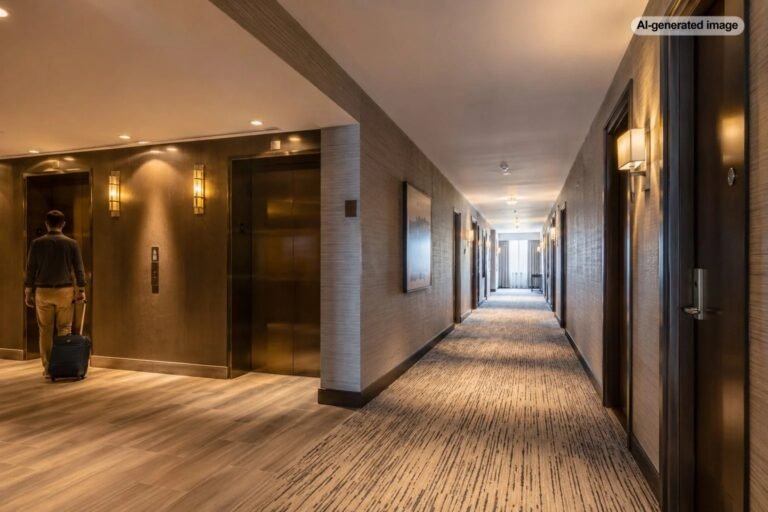
A room near an elevator may experience more hallway conversations, rolling luggage, doors opening and closing, and late-night foot traffic. Mechanical elevator noise can also affect certain rooms depending on the building. Asking to be away from the elevator is therefore a reasonable starting point for a light sleeper.
Ice machines and service areas
Ice machines, housekeeping closets, service elevators, vending areas, and utility doors can create intermittent noise. The disturbance may be minor during the afternoon but more noticeable when the rest of the floor is quiet.
Connecting rooms
Connecting rooms are useful for families and groups, but the connecting doorway can sometimes make voices or television sound more noticeable than they would be through a solid wall. Travelers who do not need a connecting room can ask whether a non-connecting room is available.
End-of-hall rooms
A room near the end of a corridor may experience less passing foot traffic because fewer guests need to walk past it. That does not make every end room quieter, however. An end location could also be close to a stairwell, service area, exterior equipment, or another source of noise. Treat corridor position as one clue rather than a guarantee.
Do not assume the highest floor is always the quietest
A high floor can be useful when the primary concern is traffic, pedestrians, or activity immediately outside the hotel. It is not a universal solution.
Upper floors can sometimes be closer to rooftop mechanical equipment, rooftop restaurants, bars, terraces, or event spaces. In another building, a lower room facing an interior courtyard may be much quieter than a top-floor room facing a major road.
A better request is specific: explain what type of noise you are trying to avoid. For example, a light sleeper might ask for a quiet room away from elevators and service areas rather than requesting only the highest available floor.
Look carefully at room categories
Room-category descriptions occasionally provide clues about orientation. Terms referring to courtyard, garden, city, street, pool, atrium, or landmark views may indicate which direction a room faces, although terminology varies by property.
Do not infer more than the description actually states. A room with a desirable view is not necessarily quiet, and a less dramatic view can sometimes be preferable for sleep. If orientation matters, contact the property and ask what the selected room category generally faces rather than relying on photographs alone.
Ask the hotel a better question
Instead of asking, “Are your rooms quiet?” ask a question the hotel can answer more practically. For example: “I am a light sleeper. Is it possible to note a preference for a room away from elevators, ice machines, service areas, and connecting doors?”
You can also mention your main concern. Someone sensitive to traffic may care most about building orientation, while someone who sleeps early may be more concerned about a ballroom, restaurant, or nightlife venue.
Keep the request focused rather than supplying a long list of preferences that could conflict with one another. A high floor, particular view, early check-in, specific bed configuration, and distant elevator location may not all be available in the same room. Decide which characteristic matters most.
Separate street noise from hotel noise
It helps to divide potential problems into three categories. Exterior noise includes traffic, nightlife, airplanes, trains, construction, and crowds. Interior guest noise includes hallway conversations, neighboring televisions, doors, elevators, and late arrivals. Building or operational noise can include ventilation equipment, service activity, plumbing, elevators, and nearby hotel facilities.
This distinction makes reviews much easier to interpret. A hotel criticized for traffic noise may still work well if quieter rooms face away from the road. Complaints about sound passing between neighboring rooms suggest a different issue that may be harder to solve through orientation alone.
Check the room as soon as you arrive
Even careful research cannot reveal everything. Once you enter the room, spend a few minutes listening before unpacking completely. Turn off the television and listen for hallway noise, neighboring rooms, traffic, elevators, mechanical sounds, and the heating or cooling system.
If the room seems unusually noisy, raising the issue early can be more useful than discovering the problem when you are ready to sleep. Whether another room is available will depend on the property and occupancy at the time, but identifying a concern promptly gives the hotel an opportunity to explain the source or discuss possible alternatives.
What travelers often overlook
Nighttime conditions can differ from daytime conditions. A street that seems calm during afternoon check-in may become active after dinner. Conversely, a business district that is busy during the day may become quieter at night.
The room next door is unpredictable. No booking strategy can guarantee silent neighbors, which is why building construction and connecting-room configuration matter to particularly sensitive sleepers.
A view can involve a tradeoff. Rooms facing an active street, entertainment district, pool, plaza, or event space may offer attractive views while exposing guests to more activity.
Temporary conditions matter. Construction, private events, maintenance, and unusual neighborhood activity can affect an otherwise quiet hotel. If silence is especially important for a particular stay, asking about current conditions shortly before arrival can provide information that older reviews cannot.
FAQ
Should I always request a room away from the elevator?
It is a sensible preference for light sleepers because elevator areas generally attract more foot traffic. However, room orientation, neighboring rooms, service areas, and exterior noise may be more important at some properties.
Are high-floor hotel rooms quieter?
They can be quieter when street-level activity is the main issue, but not always. Rooftop equipment or venues can make some upper-floor locations less desirable for noise-sensitive guests.
Are connecting hotel rooms noisier?
They can allow neighboring sound to be more noticeable because the rooms are separated partly by connecting doors rather than only a conventional wall. If you do not need adjoining accommodations and are sensitive to noise, requesting a non-connecting room can be worthwhile.
Can I guarantee a quiet room when booking?
Usually, the realistic goal is to improve your chances rather than expect complete silence. Room assignments, neighboring guests, external activity, and temporary operating conditions can all affect noise. Ask how the property handles room-location preferences if quietness is important to your stay.
What is the strongest warning sign in hotel reviews?
Look for a recurring, specific complaint rather than a single negative comment. Multiple recent guests independently describing the same elevator, street, venue, hallway, mechanical, or soundproofing problem provide a more useful signal than a vague statement that a hotel was noisy.
The best strategy is to combine several clues
No single label such as “high floor” or “quiet room” can predict a silent stay. The strongest approach combines several pieces of information: examine the surrounding area, search recent reviews for recurring noise patterns, understand the likely room position, avoid obvious high-traffic areas when possible, and communicate your most important preference before arrival.
That will not eliminate every unpredictable sound, but it turns a vague hope for a quiet hotel room into a much more informed booking decision.