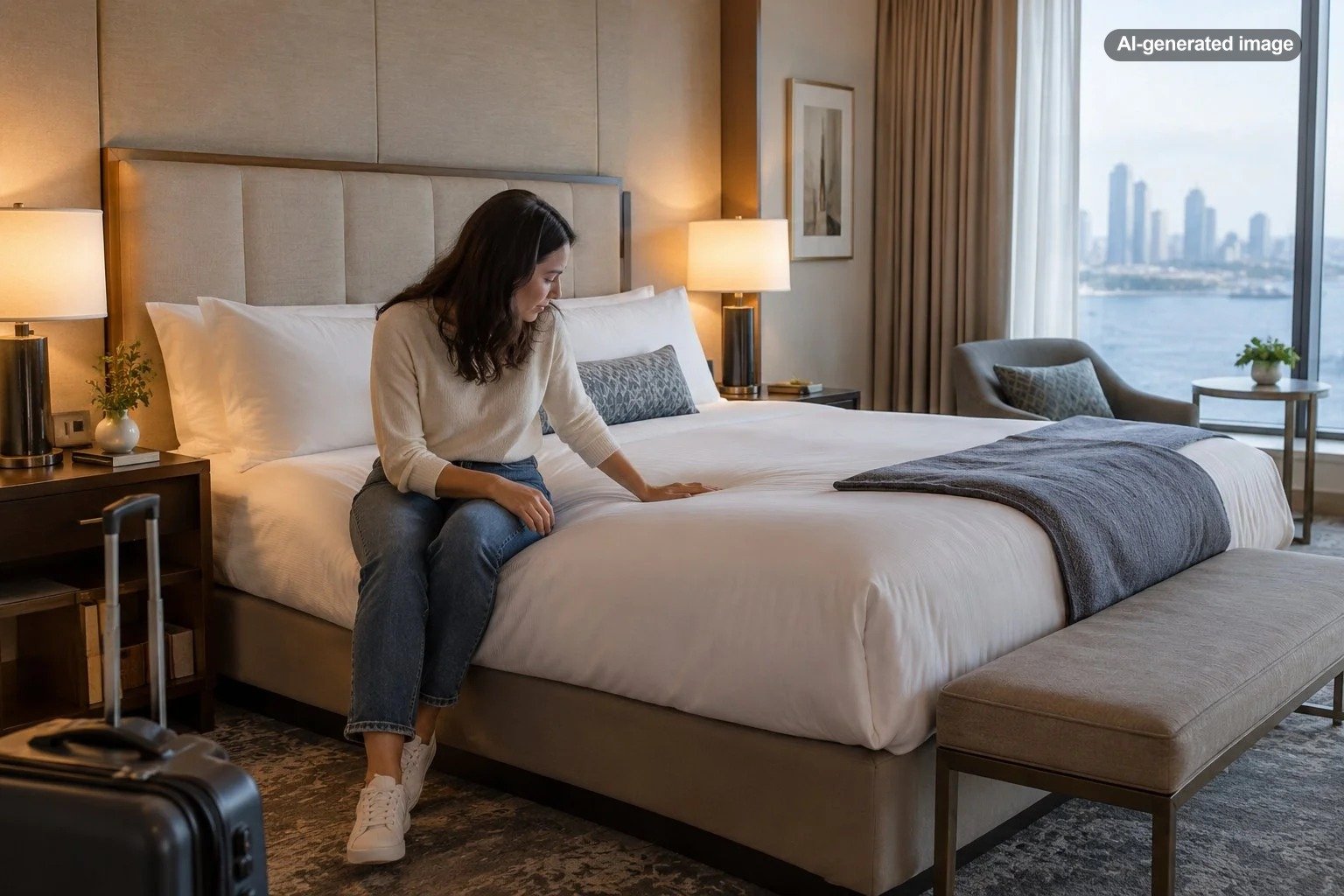
What to Do If the Hotel Mattress Is Too Soft or Too Firm
A hotel mattress that feels dramatically different from the bed you use at home can make an otherwise comfortable room surprisingly difficult to sleep in. If the mattress is too soft, the goal is to reduce excessive sinking and improve your sleeping position. If it is too firm, the goal is to add cushioning at pressure points. Start with reversible adjustments using the bedding already in the room, then contact the hotel if the problem is severe enough to interfere with sleep.
Mattress firmness is highly personal. The same bed may feel pleasantly plush to one guest and unsupportive to another, while a mattress another traveler considers comfortably firm may create noticeable pressure around your shoulders or hips. That is why the most useful solution is usually not to decide whether the mattress is objectively good or bad, but to change the sleep setup around your own needs.
Quick answer: what to try first
- If the mattress feels too firm: add cushioning with an extra comforter, blanket, or available mattress pad, and experiment with pillows that improve alignment.
- If the mattress feels too soft: remove unnecessary plush layers, use supportive pillows strategically, and check whether another available bed or room would suit you better.
- If you are staying several nights: contact the front desk rather than tolerating significant discomfort night after night.
- If you share the bed: remember that each person may experience the same mattress differently because of body size, sleep position, and personal preference.
First determine whether the mattress is actually the problem
A strange hotel bed can feel uncomfortable for reasons beyond mattress firmness. The pillows may be substantially higher or flatter than the ones you normally use. Heavy bedding can make you feel trapped in the mattress. A warm room can make a closely conforming bed feel softer and more enveloping. Even the unfamiliar environment itself can make it harder to settle into your normal sleeping position.
Spend a few minutes isolating the issue. Lie in your usual sleep position without extra decorative pillows or folded bedding. Notice whether you are sinking deeply around your hips and torso, or whether your shoulders and hips feel as though they are pressing against an unyielding surface. That distinction will guide the most useful adjustment.
If the hotel mattress is too firm
A firm surface can be particularly noticeable to travelers who normally sleep on a more cushioning mattress. Side sleepers may notice pressure around the shoulders and hips because those areas bear more concentrated weight.
Add a removable cushioning layer
If extra bedding is available, a folded comforter or blanket can sometimes provide a little additional cushioning. Keep the surface smooth rather than creating thick folds or lumps. If the hotel can provide a mattress pad or topper, that may be another option worth asking about, although availability varies by property.
Use pillows to reduce pressure
Your pillow setup can change how the entire bed feels. Side sleepers may be more comfortable with adequate head and neck support plus a pillow between the knees. Back sleepers may find that a small amount of support beneath the knees reduces tension. The objective is not to build an elaborate arrangement, but to prevent the rest of your body from compensating for a sleep surface that feels unusually hard.
Try another sleeping position
If you normally alternate between positions, one may work better than another on an unfamiliar bed. A mattress that feels uncomfortable while lying directly on your side may feel more manageable when you shift slightly toward your back. Do not force a position that causes discomfort simply because it is supposed to work better on a certain mattress type.
If the hotel mattress is too soft
A mattress that feels overly soft can create a different problem: instead of pressure against the surface, you may feel as though your midsection is sinking more deeply than the rest of your body. This can be especially noticeable when you normally sleep on a firmer bed.
Remove unnecessary plush layers
Look at what is actually between you and the mattress. Thick mattress pads or multiple cushioned layers can make the bed feel softer. Do not dismantle hotel bedding or remove protective components, but if there are clearly optional removable layers such as an extra comforter placed beneath you, returning the bed to its normal setup may help.
Adjust your pillow height
A pillow that is too thick can compound an uncomfortable sleeping angle, particularly on a bed that allows your torso to sink. Try the hotel’s available pillow options rather than assuming the largest or plushest pillow will be the most comfortable. Small changes in pillow height can make a surprisingly noticeable difference.
Use the other bed if your room has one
In a room with two beds, do not assume they will feel identical. Wear, construction, and individual components can create subtle differences. Testing the unused bed takes only a few minutes and may provide a simpler solution than trying to modify the one you initially chose.
When to contact the front desk
If basic adjustments do not help, contact the hotel and describe the problem plainly. Rather than saying only that the bed is uncomfortable, explain that the mattress feels significantly too firm or too soft for you and ask whether there are any practical alternatives available.
Depending on the property and what is available at that moment, possible solutions could include additional bedding, a mattress pad, a different bed configuration, or a room change. These are possibilities rather than standard hotel services, so it is better to ask what the property can offer than to assume a particular accommodation is available.
If you discover the problem shortly after checking in, raising it early can be more useful than waiting until late at night. When you are staying multiple nights, solving the issue on the first evening can make a substantial difference to the rest of the trip.
What travelers often overlook
Firmness and support are not exactly the same thing. A mattress can feel soft while still supporting some sleepers well, or feel firm without being comfortable for a particular person’s body and sleeping position. Focus on the actual discomfort you are experiencing rather than the firmness label alone.
Your usual sleep position matters. Side sleepers generally place more concentrated pressure on the shoulders and hips, while back and stomach sleepers distribute weight differently. A hotel mattress may therefore bother one member of a couple much more than the other.
One poor night does not necessarily mean every room has the same bed experience. If the mattress feels damaged, unusually uneven, or substantially different from what you expected, mentioning the condition to hotel staff is more useful than trying to compensate indefinitely with pillows and blankets.
Long stays justify more effort. For a single overnight stop, a modest bedding adjustment may be sufficient. For a weeklong business trip or vacation, asking about alternatives becomes much more worthwhile because the cumulative effect of poor sleep can interfere with the trip itself.
How to reduce the chance of the same problem on a future trip
If mattress firmness strongly affects your sleep, make it part of your hotel research. Guest reviews sometimes mention beds, but remember that descriptions such as firm, soft, comfortable, or uncomfortable are subjective. Look for repeated descriptions rather than treating one reviewer’s preference as definitive.
You can also make a note of hotel beds that worked particularly well for you. Over time, knowing whether you generally prefer a firmer, more responsive surface or a softer, more cushioning one can help you interpret accommodation descriptions and reviews more intelligently.
Travelers who are especially sensitive to sleep-surface changes may also benefit from packing a few compact items that help reproduce their normal sleep environment, such as a familiar pillow when practical. It is usually easier to control pillow feel than mattress construction, and improving one part of the sleep setup can sometimes make an unfamiliar mattress easier to tolerate.
Frequently asked questions
Can I ask a hotel for a mattress topper?
You can ask whether one is available, but availability and terminology vary by property. Some hotels may have additional mattress pads or bedding that can change the feel of the bed, while others may not.
Should I ask to change rooms because of an uncomfortable mattress?
If the discomfort is significant and simpler adjustments have not helped, asking whether another room is available is reasonable. A move is particularly worth considering during a longer stay. The hotel may also suggest another solution before changing rooms.
Why does a hotel mattress feel softer than my bed at home?
Differences in mattress construction, comfort layers, bedding, wear, body weight distribution, and your familiar home setup can all affect perceived firmness. Even pillows can alter how supportive the entire bed feels.
Why does a hotel mattress feel harder when I sleep on my side?
Side sleeping concentrates more pressure around the shoulders and hips. A surface with less cushioning may therefore feel noticeably firmer in that position than it would while sleeping on your back.
Is it worth complaining about the mattress?
It is more productive to treat the issue as a request for assistance rather than a complaint about personal preference. Explain what feels wrong and ask what alternatives are available. That gives hotel staff a clearer problem to solve and may lead to a straightforward adjustment.
The most practical approach
When a hotel mattress is too soft or too firm, begin with the least disruptive changes: adjust pillows, remove or add appropriate removable bedding, and test another bed if the room has one. If those changes do not solve the problem, ask the hotel what alternatives are available.
The important distinction is that mattress comfort is personal. You do not need to prove that a bed is universally too firm or too soft. You simply need a sleep setup that works reasonably well for your body, your preferred sleeping position, and the length of your stay.